
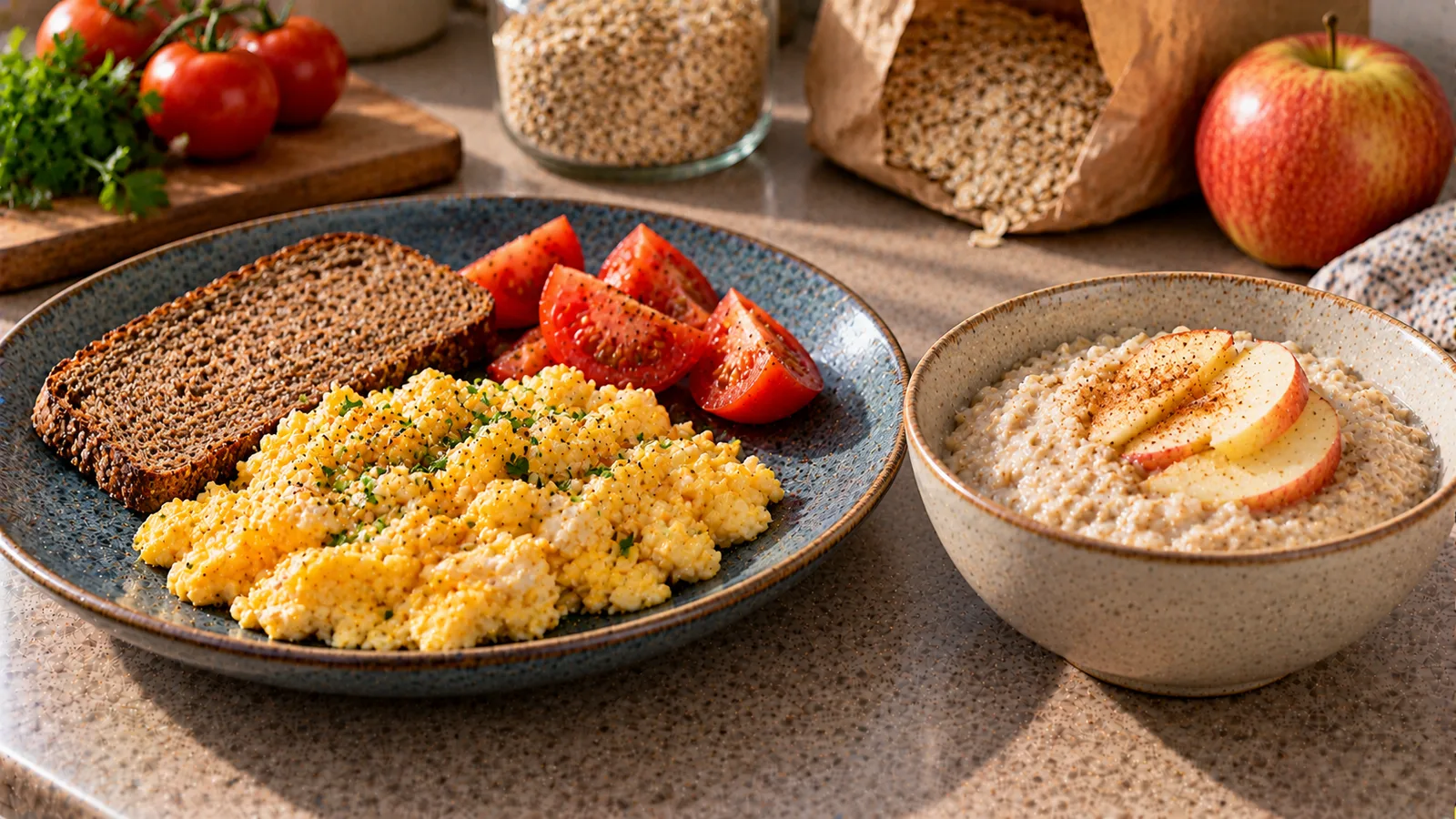
A cheap breakfast plan is only useful if its grocery list matches the breakfasts and if the amount paid at the checkout is kept separate from the amount of ingredients eaten. This seven-day plan is for one adult, one breakfast each day. It uses 14 grocery items across seven deliberately different meals: oat porridge twice, a yogurt bowl, two styles of toast, an egg breakfast and a cottage-cheese bowl. It is not a seven-day meal plan for all meals or a promise that a fixed price buys breakfast in every city.
In our illustrative German budget, buying the required packs costs €20.69. Only €7.15 of those packs is assigned to the seven breakfasts — an average of €1.02 per breakfast. The rest stays in the kitchen for later use. These are deliberately invented, internally consistent budgeting assumptions, not current retailer offers or verified shelf prices. Actual prices, brands, edible weights and quantities vary; check local unit prices before shopping.
The seven breakfasts in one glance
All ingredient amounts below are for one person, not two. Oats are weighed dry, bread as sold, berries frozen before thawing, and chickpeas after draining. Apples refer to the edible amount used, not an obligation to buy exactly that weight. The egg count is in whole eggs. This avoids making cooked-weight and package-weight calculations look interchangeable.
| Day / breakfast | Ingredient amounts | Allocated cost |
|---|---|---|
| Monday — Apple oat porridge | 60 g rolled oats; 200 ml milk; 150 g apples; 10 g sunflower seeds | €0.72 |
| Tuesday — Yogurt, berries and oats | 200 g plain yogurt; 40 g rolled oats; 100 g frozen unsweetened berries; 10 g sunflower seeds | €1.36 |
| Wednesday — Egg and spinach toast | 2 eggs eggs; 80 g wholegrain bread; 80 g frozen spinach; 5 ml cooking oil | €1.06 |
| Thursday — Apple and peanut-butter toast | 80 g wholegrain bread; 30 g peanut butter; 150 g apples | €0.72 |
| Friday — Chickpea and carrot toast | 120 g canned chickpeas, drained; 150 g carrots; 80 g wholegrain bread; 100 g plain yogurt | €1.05 |
| Saturday — Warm berry porridge | 70 g rolled oats; 200 ml milk; 80 g frozen unsweetened berries; 10 g sunflower seeds | €1.01 |
| Sunday — Cottage-cheese apple oat bowl | 200 g plain cottage cheese; 50 g rolled oats; 150 g apples; 20 g peanut butter; 10 g sunflower seeds | €1.24 |
| Seven breakfasts | — | €7.15 |
The table is a shopping and cooking plan, not a laboratory nutrition analysis. No precise calories or protein totals are claimed: those depend on the labels of your actual yogurt, bread, peanut butter and other purchases. Water for porridge, tap water to drink and optional pepper or cinnamon are not assigned costs. If you use additional sweeteners, butter, coffee or extra fruit, count them separately.
Monday — apple porridge with sunflower seeds
Put 60 g dry oats and 200 ml milk in a small pot. Stir over moderate heat until creamy; add water if you prefer a thinner texture. Chop 150 g apple and fold some in while cooking. Top with the remaining apple and 10 g sunflower seeds. Because the fruit and seeds add texture, taste the bowl before deciding whether it needs sugar. The quantities yield one substantial bowl rather than an assumed standardized serving.
Make this breakfast fresh. If time is short, pre-weigh oats and seeds into a dry container the night before and refrigerate the milk. If you prefer cold oats, mix the night before and keep the covered container cold until breakfast. Do not use uncooked oats as a reason to leave milk unrefrigerated overnight.
Tuesday — yogurt with berries, oats and seeds
Combine 200 g plain yogurt, 40 g dry oats, 100 g frozen berries and 10 g sunflower seeds. Thaw berries as instructed on their pack; if the pack requires heating before eating, follow that instruction and cool them before adding to yogurt. Stir the oats through or leave them crunchy, depending on texture. This is a breakfast with a dairy element, grain, fruit and seeds rather than simply a sweetened yogurt snack.
A large flavored yogurt tub can cost differently and contain much more added sugar than a plain product. Choose the yogurt that fits your needs and compare its label per 100 g. The allocated price in the table assumes the specific example bulk pack, not an individual single-serve cup.
Wednesday — spinach and eggs on wholegrain toast
Toast 80 g wholegrain bread. Defrost and thoroughly heat 80 g frozen spinach according to pack directions. In a non-stick pan cook 2 eggs with about 5 ml oil until the egg whites and yolks are set; place spinach alongside or on the toast. Season if desired. Keep the spinach and eggs out of contact with bread until eating if you want the toast to remain crisp.
The eggs and spinach are cooked for this meal, not a batch intended to sit on the counter. The USDA guidance for shell eggs recommends thorough cooking and timely refrigeration of prepared egg dishes. If you replace eggs with another ingredient, recalculate the grocery list rather than assuming the substitution is free.
Thursday — peanut-butter and apple toast
Toast 80 g wholegrain bread and spread 30 g peanut butter evenly across it. Slice 150 g apple and serve on top or beside the toast. A scale is useful for peanut butter: a generous spoonful can be considerably larger than the assumed 30 g. Use a product containing peanuts as its main ingredient and check the actual label if there are added sugar, salt or oils.
This no-cook combination is particularly useful on a busy morning. Peanut butter contains peanuts, a major allergen, and this recipe is not suitable for anyone with a peanut allergy. Try seed butter only after checking the label and budget again, because it can change both cost and nutrition.
Friday — chickpea-carrot toast with yogurt dressing
Rinse and drain the chickpeas; measure 120 g of drained chickpeas from a can with about 240 g edible drained contents. Lightly mash them with a fork. Finely grate 150 g carrot and stir in 100 g plain yogurt to form a thick spread. Season to taste. Spoon onto 80 g wholegrain bread just before eating. For a smoother spread, mash a portion of the chickpeas more thoroughly instead of adding extra oil.
The can's 400 g declared net weight is not the same as the 240 g drained weight used for our example costing. The bean allocation is half of that drained amount, so it uses half of the fictional €0.86 can price. Keep the other drained half refrigerated in a clean covered container and use promptly in another meal; it has not been assigned to these seven breakfasts. Do not keep leftovers in an opened can for days.
Saturday — warm berry porridge
Cook 70 g dry oats with 200 ml milk, stirring until the oats soften. Add 80 g frozen berries according to the package's cooking instructions; heat thoroughly where required. Finish with 10 g sunflower seeds. You can add water for a looser consistency without changing the counted purchase quantities. This is a different fruit combination from Monday, but deliberately reuses the same economical oats, milk and seeds.
Berries are purchased frozen so they can be measured over the week without needing fresh berries to last six or seven days. The comparison is about practical storage and budget, not a claim that frozen fruit is always nutritionally superior or cheaper in every season.
Sunday — cottage cheese, apple and oats
Spoon 200 g plain cottage cheese into a bowl. Add 50 g oats, 150 g chopped apple, 20 g peanut butter and 10 g sunflower seeds. Mix lightly or keep ingredients separate. If you want the oats softer, refrigerate them mixed with the cottage cheese for a short period according to food-safety instructions, rather than leaving the dairy bowl at room temperature.
Cottage cheese varies notably by fat content and salt between manufacturers; use the nutrition panel of the pack actually bought. Its presence offers variety from the yogurt meals. If you avoid dairy, a plain suitable alternative may work, but the protein, price, allergens and spoonable consistency may differ substantially.
One consolidated shopping basket for the entire week
The table uses fictional example pack prices in euros for Germany, fixed solely to demonstrate reproducible arithmetic. The shopping column represents the whole pack you pay for. The allocated column multiplies the pack price by the quantity used divided by the stated purchasable or drained edible quantity. The exception is eggs, allocated by number, and the oil, allocated by millilitres. This is an accounting convention, not an assertion that every residue can be reused without spoilage.
| Product | Pack bought | Quantity used | Pack price | Allocated cost |
|---|---|---|---|---|
| Rolled oats | 500 g | 220 g | €0.89 | €0.39 |
| Milk | 1000 ml | 400 ml | €1.15 | €0.46 |
| Plain yogurt | 500 g | 300 g | €1.19 | €0.71 |
| Apples | 1000 g | 450 g | €2.29 | €1.03 |
| Frozen unsweetened berries | 300 g | 180 g | €2.29 | €1.37 |
| Wholegrain bread | 500 g | 240 g | €1.29 | €0.62 |
| Eggs | 6 eggs | 2 eggs | €1.79 | €0.60 |
| Peanut butter | 350 g | 50 g | €1.99 | €0.28 |
| Carrots | 1000 g | 150 g | €1.19 | €0.18 |
| Plain cottage cheese | 400 g | 200 g | €1.29 | €0.65 |
| Frozen spinach | 450 g | 80 g | €1.29 | €0.23 |
| Sunflower seeds | 200 g | 40 g | €0.89 | €0.18 |
| Canned chickpeas, drained | 400 g can / 240 g drained | 120 g | €0.86 | €0.43 |
| Cooking oil | 500 ml | 5 ml | €2.29 | €0.02 |
| Total | — | — | €20.69 | €7.15 |
Three different totals should not be confused: checkout spending is €20.69; the theoretical ingredient cost assigned to breakfast is €7.15; and the remaining accounting value is €13.54. They are not a discount, a refund or guaranteed savings. For example, buying a 500 g oat pack assigns only 220 g to breakfast and leaves 280 g, while buying six eggs and eating two leaves four eggs. Likewise, the canned chickpeas have 120 g drained edible beans not used in the breakfast plan. Consume leftovers before their use-by dates; some fresh foods do not keep for an entire additional week.
If you already own oats, peanut butter, oil or seeds, your additional checkout cost can be lower. But their use is not economically free: they still have a replacement cost. For an honest comparison with buying breakfast outside the house, choose whether you are comparing the amount spent today or the ingredient value consumed. Mixing these measures produces misleading claims of savings.
How to adapt this basket without breaking the budget
Before shopping, count the breakfasts you will actually eat at home. If you have breakfast away twice during the week, reducing the planned portions may prevent spoiled yogurt, bread or fruit. Compare unit prices per kilogram or litre, not merely the lowest headline pack price. The German consumer advice centre's weekly planning guidance suggests checking your stores and cupboards first and building one consolidated list. Its budget shopping guidance also points to unit pricing and disciplined shopping lists.
For a household of two, do not automatically double every package: portions roughly double, but an already sufficient jar of peanut butter or bottle of oil may not. Double the exact recipe quantities, then round up each purchase to available pack sizes. If you buy a different can size, use its drained weight to recalculate the chickpea allocation.
To make the week more filling, adjust portions according to your appetite and the rest of your diet rather than treating the fixed grams as a personal prescription. Our guide to portion size versus serving size can help with those distinctions. If you want more ideas for grains and legumes, the high-fiber foods guide explains the wider food categories; for protein-rich substitutions, use budget-friendly protein foods. These are supporting guides, not extra ingredients silently included in the €7.15 calculation.
Balance and food safety across seven mornings
A single breakfast does not have to provide all nutrients, and the week here cannot stand in for a whole dietary assessment. A balanced day contains variety across fruits and vegetables, wholegrains and different protein sources. The NHS balanced-diet guidance describes that broader pattern. Someone with a food allergy, coeliac disease, special energy needs or a medically prescribed diet will need a different shopping list; oats, wheat bread, milk, eggs, peanuts and seeds warrant attention to labels and cross-contact.
Store dairy and chilled products according to their labels. Keep frozen berries and spinach frozen until needed, and return them promptly to the freezer after measuring. Wash fruit and vegetables. Prepare eggs thoroughly. According to BZfE food-hygiene advice, prepared perishable dishes should be cooled promptly and generally kept refrigerated only for a short period, around two days in that guidance. Therefore, this plan proposes assembling breakfasts on the day, not preparing all seven dairy or egg dishes on Sunday.
The grocery figures deliberately do not include electricity, transport, optional seasonings or drinks. If your goal is the cost of the whole breakfast routine, add coffee, tea, any extra milk or spreads, and the preparation costs you actually incur. If your goal is affordable variety from a minimal basket, the key advantage is not that every breakfast is identical: it is that oats, bread, fruit and dairy are used across different meals without a new shopping trip for each recipe.
For an entire week's nutrition rather than just breakfasts, the existing seven-day high-protein meal plan is a separate, broader planning task. This article owns the narrower question: seven specifically measured low-cost breakfasts from one basket.
Method: All package prices and recipe costs are constructed examples for Germany, not scraped prices, and no exact food nutrient composition is asserted. Costs use unrounded intermediate allocation; the tables display two-decimal rounded values and may differ by one cent if readers sum displayed rows. Any external substitution requires new quantities and a new calculation.