
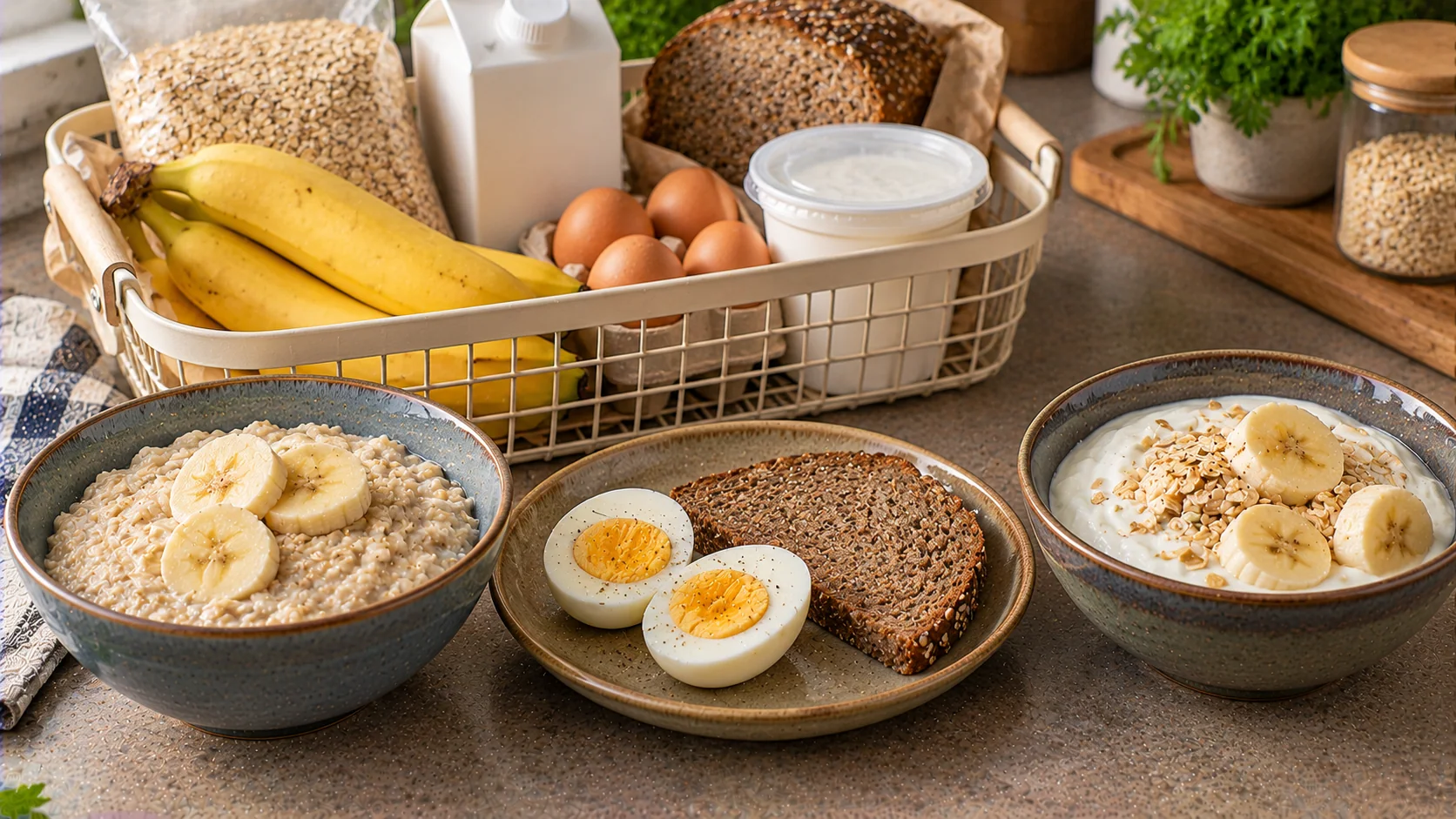
A €15 basket is a purchase budget, not the cost of three plates
Buying groceries means paying for whole packs. Eating breakfast uses portions of them. Do not confuse the €14.81 checkout total with the approximately €3.23 of ingredients used for these three breakfasts. Most oats, bread, eggs, fruit and peanut butter remain available after day three. Packaging sizes and prices are hypothetical illustrations, not live German supermarket offers, and actual store prices may be higher. The exercise shows a reusable method rather than a claim that every shopper can always purchase this basket for €15.
Example shopping basket: nine products
| Product | Pack purchased | Example checkout price | Planned use, three breakfasts |
|---|---|---|---|
| Rolled oats | 500 g | €0.99 | 130 g |
| Milk | 1 litre | €1.19 | 200 ml |
| Plain yogurt | 500 g | €1.19 | 300 g |
| Eggs | 6 eggs | €1.99 | 2 eggs |
| Bananas | 1 kg | €1.49 | 120 g |
| Apples | 1 kg | €2.29 | 300 g |
| Wholegrain bread | 500 g | €1.49 | 100 g |
| Peanut butter | 350 g | €2.19 | 30 g |
| Frozen berries | 300 g | €1.99 | optional, not required |
| Total | Nine packs | €14.81 | Leftovers for later |
Frozen berries are included as a flexible option but excluded from the three breakfasts' base nutrition and ingredient-use arithmetic. Choose unsweetened products where possible; wholegrain bread and peanut-butter labels vary. Because the basket contains milk, yogurt, eggs and possibly opened nut butter, follow the package's storage instructions and keep perishables chilled.
Day 1: banana and peanut-butter oats
One serving: 70 g rolled oats, 200 ml milk, 120 g peeled banana and 15 g peanut butter. Put the oats and milk in a microwave-safe bowl. Heat in short bursts, stirring until thick, or simmer on the stove according to the oats' directions. Slice the banana, stir in the peanut butter and serve. Add water if it becomes too thick. The estimated ingredient cost is €0.65: oats €0.14 + milk €0.24 + banana €0.18 + peanut butter €0.09. This is the cost of used portions, not the price of buying each pack.
Day 2: apple-yogurt oat bowl
One serving: 200 g plain yogurt, 60 g rolled oats, 150 g edible apple and 15 g peanut butter. If you prefer softer oats, soak them in the covered yogurt in the fridge overnight. Wash the apple, remove its core, dice it shortly before eating and mix it with the oats and yogurt. Swirl through the peanut butter. The ingredient estimate is €1.03: yogurt €0.48 + oats €0.12 + apple €0.34 + peanut butter €0.09. Do not leave the prepared dairy bowl unrefrigerated for a long commute.
Day 3: eggs on toast with fruit and yogurt
One serving: two eggs, 100 g wholegrain bread, 150 g edible apple and 100 g plain yogurt. Hard-boil the eggs until both yolks and whites are set, or cook them thoroughly in a pan. Toast the bread, wash and slice the apple, and serve the yogurt separately. The estimated cost is €1.54: eggs €0.66 + bread €0.30 + apple €0.34 + yogurt €0.24. Use a thermometer when necessary for egg dishes, and avoid raw eggs when food safety is a concern.
Cost per serving: reproduce the maths
For ingredients sold by weight, used cost = pack price × (grams eaten ÷ grams purchased). For milk, use millilitres; for eggs, use units. For example, 70 g of €0.99/500 g oats costs 0.99 × 70/500 = €0.1386, rounded to €0.14. A 15 g portion of €2.19/350 g peanut butter costs €0.0939, rounded to €0.09. The whole three-day menu is approximately €3.22 before rounding individual lines (about €3.23 when adding the displayed rounded breakfast totals). This assumes a 120 g banana or 150 g apple represents edible fruit; actual fruit purchases contain peel and cores, so the exact banana/apple costs can be higher if weighed before peeling.
| Day | Breakfast | Approximate ingredient cost | Main leftovers |
|---|---|---|---|
| 1 | Oats, milk, banana, peanut butter | €0.65 | Oats, milk, fruit, nut butter |
| 2 | Apple, yogurt, oats, peanut butter | €1.03 | Yogurt, apples, oats |
| 3 | Eggs, toast, apple, yogurt | €1.54 | Four eggs, bread, fruit |
| Three days | Three distinct breakfasts | €3.22 | Plus an unused berries pack |
The shopping basket totals €14.81, leaving €0.19 under the chosen €15 example limit. There is no claim that the €11.59 difference is refundable cash: it is groceries still at home. When prices change, update the price and weight of each pack first; then recalculate both the checkout total and used portion cost.
Build a more filling breakfast without overspending
Oats and wholegrain bread supply carbohydrate and fibre, yogurt and eggs contribute protein, and fruit provides variety. The breakfasts are not interchangeable in protein content: the egg breakfast has different nutrients from a fruit-and-oat bowl. If greater protein is a priority, replace some milk or yogurt with a comparable higher-protein plain dairy product and recalculate its actual price; do not assume that a labelled 'high protein' product is cheaper per gram of protein. If you need more energy, increase oats or bread based on appetite; for less, reduce the portion rather than making a universal calorie promise.
Budget substitutions and how they change the numbers
An egg-free day-three alternative is peanut-butter toast with yogurt and apple. Swap the two eggs for 25 g peanut butter, then recalculate: 25/350 × €2.19 = about €0.16 rather than €0.66, a reduction of roughly €0.50 in the used portion. An alternative to peanut butter is a seed spread for allergies, but check its price and allergy labelling. Plant-based drinks or dairy-free yogurt can replace dairy, yet protein and calcium may differ substantially. If frozen berries cost more than expected, omit them: the base three breakfasts do not use them, so the example checkout becomes €12.82.
Shopping strategy that works in different stores
Start with ingredients you actually want to eat across three mornings. Check the shelf price against pack size; a lower sticker price can hide a smaller pack. Add the entire pack prices before entering the checkout line. If the total exceeds your budget, remove optional berries first, then look for a smaller peanut-butter pack or a cheaper seasonal fruit. Avoid buying a large perishable pack just because its unit price looks appealing when you have no plan to finish it. Select unsweetened yogurt, check ingredient lists and weigh the portion you actually use at home.
Storage and preparation schedule
The evening before day one, group the dry oats and measure your planned servings into clean containers. Keep milk and yogurt refrigerated at 4 °C or colder when possible and follow package dates and manufacturer instructions. Store eggs according to local packaging guidance; wash fruit immediately before preparing. For day two, cover and refrigerate oats mixed with yogurt overnight; add fresh fruit just before eating for better texture. Cook day-three eggs thoroughly, eat them promptly or chill them safely, and transport dairy breakfasts with a cold pack when refrigeration is unavailable. Do not assume a generic several-day use-by date supersedes the product's own instructions.
Nutrition: use the real package, not a generic calorie claim
The amounts in the recipes are measured, but nutrition varies with whole versus low-fat milk, different yogurts, bread recipes and the edible size of fruit. For a personal estimate, enter the weights and units from the ingredient table into a nutrition calculator using values matching the actual products. For label reading in the EU, nutrition values are normally declared per 100 g or 100 ml, which makes comparisons useful. For independent food-composition references, distinguish raw oats, cooked eggs and whole edible fruit from unrelated entries in USDA FoodData Central. Neither the €15 basket nor an illustrative macro calculation is a medical diet prescription.
Frequently overlooked costs
Heating, transport and packaging can add small costs beyond the ingredient arithmetic; they are excluded here. Discounts and loyalty schemes can alter checkout cost but cannot be assumed in advance. Fruit trimmed for bruises changes the edible yield; eggs sold in variable pack sizes change cost per egg. The unused 300 g frozen berries and other remaining packs are food inventory, not waste if you plan their next use. A simple notebook with four columns—item, pack cost, pack amount, used amount—lets you update the basket in minutes.
A practical three-day checklist
Before shopping: list the nine packs and your own store prices, total them and remove optional items if the sum exceeds €15. On shopping day: verify the sizes, use a cooler if needed and refrigerate perishables promptly. Before each breakfast: measure the portions instead of treating the entire purchased pack as one meal. After day three: plan the remaining four eggs, bread, fruit, oats and berries into later meals so that the value of the original basket is actually used. For broader planning, see our balanced grocery basket guide and our budget breakfast ideas.
Sources
- USDA FoodData Central — food-composition reference database; check the state and product type before using values.
- European Commission: food information to consumers — how nutrition information is shown on packaged products.
- FoodSafety.gov: FoodKeeper — storage guidance for perishables.