
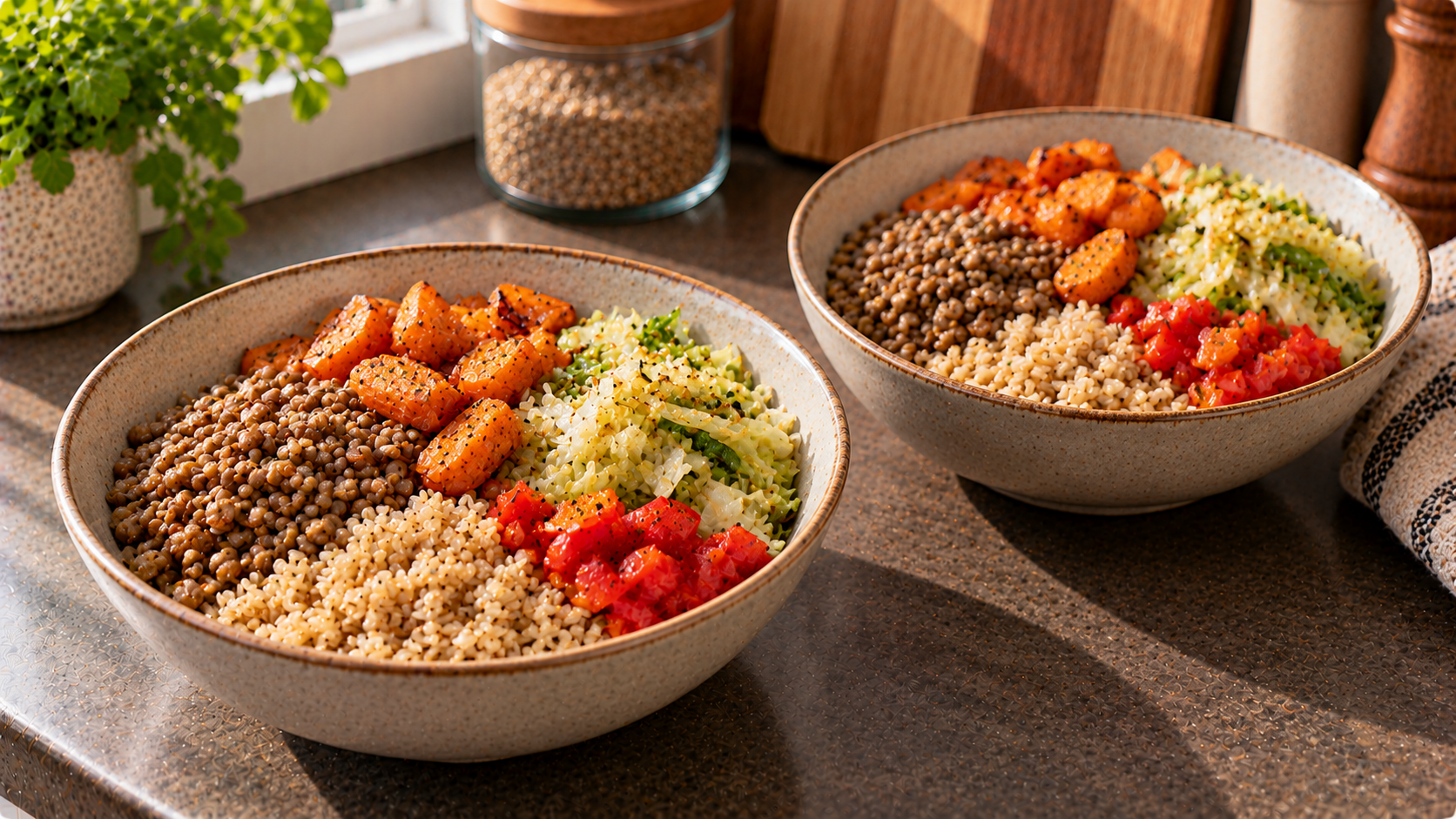
A grain bowl for two can be inexpensive without being a bowl of plain rice. The practical formula is a cooked grain, an affordable protein, a generous serving of vegetables and a small amount of flavorful dressing. Build around what is already in the cupboard, use the same inexpensive ingredients in different combinations and calculate the cost of what goes into the bowl, not the price of every full package you buy.
This guide gives four complete two-person bowls, a transparent illustrative budget, quantities you can cook without guesswork and substitutions for vegetarian, higher-protein and gluten-free preferences. Prices vary by country, shop, season and pack size; the euro examples below are hypothetical calculations, not current retail quotations.
The budget bowl formula for two
For two adults, begin with 120–160 g dry grain in total (adjust to appetite), 240–300 g drained cooked beans or another substantial protein source, 300–450 g vegetables and 10–20 g oil or a modest dressing. Cooked grain weight varies with water absorption. Someone who needs a larger meal can increase the grain, protein or vegetables; there is no single correct portion size.
When a recipe calls for drained beans, the can’s net weight is not the amount you eat; the guide to drained weight on canned labels explains which figure to use.
| Component | Amount for two | Low-cost choices | What it contributes |
|---|---|---|---|
| Grain, dry | 120–160 g | Rice, bulgur, barley, oats, couscous | Main energy source; whole grains can add fiber |
| Protein | 240–300 g drained beans, or 2–4 eggs, or 200–250 g tofu | Lentils, chickpeas, beans, eggs | Protein and often fiber |
| Vegetables | 300–450 g | Frozen broccoli, carrots, cabbage, seasonal vegetables | Volume, variety, micronutrients |
| Fat and flavor | 10–20 g oil, plus acid and seasonings | Rapeseed oil, lemon, vinegar, paprika | Flavor and unsaturated fats |
| Optional finish | 20–50 g | Yogurt, seeds, chopped herbs | Creaminess, texture, extra nutrients |
If a can says 400 g net weight, do not automatically count 400 g of beans. Check the drained weight on its label or weigh the drained contents. For a dry product, price and nutrient calculations should start from the dry amount actually used, while the eating portion can be described by its cooked weight. This avoids the common mistake of comparing 100 g dry rice with 100 g cooked rice.
Four grain bowls for two: exact shopping and cooking quantities
Each recipe makes two main-meal servings. The following recipes are deliberately different rather than four versions of the same rice-and-bean bowl. All costs are examples only; use your own receipt prices for an accurate total.
1. Lemon chickpea and bulgur bowl
Ingredients for two: 140 g dry bulgur, 250 g drained canned chickpeas, 200 g cucumber, 180 g tomatoes, 15 g olive or rapeseed oil, 30 g plain yogurt, half a lemon, parsley or dried herbs, black pepper. Optional: garlic and a pinch of cumin.
- Prepare the bulgur following its package directions; coarse bulgur may need longer cooking than fine bulgur. Let steam escape briefly while you prepare vegetables.
- Rinse chickpeas if desired, drain well and warm them in a pan with cumin, or use them cold if ready to eat.
- Dice the vegetables. Mix yogurt, lemon juice, oil and a little water into a pourable dressing.
- Divide bulgur and chickpeas into two bowls; add vegetables and dress just before serving.
Why it works: chickpeas are both a protein and fiber source, while raw vegetables provide contrast. A yogurt dressing gives flavor without relying on an expensive bottled sauce. Swap: use cooked rice instead of bulgur for a gluten-free base, after checking any dietary requirements for other ingredients.
2. Warm rice, kidney bean and cabbage bowl
Ingredients for two: 140 g dry rice (brown or white), 260 g drained canned kidney beans, 250 g finely sliced cabbage, 150 g carrots, 15 g rapeseed oil, 20 g tomato paste, vinegar, smoked paprika and garlic. Add a little water to loosen the sauce.
- Cook rice as directed and keep it hot until serving.
- Soften cabbage and carrot in a large pan with oil and a splash of water for about 6–10 minutes, or to your preferred tenderness.
- Add cooked canned beans, tomato paste, paprika and a few spoonfuls of water; heat everything thoroughly.
- Spoon over rice and finish with vinegar or lemon juice.
Why it works: cabbage and carrots are useful budget staples with a longer refrigerated life than delicate salad leaves. Canned kidney beans are already cooked; dried kidney beans require thorough boiling according to reliable preparation instructions, not merely soaking or slow-cooker warming. Swap: add a fried egg each if a higher-protein bowl fits the budget.
3. Barley, lentil and roasted-vegetable bowl
Ingredients for two: 140 g dry pearl barley, 250 g cooked lentils, 300 g frozen mixed vegetables or seasonal chopped vegetables, 15 g oil, 20 g sunflower seeds, 15 g mustard, vinegar and black pepper.
- Cook barley until tender according to the package. It takes longer than instant couscous; plan for that before you start.
- Roast or pan-cook vegetables with oil until hot and pleasantly browned, if appropriate for the vegetable mix.
- Warm cooked lentils. Stir mustard, vinegar and a spoonful of water into a dressing.
- Divide barley, lentils and vegetables between two bowls. Sprinkle seeds over the top.
Why it works: lentils offer plant protein, and a little seed topping supplies crunch. Swap: use buckwheat instead of barley when you want a naturally gluten-free grain-like base, while verifying cross-contact labeling if medically necessary. If starting with dried lentils, use the package's dry-to-cooked yield rather than assuming a fixed weight.
4. Quick couscous, egg and broccoli bowl
Ingredients for two: 140 g dry ordinary couscous, 350 g frozen broccoli, four eggs, 10 g oil, 30 g plain yogurt, lemon, pepper and chili flakes. Optional: chopped parsley.
- Prepare couscous with the amount of hot water specified on the pack. Fluff with a fork.
- Steam or microwave frozen broccoli until thoroughly hot.
- Cook eggs to the preferred doneness, following food-safety advice for anyone at higher risk from undercooked eggs.
- Assemble two bowls and finish with yogurt, lemon and a little oil.
Why it works: frozen broccoli avoids trimming waste; eggs are a flexible alternative to beans. Swap: replace eggs with tofu or cooked chickpeas. Ordinary couscous is made from wheat and is not gluten-free.
What does one budget grain bowl actually cost?
A useful calculation is unit price × quantity used, not the price of whole packs purchased. This sample represents one hypothetical chickpea-and-bulgur meal for two in euros; it does not describe a particular German supermarket.
| Ingredient | Example pack price | Amount used | Example cost used |
|---|---|---|---|
| Bulgur | €1.80 / 500 g | 140 g | €0.50 |
| Chickpeas, drained | €0.85 / 240 g drained | 250 g | €0.89 |
| Cucumber | €0.90 / 400 g | 200 g | €0.45 |
| Tomatoes | €2.40 / kg | 180 g | €0.43 |
| Oil | €3.00 / 500 ml | about 15 ml | €0.09 |
| Yogurt | €1.30 / 500 g | 30 g | €0.08 |
| Lemon, herbs, spices | Illustrative allowance | Amount used | €0.30 |
| Total / two | €2.74 | ||
| Per person | €1.37 |
Rounding explains minor differences if recalculated from precise package prices. The chickpea quantity in this particular illustration is slightly above one 240 g drained can: buy a larger format, use beans already opened, or adjust to 240 g and recalculate. Transport, energy use and food already wasted are not included. If your shop has different prices, substitute the numbers rather than treating €1.37 as a universal promise.
For comparisons between recipes, the most helpful measures are cost per two-serving meal, cost per actual portion, and — when protein is a specific goal — cost per useful protein-containing ingredient, not an imaginary exact cost per gram of absorbed protein. A cheap grain-only bowl may cost less but will not offer the same balance as a bowl with legumes and vegetables.
A five-minute supermarket comparison
Before choosing a grain, compare the price per kilogram in dry form. A 500 g bag at €1.80 costs €3.60/kg; a 1 kg bag at €2.80 costs €2.80/kg. But a bigger bag only saves money if it can be stored properly and used before quality deteriorates. Compare whole-grain alternatives without assuming a premium grain is automatically healthier than affordable oats, barley or brown rice.
To judge whether a larger pack is actually cheaper, compare the unit price and usable quantity as in the grocery unit-price guide.
For canned beans, compare the price per kilogram of drained beans, not the price per kilogram of beans plus water. Two cans with the same net weight may supply different quantities of food. Dry beans can cost less per cooked portion, but they require planning, cooking energy and appropriate safe preparation; they are not always the best choice for a rushed evening.
For vegetables, compare an edible portion after trimming or thawing. Frozen vegetables are often useful when shopping for two because only the needed amount can be taken out. Seasonal vegetables can be a better deal, but the price changes across the year. Pre-cut convenience packs may reduce time while increasing the price per usable gram.
How to make the bowl filling without expensive extras
Start by including enough grain and a substantial protein component. Protein and fiber can make a meal more satisfying, but no single ingredient guarantees fullness. Beans and lentils are particularly useful because they add both. Whole grains can add fiber compared with some refined versions. A large vegetable portion provides texture and volume; oil or seeds contribute flavor and fat, but their calories add up quickly, so measuring them once can be useful for tracking.
A practical division for two is 140 g dry grain + 250 g cooked legumes + 400 g vegetables + 15 g oil. You can change those amounts for different energy needs; people do not all require identical meals. Eggs, yogurt and tofu offer alternatives when lentils are not appealing, but consider allergies and dietary patterns. For a vegan bowl, use a plant-based dressing and a legume or tofu protein source.
Do not choose foods by protein grams alone. Compare fiber, vegetables, salt, saturated fat, overall energy, cost and how reliably you will actually cook the meal. The German Nutrition Society (DGE) encourages vegetables, whole grains, legumes and plant oils as part of an overall healthy eating pattern: DGE recommendations.
Prepare once, assemble twice: a realistic two-person workflow
If making two different bowls over two days, cook a suitable quantity of grain, portion it promptly and choose toppings that can be added later. Keep washed raw vegetables separate from warm ingredients until eating. A small box of dressing prevents soggy bowls. A half can of beans can be folded into a soup, omelet or salad rather than forgotten at the back of the refrigerator.
For bowls prepared ahead with rice, consult the separate rice cooling, freezing and reheating guide before choosing storage times.
Cooked rice deserves extra care. Do not leave cooked grain standing at room temperature for hours. Promptly divide into shallow containers and refrigerate; follow local guidance on rice cooling, reheating and shorter storage windows where recommended. General USDA food-safety guidance advises refrigerating perishables within two hours (one hour above 32°C), eating most refrigerated leftovers within three to four days and reheating leftovers thoroughly to 74°C/165°F. For rice, some national agencies advise a stricter one-day refrigerated limit: use the stricter applicable guidance. See USDA leftovers guidance.
If you take a grain bowl to work, carry perishable ingredients in an insulated bag with a cold pack and refrigerate promptly when possible. Rice, eggs, cooked lentils and yogurt dressing should not spend the morning on a warm desk. Reheating does not reliably undo all risks from food left improperly at room temperature.
Substitutions that save money without turning every bowl into the same dish
| If this is expensive or unavailable | Try this | Check before substituting |
|---|---|---|
| Quinoa | Rice, bulgur, barley or buckwheat | Cooking time, gluten needs |
| Fresh broccoli | Frozen broccoli or cabbage | Edible weight and seasoning |
| Chickpeas | Lentils, kidney beans or white beans | Drained weight; cooked status |
| Bottled dressing | Yogurt + lemon, or oil + vinegar | Dairy allergy, portion size |
| Fresh herbs | Dried herbs, lemon zest, spice mix | Salt added to blends |
| Nuts | Sunflower or pumpkin seeds | Allergy and price per portion |
| Feta | Eggs, tofu or extra beans | Different flavor and protein |
One cheap ingredient does not have to appear every night. Use rice in a warm smoky bowl, barley with mustard lentils, bulgur with lemon chickpeas and couscous in a quick egg dinner. Alternating sauces and textures creates variety even when your shopping list overlaps.
Common cost and portion mistakes
Counting an entire bag as the cost of dinner. A 1 kg bag of rice may last several meals; calculate only the dry grams used. Conversely, a €0.20 sprinkle of seeds is not free just because the packet is already open.
Using can net weight instead of drained weight. The liquid is not always part of the meal. If you keep bean liquid for a sauce, count what you actually use; otherwise base portion calculations on the drained contents.
Comparing cooked grams with dry grams. Water changes weight, not the starting quantity of dry grain. Follow one method consistently when comparing recipes and tracking nutrition.
Overlooking toppings. Several spoonfuls of tahini, cheese or oil can change both cost and energy noticeably. Their inclusion can be perfectly reasonable; simply measure them when precision matters.
Buying delicate produce for too many planned meals. A theoretical low price is not a saving if vegetables spoil. Frozen products and longer-keeping roots can help reduce waste.
Ignoring cooking equipment and time. The cheapest dried legume may be impractical on a busy weeknight. A canned or frozen option can be economical once convenience and waste are considered.
Choose a bowl tonight
For a fresh and tangy dinner, use lemon chickpea bulgur. For a warm, smoky plate built from cupboard items, make rice with beans and cabbage. For a fiber-rich batch-cook option, choose barley and lentils. For a fast meal with little chopping, choose couscous with eggs and frozen broccoli. Adjust portions to appetite, record the price of ingredients actually used and keep one affordable protein source in every bowl. The aim is a meal you enjoy and can repeat with different ingredients — not the lowest possible number on a price label.
For a fuller approach to inexpensive eating, see DGE guidance on legumes and the USDA food-safety basics.