
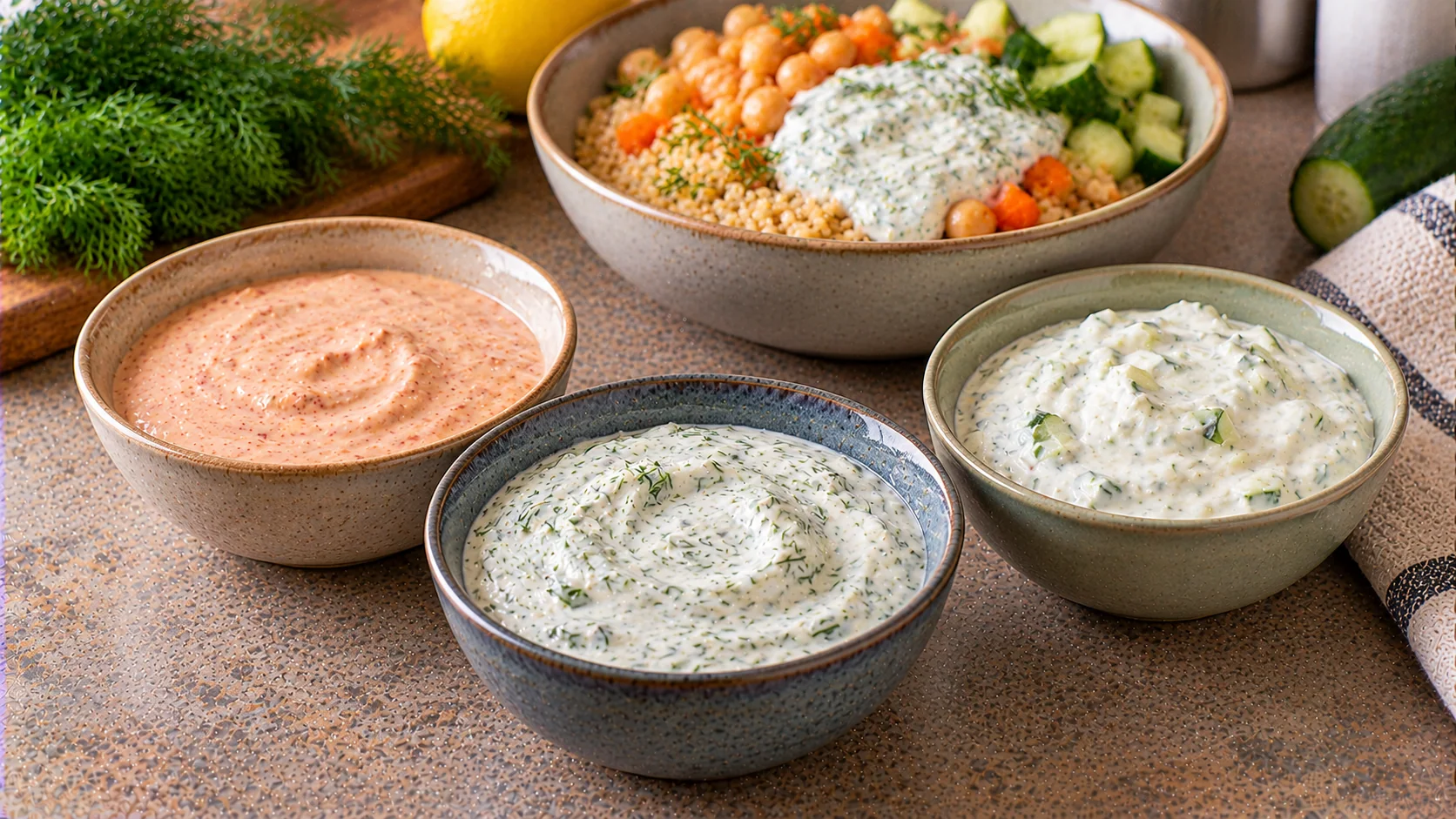
Three-Ingredient Yogurt Sauces for Grain Bowls
A bowl of cooked bulgur, rice, barley or quinoa can taste very different with a spoonful of sauce. These three separate sauces each use exactly three edible ingredients (water is unnecessary). Each recipe makes two generous sauce servings, is mixed cold in under five minutes, and can be made while the grains cook. None is a substitute for an entire balanced meal: grains, vegetables and a substantial protein source still belong in the bowl.
At a glance: choose your sauce
| Sauce | Three ingredients | Yield | Prep time | Best with |
|---|---|---|---|---|
| Lemon and parsley | Yogurt, lemon juice, parsley | 150 g | 5 min | Chickpeas, bulgur, roasted carrots |
| Cucumber and dill | Yogurt, cucumber, dill | 170 g | 5 min | Lentils, rice, peppers |
| Smoked paprika and lime | Yogurt, smoked paprika, lime juice | 150 g | 3 min | Black beans, barley, baked squash |
Each sauce makes two portions of about 75 g, 85 g and 75 g respectively. Quantities describe the whole small batch, not one spoonful. Start with plain unsweetened yogurt; thick Greek-style yogurt produces a coating sauce, while thinner plain yogurt becomes a drizzle. Check the ingredient list for added sugar and allergens, and keep packaged-yogurt nutrition separate from any estimate here.
Sauce 1: lemon and parsley yogurt
| Ingredient | Exact amount | Note |
|---|---|---|
| Plain unsweetened yogurt | 120 g | Cold, dairy or suitable unsweetened alternative |
| Fresh lemon juice | 20 g | About 1½ tbsp, weigh if possible |
| Fresh parsley | 10 g | Finely chopped |
Method: (1) Wash, dry and chop parsley. (2) Stir the lemon juice into the 120 g yogurt until smooth. (3) Fold in the parsley. (4) Divide between two bowls or refrigerate immediately in a clean covered container. Yield: about 150 g; time: 5 minutes. Spoon it onto a warm chickpea-and-bulgur bowl only when ready to eat to keep the sauce cool and the herbs bright. If the yogurt is already tangy, begin with half the lemon and add the rest to taste; that changes the final yield slightly.
Sauce 2: cucumber and dill yogurt
| Ingredient | Exact amount | Note |
|---|---|---|
| Plain unsweetened yogurt | 120 g | Cold |
| Cucumber | 40 g | Grated, squeezed lightly |
| Fresh dill | 10 g | Finely chopped |
Method: (1) Rinse the cucumber, grate 40 g and gently squeeze away excess water; the recipe weights cucumber before squeezing. (2) Chop dill. (3) Combine with yogurt and refrigerate until serving. Yield: approximately 170 g before any cucumber-water loss; the actual finished mass can be slightly lower. Time: 5 minutes. The cucumber releases moisture during storage: stir before use and keep the sauce separate from dry grains to prevent sogginess.
Sauce 3: smoked paprika and lime yogurt
| Ingredient | Exact amount | Note |
|---|---|---|
| Plain unsweetened yogurt | 130 g | Cold |
| Lime juice | 18 g | Freshly squeezed |
| Smoked sweet paprika | 2 g | Mild, not hot chili powder |
Method: (1) Mix the paprika into a tablespoon of yogurt to dissolve any clumps. (2) Add the remaining yogurt and 18 g lime juice. (3) Taste; cover and chill until serving. Yield: 150 g; time: about 3 minutes. Smoked paprika adds color and a roasted aroma without needing to roast vegetables for the sauce itself. Check spice blends for salt or allergens; this recipe assumes single-ingredient paprika.
Build a complete grain bowl, not just a sauce
For a practical one-person lunch, combine about 150 g cooked bulgur or rice, 120 g drained canned chickpeas or cooked lentils, and 150 g cooked or raw vegetables. Add one portion of the selected sauce just before eating. These are example assembly weights, not measured nutrition claims. Rinse canned legumes if desired, drain, and use their drained weight, never the weight of the liquid. Grain weights are already cooked; do not apply dry-grain nutrition values to 150 g cooked grain. If batch cooking, pack sauce in a separate leakproof container and keep it cold in transit.
Try the lemon sauce with chickpeas and roasted carrots, cucumber-dill with lentils and peppers, or paprika-lime with black beans and squash. These pairings are suggestions rather than additional multi-ingredient sauce recipes. A different yogurt base will change consistency and protein; plant-based products vary widely, particularly in protein and calcium fortification.
Protein and calories: reproducible estimates
To estimate the yogurt contribution, consider a model plain yogurt label showing 65 kcal, 4 g protein, 3.5 g fat and 5 g carbohydrate per 100 g. This is an illustrative label, not an asserted value for all Greek, dairy-free or natural yogurts. A 120 g yogurt base then supplies 78 kcal, 4.8 g protein, 4.2 g fat and 6 g carbohydrate before lemon, herbs or cucumber. For the 130 g base, these values are 84.5 kcal and 5.2 g protein before additions. Divide batch nutrients by two for each sauce serving. Lemon, cucumber and herbs contribute some nutrients, so these base-only calculations must not be presented as exact totals for the finished sauces.
Use the specific carton nutrition table and ingredient quantities, or reference a comparable plain yogurt from USDA FoodData Central. For each ingredient, multiply nutrients per 100 g by grams used / 100, sum the ingredients once, and divide by two. A Greek-style high-protein yogurt could produce a materially different result. This modest sauce portion does not determine the protein adequacy of the whole meal.
Cost per portion and checkout price
The table is a transparent hypothetical calculation in euros, not a store price check. It counts the quantity used, not full unopened cartons, herb bunches or citrus purchases.
| Sauce batch | Yogurt used | Other ingredients | Batch model cost | Per sauce portion |
|---|---|---|---|---|
| Lemon-parsley | €0.36 | €0.18 | €0.54 | €0.27 |
| Cucumber-dill | €0.36 | €0.20 | €0.56 | €0.28 |
| Paprika-lime | €0.39 | €0.19 | €0.58 | €0.29 |
The three full small batches would consume €1.68 of ingredients, for six sauce portions, or €0.28 on average. Buying all ingredients from scratch may cost much more at checkout, because yogurt, herbs and spices are sold in larger packages. The cooked grain, legumes, vegetables, electricity and possible food waste are not included. To price a finished lunch, add those components and count only the amounts used; do not call the sauce price a full meal cost.
Chill promptly and protect the yogurt
These are refrigerated dairy-based preparations, not shelf-stable condiments. Make them with cold yogurt and clean utensils, place in covered containers, and keep at 4°C or below. For best texture and freshness, prepare in small batches and aim to eat within 1–2 days, or earlier if the yogurt's use-by date requires it; this is a conservative quality target, not a microbiological guarantee. Cucumber sauce may become watery faster than the other two. Do not rely on lemon or lime juice to preserve dairy sauce at room temperature.
USDA FSIS guidance says perishable foods should not remain out longer than two hours, or one hour above 32°C / 90°F. If packed for work, use an insulated bag with a cold pack and refrigerate on arrival. Discard sauce with signs of spoilage or after unsafe temperature exposure; do not taste it to test safety. Freezing can cause separated, grainy texture, so it is not the first choice for a fresh drizzle.
Adapt the three-ingredient rule sensibly
A squeeze of garlic, extra oil or salt would make a fourth ingredient; these recipes intentionally avoid it. If salt is important to your taste, adjust the bowl separately and account for sodium there. Dried dill can replace fresh dill, but use a smaller amount and accept a different yield and texture. For a lactose-free version, choose plain lactose-free dairy yogurt; for a vegan version choose an unsweetened plant yogurt and verify calcium and protein on its label. Do not assume that every coconut-based yogurt has the same protein as dairy yogurt.
For practical grain-bowl ideas see complete grain-bowl ideas, and for a bright chickpea-bulgur base see lemony chickpea and bulgur bowls. These links provide complete meals; the sauce recipes here serve as optional components.
Sources
- USDA FoodData Central — reference food composition and methodology; check brand-specific yogurt labels.
- USDA FSIS: Leftovers and Food Safety — temperature control and the two-hour rule for perishable foods.