
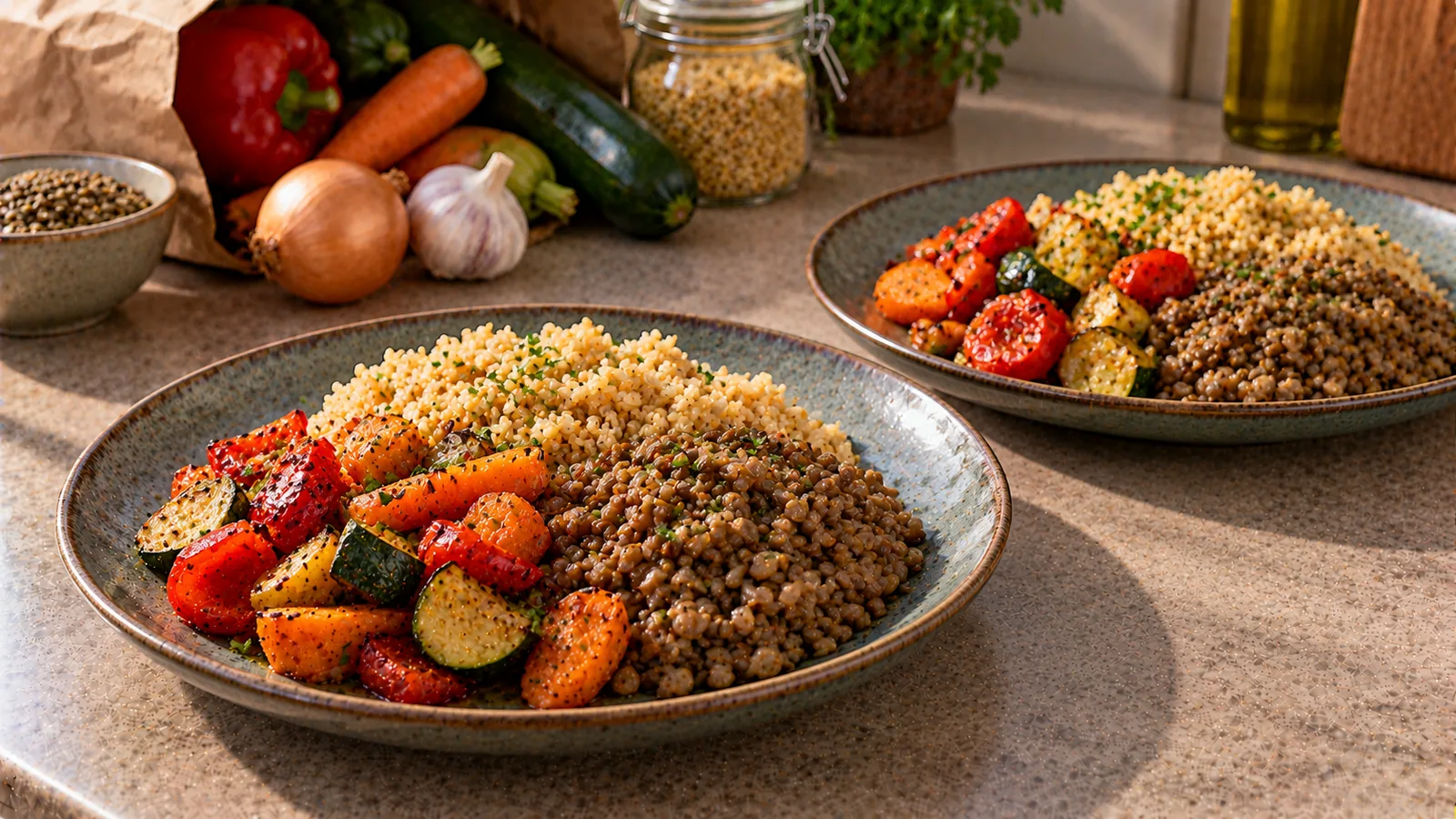
Five dinners for two adults, one consolidated shopping list and no assumption that a budget meal means a tiny plate: this is a practical five-day dinner plan using lentils, chickpeas, eggs, beans and tofu. The example grocery basket costs €23.15 at checkout in a deliberately illustrative German budget, while the ingredients consumed in the ten dinner portions cost about €15.28, or €1.53 per plate. The difference is not a discount: it is rice, oil, eggs and other food that remains available after day five.
These are example prices, not currently verified prices from a German supermarket. Change the numbers to match your receipts, the size of the package and what is already in your cupboard. The plan includes dinner only; it does not claim to meet anybody's whole-day calorie, protein or micronutrient needs. The meals are meat-free and use eggs, plain dairy and soy; substitutions are discussed below.
The five-day dinner schedule for two
Every recipe yields two dinner portions, not two days of prepared leftovers. We use dry weights for rice, couscous, pasta and lentils; drained edible weights for canned chickpeas and white beans; and the listed frozen weight for vegetables. The oil quantity is in millilitres, not grams. Salt, pepper, paprika, garlic powder and water are treated as existing pantry basics and are not included in the price calculation.
| Dinner | Servings | Cost of ingredients used for two |
|---|---|---|
| 1. Tomato lentil rice | 2 | 2.56 € |
| 2. Chickpea couscous | 2 | 2.67 € |
| 3. Egg and potato skillet | 2 | 3.89 € |
| 4. White-bean tomato pasta | 2 | 2.80 € |
| 5. Tofu vegetable rice | 2 | 3.36 € |
| Total, food used | 10 | 15.28 € |
The daily costs are derived from the ingredient allocations below, rather than guessed from the name of the dish. This lets you change just one price when you shop somewhere else. Spend a few minutes checking pantry staples before buying: the German consumer advice on shopping with a list recommends planning quantities and looking at what is already on hand.
Consolidated grocery basket and the checkout bill
The basket assumes one pack of each item below, except for the two tomato tins. One 400 g can of chickpeas or beans is assumed to provide approximately 240 g drained. Check the drained-weight declaration: brands vary, and if yours has less, adjust the recipe or buy enough. Frozen vegetables are assumed unseasoned; tofu is plain and eggs are counted individually.
| Ingredient | Pack bought | Illustrative checkout price |
|---|---|---|
| Dry red lentils | 500 g | 1.81 € |
| Dry rice | 500 g | 1.29 € |
| Dry couscous | 500 g | 1.29 € |
| Dry pasta | 500 g | 0.89 € |
| Canned chickpeas (drained) | 1 × 400 g (240 g) | 0.79 € |
| Canned white beans (drained) | 1 × 400 g (240 g) | 0.89 € |
| Chopped canned tomatoes | 2 × 400 g | 1.58 € |
| Eggs | 6 eggs | 2.19 € |
| Firm tofu | 200 g | 1.69 € |
| Potatoes | 1000 g | 1.69 € |
| Carrots | 1000 g | 0.99 € |
| Onions | 1000 g | 1.29 € |
| Frozen spinach | 750 g frozen | 1.59 € |
| Frozen mixed vegetables | 750 g frozen | 1.69 € |
| Plain yogurt | 500 g | 0.99 € |
| Cooking oil | 500 ml | 2.49 € |
| Checkout total | 16 items | 23.15 € |
The €23.15 checkout total includes buying a full 500 ml oil bottle even though the five dinners use just 75 ml. The €15.28 food-used figure values only the portion consumed from each package at the assumed unit price. For example, 160 g of dry lentils at €1.81 per 500 g costs €0.58 after rounding; the full €1.81 still has to be paid if you have no lentils at home. Similarly, 270 g of the 500 g rice bag costs roughly €0.70 in the recipe allocation. This is why an average ingredient cost of €1.53 per plate is not an upfront cash budget of €15.30.
For real shopping, choose plain store-brand staples, compare the price per kilogram and check whether another pack size is available. The German consumer centre's meal-planning guidance supports a weekly menu and shopping list as tools for reducing unnecessary purchases. The figures above are a reproducible cost exercise, not price quotes from that institution.
Dinner 1 — tomato lentils with rice and spinach
For two: 160 g dry red lentils, 120 g dry rice, 400 g canned chopped tomatoes, 200 g frozen spinach, 140 g onion, 200 g carrot, 15 ml oil, water and pantry spices. Allocated cost: €2.56 for two. Allow about 30–40 minutes, depending on the rice variety.
- Rinse the rice if the package instructs; cook it in fresh water using the package's water ratio and timing. Cook only what you will serve tonight.
- Chop the onion and carrot into small pieces. Heat the oil, soften the vegetables for around 5 minutes, then add the rinsed red lentils, tomatoes and enough water to simmer without sticking.
- Simmer until the lentils are tender, usually around 15–20 minutes for split red lentils, adding more water as needed. Stir in the frozen spinach and heat it completely through. Taste and season.
- Divide the rice and tomato-lentil mixture evenly between two plates. Each receives half of the ingredient amounts given here, not half the whole purchased pack of rice or lentils.
The lentils provide a protein-rich legume component, while vegetables and rice contribute volume and variety. A little lemon juice could brighten the sauce, but lemon is not in the base basket and would raise your actual bill unless already available. If using brown rice, start it sooner. Lentil cooking time depends on the brand and whether they are split.
Dinner 2 — chickpea couscous bowls with yogurt
For two: 240 g drained chickpeas, 140 g dry couscous, 300 g frozen mixed vegetables, 250 g carrot, 100 g onion, 200 g plain yogurt and 15 ml oil. Allocated cost: €2.67 for two. Budget around 25–35 minutes.
- Drain and rinse the chickpeas. Dice the carrots and onion. Heat the oil in a large pan; cook the fresh vegetables first, then add the frozen mix and chickpeas and continue until the vegetables are fully hot and tender.
- Prepare the 140 g of dry couscous with the amount of boiling water and standing time specified on its pack; loosen with a fork.
- Divide the warm couscous and chickpea-vegetable mixture into two bowls. Spoon 100 g yogurt per plate over the food or serve it cold on the side. Pantry pepper or paprika works without a purchased sauce.
A drained can is not the same as a 400 g edible serving: counting all of the water in the tin as chickpeas overstates the meal. If the mixed-vegetable bag includes sauce, its ingredients and price may differ from our plain-bag assumption. Plain yogurt can be replaced by a suitably priced, unsweetened soy alternative, but then the cost and allergen profile need updating.
Dinner 3 — potato, egg and spinach skillet
For two: 700 g potatoes, four eggs, 300 g frozen spinach, 150 g onion, 150 g carrot, 100 g yogurt and 15 ml oil. Allocated cost: €3.89 for two. Allow approximately 35–45 minutes.
- Wash the potatoes; cut into bite-sized cubes and simmer until nearly tender. Drain well to avoid splattering in the pan. Keep edible skins if you like them.
- While the potatoes cook, dice the onion and carrot. Soften them in the measured oil, then stir in the potatoes and let the edges colour slightly.
- Cook the spinach until heated fully through and excess moisture has reduced. Make four gaps in the skillet, add the four eggs and cook until the whites and yolks are set to your preferred safe standard; cover the pan as necessary. Fully cooked eggs are the cautious option, especially for higher-risk diners.
- Share the skillet into two equal portions: two eggs per person. Serve with 50 g yogurt each rather than a separately purchased cheese sauce.
If you need a smaller meal, reduce the potato serving and keep the unused potato for a different day; the meal cost would change. Egg size affects nutrition and the actual recipe weight. This isn't an instruction to treat four eggs as universally ideal for all adults; it is a clearly defined dinner recipe.
Dinner 4 — white-bean tomato pasta with spinach
For two: 180 g dry pasta, 240 g drained canned white beans, 400 g canned tomatoes, 250 g frozen spinach, 150 g onion and 15 ml oil. Allocated cost: €2.80 for two. Plan for 20–30 minutes.
- Boil 180 g of dry pasta as directed and save a small mug of its cooking water. Do not mistake the finished cooked pasta weight for the 180 g used in the basket calculation.
- In another pan, soften the chopped onion in oil. Add tomatoes, then the rinsed drained beans and frozen spinach. Cook until bubbling and fully heated through.
- Loosen with a little reserved pasta water, combine with pasta and divide equally. Extra cheese, pesto or cream can work, but none is included in the €2.80 figure.
White beans offer a low-effort alternative to a meat sauce. If buying beans in a seasoned tomato sauce, your drained weight, sugar, salt and ingredient costs will not match this recipe. A whole-wheat pasta can provide more fibre when its price fits the budget; it is not necessary for the arithmetic to work.
Dinner 5 — tofu and vegetable rice
For two: 200 g plain firm tofu, 150 g dry rice, 450 g frozen mixed vegetables, 150 g onion and 15 ml oil. Allocated cost: €3.36 for two. Allow around 30–40 minutes.
- Cook a fresh 150 g dry-rice batch according to the pack. Do not rely on a large cooked-rice batch left unrefrigerated from earlier in the week.
- Drain and pat the tofu dry. Cut it into small cubes. Heat the oil, brown the tofu, then add the sliced onion and frozen vegetables. Cook until the vegetables are tender and the tofu is hot throughout.
- Fold in the freshly cooked rice, stir thoroughly and season with pantry garlic, pepper or paprika. If you use soy sauce, chilli sauce or extra oil, add their price and sodium or energy separately; they are not in the quoted basket.
- Split the whole pan into two equal servings. This finishes the two frozen-vegetable bags across the week without requiring five new fresh produce purchases.
Firm tofu contributes soy protein, but protein content differs greatly between brands. If you avoid soy, a replacement needs its own cost and recipe calculation. This is a separate dish from the first night's tomato-lentil rice despite both containing rice.
How the €15.28 of used food differs from €23.15 spent
The used-food arithmetic is based on quantity used ÷ purchased usable quantity × assumed pack price, applied to every ingredient. For chickpeas and white beans the usable quantity is the drained 240 g, not the total can mass. For oil it is 75 ml out of 500 ml. Each night's two-portion cost is rounded only at display, and the unrounded allocation totals approximately €15.28 for ten plates.
The remaining groceries are real food you have already paid for. They should not be described as a refund, and the cost of the next meal using them is not literally zero. It is simply possible to reuse them without purchasing another full package immediately.
| Left after the five dinners | Remaining in bought packs | Use later |
|---|---|---|
| Dry red lentils | 340 g | Soup or dal |
| Dry rice | 230 g | Other rice meals |
| Dry couscous | 360 g | Another grain bowl |
| Dry pasta | 320 g | Next pasta meal |
| Eggs | 2 eggs | Breakfast or omelet |
| Potatoes | 300 g | Soup or baked potato |
| Carrots | 400 g | Salad or soup |
| Onions | 310 g | Soup or stir-fry |
| Plain yogurt | 200 g | Breakfast or dip |
| Cooking oil | 425 ml | Future cooking |
The unused two eggs and yogurt need to be stored according to their packaging. Do not assume all opened dairy remains fresh for a week; check the date and keep it refrigerated. Dry items should remain sealed and dry, while onions and potatoes are best kept according to local storage guidance. Freezer bags are finished in the five dinners, so there is no invented frozen leftover.
Is this a healthy five-day dinner plan?
It is a workable dinner-only framework built around vegetables, legumes, different starches, some dairy, eggs and soy. It provides more variety than eating the same cheap pasta sauce for all five nights. However, recipe weights alone cannot prove that each person meets calorie, protein, iron or other requirements over a whole day. These depend on product labels, portion size and the rest of the diet.
The NHS Eatwell recommendations encourage a variety of vegetables and fruit, higher-fibre starchy foods where practical, and sources of protein such as beans and pulses, alongside other food groups. This plan can sit within that pattern, but it is not presented as a medical weight-loss diet, a certified nutrient-complete menu or a guaranteed low-salt programme. Drained canned foods may still contain added salt; compare labels and rinse where appropriate.
If one person needs more energy, portion the rice or pasta differently, or serve an affordable side. For different eating needs between adults, see Mealisa's guide to planning meals for two. The important point is to revise the weighed portions and therefore the price rather than calling an unchanged recipe suitable for everyone.
Prep, storage and the weeknight sequence
Buying ingredients once does not mean cooking everything on Sunday. A realistic schedule is to batch the shopping and chopping but make the two portions of each dinner near serving time. Set aside the daily dry rice or pasta quantities in marked containers, keep sealed canned food unopened until needed, and take only the required frozen vegetables from the freezer. On day one you can chop onion and carrot for a short initial period if safely refrigerated; freezing portions is another option.
Perishable leftovers should be refrigerated promptly. USDA FSIS guidance says refrigerate within two hours (within one hour if the room is hotter than 32 °C), and use most properly refrigerated leftovers within three to four days. A cautious UK government food-safety guide advises cooling cooked rice quickly, ideally within one hour, and keeping it refrigerated for no more than one day; see rice and leftovers advice. For simplicity, this menu cooks the rice fresh on nights one and five. Never leave cooked rice sitting at room temperature until the next night.
When shopping and cooking schedules change, adjust the order instead of letting opened food spoil. For the broader method rather than fixed recipes, read how to plan dinners for the week and how to meal plan on a budget. For ingredient rotation and food waste, see reducing waste through meal planning.
Adapt the plan to a real grocery receipt
Before leaving for the shop, cross off anything already stocked. Then replace each hypothetical basket price with the actual amount on the shelf. Do not compare a 240 g drained can with a 500 g dry-bean pack without accounting for soaking and cooked yield; they are not the same usable weight. If your supermarket sells only a 1 kg bag of rice, the checkout figure increases even though 270 g remains the amount used in these dinners.
A few small substitutions have predictable effects. Use a less expensive frozen vegetable mix in the same weight if the ingredients are comparable. Switch white rice to brown rice if you want and can pay the difference, allowing for cooking time. Replace plain yogurt with a compatible plant alternative if needed. Avoid declaring a swap cheaper until you have compared prices per usable gram.
This exact plan has five different dinners, two servings per dinner and one auditable shopping basket. It solves the practical question of what to cook and buy for two people over five evenings; unlike a general article about budgeting or portion planning, every ingredient is assigned to a recipe and every euro in the model can be recalculated. Check food labels and your local prices before using the example totals as a personal budget.