
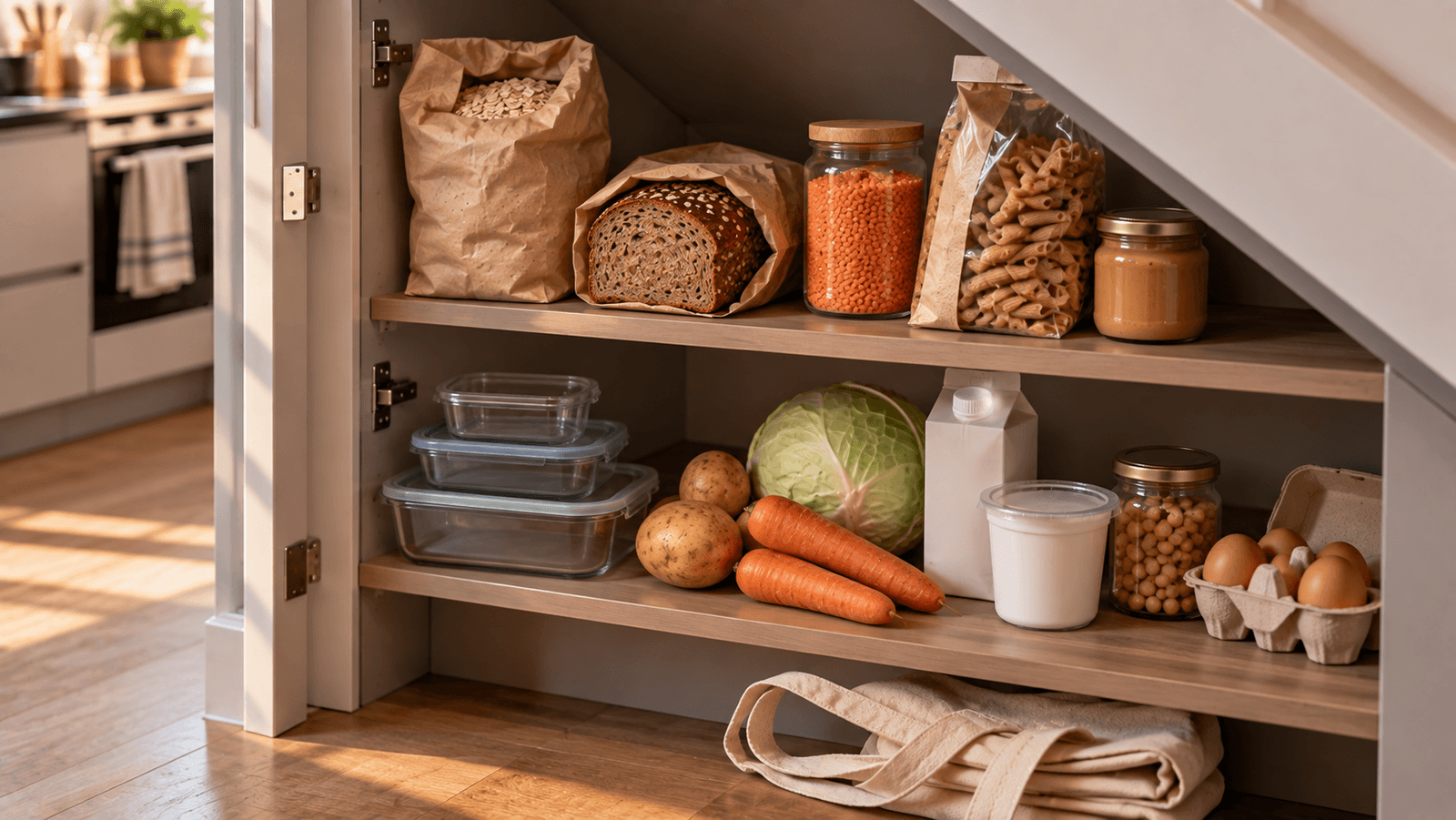
Use the calculator below to estimate how much you can spend on food each week and month.
<div id="food-budget-calculator" data-mealisa-tool="food-budget-calculator"></div>
What the food budget calculator can show
A useful food budget is easier to understand when it is broken into smaller numbers.
The calculator is designed to help you estimate:
- weekly food budget
- monthly food budget
- grocery spending
- eating-out spending
- budget per person
- approximate budget per meal
- remaining budget after fixed food costs
These numbers are planning estimates rather than rules for how much you should spend.
Weekly vs monthly food budget
If you normally think about food spending monthly, converting it into a weekly amount can make day-to-day planning easier.
A simple average conversion is:
Weekly budget = monthly food budget × 12 ÷ 52
For example, a monthly food budget of €600 corresponds to an average of about €138 per week.
Using four weeks per month would give €150, but months are longer than exactly four weeks on average.
That is why annualizing the amount and dividing by 52 gives a more useful average weekly figure.
To convert in the opposite direction:
Monthly budget = weekly food budget × 52 ÷ 12
A €120 weekly budget is approximately €520 per average month.
Include more than groceries
A food budget can become misleading if grocery spending is tracked while other food purchases are ignored.
Depending on your goal, include:
- supermarket purchases
- bakery purchases
- takeaway
- restaurant meals
- work or school lunches
- food delivery
- coffee and snacks bought outside the home
You can also keep groceries and eating out as separate categories.
That makes it easier to see where changes are actually occurring.
Example: household food budget
Suppose a two-person household plans:
- €110 per week for groceries
- €30 per week for eating out
Total weekly food budget:
€110 + €30 = €140
Average per person:
€140 ÷ 2 = €70 per person per week
Approximate monthly total:
€140 × 52 ÷ 12 ≈ €607
This does not mean each person must spend exactly €70.
It is simply another way to understand the household total.
Estimate a budget per meal
You can also translate a food budget into an approximate amount per meal.
Suppose:
- household size: 2 people
- 3 meals per person per day
- 7 days
- weekly food budget: €140
Number of person-meals:
2 × 3 × 7 = 42
Average available budget:
€140 ÷ 42 ≈ €3.33 per person-meal
This is only an average.
Breakfast may cost much less, while dinner may cost more.
Snacks, drinks and food waste can also change the real amount.
Use the number as a planning reference rather than a target for every individual meal.
Grocery budget and total food budget are not the same
These two numbers answer different questions.
Grocery budget
How much do you plan to spend on food bought for home?
Total food budget
How much do you plan to spend on all food, including groceries and food purchased outside the home?
If your goal is to control overall food spending, the second number is usually more informative.
If your goal is specifically to plan supermarket shopping, the grocery budget may be the more useful number.
Start with actual spending when possible
If you do not know what budget to enter, look at recent real spending.
For example, review the last four to eight weeks and separate:
- groceries
- restaurants
- takeaway
- delivery
- coffee/snacks outside the home
Then calculate an average.
This gives you a baseline based on your current behavior.
From there, you can decide whether the goal is to:
- maintain spending
- reduce it gradually
- allow more room for food
- move money from eating out to groceries
- reduce food waste without reducing meal quality
A budget based on real spending is often more practical than choosing an arbitrary number.
Account for irregular shopping weeks
Food spending rarely looks identical every week.
One week may include:
- olive oil
- rice
- spices
- frozen foods
- coffee
- other long-lasting staples
The next week may be much cheaper because those products are already available.
Do not judge the entire budget from one unusually expensive grocery trip.
A rolling four-week average can give a clearer picture.
Example of a four-week average
Suppose grocery spending was:
| Week | Grocery spending |
|---|---|
| Week 1 | €128 |
| Week 2 | €94 |
| Week 3 | €111 |
| Week 4 | €107 |
Total:
€440
Average weekly grocery spending:
€440 ÷ 4 = €110
That €110 figure is usually more useful for planning than assuming the €128 week represents every week.
Household size matters, but not perfectly
A four-person household will normally need a larger total food budget than a one-person household.
But costs do not always increase in a perfectly linear way.
Larger households may be able to:
- use larger package sizes
- divide bulk ingredients efficiently
- cook larger batches
- share staple products
At the same time, age, preferences, dietary requirements and how often people eat at home can significantly change spending.
Use household size as one planning input rather than as a universal spending rule.
Meals eaten at home matter
Two households of the same size may need very different grocery budgets.
For example:
Household A
Most breakfasts, lunches and dinners are prepared at home.
Household B
Lunch is usually bought at work or school and several dinners are eaten out.
Household B may have a lower supermarket bill but a higher total food bill.
That is why grocery spending alone does not always describe food costs accurately.
Separate fixed and flexible food spending
Some food expenses are relatively predictable.
For example:
- weekly grocery shop
- school lunch plan
- regular meal delivery
Others are more flexible:
- restaurant visits
- takeaway
- convenience snacks
- spontaneous coffee purchases
Separating these categories helps identify which part of the budget can realistically change.
Budget for food waste
Food that is purchased but discarded still consumes part of the budget.
Common examples include:
- vegetables that spoil
- opened sauces that are never finished
- leftovers that are forgotten
- oversized packages bought only because the unit price looked lower
A cheaper unit price does not save money if the unused portion is thrown away.
When comparing packages, consider both price and the amount you realistically expect to use.
Use cost per meal for recipe decisions
The weekly food budget tells you how much money is available overall.
Cost per meal answers a different question: how expensive a specific meal is.
For example, if a recipe costs €12 to make and produces four realistic portions:
€12 ÷ 4 = €3 per portion
This can help compare meals inside the same weekly budget.
Use the Meal Cost Calculator when you want to calculate the cost of a particular recipe or meal.
A simple weekly budget workflow
1. Choose your total food budget
Start with recent spending or the amount available for food.
2. Reserve planned eating-out money
If you expect one restaurant meal or takeaway, include it before allocating the grocery budget.
3. Calculate the grocery amount
For example:
Total weekly food budget: €150
Planned eating out: €35
Grocery budget = €150 − €35 = €115
4. Plan meals around the grocery amount
Prioritize ingredients that can appear in several meals.
5. Track actual spending
Compare the real total with the planned total.
6. Adjust the next week
If you spent more, identify why.
If you spent less, check whether it was genuine saving or simply because you used food purchased in an earlier week.
Do not reduce every category equally
If you want to lower food spending, first identify where the money is going.
A €20 reduction could come from very different changes:
- one fewer takeaway
- fewer unused groceries
- switching one frequently purchased product
- using existing pantry food
- planning one more dinner at home
This is more useful than trying to make every meal as cheap as possible.
Food budget example for one person
Suppose one person sets a weekly food budget of €85.
They expect:
- groceries: €65
- eating out and coffee: €20
Average monthly food budget:
€85 × 52 ÷ 12 ≈ €368
If they prepare 18 meals at home that week, dividing the grocery budget by 18 gives:
€65 ÷ 18 ≈ €3.61
That does not mean every home meal costs €3.61.
Some ingredients may last into future weeks, while pantry items bought earlier may be used this week.
It is simply a rough planning metric.
Food budget example for a family
Suppose a four-person household plans:
- €180 groceries
- €40 food outside the home
Weekly total:
€220
Average per person per week:
€220 ÷ 4 = €55
Approximate monthly total:
€220 × 52 ÷ 12 ≈ €953
Again, the per-person number is descriptive.
It does not imply that every household member consumes an equal share of the budget.
Review the budget over time
A food budget becomes more useful after several weeks of real data.
Track:
- planned spending
- actual grocery spending
- actual eating-out spending
- unusual purchases
- food that carried into the next week
Then compare trends rather than isolated shopping trips.
A realistic budget should adapt to actual prices and habits.