
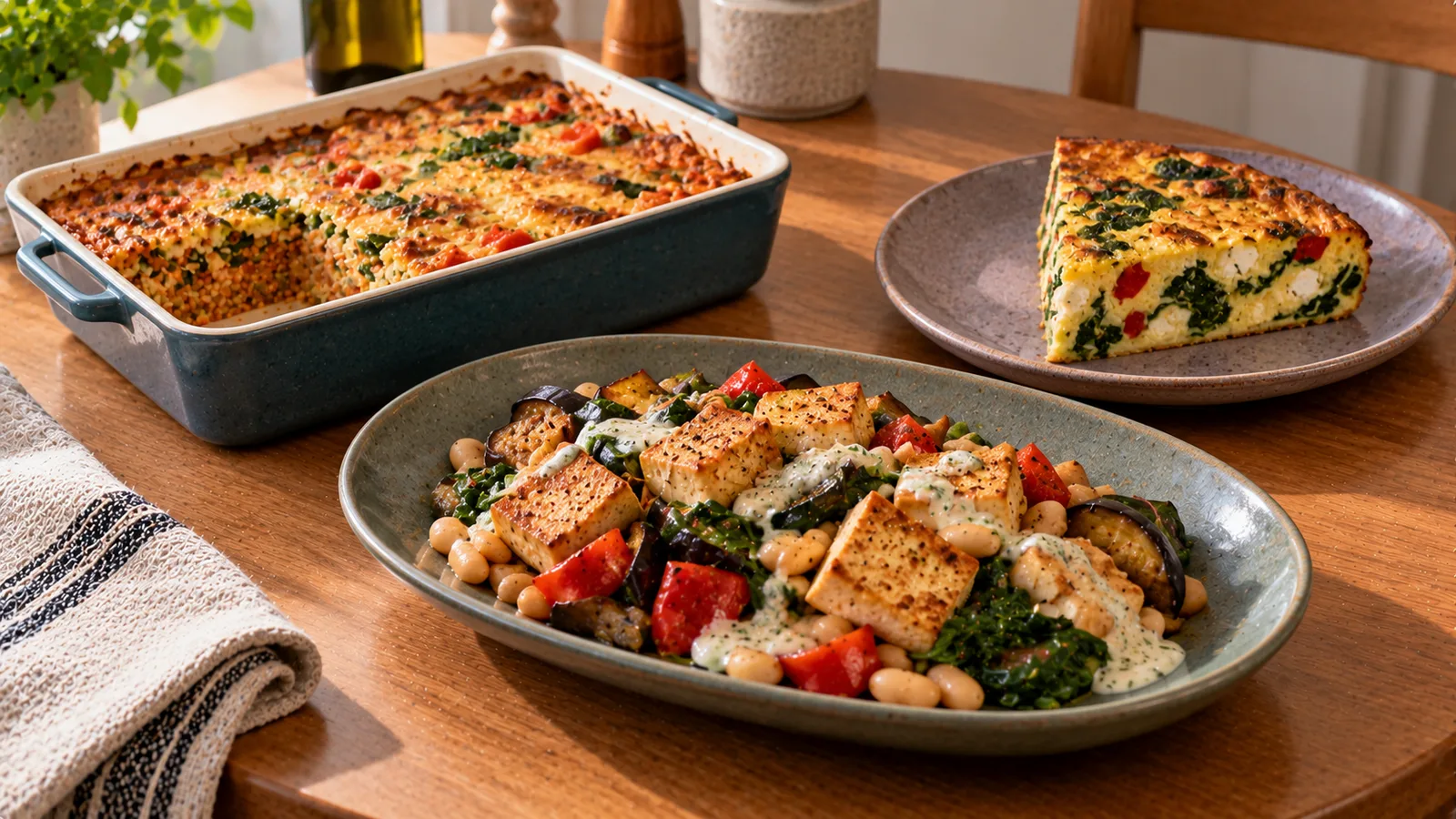
Getting more protein from a vegetarian diet does not require every meal to revolve around protein powder or highly processed meat substitutes.
Eggs, dairy foods, tofu, tempeh, lentils, beans, chickpeas and combinations of grains and legumes can all help build substantial meals.
Below are 15 practical vegetarian high-protein recipes. Nutrition values are approximate because brands, ingredient sizes and cooking methods vary.
1. Lentil and Cottage Cheese Bowl
A simple combination of lentils, vegetables and cottage cheese creates a filling meal with little preparation.
Ingredients — 1 serving
- 180 g cooked lentils
- 150 g cottage cheese
- 100 g cherry tomatoes
- 100 g cucumber
- 30 g red onion
- 1 tsp olive oil
- lemon juice
- parsley
- black pepper
Method
- Drain the cooked lentils well.
- Chop the tomatoes, cucumber and onion.
- Combine the lentils and vegetables in a bowl.
- Add cottage cheese.
- Finish with olive oil, lemon juice, parsley and pepper.
Approximate nutrition: 500 kcal and 39 g protein.
2. Tofu and Vegetable Stir-Fry
Firm tofu works well in a quick vegetable stir-fry because it provides a substantial protein base without requiring a complicated recipe.
Ingredients — 1 serving
- 200 g firm tofu
- 150 g broccoli
- 100 g red pepper
- 100 g mushrooms
- 120 g cooked rice
- 1 tsp oil
- 1 tbsp soy sauce
- garlic
- ginger
Method
- Press excess moisture from the tofu and cut it into cubes.
- Heat the oil in a pan and brown the tofu.
- Add broccoli, pepper and mushrooms.
- Cook until the vegetables are tender but still have some texture.
- Add garlic, ginger and soy sauce.
- Serve with rice.
Approximate nutrition: 520 kcal and 34 g protein.
3. Skyr Oat Breakfast Bowl
Skyr makes it possible to build a high-protein breakfast without relying on a large number of ingredients.
Ingredients — 1 serving
- 300 g plain skyr
- 50 g oats
- 100 g berries
- 15 g chia seeds
- 15 g walnuts
- cinnamon
Method
- Add the skyr to a bowl.
- Stir in the oats and chia seeds.
- Top with berries and walnuts.
- Add cinnamon to taste.
Approximate nutrition: 510 kcal and 40 g protein.
4. Chickpea and Egg Shakshuka
Adding chickpeas to an egg-based tomato dish increases both the protein and fiber content.
Ingredients — 1 serving
- 3 eggs
- 120 g cooked chickpeas
- 250 g canned chopped tomatoes
- 100 g red pepper
- 60 g onion
- 1 tsp olive oil
- garlic
- paprika
- cumin
- parsley
Method
- Heat the oil and soften the onion and pepper.
- Add garlic, paprika and cumin.
- Add tomatoes and chickpeas and simmer for about 8 minutes.
- Make three small wells in the sauce and crack in the eggs.
- Cover and cook until the eggs reach your preferred consistency.
- Finish with parsley.
Approximate nutrition: 560 kcal and 32 g protein.
5. Red Lentil Pasta With Spinach and Ricotta
Legume-based pasta can substantially increase the protein content of a familiar pasta meal.
Ingredients — 1 serving
- 100 g dry red lentil pasta
- 120 g ricotta
- 100 g spinach
- 150 g passata
- 10 g Parmesan
- garlic
- black pepper
Method
- Cook the lentil pasta according to the package instructions.
- Warm the passata in a pan with garlic.
- Add spinach and cook until wilted.
- Stir in the ricotta.
- Add the drained pasta and mix.
- Finish with Parmesan and pepper.
Approximate nutrition: 620 kcal and 42 g protein.
6. Tempeh Peanut Noodle Bowl
Tempeh provides a firm texture and substantial protein while vegetables and noodles make the dish a complete meal.
Ingredients — 1 serving
- 150 g tempeh
- 70 g dry whole-grain noodles
- 100 g carrots
- 100 g cabbage
- 15 g peanut butter
- 1 tbsp soy sauce
- lime juice
- garlic
- chili to taste
Method
- Slice the tempeh and brown it in a non-stick pan.
- Cook the noodles.
- Thinly slice the carrots and cabbage.
- Mix peanut butter, soy sauce, lime juice, garlic and a little water into a sauce.
- Combine the noodles, vegetables and tempeh.
- Add the sauce and mix well.
Approximate nutrition: 650 kcal and 38 g protein.
7. Black Bean and Egg Breakfast Wrap
Beans and eggs make a straightforward filling for a high-protein vegetarian wrap.
Ingredients — 1 serving
- 2 eggs
- 150 g cooked black beans
- 1 large whole-grain tortilla
- 50 g Greek yogurt
- 50 g tomato
- 30 g grated cheese
- spinach
- chili or salsa to taste
Method
- Scramble the eggs in a pan.
- Warm the black beans.
- Place the eggs and beans in the tortilla.
- Add tomato, spinach and cheese.
- Add Greek yogurt and salsa.
- Fold and serve.
Approximate nutrition: 650 kcal and 39 g protein.
8. Cottage Cheese and Spinach Baked Potatoes
A baked potato becomes a more protein-focused meal when paired with cottage cheese rather than being treated only as a side dish.
Ingredients — 1 serving
- 350 g potato
- 200 g cottage cheese
- 100 g spinach
- 50 g Greek yogurt
- 10 g pumpkin seeds
- spring onion
- black pepper
Method
- Bake the potato until soft.
- Wilt the spinach in a pan.
- Cut open the potato.
- Fill it with spinach and cottage cheese.
- Add Greek yogurt, pumpkin seeds and spring onion.
- Season with pepper.
Approximate nutrition: 560 kcal and 40 g protein.
9. Lentil Bolognese With Whole-Wheat Spaghetti
Lentils can replace the usual meat component in a simple tomato-based pasta sauce.
Ingredients — 1 serving
- 80 g dry whole-wheat spaghetti
- 180 g cooked lentils
- 250 g passata
- 60 g onion
- 70 g carrot
- 50 g celery
- 15 g Parmesan
- 1 tsp olive oil
- garlic
- oregano
Method
- Finely chop the onion, carrot and celery.
- Cook them in olive oil until softened.
- Add garlic, lentils, passata and oregano.
- Simmer for 10–15 minutes.
- Cook the spaghetti separately.
- Serve the sauce over the pasta and add Parmesan.
Approximate nutrition: 650 kcal and 32 g protein.
10. Tofu Scramble With Beans and Potatoes
This savory meal combines tofu and beans with potatoes for a substantial breakfast, lunch or dinner.
Ingredients — 1 serving
- 200 g firm tofu
- 120 g cooked kidney beans
- 200 g potatoes
- 100 g tomatoes
- 50 g spinach
- 1 tsp oil
- turmeric
- paprika
- black pepper
Method
- Dice and cook the potatoes until browned and tender.
- Crumble the tofu into a pan.
- Add turmeric, paprika and pepper.
- Add beans, tomatoes and spinach.
- Cook until everything is hot and the spinach has wilted.
- Serve with the potatoes.
Approximate nutrition: 580 kcal and 36 g protein.
11. Greek Yogurt Chickpea Salad
A yogurt-based dressing adds extra protein while keeping the salad creamy without requiring mayonnaise.
Ingredients — 1 serving
- 200 g cooked chickpeas
- 200 g Greek yogurt
- 100 g cucumber
- 100 g tomatoes
- 30 g red onion
- 20 g pumpkin seeds
- lemon juice
- dill
- black pepper
Method
- Drain the chickpeas.
- Chop the vegetables.
- Mix the yogurt with lemon juice, dill and pepper.
- Combine everything in a bowl.
- Sprinkle with pumpkin seeds.
Approximate nutrition: 600 kcal and 37 g protein.
12. High-Protein Vegetable Frittata
Eggs, cottage cheese and vegetables create a simple frittata suitable for breakfast, lunch or dinner.
Ingredients — 1 serving
- 3 eggs
- 150 g cottage cheese
- 100 g mushrooms
- 100 g red pepper
- 80 g spinach
- 10 g Parmesan
- 1 tsp olive oil
- black pepper
Method
- Heat the oven to 190°C.
- Cook the mushrooms and pepper briefly in an oven-safe pan.
- Add the spinach and let it wilt.
- Beat the eggs with cottage cheese and pepper.
- Pour over the vegetables.
- Sprinkle with Parmesan.
- Bake until the center is set.
Approximate nutrition: 500 kcal and 45 g protein.
13. White Bean and Halloumi Grain Bowl
Beans and halloumi provide two different protein sources in this simple grain bowl.
Ingredients — 1 serving
- 150 g cooked white beans
- 80 g halloumi
- 120 g cooked bulgur
- 100 g tomatoes
- 100 g cucumber
- mixed greens
- lemon juice
- herbs
Method
- Slice and brown the halloumi in a pan.
- Drain the beans.
- Add bulgur, beans and vegetables to a bowl.
- Top with halloumi.
- Finish with lemon juice and herbs.
Approximate nutrition: 650 kcal and 35 g protein.
14. Edamame and Tofu Rice Bowl
Combining tofu and edamame produces a protein-rich plant-based meal without requiring unusual preparation.
Ingredients — 1 serving
- 150 g firm tofu
- 150 g shelled edamame
- 120 g cooked rice
- 100 g broccoli
- 70 g carrots
- 1 tbsp soy sauce
- 1 tsp sesame oil
- lime juice
Method
- Cube and brown the tofu.
- Cook or steam the edamame and broccoli.
- Add rice to a bowl.
- Top with tofu, edamame, broccoli and carrots.
- Add soy sauce, sesame oil and lime juice.
Approximate nutrition: 620 kcal and 39 g protein.
15. Quinoa, Lentil and Feta Bowl
Lentils provide most of the protein, while quinoa and feta add additional protein and make the meal more varied.
Ingredients — 1 serving
- 160 g cooked lentils
- 150 g cooked quinoa
- 80 g feta
- 100 g tomatoes
- 100 g cucumber
- 50 g spinach
- lemon juice
- parsley
- black pepper
Method
- Add quinoa and lentils to a bowl.
- Chop the vegetables and add them.
- Crumble feta over the top.
- Add lemon juice, parsley and pepper.
- Mix before serving.
Approximate nutrition: 650 kcal and 35 g protein.
How to build your own vegetarian high-protein meal
You do not need a specific recipe every time.
A practical structure is:
protein base + vegetables + carbohydrate source + flavor
For example:
| Protein base | Vegetables | Carbohydrate | Flavor |
|---|---|---|---|
| Tofu | Broccoli + pepper | Rice | Soy, ginger, lime |
| Lentils | Carrot + tomato | Pasta | Garlic, herbs |
| Eggs + cottage cheese | Spinach + mushrooms | Potatoes | Herbs, pepper |
| Chickpeas + yogurt | Cucumber + tomato | Bread | Lemon, dill |
| Tempeh | Cabbage + carrot | Noodles | Peanut, soy, chili |
This structure makes it easier to vary meals while keeping protein as an intentional part of the plan.
Protein amounts vary between products
The numbers in these recipes are estimates.
For example, protein can differ between:
- one tofu brand and another;
- low-fat and full-fat dairy products;
- different sizes of eggs;
- cooked and drained weights of legumes;
- types of pasta;
- different cheeses.
If you need a more precise nutrition estimate, use the labels from the products you actually cook with and the amount you actually eat.
Vegetarian does not automatically mean high-protein
A vegetarian meal can still contain relatively little protein.
For example, plain pasta with tomato sauce, a vegetable soup or a salad may be vegetarian without providing much protein.
If protein is a goal, include a deliberate source such as:
- legumes;
- tofu or tempeh;
- eggs;
- dairy foods;
- edamame;
- suitable meat alternatives.
The whole meal matters more than the vegetarian label alone.
Keep the overall diet varied
Protein is only one part of nutrition.
A useful vegetarian eating pattern also includes a variety of:
- vegetables;
- fruit;
- whole grains and other carbohydrate sources;
- legumes;
- nuts and seeds;
- appropriate fat sources;
- foods providing relevant vitamins and minerals.
Rather than trying to maximize protein in every food, build meals in which protein fits alongside the rest of the diet.