
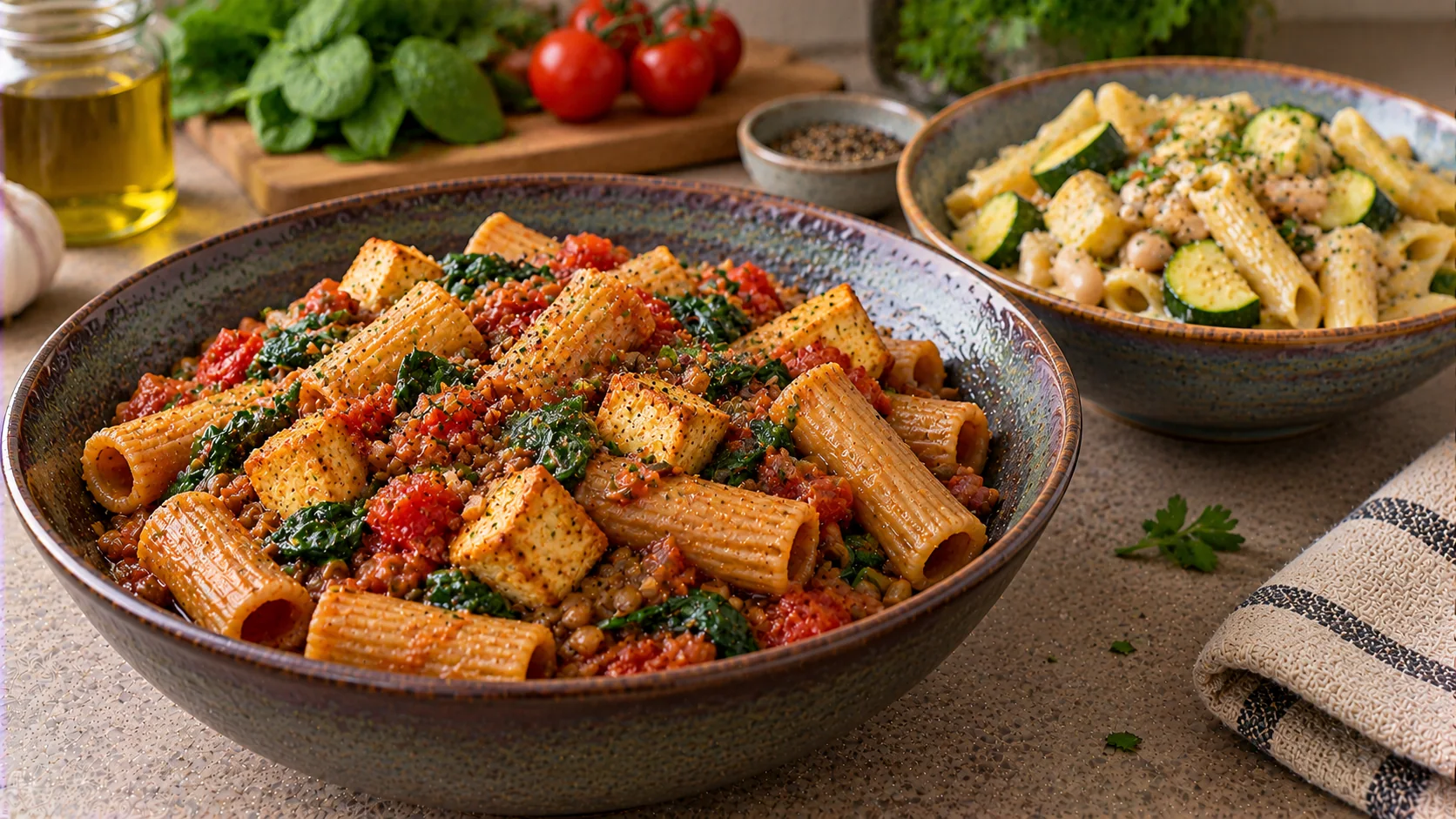
High-Protein Pasta Without Meat: Three Tested-Style Recipes
A meat-free pasta dinner can provide substantial protein without using protein powders or vague “high-protein” promises. These three one-serving recipes combine pasta with a distinct protein ingredient: lentil pasta and skyr, whole-wheat pasta and tofu, or ordinary pasta with chickpeas and cottage cheese. Every quantity is weighed before cooking unless otherwise stated. The calculations use illustrative label values, not verified values for a specific retailer product.
Compare the three finished portions
| Recipe | Protein | Preparation time |
|---|---|---|
| 1. Lentil pasta with spinach and lemon | ~31.4 g | 20–30 min |
| 2. Whole-wheat pasta with tofu and peas | ~32.3 g | 20–30 min |
| 3. Chickpea and cottage-cheese tomato pasta | ~31.3 g | 20–30 min |
Recipe 1: Lentil pasta with spinach and lemon
Ingredients (one serving)
70 g dry red-lentil pasta; 100 g plain skyr; 100 g spinach; 8 g olive oil; lemon zest and juice.
Cooking method
Cook pasta according to packet until tender. Reserve 30 ml cooking water and drain. Wilt spinach in a pan with oil for 2–3 minutes. Remove from the heat, stir skyr with lemon and reserved water, then fold in hot pasta. Warm gently without boiling the skyr.
Protein calculation
Red-lentil pasta 25 g/100 g dry, skyr 11 g/100 g, spinach 2.9 g/100 g: 17.5 + 11 + 2.9 = 31.4 g protein per portion. Actual brand values and water absorbed during cooking can change the nutrition per 100 g of the finished plate.
Recipe 2: Whole-wheat pasta with tofu and peas
Ingredients (one serving)
80 g dry whole-wheat pasta; 130 g firm tofu, drained; 100 g thawed peas; 100 g chopped tomatoes; 8 g olive oil; garlic and pepper.
Cooking method
Boil pasta to packet directions. Dice tofu and pat it dry; brown for 5–6 minutes in oil. Add tomatoes and peas, simmer 4 minutes until piping hot. Toss the cooked pasta through the sauce with a splash of cooking water. Check the tofu brand and use fully cooked peas.
Protein calculation
Whole-wheat pasta 13 g/100 g dry, tofu 12 g/100 g, peas 5.4 g/100 g, tomatoes 0.9 g/100 g: 10.4 + 15.6 + 5.4 + 0.9 = 32.3 g protein. Actual brand values and water absorbed during cooking can change the nutrition per 100 g of the finished plate.
Recipe 3: Chickpea and cottage-cheese tomato pasta
Ingredients (one serving)
75 g dry standard pasta; 140 g canned chickpeas, drained; 100 g cottage cheese; 150 g crushed tomatoes; 8 g olive oil; paprika and basil.
Cooking method
Boil pasta following pack instructions. Warm drained chickpeas and tomato with oil and spices for 6–8 minutes. Blend cottage cheese with 2 tablespoons of warm tomato sauce to make it smooth, stir into the pan off the heat, then fold through pasta. Serve at once; reheat leftovers thoroughly.
Protein calculation
Standard pasta 12 g/100 g dry, chickpeas 7 g/100 g drained, cottage cheese 11 g/100 g, tomatoes 1 g/100 g: 9 + 9.8 + 11 + 1.5 = 31.3 g protein. Actual brand values and water absorbed during cooking can change the nutrition per 100 g of the finished plate.
What “high protein” can and cannot mean
The estimated 31.4 g, 32.3 g and 31.3 g protein per serving are sums of ingredient label-style values. They are not measured laboratory results. The EU “high protein” nutrition claim has a separate legal definition based on the share of total energy provided by protein, not merely grams per plate. Without verified energy totals for the finished recipe, this article does not assert that any recipe legally qualifies for that claim. EFSA’s adult population reference intake of 0.83 g/kg body weight per day is a population reference, not a target every individual must apply uncritically. EFSA protein reference. EU nutrition claims rules.
How to estimate cost without misleading shelf-price comparisons
For each meal, calculate ingredient cost as grams used ÷ grams bought × package price. For example, if 500 g pasta costs €1.50, using 80 g costs €0.24; this is the used ingredient cost, not the checkout price. Add all ingredients, oil and toppings. Because product prices and branded protein vary, no single price or protein number should be described as universally guaranteed.
Storage, allergens and substitutions
Cool hot meals promptly in shallow containers and refrigerate within two hours. Use refrigerated leftovers within 3–4 days or freeze sooner; reheat to 74 °C / 165 °F throughout. Do not assume that pasta, tofu, cottage cheese or skyr retains ideal texture after freezing. Dairy is present in recipes 1 and 3, soy in recipe 2, wheat in recipes 2 and 3; check pasta packaging because red-lentil pasta can have cross-contact warnings. All substitutions change the nutritional calculation. USDA leftovers guidance.
Choosing pasta by label
Protein values are calculated on dry pasta and either drained or ready-to-eat accompaniments. Lentil pasta brands vary greatly: if yours lists 20 g rather than 25 g protein per 100 g, recipe 1 loses 3.5 g of protein. Choose unsweetened skyr, check tofu drained weight, and read cottage-cheese salt values. A dish labelled vegetarian may still contain animal rennet in optional cheese toppings.
Related practical guidance
Adjust portions to your appetite and compare the actual packaging you buy. For a broader look at affordable protein-and-fibre meals see budget-friendly protein combinations, and for a flour-based alternative to pasta see chickpea-flour savory pancake comparison.
Sources
- USDA FoodData Central — ingredient nutrition reference; check brand labels.
- EFSA: protein dietary reference values — adult population reference intake.
- Regulation (EC) No 1924/2006 — legal nutrition-claim framework.
- USDA FSIS: leftovers and food safety — cooling and reheating guidance.