
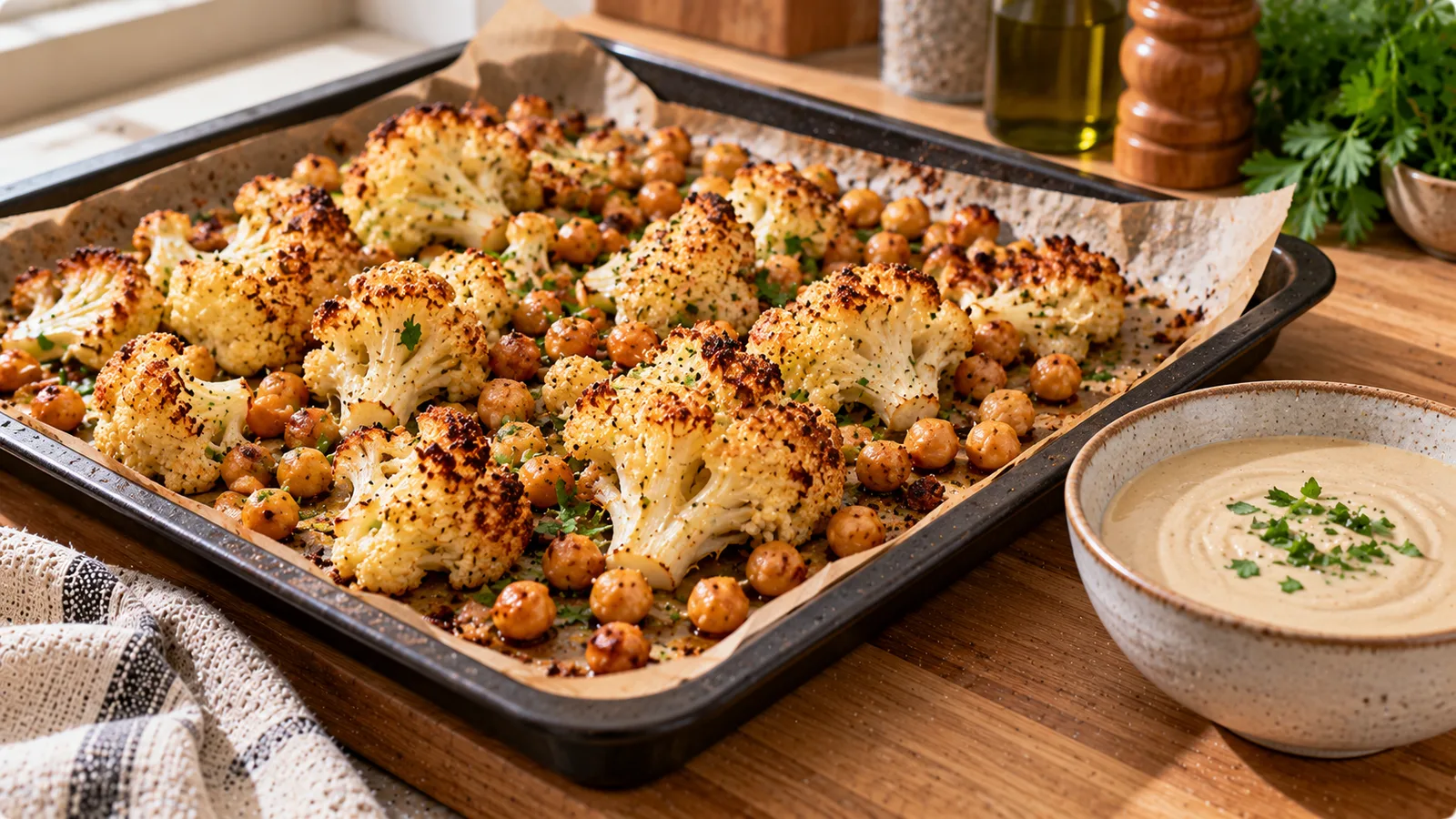
Roasted Cauliflower and Chickpeas With Tahini
Roasted cauliflower and chickpeas with tahini is an easy plant-based dish that combines caramelized vegetables, lightly crisp chickpeas and a creamy lemon sauce.
The cauliflower becomes tender inside with browned edges. The chickpeas add substance and a pleasant texture. Tahini, lemon and garlic bring everything together.
This recipe uses one large baking tray and everyday ingredients. It works as a light main course, a substantial side dish or the base of a grain bowl.
Recipe at a glance
| Detail | Amount |
|---|---|
| Preparation | 10 minutes |
| Roasting | 25–30 minutes |
| Total time | About 40 minutes |
| Servings | 4 |
| Oven temperature | 220°C conventional / 200°C fan |
| Difficulty | Easy |
| Dietary style | Vegan, with naturally gluten-free ingredients |
| Main allergens | Sesame from tahini |
The recipe makes four moderate servings. For a larger dinner, add cooked rice, quinoa, bread or another protein-rich component.
Ingredients for four servings
For the roasted vegetables
| Ingredient | Quantity |
|---|---|
| Cauliflower, trimmed | 800 g |
| Cooked chickpeas, drained | 480 g |
| Olive oil | 30 g |
| Smoked paprika | 2 tsp |
| Ground cumin | 1 tsp |
| Garlic powder | 1 tsp |
| Salt | To taste |
| Black pepper | To taste |
The chickpea weight refers to the drained, edible weight. Depending on the can, you may need approximately two standard cans.
For the lemon-tahini sauce
| Ingredient | Quantity |
|---|---|
| Tahini | 60 g |
| Lemon juice | 30 ml |
| Garlic, finely grated | 5 g |
| Water | 45–75 ml |
| Salt | To taste |
To finish
- Fresh parsley, approximately 15 g.
- Lemon wedges, optional.
- A little additional black pepper.
The water used to thin the sauce contributes no calories. Additional oil or extra tahini will change the nutrition estimate.
How to make roasted cauliflower and chickpeas
1. Preheat the oven
Heat the oven to 220°C conventional or 200°C fan.
Line a large baking tray with baking paper if desired.
Use a second tray if the ingredients cannot fit in a reasonably even layer.
Crowding causes vegetables to steam instead of brown.
2. Prepare the cauliflower
Remove the leaves and tough central core.
Cut the cauliflower into medium florets of similar size.
Very small florets can burn before larger pieces become tender.
Dry the florets after washing.
Excess water delays browning.
3. Dry the chickpeas
Drain and rinse the chickpeas.
Pat them dry with a clean kitchen towel or paper towel.
Removing surface moisture helps the chickpeas roast instead of steam.
You do not need to peel every chickpea.
Loose skins can be removed if convenient.
4. Season everything
Place the cauliflower and chickpeas in a large bowl.
Add olive oil, smoked paprika, cumin, garlic powder, salt and black pepper.
Toss until evenly coated.
Spread the mixture across the baking tray.
Keep the pieces in a single layer with some space between them.
5. Roast until golden
Roast for approximately 25–30 minutes.
Turn the vegetables after about 15 minutes.
The cauliflower should be tender when pierced with a fork and browned around the edges.
The chickpeas should look lightly golden and somewhat crisp.
Exact timing depends on the oven, floret size and moisture content.
If the cauliflower needs more time, continue roasting in short intervals.
6. Make the tahini sauce
While the vegetables roast, whisk together tahini, lemon juice, grated garlic and a pinch of salt.
Add water gradually.
Tahini may initially become very thick when mixed with lemon juice and water. This is normal.
Continue whisking and adding water until the sauce becomes smooth and pourable.
Taste and adjust the lemon or salt.
7. Assemble and serve
Transfer the roasted cauliflower and chickpeas to a serving dish.
Drizzle with the lemon-tahini sauce.
Finish with chopped parsley and lemon wedges.
Serve warm.
For the best texture, add the sauce immediately before eating rather than soaking the roasted ingredients in advance.
How to get cauliflower nicely browned
Browning makes a major difference to this dish.
Use high heat. A hot oven encourages caramelization at the edges.
Dry the cauliflower. Water on the surface slows browning.
Avoid overcrowding. Two trays are better than one overloaded tray.
Cut evenly. Similar-sized florets cook more consistently.
Use enough oil. A modest coating improves roasting, but extra oil also increases calories.
Turn once. This gives more surfaces a chance to brown.
A few dark brown spots are desirable. Burnt black edges are not.
How to make chickpeas crispier
Canned chickpeas are convenient, but they contain moisture.
To improve their texture:
- Drain them thoroughly.
- Rinse away the canning liquid.
- Dry them well.
- Spread them out instead of piling them together.
- Roast until the outside becomes lightly crisp.
Chickpeas roasted alongside cauliflower may remain softer than chickpeas roasted alone.
For extra crispness, place them on a separate tray and give them a few additional minutes if needed.
Watch closely near the end to avoid burning.
The chickpeas will soften as they cool or absorb sauce.
What does tahini add?
Tahini is a paste made from sesame seeds.
It provides a rich, nutty flavor and helps create a creamy sauce without dairy.
Because sesame seeds contain substantial fat, tahini is energy-dense.
That is not inherently a problem, but the quantity matters when estimating calories.
For this recipe, 60 g tahini across four servings contributes 15 g tahini per serving.
You can reduce the tahini to 40 g and use more water and lemon for a lighter sauce.
The sauce will be less rich.
Tahini contains sesame, which is a major allergen. Anyone with a sesame allergy should avoid it and choose an appropriate alternative.
Estimated nutrition per serving
These are approximate recipe estimates, not laboratory measurements.
They assume four servings and include the full quantity of cauliflower, drained chickpeas, olive oil, tahini and other ingredients.
| Nutrient | Approximate amount per serving |
|---|---|
| Calories | 350–410 kcal |
| Protein | 12–16 g |
| Fat | 17–21 g |
| Carbohydrate, including fiber in US-style definitions | 35–43 g |
| Fiber | 10–14 g |
Actual values depend on the chickpea product, tahini brand, trimming losses and serving size.
In EU nutrition labeling, carbohydrate and fiber are reported separately. US total-carbohydrate figures generally include fiber.
If you add rice, bread or extra sauce, calculate those ingredients separately.
Is this a high-protein meal?
Chickpeas and tahini provide plant protein, but this dish is not necessarily high-protein relative to its total calories.
For a higher-protein meal, serve it with tofu, tempeh or another suitable protein source.
You can also increase the chickpea portion, although that increases calories and carbohydrates too.
Ways to serve it
With quinoa
Serve the roasted mixture over cooked quinoa and finish with tahini sauce.
This creates a grain bowl with contrasting textures.
With brown rice
Brown rice makes the meal more substantial and is useful for preparing lunches ahead.
In a warm pita
Fill pita bread with cauliflower, chickpeas, chopped vegetables and tahini sauce.
Check the pita's ingredients if you need a gluten-free meal.
With a green salad
A salad of cucumber, tomatoes and leafy greens adds freshness.
Keep the dressing light if you are already using a generous amount of tahini sauce.
As a side dish
Serve smaller portions alongside grilled fish, chicken or a plant-based main course.
The base recipe itself remains vegan.
Recipe variations
Spicy cauliflower and chickpeas
Add chili flakes or cayenne pepper to the seasoning.
Start with a small quantity.
Mediterranean version
Use dried oregano and lemon zest instead of smoked paprika and cumin.
Finish with parsley.
Curry-spiced version
Replace the spice blend with mild curry powder and a little turmeric.
Use the same roasting method.
With sweet potatoes
Replace approximately 250 g cauliflower with 250 g diced sweet potato.
Cut the sweet potato into small pieces so it cooks in the same time.
The carbohydrate and calorie values will change.
With broccoli
Replace part of the cauliflower with broccoli florets.
Broccoli can brown quickly, so check the tray toward the end of cooking.
Can you use frozen cauliflower?
Yes, but the texture may differ.
Frozen cauliflower contains additional surface moisture and may release water during roasting.
For better results:
- Preheat the oven thoroughly.
- Spread frozen florets in a single layer.
- Avoid overcrowding.
- Roast until excess moisture evaporates.
- Add a little extra cooking time if needed.
You can roast cauliflower directly from frozen, but it may be softer and less evenly browned than fresh cauliflower.
Meal prep and storage
This recipe can be prepared ahead, although the texture is best immediately after roasting.
Cool cooked food promptly.
Transfer leftovers to shallow, food-safe containers and refrigerate within two hours of cooking, or within one hour when ambient temperatures exceed approximately 32°C.
Keep the refrigerator at approximately 4°C or below.
As a conservative general guideline, use refrigerated cooked leftovers within 3–4 days.
Store the tahini sauce separately in a covered container in the refrigerator.
The sauce may thicken during storage. Stir in a little water before serving.
Reheating
For better texture, reheat cauliflower and chickpeas on a baking tray or in an air fryer rather than simmering them in sauce.
Reheat leftovers thoroughly.
US food-safety guidance recommends heating many cooked leftovers to 74°C (165°F).
Add the tahini sauce after reheating.
Freezing
The roasted cauliflower and chickpeas can be frozen, but they may lose some crispness after thawing.
Freeze in suitable containers once safely cooled.
For best quality, aim to use within approximately 2–3 months.
Tahini sauce is generally better made fresh or stored separately in the refrigerator.
Common mistakes
Crowding the tray. The ingredients steam and remain pale.
Using wet chickpeas. Excess moisture makes crisping harder.
Cutting cauliflower unevenly. Small pieces burn while large ones remain firm.
Adding sauce before roasting. Tahini sauce is intended for serving, not for coating the vegetables in the oven.
Using too little water in the sauce. Tahini can become thick when first mixed with lemon juice. Add water gradually and keep whisking.
Forgetting sesame allergies. Tahini is made from sesame and is not suitable for someone with a sesame allergy.
Frequently asked questions
Can I use canned chickpeas?
Yes. Drain, rinse and dry them before roasting.
Do I need to cook canned chickpeas first?
No. Canned chickpeas are already cooked and can go directly into the oven after draining.
Is the recipe vegan?
Yes, provided the ingredients and any additional toppings are plant-based.
Is it gluten-free?
The listed ingredients are naturally gluten-free, but check spice blends, packaged ingredients and cross-contact if gluten avoidance is medically necessary.
Can I make the sauce without garlic?
Yes. Omit the garlic and adjust the lemon and salt.
Can I reduce the oil?
Yes. The vegetables may brown differently and the calorie total will decrease.
Can I prepare this for lunchboxes?
Yes. Store the roasted ingredients and sauce separately, refrigerate promptly and reheat safely if desired.
Sources
- USDA FoodData Central — nutrient composition of cauliflower, chickpeas, sesame paste and olive oil.
- USDA Food Safety and Inspection Service — food storage and reheating.
- FoodSafety.gov — leftover storage and safe temperatures.
- European Commission: Food Allergens — allergen information requirements.
Final tips
The key to this recipe is simple: dry the chickpeas, give the cauliflower enough space to brown and keep the tahini sauce separate until serving.
The result is a satisfying plant-based dish with warm spices, roasted vegetables and a fresh lemon finish.