
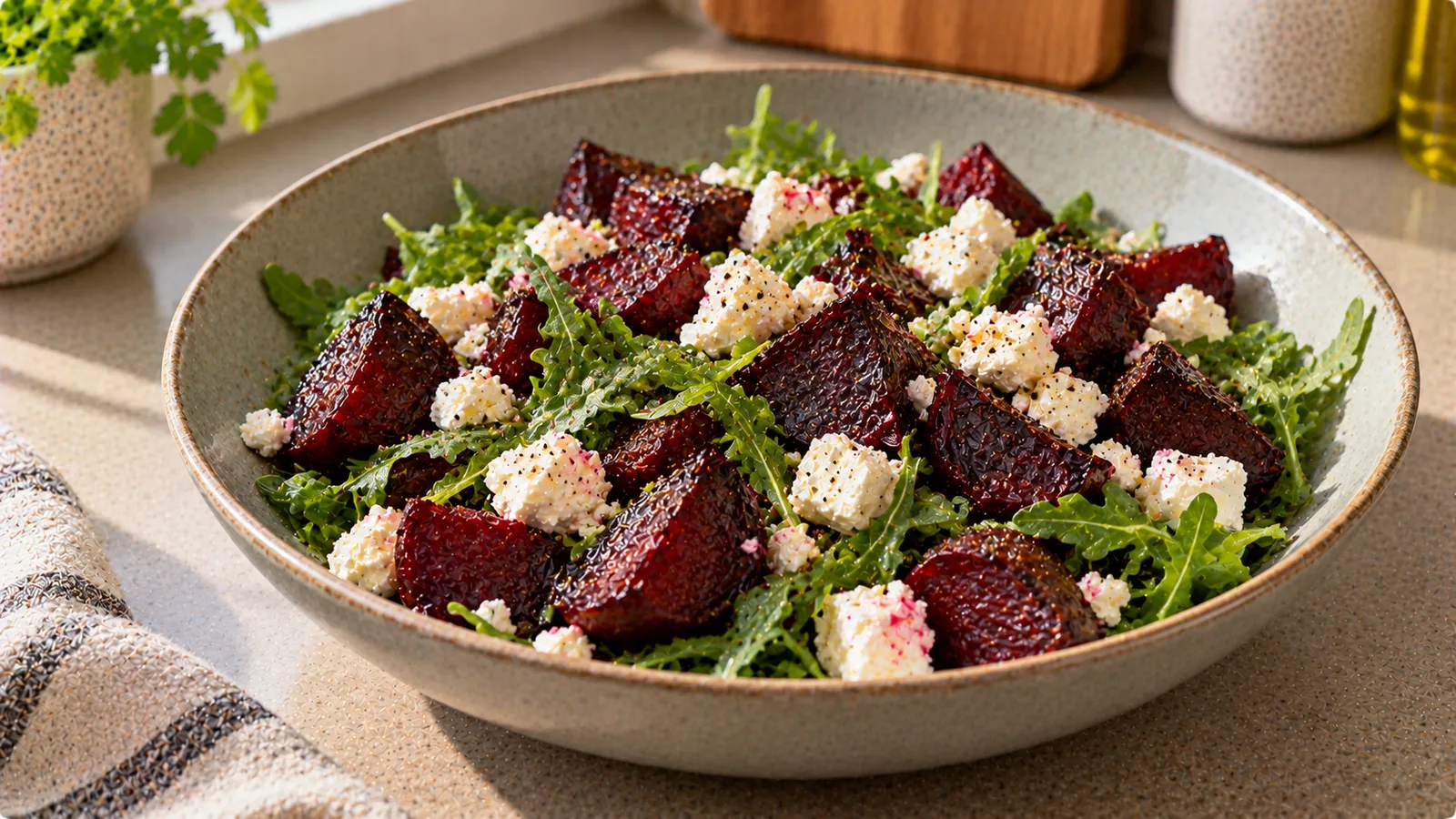
Roasted beetroot and feta salad combines tender roasted beets, salty feta, peppery arugula and crunchy walnuts with a simple balsamic dressing.
Roasting brings out the natural sweetness of beetroot, while feta provides a contrasting savory flavor. The walnuts add texture, and the dressing ties the ingredients together without overpowering them.
This recipe makes four side-salad portions. It can also become a more substantial meal when served with a protein source or whole grains.
Recipe at a glance
| Detail | Amount |
|---|---|
| Servings | 4 side-salad portions |
| Preparation | 15 minutes |
| Roasting | 35–50 minutes |
| Assembly | 5 minutes |
| Total time | Approximately 55–70 minutes |
| Oven temperature | 200°C / 180°C fan / 392°F |
| Estimated calories | Approximately 270 kcal per serving |
The roasting time depends on how large the beetroot pieces are and how efficiently the oven heats.
Ingredients for four servings
Salad
| Ingredient | Quantity |
|---|---|
| Raw beetroot, peeled | 600 g |
| Feta cheese | 120 g |
| Arugula (rocket) | 80 g |
| Walnuts | 40 g |
| Red onion | 60 g |
| Olive oil for roasting | 15 g |
| Fresh thyme | 2–3 sprigs, optional |
| Black pepper | To taste |
Balsamic dressing
| Ingredient | Quantity |
|---|---|
| Extra-virgin olive oil | 15 g |
| Balsamic vinegar | 20 g |
| Dijon mustard | 10 g |
| Honey | 10 g |
| Water | 10–15 ml, as needed |
| Black pepper | To taste |
The total olive oil in the recipe is 30 g: 15 g for roasting and 15 g for the dressing.
Use plain feta and unsalted walnuts. The feta already contributes salt, so additional salt may not be necessary.
The 600 g beetroot quantity refers to the peeled raw weight before roasting.
How to make roasted beetroot and feta salad
1. Preheat the oven
Preheat the oven to 200°C, or 180°C with a fan.
Line a baking tray with parchment paper.
Choose a tray large enough to hold the beetroot in a single layer. Overcrowding causes more steaming and less browning.
2. Prepare the beetroot
Peel the beetroot and cut it into pieces approximately 2–3 cm wide.
Try to keep the pieces similar in size so they cook evenly.
Place them in a bowl and add 15 g olive oil.
Season with black pepper and optional thyme.
Toss until the pieces are lightly coated.
Beetroot juice can stain cutting boards, clothes and hands, so use a washable surface.
3. Roast until tender
Spread the beetroot over the baking tray in a single layer.
Roast for approximately 35–50 minutes, turning once halfway through.
The beetroot is ready when a fork or knife enters the center of the pieces easily.
Smaller pieces may cook more quickly, while larger pieces can require additional time.
Avoid roasting solely by the clock. Check tenderness before removing the tray.
4. Prepare the other ingredients
While the beetroot roasts, wash and dry the arugula.
Thinly slice the red onion.
Roughly chop the walnuts.
Crumble the feta into medium-sized pieces.
If you prefer a milder onion flavor, soak the sliced onion in cold water for approximately 5–10 minutes, then drain thoroughly.
5. Make the dressing
In a small bowl, combine:
- 15 g extra-virgin olive oil.
- 20 g balsamic vinegar.
- 10 g Dijon mustard.
- 10 g honey.
- Black pepper.
Whisk until the dressing is combined.
Add 10–15 ml water if you prefer a thinner consistency.
Taste before adding salt because the feta and mustard may already provide enough.
6. Cool the beetroot slightly
Remove the roasted beetroot from the oven.
Let it cool for approximately 10–15 minutes.
The beetroot can remain pleasantly warm, but it should not be so hot that it immediately wilts all the arugula.
For a completely cold salad, cool the beetroot safely before assembling.
7. Assemble the salad
Arrange the arugula on a serving platter or divide it among four plates.
Add the roasted beetroot and sliced red onion.
Scatter the crumbled feta and chopped walnuts over the top.
Drizzle with the balsamic dressing immediately before serving.
Toss gently if desired.
Serve while the beetroot is slightly warm or after it has cooled.
Estimated nutrition per serving
The following estimates are based on representative nutritional values for the specified ingredients.
| Nutrient | Approximate amount |
|---|---|
| Calories | 270 kcal |
| Protein | 7.5 g |
| Fat | 19.5 g |
| Carbohydrates | 18 g |
| Fiber | 5 g |
The full recipe provides approximately 1,080 kcal, divided into four equal portions.
These are rounded planning estimates rather than laboratory-tested nutrition facts.
The actual values depend on the feta brand, the edible beetroot weight, the oil used and the walnuts.
The estimate includes the dressing and excludes optional additions such as bread, chicken or grains.
Reference: USDA FoodData Central.
Why the oil matters
This recipe contains 30 g olive oil in total.
Olive oil provides approximately 9 kcal per gram.
The oil therefore contributes roughly 270 kcal to the entire salad, or approximately 68 kcal per portion.
If you pour oil without measuring it, the final calorie content may be noticeably different.
Why feta and walnuts matter
Feta contributes protein, fat and sodium.
Walnuts contribute mostly fat, alongside some protein and fiber.
Both ingredients are useful for flavor and texture, but their quantities have a meaningful effect on the energy content.
For accurate food tracking, weigh them rather than estimating handfuls or cubes.
Should you peel beetroot before roasting?
For this recipe, peeling before roasting makes the preparation straightforward.
It also allows the beetroot to be cut into equal pieces and roasted with a little oil.
However, you can roast whole beets with their skins on.
Whole beets generally take longer to cook.
After cooking and cooling enough to handle, the skin can often be rubbed or peeled away.
If using whole roasted beetroot, weigh the edible portion after removing the skin when calculating the recipe.
Can you use pre-cooked beetroot?
Yes.
Vacuum-packed cooked beetroot is a convenient alternative when you want to reduce preparation time.
Choose plain cooked beetroot rather than beetroot pickled in vinegar or sugar.
For a faster version:
- Drain the cooked beetroot if necessary.
- Cut it into bite-sized pieces.
- Pat it dry.
- Toss it with a small amount of the measured roasting oil.
- Roast briefly at 200°C until heated and lightly browned, or use it cold.
Because the beetroot is already cooked, it does not need the full 35–50 minutes.
The nutrition estimate may differ slightly because cooked beetroot has a different moisture content from raw beetroot.
If using 600 g pre-cooked beetroot instead of 600 g peeled raw beetroot, recalculate with the product label.
How to keep the salad from becoming watery
Beetroot releases moisture during cooking and cooling.
Excess liquid can dilute the dressing and make the arugula soggy.
Three practical steps help:
Roast in a single layer
Leave some space between the beetroot pieces.
A crowded tray traps steam.
Allow excess moisture to evaporate
If the beetroot is still wet, roast for a few additional minutes after it becomes tender.
Do not let the pieces burn.
Dress immediately before serving
Keep the dressing separate until the salad is ready to eat.
This is especially useful if you prepare the salad in advance.
Best feta for beetroot salad
Traditional feta has a tangy, salty flavor that contrasts with the sweetness of roasted beetroot.
A block of feta can be crumbled just before serving.
Pre-crumbled products are also convenient, although their texture and nutrition may differ.
If you use a feta-style cheese, check the label because fat, protein and sodium can vary.
For this recipe, use 120 g cheese in total.
That is 30 g per serving.
If you increase the cheese to 200 g, the salad will have more calories, fat and protein.
What can replace feta?
Several alternatives work, although they change the flavor and nutritional composition.
Goat cheese
Soft goat cheese creates a creamier salad.
Its energy and protein content depend on the product.
Reduced-fat feta
A reduced-fat version may lower the total fat content.
Check the label rather than assuming every reduced-fat product has the same nutritional profile.
Dairy-free alternative
A plant-based feta-style product can be used.
Its protein, fat and salt content may differ substantially from dairy feta.
Cottage cheese
Cottage cheese provides a softer, wetter texture.
It is better added immediately before serving.
The salad will taste different from the feta version.
Can you make the dressing without honey?
Yes.
The honey adds a small amount of sweetness to balance the vinegar.
You can omit it for a sharper dressing.
Alternatively, use a little maple syrup or another sweetener.
Any replacement containing calories should be included in the nutrition calculation.
For a version without added sweetener, whisk the oil, balsamic vinegar, mustard and pepper together.
Easy variations
Beetroot, feta and orange salad
Add orange segments to the finished salad.
Orange complements the earthy beetroot and salty feta.
The fruit adds carbohydrates and moisture.
Beetroot, feta and lentil salad
Add cooked lentils to make the dish more substantial.
Lentils contribute additional protein, carbohydrates and fiber.
For accurate nutrition, weigh the cooked lentils separately.
Beetroot and feta salad without walnuts
Omit the walnuts if you prefer a nut-free recipe.
The texture becomes less crunchy and the total calories decrease.
If avoiding nuts because of an allergy, check all packaged ingredients for relevant allergen information.
Beetroot, feta and quinoa salad
Add cooked quinoa to turn the salad into a more filling meal.
Quinoa increases the carbohydrate and energy content.
Use cooked weight when recording it.
Beetroot salad with pumpkin seeds
Replace the walnuts with pumpkin seeds.
This changes the flavor and nutrient profile.
Use the same measured weight only if you intend to compare the resulting nutrition accurately.
How to make it a complete meal
The base recipe is designed as a side salad.
A serving provides approximately 270 kcal and 7.5 g protein.
For many adults, that may be too small to serve as an entire lunch or dinner.
You can add a protein source and a carbohydrate source according to your needs.
Example: with chicken
Serve one portion of salad with 120 g cooked chicken breast.
The chicken adds substantial protein and calories.
Record it separately from the base salad.
Example: with lentils
Add 150 g cooked lentils to one portion.
This increases protein, fiber, carbohydrates and energy.
Example: with bread
Serve one portion with 60 g whole-grain bread.
If the bread provides 250 kcal per 100 g, it adds approximately 150 kcal.
The salad and bread together would contain approximately 420 kcal before any other additions.
These are examples rather than prescribed meal plans.
Can you prepare the salad ahead?
Yes, but store the components separately for the best texture.
Roast the beetroot in advance
Cook the beetroot and allow it to cool promptly.
Refrigerate it in a covered container.
Prepare the dressing
Whisk the dressing and refrigerate it in a clean, sealed container.
Stir or shake before serving because the oil and vinegar may separate.
Keep the arugula dry
Wash and dry the leaves thoroughly.
Store them separately from the roasted beetroot and dressing.
Add feta and walnuts last
This helps the walnuts remain crunchy and prevents the cheese from becoming overly mixed into the dressing.
Storage and food safety
Cooked beetroot and the assembled salad are perishable foods.
Refrigerate prepared components promptly.
As a general reference, the USDA recommends consuming properly refrigerated cooked leftovers within 3–4 days.
Source: USDA Food Safety and Inspection Service.
The assembled salad is best eaten soon after dressing because the leaves soften over time.
Do not leave feta or prepared salad at room temperature for extended periods.
If transporting the salad, use appropriate chilled storage.
Common mistakes
Cutting beetroot into uneven pieces
Small pieces can overcook before larger pieces become tender.
Keep the pieces similar in size.
Using too much oil
Beetroot does not need to be submerged in oil.
Measure the oil to control both texture and calories.
Adding feta before roasting
Feta may dry out or brown excessively if roasted with the beetroot for the full cooking time.
For this version, add it after roasting.
Dressing hot arugula
Very hot beetroot can wilt the leaves.
Let it cool slightly before assembly.
Forgetting the dressing in the nutrition calculation
Olive oil, honey and mustard contribute to the complete recipe.
Include the dressing when tracking the salad.
How to record the recipe in a food diary
Create a homemade recipe with the ingredient weights:
- Beetroot, raw and peeled: 600 g.
- Feta: 120 g.
- Arugula: 80 g.
- Walnuts: 40 g.
- Red onion: 60 g.
- Olive oil: 30 g total.
- Balsamic vinegar: 20 g.
- Dijon mustard: 10 g.
- Honey: 10 g.
- Optional herbs and seasonings.
Set the recipe to four servings.
If you eat one-quarter of the finished salad, record one serving.
If the portions differ in size, weigh the finished edible dish and record the amount you actually consume.
Roasting removes water from beetroot, which changes the finished weight without removing the calories from the oil, cheese or nuts.
Sources
- USDA FoodData Central — representative nutritional data for beetroot, feta, walnuts, vegetables and oils.
- USDA Food Safety and Inspection Service — food storage and handling guidance.
Nutrition values are approximate and depend on the specific products used. The recipe makes four side-salad portions, including the dressing.