
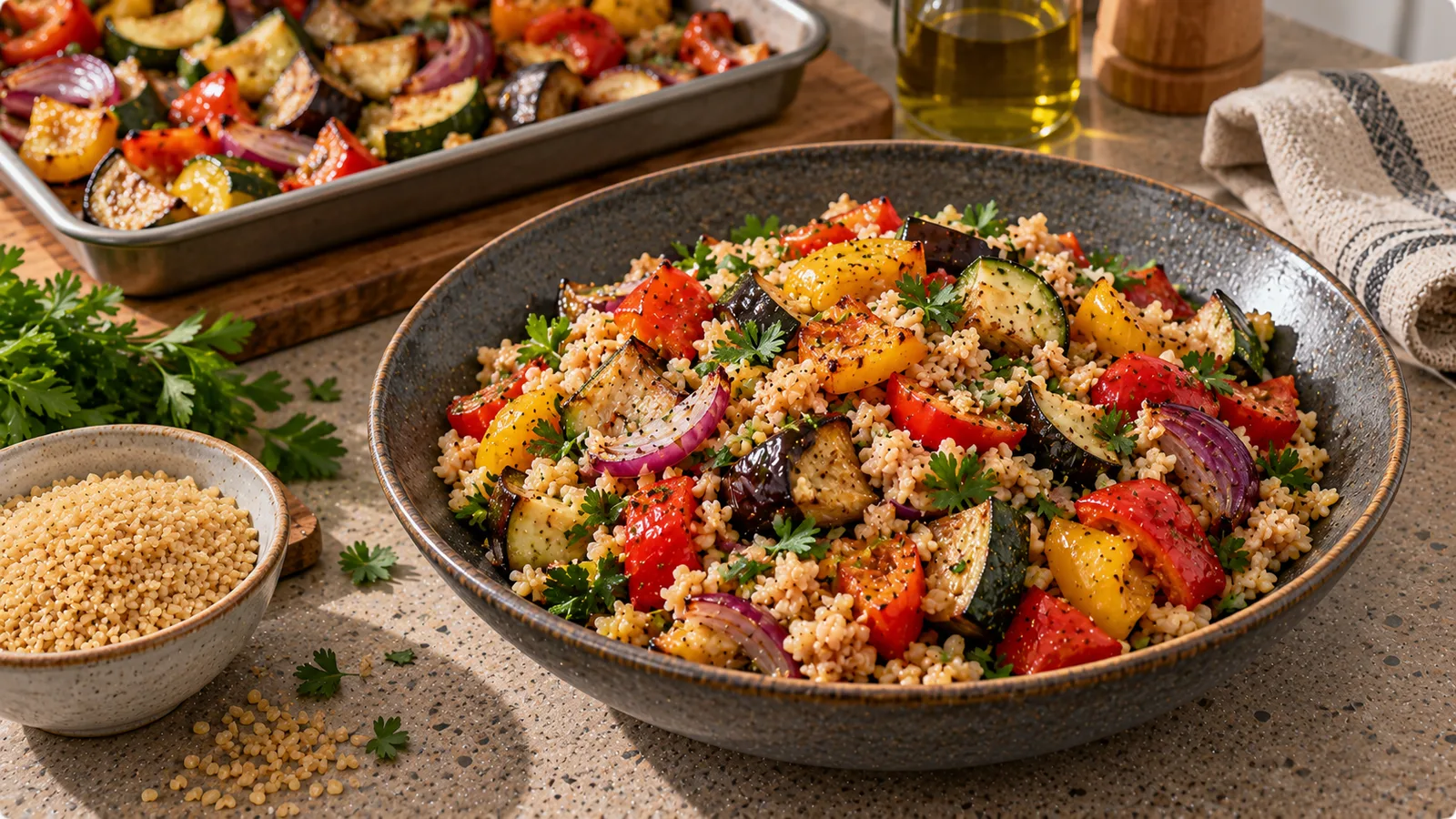
Bulgur and roasted vegetable salad combines tender wheat grains, caramelised vegetables, chickpeas, fresh herbs and a bright lemon dressing.
It is substantial enough for lunch, works as a side dish at dinner and can be prepared ahead for busy weekdays.
Roasting gives zucchini, peppers and tomatoes a deeper flavour than using them raw. Bulgur absorbs the dressing, while chickpeas add texture and plant protein.
The recipe is vegetarian and vegan when prepared with the ingredients listed below.
Recipe at a glance
| Detail | Amount |
|---|---|
| Servings | 4 substantial portions |
| Preparation time | 15 minutes |
| Cooking time | 25–30 minutes |
| Total time | Approximately 40–45 minutes |
| Main ingredients | Bulgur, vegetables, chickpeas |
| Cooking method | Oven roasting and soaking or simmering |
| Suitable for meal prep | Yes |
| Contains gluten | Yes, bulgur is wheat |
The recipe makes four lunch-sized portions or approximately six smaller side portions.
Ingredients
For the salad
- 200 g dry medium or coarse bulgur
- 250 g zucchini
- 250 g red bell pepper
- 200 g cherry tomatoes
- 150 g red onion
- 240 g cooked chickpeas, drained
- 20 g fresh parsley
- 10 g fresh mint, optional
- 15 g olive oil for roasting
- 1 teaspoon ground cumin
- 1 teaspoon smoked paprika
- 1/2 teaspoon salt, or to taste
- Freshly ground black pepper
For the lemon dressing
- 25 g extra-virgin olive oil
- 35 ml fresh lemon juice
- 10 g Dijon mustard
- 1 small garlic clove, finely grated
- 10–20 ml water, as needed
- Black pepper and a small pinch of salt
The total olive oil in the recipe is 40 g: 15 g for roasting and 25 g for the dressing.
The chickpea quantity refers to cooked, drained chickpeas, not their dry weight.
The bulgur quantity refers to dry grain.
Equipment
You will need a large baking tray, a saucepan or heatproof bowl with a lid, a mixing bowl, a knife and a whisk or fork.
Use a sufficiently large tray so the vegetables can roast in a reasonably even layer.
If they are piled too deeply, they tend to steam rather than brown.
How to make bulgur and roasted vegetable salad
Step 1: Preheat the oven
Heat the oven to 220°C conventional or approximately 200°C fan.
Line a large baking tray with baking paper if desired.
Step 2: Cut the vegetables
Cut the zucchini into pieces approximately 2 cm thick.
Remove the seeds from the pepper and cut it into similar-sized pieces.
Cut the red onion into wedges.
Leave small cherry tomatoes whole or halve larger ones.
Keeping the pieces relatively uniform helps them cook evenly.
Step 3: Season and roast
Place the zucchini, pepper, onion and tomatoes on the tray.
Add 15 g olive oil, cumin, smoked paprika, salt and black pepper.
Toss until the vegetables are lightly coated.
Roast for approximately 25–30 minutes, turning once halfway through.
The vegetables should become tender with some browned edges.
If the tomatoes release a lot of liquid, continue roasting briefly or transfer the vegetables with a slotted spoon.
Do not discard the juices automatically; a small amount can add flavour to the salad.
Step 4: Prepare the bulgur
Cook 200 g dry bulgur according to the package instructions.
For many medium bulgur products, a starting point is approximately 400 ml boiling water, but the required quantity and cooking time depend on the grain size.
Some fine bulgur needs only soaking.
Coarse bulgur may require simmering.
When tender, fluff the grains with a fork and let them cool slightly.
Avoid overcooking: the grains should remain separate rather than becoming mushy.
Step 5: Mix the dressing
Whisk together 25 g olive oil, lemon juice, mustard and garlic.
Add a little water if the dressing is too concentrated.
Taste and adjust the lemon, salt and pepper.
The dressing should taste slightly more assertive on its own because the bulgur and chickpeas will absorb some of its flavour.
Step 6: Combine the salad
Place the warm or cooled bulgur in a large bowl.
Add the drained chickpeas and roasted vegetables.
Pour over most of the dressing and toss gently.
Fold in the chopped parsley and optional mint.
Taste before adding the remaining dressing.
Step 7: Rest and serve
Allow the salad to stand for approximately 10 minutes if time permits.
This helps the bulgur absorb the dressing.
Serve warm, at room temperature or chilled.
For food safety, do not leave cooked grains or prepared salad at room temperature for prolonged periods.
Estimated nutrition per serving
The following values are approximate and assume four equal portions.
They are based on the listed ingredients, including all 40 g of olive oil.
| Nutrient | Estimated amount per serving |
|---|---|
| Calories | 390–450 kcal |
| Protein | 12–16 g |
| Fat | 12–15 g |
| Carbohydrates | 55–70 g |
| Fibre | 11–15 g |
These ranges are estimates, not laboratory measurements.
The values can change with the bulgur brand, chickpea composition, exact vegetable weights, dressing quantities and portion sizes.
For more accurate tracking, use the nutrition labels or a recognised food-composition database and divide the complete recipe by the number of portions actually served.
Why this salad is filling
Bulgur contributes carbohydrates and fibre.
Chickpeas provide additional fibre, protein and carbohydrates.
Olive oil adds fat and helps carry the flavours of the dressing.
The vegetables increase the volume of the meal and contribute a variety of micronutrients.
Together, these ingredients make the salad more substantial than a simple bowl of leafy greens.
How to make the salad higher in protein
The original recipe contains plant protein from both bulgur and chickpeas.
If you want a higher-protein main meal, you can adjust it without changing its basic character.
Add tofu
Add 400 g firm tofu, cubed and roasted separately or alongside the vegetables if space permits.
Season the tofu before cooking.
The additional protein depends on the product.
Add edamame
Mix in 200–300 g cooked shelled edamame.
This keeps the salad vegan and adds more protein.
Add a dairy topping
For a vegetarian version, serve with plain skyr, Greek-style yogurt or cottage cheese on the side.
This changes the recipe from vegan to vegetarian.
Serve with fish or chicken
If you do not need a vegetarian meal, use the salad as a side dish with grilled fish or chicken.
Record the additional ingredients separately when calculating nutrition.
Ingredient substitutions
The recipe is flexible, but substitutions can change cooking time and nutrition.
| Original ingredient | Alternative | Adjustment |
|---|---|---|
| Zucchini | Aubergine | Roast until fully tender |
| Red pepper | Yellow or orange pepper | Similar preparation |
| Cherry tomatoes | Regular tomatoes | Remove excess liquid if needed |
| Chickpeas | White beans or lentils | Drain thoroughly |
| Parsley | Coriander or extra mint | Adjust to taste |
| Lemon | Lime | Use a similar quantity initially |
| Dijon mustard | A little extra lemon and garlic | Dressing texture and flavour will change |
| Bulgur | Quinoa or rice | Cook according to the replacement grain |
Can you make it gluten-free?
Bulgur is made from wheat and contains gluten.
For a gluten-free version, replace it with a suitable gluten-free grain such as quinoa.
Check packaged ingredients and cross-contact information if you need strict gluten avoidance because of coeliac disease or another medical requirement.
The resulting dish is a quinoa and roasted vegetable salad rather than a bulgur salad.
Choosing the right bulgur
Bulgur is commonly available in fine, medium and coarse grades.
Fine bulgur is often used in dishes where it can hydrate quickly.
Medium bulgur works well for salads when the grains remain separate.
Coarse bulgur can also work, but usually needs more cooking time.
Always check the instructions on the packet.
A fixed water ratio does not work equally well for every product.
How much does 200 g dry bulgur make?
Dry bulgur absorbs water during cooking.
Its final weight depends on the grain size and amount of water retained.
For nutrition tracking, record the 200 g dry weight used for the whole recipe rather than estimating calories from the final cooked weight alone.
You can then divide the finished salad into four portions or weigh the entire prepared batch.
How to avoid a soggy salad
Roasted vegetables contain moisture, and tomatoes can release a considerable amount of liquid.
A few small adjustments improve the texture.
Use a large baking tray
Crowded vegetables release steam and brown less effectively.
Spread them in one layer where possible.
Do not overcook the bulgur
The grains should be tender but still hold their shape.
Drain excess liquid if the product requires it.
Drain the chickpeas
Rinse canned chickpeas if desired, then drain them thoroughly.
Excess water can dilute the dressing.
Add dressing gradually
Start with most of the dressing.
Add the remainder only after tasting.
Cool before sealing for storage
Allow the food to cool promptly and refrigerate it in shallow containers.
Avoid sealing a large amount of very hot food in a deep container where it cools slowly.
Meal-prep and storage
This salad is useful for preparing lunches ahead.
For best quality, keep it in a covered container in the refrigerator and eat within approximately 3–4 days, provided it has been handled and chilled properly.
Food-safety recommendations can differ by country, so follow relevant local guidance.
Refrigerate promptly after cooking and avoid leaving the salad at room temperature for extended periods.
Best meal-prep method
If preparing several portions, consider keeping the dressing separate until serving.
This helps preserve the texture, especially when the salad contains juicy tomatoes.
You can also store chopped fresh herbs separately and add them just before eating.
Can you freeze it?
Cooked bulgur and roasted vegetables can be frozen, but the texture may become softer after thawing.
Fresh herbs and the dressing are usually better added after reheating or thawing.
For the best eating quality, refrigeration is preferable when the salad will be eaten over the next few days.
Can you eat it cold?
Yes.
The salad can be served cold after appropriate refrigeration.
It is also pleasant slightly warm.
If reheating, warm only the portion you plan to eat and follow normal food-safety practices.
Serving ideas
As a complete lunch
Serve one-quarter of the recipe as a substantial plant-based lunch.
Add extra tofu or edamame if you want more protein.
With grilled vegetables
Use the salad as a base for additional roasted cauliflower, carrots or mushrooms.
Alongside a main dish
Serve a smaller portion with baked fish, chicken or a bean-based main course.
In a lunchbox
Pack the salad in a sealed container with the dressing in a small separate jar.
Keep it chilled until mealtime.
Cost and shopping considerations
Bulgur, canned chickpeas and seasonal vegetables can make this a relatively economical recipe.
The final cost depends on local prices, the season and whether you buy dried or canned legumes.
To compare the cost of homemade portions:
- Record the price of the amount of each ingredient used.
- Include the olive oil, dressing ingredients and herbs.
- Add the ingredient costs.
- Divide by four substantial servings.
If you use only part of a package, calculate the cost of the quantity used rather than charging the entire package to one recipe.
For example, if 200 g of bulgur comes from a 1 kg bag, allocate one-fifth of the bag's price.
This provides a more meaningful cost per serving.
Questions about the recipe
Can I prepare the vegetables in advance?
Yes.
Roast the vegetables, cool them promptly and refrigerate.
Combine with the bulgur and dressing when convenient.
Can I use canned chickpeas?
Yes.
Drain them and rinse if preferred.
The recipe uses 240 g of cooked, drained chickpeas.
Can I leave out the chickpeas?
Yes, but the salad will contain less protein and fibre.
You can replace them with cooked lentils or white beans.
Can I serve it without oil?
You can roast vegetables with little or no oil using an appropriate non-stick tray and replace the dressing oil with a small amount of water.
The flavour, texture and nutritional profile will change.
Is this recipe suitable for vegans?
Yes, when all packaged ingredients are vegan.
Check the mustard and other prepared ingredients if you have specific dietary requirements.
Recipe summary
For four substantial portions, combine 200 g dry bulgur, 240 g drained cooked chickpeas, 850 g mixed vegetables, 40 g olive oil, lemon, mustard, garlic and herbs.
Roast the vegetables until tender, prepare the bulgur according to the packet, whisk the dressing and combine everything.
Serve warm or chilled.
The key to good texture is properly cooked bulgur, well-roasted vegetables and dressing added to taste.