
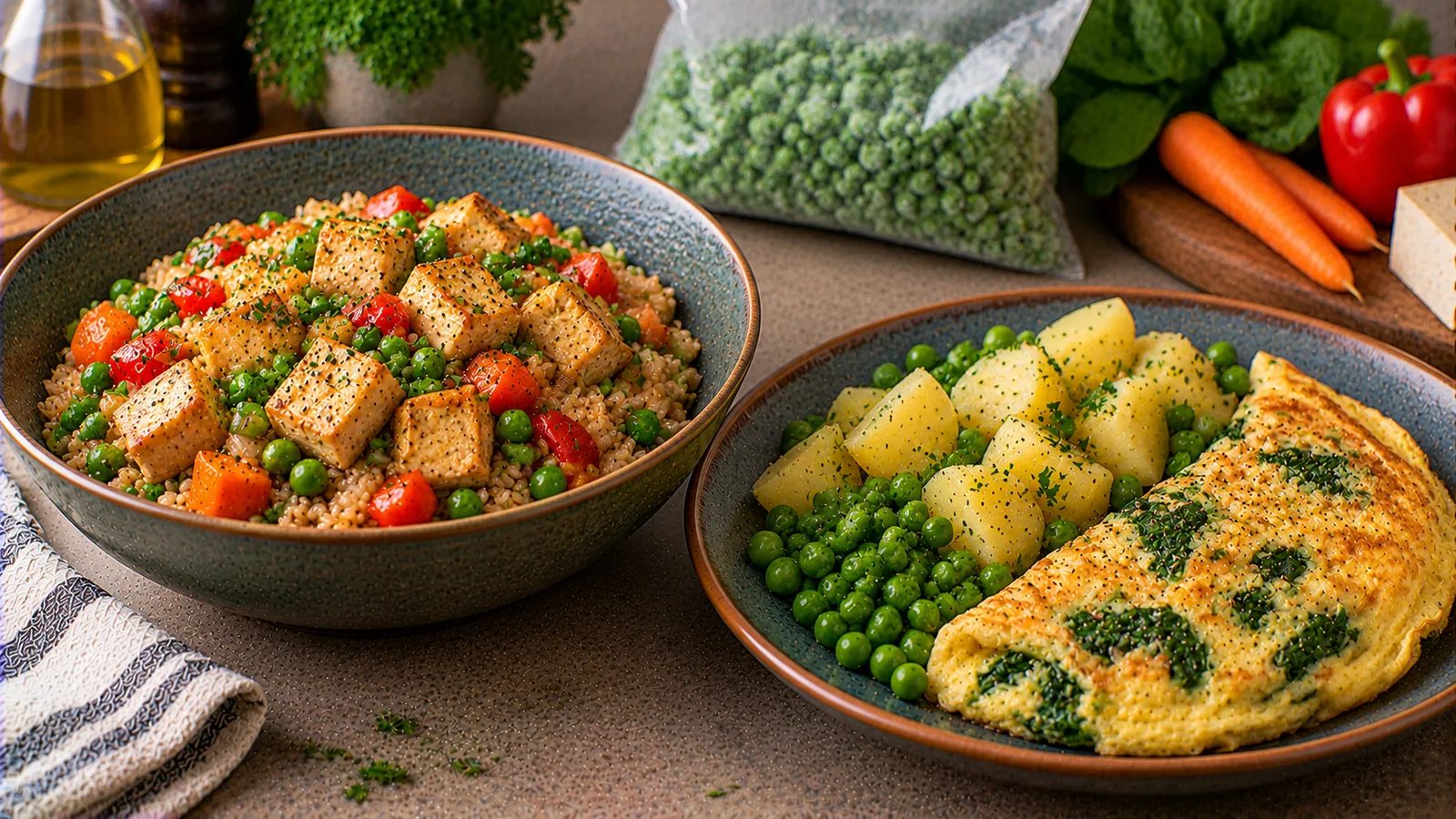
Four genuinely different weeknight dinners can begin with the same freezer bag of peas. The trick is not to pretend peas alone turn a meal into a protein-rich dinner: pair a measured quantity of them with tofu, cottage cheese, skyr or eggs, then add enough starch to make a full plate. These are four complete recipes for one adult-sized serving each, not four interchangeable topping suggestions.
Counted protein per plate: 40.0 g for tofu–pea rice, 38.5 g for potato–pea cottage cheese, 35.6 g for lemon skyr–pea pasta, and 33.2 g for a potato–pea egg frittata. These are estimates from named label reference foods, not laboratory analyses or promises for every brand. Oil, herbs, lemon and optional seasonings are omitted from the protein subtotal. The ingredient weights are frozen peas as sold, uncooked dry rice or pasta, potatoes before cooking, and eggs without shells.
Four plates at a glance
| Full dinner for one | Frozen peas | Other counted protein foods | Counted protein | Active / total time |
|---|---|---|---|---|
| Ginger tofu–pea rice skillet | 150 g | 180 g tofu + 70 g dry rice | 40.0 g | 15 / 30 min |
| Warm pea–potato bowl with cottage cheese | 150 g | 200 g cottage cheese + 250 g potatoes | 38.5 g | 10 / 25 min |
| Lemon skyr–pea whole-wheat penne | 120 g | 170 g skyr + 80 g dry pasta | 35.6 g | 10 / 20 min |
| Potato–pea frittata with three eggs | 180 g | 150 g shell-free eggs + 200 g potatoes | 33.2 g | 15 / 30 min |
A single 600 g quantity of frozen peas covers all four plates (150 + 150 + 120 + 180 g). This is not a four-day meal-prep prescription or a one-bag shopping-basket price: tofu, dairy, eggs and grains are separate purchases. For more general frozen-vegetable dinners without a protein target, see six additional dinners built around frozen vegetables. If you would rather build dinner from a pantry legume, compare complete vegetarian dinners built around one can of beans.
Protein method: use the weight before cooking
The table uses the following specific product-label reference values per 100 g. You can open each linked label and substitute the protein on your own packet. The potato reference is a cooked potato product used as a rough proxy for plain potatoes; its value is not a measurement of the raw potatoes in your kitchen. The total therefore remains an estimate.
| Counted food and label reference | Protein per 100 g | Basis used here |
|---|---|---|
| ja! frozen young peas | 5.4 g | Frozen product weight |
| REWE Bio natural tofu | 15 g | Drained tofu product weight |
| ja! dry long-grain rice | 7 g | Dry weight before boiling |
| REWE Bio cottage cheese | 12.7 g | Refrigerated product weight |
| Plain potatoes (Popp cooked-potato label proxy) | 2 g | Approximate potato reference |
| Berchtesgadener Land plain skyr | 11 g | Refrigerated product weight |
| Barilla whole-wheat penne | 13 g | Dry pasta weight |
| REWE fresh eggs | 13 g | Edible egg mass, without shells |
For each line, grams used × label protein per 100 g ÷ 100. Add the unrounded components and round the plate result to one decimal. Cooking water changes weight, not the dry-grain input for the calculation. Potatoes and egg sizes vary; weigh them rather than assuming that three eggs always yield precisely 150 g. Optional oil, condiments, herbs or garlic may change actual total nutrition slightly; we make no unsupported calorie, fat or fibre claims.
Plate 1 — Ginger tofu–pea rice skillet: 40.0 g counted protein
| Ingredient, one plate | Measured amount |
|---|---|
| Frozen peas | 150 g |
| Firm plain tofu, drained | 180 g |
| Dry long-grain rice | 70 g |
| Rapeseed oil | 5 ml |
| Water for rice | According to rice packet |
| Soy sauce, ginger, lemon or lime | Small amounts, to taste |
- Rinse and cook 70 g dry rice as the packet directs; allow roughly 15–20 minutes depending on the product. Drain if needed.
- Pat 180 g tofu dry and cut into 1–2 cm cubes. Fry in 5 ml oil in a wide pan over medium-high heat for 5–7 minutes, turning until golden.
- Add 150 g peas straight from frozen and a splash of water. Cover, heat until steaming hot all the way through, and follow the pea package's cooking instructions; stir to avoid cold centres.
- Season with ginger and a little soy sauce. Fold in the cooked rice and finish with lemon or lime. Taste before adding salt.
The arithmetic: peas 150 × 5.4/100 = 8.1 g; tofu 180 × 15/100 = 27.0 g; dry rice 70 × 7/100 = 4.9 g; total 40.0 g. This is the one-plate total, not the amount per 100 g of the finished dish. A soy allergy makes this version unsuitable without replacing and recalculating the tofu and soy sauce. For a vegan option, choose a suitable sauce and keep the same tofu reference.
Plate 2 — Warm pea–potato bowl with cottage cheese: 38.5 g
| Ingredient, one plate | Measured amount |
|---|---|
| Frozen peas | 150 g |
| Potatoes | 250 g, before cooking |
| Cottage cheese | 200 g |
| Rapeseed oil | 5 ml |
| Lemon, dill, pepper | To taste |
- Cut 250 g potatoes into evenly sized chunks; boil in water until a knife meets no resistance, usually around 12–18 minutes depending on size. Drain well.
- In a separate small pot, fully heat 150 g frozen peas according to the pack; do not rely on thawing alone.
- Toss hot potatoes and peas with 5 ml oil, dill, pepper and lemon. Spoon 200 g cold cottage cheese beside or over the warm vegetables just before serving.
- Eat immediately: the cheese is intentionally a cool topping, not something that has to simmer into a sauce.
The arithmetic: peas 150 × 5.4/100 = 8.1 g; cottage cheese 200 × 12.7/100 = 25.4 g; potato proxy 250 × 2/100 = 5.0 g; total 38.5 g. Cottage cheese is a milk product; neither this plate nor the skyr pasta is dairy-free. The measured potato mass is before boiling, while the 2 g reference comes from a marketed cooked potato product, so do not report 38.5 g as a laboratory-verified amount.
Plate 3 — Lemon skyr–pea whole-wheat penne: 35.6 g
| Ingredient, one plate | Measured amount |
|---|---|
| Frozen peas | 120 g |
| Whole-wheat penne, dry | 80 g |
| Plain skyr | 170 g |
| Pasta cooking water | 30–50 ml, if needed |
| Lemon zest, pepper, parsley | To taste |
- Boil 80 g dry penne in plenty of water according to its pack, usually about 9 minutes. Reserve 30–50 ml cooking water before draining.
- During the final minutes, cook 120 g frozen peas separately as instructed until thoroughly hot; or add them to the boiling pasta water for the pack's required cooking time.
- Turn the heat off. Fold 170 g plain skyr into the drained pasta with the hot peas and a spoonful of reserved water; stir gently to make a creamy coating. Do not boil skyr, which can split.
- Season with lemon zest, parsley and black pepper. Serve right away. Use less water for a thicker sauce.
The arithmetic: peas 120 × 5.4/100 = 6.48 g; skyr 170 × 11/100 = 18.70 g; dry pasta 80 × 13/100 = 10.40 g; total 35.58 g, displayed as 35.6 g. The pasta contains wheat/gluten, and the skyr contains milk. If you use ordinary rather than whole-wheat pasta, your label protein and the calculated total may change.
Plate 4 — Potato–pea frittata with three eggs: 33.2 g
| Ingredient, one plate | Measured amount |
|---|---|
| Frozen peas | 180 g |
| Egg contents, without shells | 150 g (roughly 3 eggs) |
| Potatoes | 200 g, before cooking |
| Rapeseed oil | 5 ml |
| Chives, paprika, pepper | To taste |
- Dice and cook 200 g potatoes in boiling water until just tender, about 10–15 minutes depending on size. Drain and dry briefly.
- Fully heat 180 g peas according to the frozen pack; drain extra water so the frittata can set.
- Crack approximately three eggs into a bowl and weigh 150 g edible contents. Beat with paprika and pepper; a different egg mass requires a new calculation.
- Heat 5 ml oil in a nonstick, oven-safe pan (or transfer to a small oiled oven dish). Scatter in cooked potatoes and peas, pour over the egg, and cook gently until the edges set. Finish under moderate oven heat until the centre is fully set. Avoid unsafe oven use with plastic pan handles.
- Slide onto a plate, add chives and serve hot; do not leave runny, partially cooked egg in a stored portion.
The arithmetic: peas 180 × 5.4/100 = 9.72 g; eggs 150 × 13/100 = 19.50 g; potato proxy 200 × 2/100 = 4.00 g; total 33.22 g, displayed as 33.2 g. Eggs vary naturally in size and composition; the 150 g refers to the broken egg, not shell-on weight.
Choosing and changing the plate without breaking the numbers
The 40.0 / 38.5 / 35.6 / 33.2 g figures only apply to the exact measured main ingredients above and these label references. Frozen peas can have substantially different label protein, so swapping brands is not nutritionally invisible. Divide amounts by two for a smaller plate and halve the displayed protein subtotal; doubling everything produces two identical plates only if it is actually divided evenly.
A vegetable garnish is welcome but has not been included in the calculation. Likewise, if you replace skyr with yogurt, cottage cheese with quark or tofu with tempeh, recalculate from the new label. The recipes deliberately contain enough starch to function as real dinners; stripping out rice, potatoes or pasta changes both the dish and its protein total. If you use olive oil instead of rapeseed oil, the core protein subtotals barely change, but the actual energy and cost can.
For EU regulated packaged-food claims, “high protein” means at least 20% of the food's energy is provided by protein under Regulation (EC) No 1924/2006. A grams-per-plate calculation alone cannot certify that legal threshold. Here “protein-rich dinner” is an editorial description of a filling recipe with a specified amount of protein; this article is not a certified nutrition-label claim.
Cook frozen peas safely and store leftovers sensibly
Use peas directly from frozen, following the manufacturer's cooking time; do not assume they are ready-to-eat because they look pre-blanched. Germany's Federal Institute for Risk Assessment (BfR) warns that frozen vegetables should be heated thoroughly; for reliable safety it advises reaching 70 °C for two minutes in all parts of heated food. Keep cooked foods hot or cool promptly in shallow containers; refrigerate and consume leftovers in 2–3 days, following BfR meal-prep guidance. The skyr and cottage-cheese plates are best assembled fresh rather than reheated with the cold dairy topping.
Bottom line for the cook: buy 600 g frozen peas for these four separate single plates, weigh your other components, and use the actual packet to adapt the protein arithmetic. The proteins come from the whole meals, not from a general claim about peas.
Sources
- REWE ja! frozen peas, 5.4 g protein per 100 g
- REWE Bio tofu, 15 g/100 g, rice 7 g/100 g dry
- REWE Bio cottage cheese 12.7 g/100 g, cooked-potato proxy 2 g/100 g
- Plain skyr 11 g/100 g, whole-wheat penne 13 g/100 g dry, eggs 13 g/100 g
- BfR on frozen vegetables and thorough cooking and BfR meal-prep safety
- EU Regulation 1924/2006, Annex: high-protein claims