
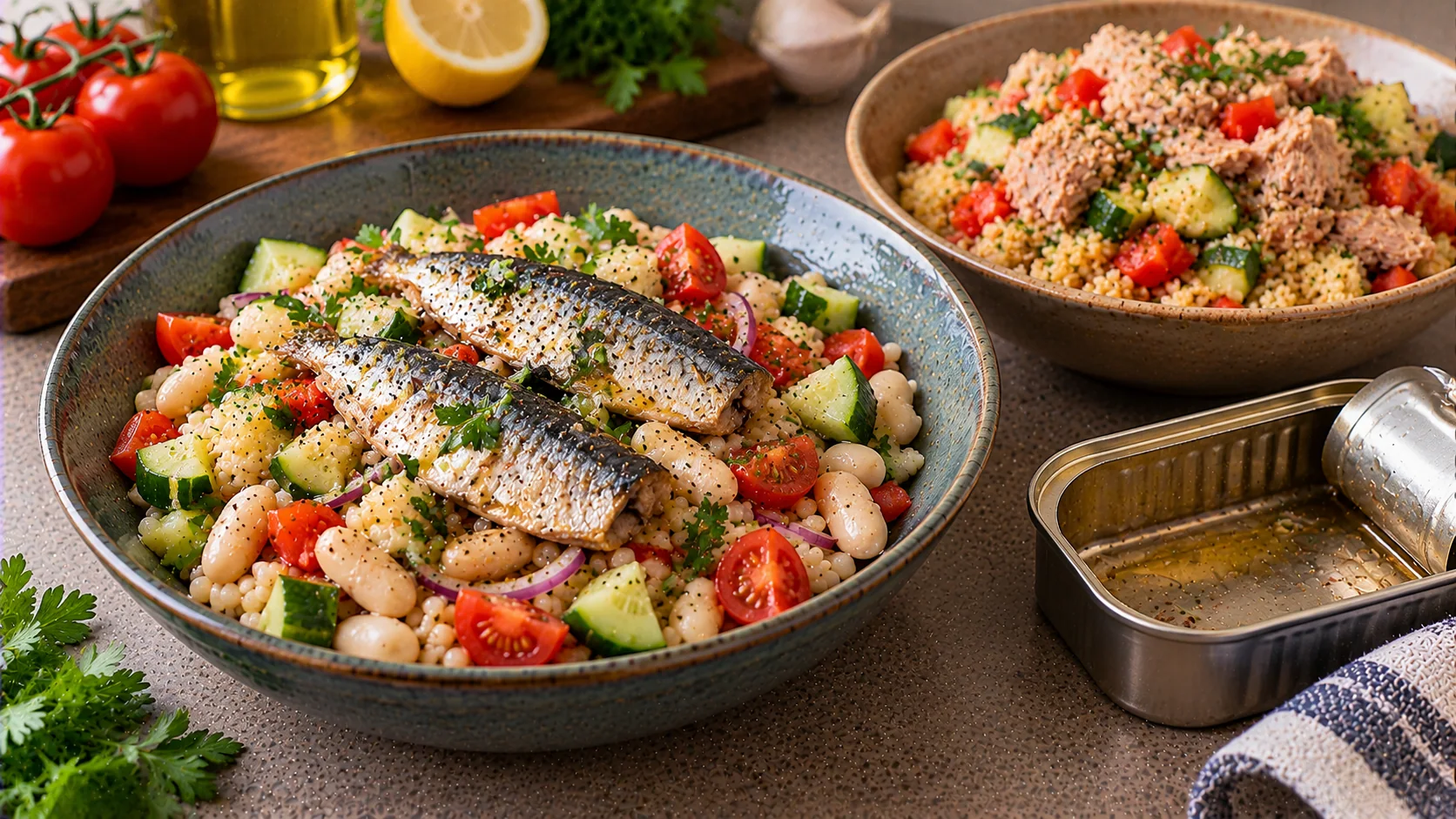
Low-Cost Mediterranean Lunches With Canned Fish: Three Recipes
Three real lunches, not just a list of ideas
These three Mediterranean-inspired lunches use shelf-stable canned fish, legumes, vegetables, a grain or bread, lemon and olive oil. Every recipe makes one generous lunch and gives amounts in grams so you can actually prepare it. They are inspired by Mediterranean ingredients, not a claim to reproduce a specific regional traditional dish. Use cans with the species, drained weight and storage instructions clearly stated on the label.
The example prices below are illustrative assumptions in euros, not checked offers from a German supermarket. Cost is for ingredients used, not necessarily the full cash-outlay when buying new packages. The meal is not automatically suitable for every allergy, age or pregnancy situation: fish species, salt content, gluten and other label details matter.
One shopping list for all three lunches
| Ingredient | Quantity used in three lunches | Notes |
|---|---|---|
| Sardines, drained | 90 g | One lunch; water or olive oil, as labelled |
| Canned salmon, drained | 100 g | Choose edible, boneless fish or remove large bones if desired |
| Canned light tuna (e.g., skipjack), drained | 90 g | Do not silently substitute albacore |
| Chickpeas, drained | 150 g | Rinse when useful to reduce surface brine |
| White beans, drained | 120 g | For the salmon bowl |
| Dry bulgur | 55 g | Cooked weight is higher due to absorbed water |
| Wholegrain bread | 80 g | For the sardine lunch |
| Potato, raw | 220 g | For the tuna salad |
| Tomatoes | 300 g | Across the three lunches |
| Cucumber | 180 g | Across lunches |
| Red onion | 60 g | Finely chopped |
| Lemon juice | 40 g | About 2–3 tablespoons |
| Olive oil | 20 g | Measured, not a free pour |
| Parsley, optional | 15 g | Washed and chopped |
Keep the drained weight distinct from the weight printed on the can including packing liquid. For wheat-free eating, replace bulgur and wheat bread with verified suitable alternatives; the changes will affect cost and nutrition.
Lunch 1: sardine, chickpea and tomato toast
One serving; about 10 minutes; no stove. Use 90 g drained sardines, 150 g drained chickpeas, 80 g wholegrain bread, 120 g tomatoes, 60 g cucumber, 10 g lemon juice, 5 g olive oil and black pepper. Drain the fish and chickpeas; rinse the chickpeas if preferred and pat them dry. Dice the tomatoes and cucumber. Lightly crush the chickpeas with lemon and measured oil, fold in sardines without turning them into a paste, season, and serve with the bread. If packing for work, keep bread separate until eating so it does not become soggy.
The chickpeas provide volume and fibre while the sardines contribute protein. Check the sardine label for edible bones, sodium and whether the packing oil changes the meal's fat. The recipe does not require extra salt.
Lunch 2: salmon, white bean and bulgur bowl
One serving; about 20 minutes, including cooking. Use 100 g drained canned salmon, 120 g drained white beans, 55 g dry bulgur, 100 g tomatoes, 60 g cucumber, 20 g red onion, 15 g lemon juice, 8 g olive oil and 5 g parsley. Cook the bulgur in water according to the package, drain if necessary, then cool it promptly if packing. Rinse and drain the beans. Chop the vegetables. Combine cooled bulgur, beans and vegetables; add salmon in flakes. Mix lemon, measured olive oil and parsley as dressing and toss shortly before eating.
The 55 g bulgur is a dry ingredient quantity; do not mistake it for 55 g cooked bulgur. Depending on package and water absorption it makes a larger cooked portion. Check the salmon label for salt and bone content. If using a chilled lunchbox, keep the whole prepared bowl cold until eating.
Lunch 3: light tuna and warm potato salad
One serving; about 25 minutes. Use 90 g drained canned light tuna, 220 g raw potato, 80 g tomatoes, 60 g cucumber, 40 g red onion, 15 g lemon juice, 7 g olive oil, 10 g parsley and pepper. Wash and dice the potato, then simmer until tender (roughly 12–18 minutes, depending on cube size). Drain. Mix the measured lemon and oil into the warm potato, cool promptly if preparing for later, and add tuna, chopped vegetables and parsley. Keep the salad chilled if it is not eaten at once; do not leave fish and potato dishes out on a desk all afternoon.
Choose tuna explicitly identified as light rather than assuming every canned tuna species has the same mercury classification. For those who are pregnant, might become pregnant or are breastfeeding, species matters; see the guidance below.
A transparent example of meal costs
The following are model prices for amounts actually used, including the specified fish, vegetables, grains and oil, assuming pantry staples are purchased separately. Prices will vary with brand, pack size and local promotions.
| Lunch | Fish portion | Other ingredients | Model cost per lunch |
|---|---|---|---|
| Sardine-chickpea toast | €1.20 | €1.15 | €2.35 |
| Salmon-white bean bulgur bowl | €1.70 | €1.21 | €2.91 |
| Light-tuna potato salad | €1.35 | €1.02 | €2.37 |
| Total for three used portions | €4.25 | €3.38 | €7.63 |
These figures are not a grocery receipt: to buy all products from scratch you may pay more because packages contain unused fish, pulses, oil and vegetables. If your canned fish costs €0.50 more, add exactly €0.50 to that lunch. Do not divide a four-serving bean can's entire price by one lunch while also counting the leftover beans again in another dish. To compare bargains, compute drained edible fish €/100 g = can price ÷ labelled drained grams × 100.
Protein, energy and what labels can tell you
The recipes combine fish with legumes or potatoes/grains. Nutrition varies substantially with fish species, whether packed in oil, bread type and the actual drained portion. For a reproducible estimate, record each ingredient's mass and its per-100-g label values, then sum: nutrient in ingredient = grams used × nutrient per 100 g ÷ 100. Divide by servings (one here). For bulgur use the dry-food label and dry 55 g, not 55 g of the finished bowl. For canned pulses and fish use drained edible mass, matching the label's reference state when available. USDA FoodData Central can be used for generic checks, but it does not validate a specific brand's can.
To illustrate arithmetic only, if a 90 g drained fish portion has 22 g protein per 100 g, it contributes 19.8 g protein; if 150 g chickpeas are labelled 7 g per 100 g, they add 10.5 g. Those assumed values do not assert the exact total protein of the finished sardine lunch. Oil adds energy and fat but essentially no protein. For precise energy, fat, protein, carbohydrate or salt estimates, use your own labels and include all oil and bread.
Mercury: canned fish are not all interchangeable
The FDA/EPA fish advice identifies sardines, canned salmon and canned light tuna as Best Choices in its guidance for people who are or might become pregnant, breastfeeding, and children. Canned albacore/white tuna belongs to Good Choices, while bigeye tuna is a Choice to Avoid. The advice describes a typical adult serving as about 4 oz (113 g) and suggests two to three Best Choices servings each week for pregnancy-related groups, considering other fish consumed. This is species-specific guidance, not permission to eat unlimited tuna every day. Children require smaller portions. Check national advice where you live and consult a clinician for individual circumstances.
Storage, packing and leftovers
Canned fish can be shelf-stable before opening; once opened, follow the label and refrigerate promptly. Keep prepared lunches in clean shallow airtight containers at refrigerator temperatures and use them promptly. USDA FSIS advises most cooked leftovers be used within 3–4 days in the refrigerator and reheated to 74°C/165°F where reheating is appropriate. These fish-and-fresh-vegetable lunches are best made freshly or kept chilled in transit with an ice pack. Bulgur and potatoes should cool rapidly, not sit warm for hours. Discard perishables left at room temperature too long. Pack dressing separately if texture matters.
How these lunches fit a budget rotation
Use the drained half of a chickpea or bean can in another dinner; store remaining portions safely instead of opening a new can for every meal. Swap in seasonal vegetables, but recalculate the cost and any nutrition estimates. A canned-fish lunch can be economical without substituting an expensive ingredient, provided you compare edible weights, actual portion sizes and the need to purchase entire packages. For a broader perspective on low-cost lunches, see budget-friendly lunch planning and for a related Mediterranean-style budget plan see a Mediterranean-style budget meal plan.
Sources
- FDA/EPA: Advice about Eating Fish — fish-species mercury categories and serving advice.
- USDA FSIS: Leftovers and Food Safety — cooling and reheating precautions.
- USDA FoodData Central — general food composition reference, not prices or brand-specific nutrition.