
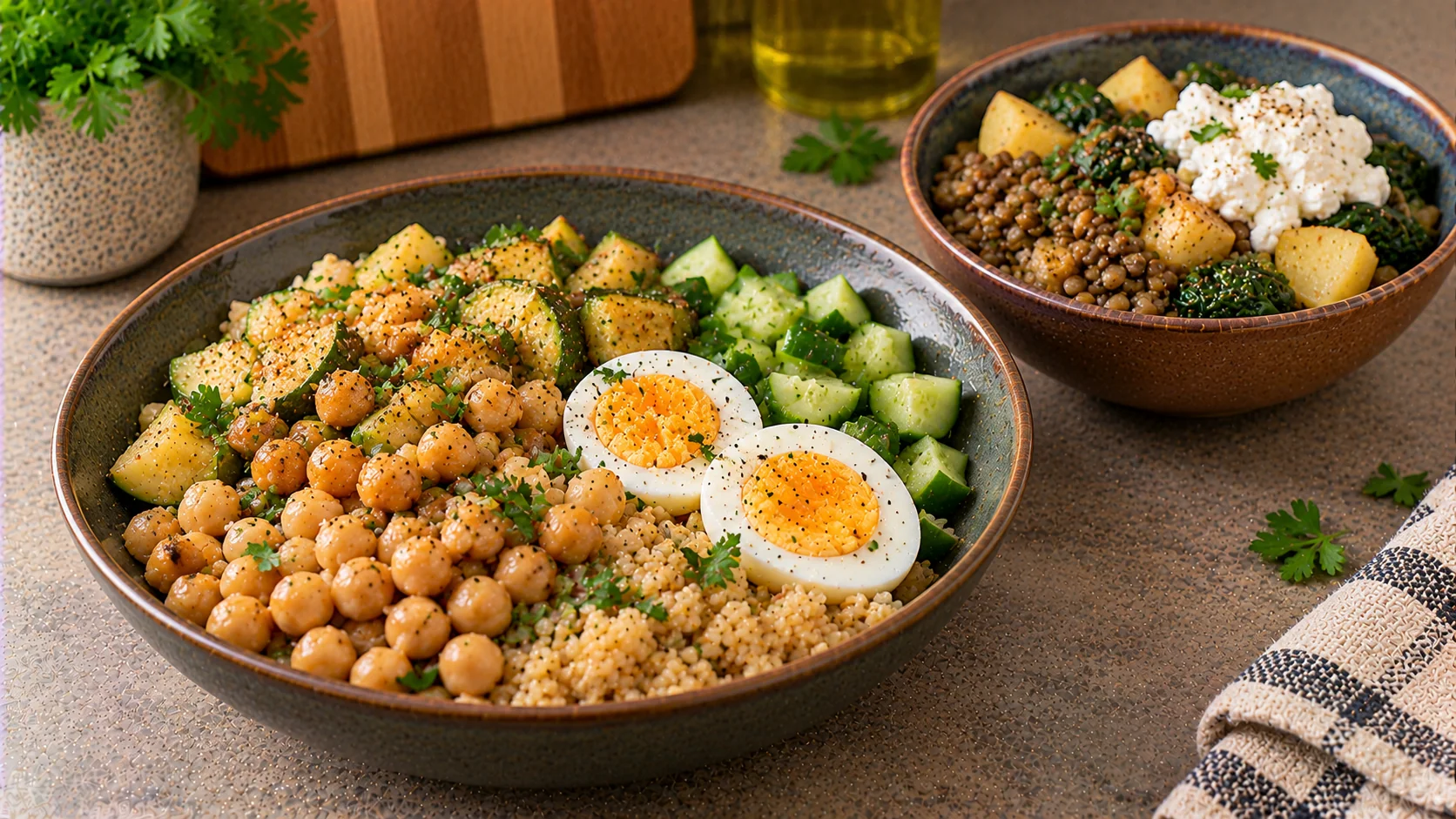
How much protein is in a budget vegetarian lunch? Five priced examples
A cheap vegetarian lunch can provide a useful amount of protein without meat, protein powder or a huge serving of cheese. The number depends on the edible amount actually served, whether beans are drained, whether grains are weighed dry or cooked, and the label on tofu or dairy. These five complete lunch examples include carbohydrate, vegetables and a main protein component; they are not a list of isolated high-protein ingredients. For more recipe variety see vegetarian high-protein recipes, while budget protein-and-fibre meal ideas explores affordable protein-and-fibre combinations.
Five lunches with measured servings
All five recipes make one substantial lunch. Grains and potatoes are weighed after cooking, canned beans after draining, tofu as purchased and pasta dry. Prices are hypothetical euro basket assumptions, not verified retailer offers. The price per lunch counts ingredients used, not the cash needed to buy every full package. Use local shop prices and check packaging for accurate figures.
Ingredients, weights and estimated protein
The figures below are illustrative calculations, not laboratory-tested meals. For each ingredient, the assumed protein per 100 g is multiplied by its edible grams and divided by 100. Values were chosen as plausible rounded examples within normal food variability. Consult the USDA FoodData Central database and the nutrition declarations on your actual packs before treating any estimate as exact. In particular, protein in tofu, quark, yogurt, bread and pasta varies widely by product.
| Lunch | Portions and illustrative protein inputs | Protein per lunch | Illustrative ingredients cost |
|---|---|---:|---:|
| Lentil-quark grain bowl | cooked lentils 180 g (9 g/100 g), quark 120 g (12 g/100 g), cooked bulgur 120 g (3.1 g/100 g), cucumber 100 g (0.7 g/100 g), olive oil 5 g (0 g/100 g) | 35.0 g | €1.75 |
| Tofu and rice skillet | firm tofu 180 g (13 g/100 g), cooked rice 150 g (2.7 g/100 g), frozen peas 120 g (5.4 g/100 g), rapeseed oil 5 g (0 g/100 g) | 33.9 g | €2.35 |
| Chickpea-egg pitta | drained chickpeas 160 g (7.5 g/100 g), eggs 100 g (12.6 g/100 g), wholegrain pitta 70 g (9 g/100 g), tomato 100 g (0.9 g/100 g) | 31.8 g | €1.95 |
| Bean and cottage cheese potato | boiled potato 250 g (2 g/100 g), drained kidney beans 150 g (7.5 g/100 g), cottage cheese 150 g (11.5 g/100 g), spinach 80 g (2.9 g/100 g) | 35.8 g | €2.15 |
| Red lentil pasta with yogurt | dry red lentil pasta 85 g (25 g/100 g), plain Greek-style yogurt 120 g (8 g/100 g), frozen broccoli 180 g (2.8 g/100 g), olive oil 5 g (0 g/100 g) | 35.9 g | €2.40 |
The five lunches: preparation and cost
For a lentil-quark grain bowl, cook bulgur separately and use fully cooked lentils. The quark is added after the warm ingredients cool slightly. A tofu-rice skillet uses thawed peas cooked until hot. The chickpea-egg pitta needs eggs cooked until firm and beans fully drained. The potato bowl uses cooked beans and spinach; add cottage cheese at the end. Lentil pasta supplies much of the protein in the fifth meal, but its packet can differ markedly from ordinary wheat pasta.
Prepare the lentil bowl
Lentil-quark grain bowl — 1 portion, about 15–25 minutes. Cook 120 g bulgur if needed, then weigh the cooked portion. Heat 180 g cooked lentils. Add 100 g chopped cucumber, 120 g quark and 5 g lemon dressing; serve soon.
Cook the tofu-rice skillet
Tofu and rice skillet — 1 portion, about 15–25 minutes. Dice 180 g firm tofu; cook in 5 g oil for 6–8 minutes. Add 120 g peas and cook thoroughly. Fold in 150 g cooked rice and heat until piping hot.
Assemble the egg-and-chickpea pitta
Chickpea-egg pitta — 1 portion, about 15–25 minutes. Boil two eggs (100 g edible) until firm. Drain and rinse 160 g chickpeas; chop 100 g tomato. Stuff one 70 g wholegrain pitta with all components.
Prepare the bean potato
Bean and cottage cheese potato — 1 portion, about 15–25 minutes. Boil 250 g potato until tender. Warm 150 g drained kidney beans and 80 g spinach until cooked. Split the potato and top with 150 g cottage cheese.
Cook lentil pasta
Red lentil pasta with yogurt — 1 portion, about 15–25 minutes. Boil 85 g dry lentil pasta according to its label, drain. Cook 180 g frozen broccoli thoroughly; toss with 5 g oil and 120 g yogurt off the heat.
How to calculate protein for your own brand
The figures below are illustrative calculations, not laboratory-tested meals. For each ingredient, the assumed protein per 100 g is multiplied by its edible grams and divided by 100. Values were chosen as plausible rounded examples within normal food variability. Consult the USDA FoodData Central database and the nutrition declarations on your actual packs before treating any estimate as exact. In particular, protein in tofu, quark, yogurt, bread and pasta varies widely by product.
Why the totals can differ
For a lentil-quark grain bowl, cook bulgur separately and use fully cooked lentils. The quark is added after the warm ingredients cool slightly. A tofu-rice skillet uses thawed peas cooked until hot. The chickpea-egg pitta needs eggs cooked until firm and beans fully drained. The potato bowl uses cooked beans and spinach; add cottage cheese at the end. Lentil pasta supplies much of the protein in the fifth meal, but its packet can differ markedly from ordinary wheat pasta.
Budget planning without protein supplements
For example, in the tofu lunch the model assumes 180 g tofu at 13 g protein per 100 g: `180 × 13 ÷ 100 = 23.4 g`. Peas add `120 × 5.4 ÷ 100 = 6.48 g`; rice `150 × 2.7 ÷ 100 = 4.05 g`. The oil contributes no meaningful protein. Total is 33.9 g after rounding. This is not a universal tofu value: if your brand lists 10 g per 100 g, tofu adds 18 g instead of 23.4 g.
Food safety and packed lunches
Differences come from moisture, varieties and manufacturing methods. Drained canned chickpeas are not the same as dry chickpeas by weight; cooked bulgur contains absorbed water. Some protein-rich pasta is made from lentil flour, while another product marketed as 'lentil pasta' may have different proportions. Yogurt and quark products also differ in protein and fat. Do not add values from dry and cooked states interchangeably.
Protein needs: day, not one magic meal
Check the cupboard first and plan two lunches that share beans or grains, without forcing the same meal every day. Larger packages can cost less per kilo but raise the amount of cash paid today. Frozen vegetables reduce the need to use everything within a short window. If you need dairy-free meals, replace quark or cottage cheese with a labelled soy alternative, then recalculate protein and price; the swap is not numerically identical.
Sources
Cool cooked rice and grains quickly, refrigerate promptly and follow local food-safety advice; rice left at room temperature can be risky. Refrigerate prepared lunches in sealed containers and use within safe storage windows, or freeze a portion the day it is cooked. Keep egg and dairy lunches chilled during transport with an insulated bag and cold pack. Reheat cooked meals thoroughly, only where appropriate, and never assume a full five-day batch can sit in the fridge safely all week.