
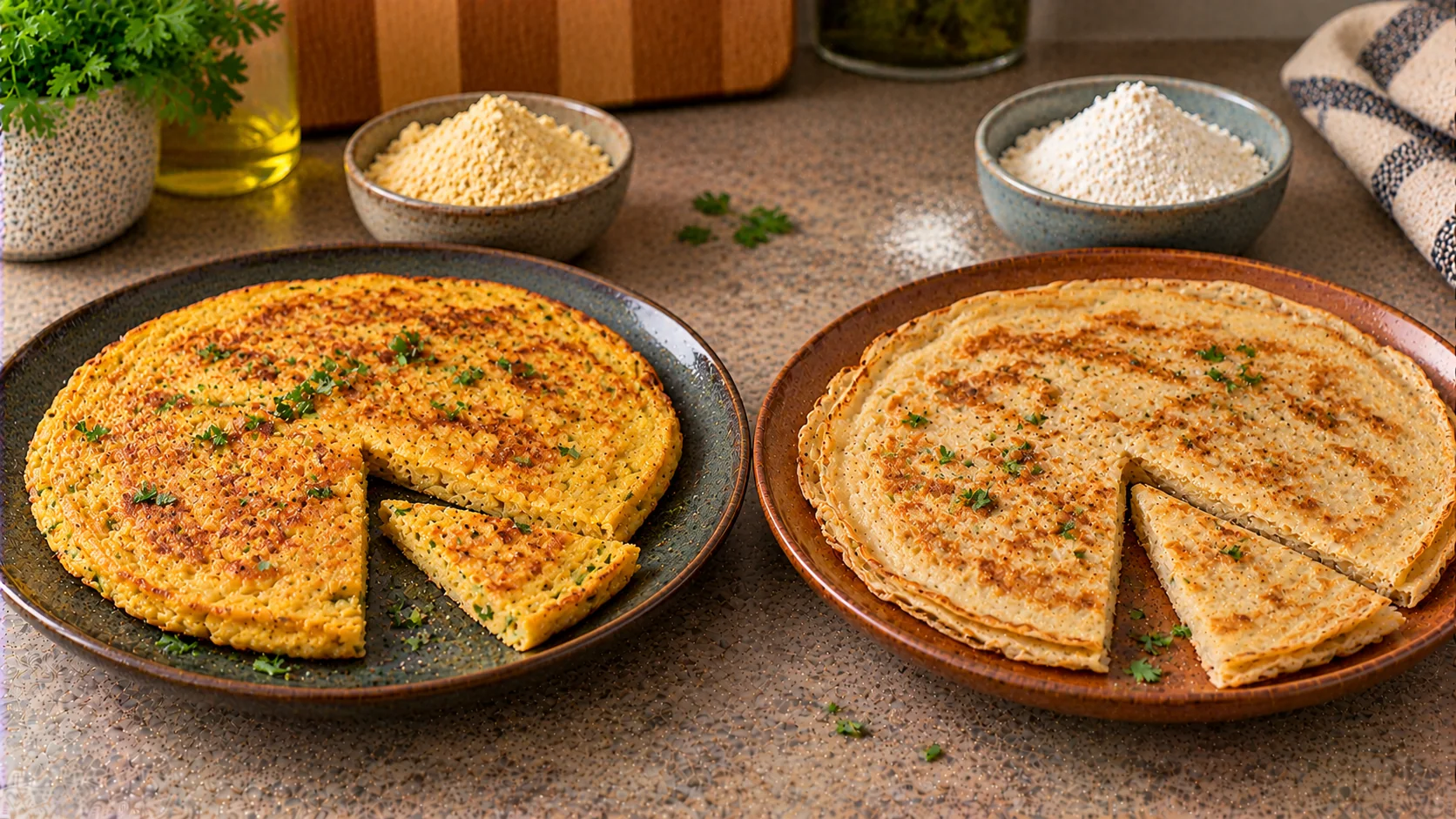
Chickpea Flour vs Wheat Flour for Savory Pancakes
Chickpea flour and ordinary white wheat flour both make savory pancakes, but they do not create identical batter. Chickpea flour has a recognizable bean-like flavor, higher estimated protein and fibre per dry 100 g and no wheat gluten. Plain wheat flour has a more neutral flavor and can form a flexible gluten network once mixed with water. For an honest comparison, start with equal dry weights, not equal scoops or cooked pancakes of different sizes.
At a glance: which flour fits which meal?
| Question | Chickpea flour | Plain white wheat flour |
|---|---|---|
| Flavor | Earthy, nutty, slightly beany | Mild, neutral |
| Batter | Thicker as it hydrates; may need extra water | Often fluid and elastic after mixing |
| Structure | Sets when cooked, but can tear when turned too soon | Gluten helps make thinner, flexible pancakes |
| Gluten | Naturally no wheat gluten, check certified packaging and cross-contact | Contains gluten; unsuitable for coeliac disease |
| Best starting use | Slightly thicker vegetable-studded pancake | Thin foldable pancakes and wraps |
Neither flour is automatically a complete meal: vegetables, oil, eggs and fillings affect the finished nutrition. A commercially prepared chickpea flour blend might include other ingredients; read its label before using the comparisons below.
Dry flour nutrition per 100 g
These illustrative reference values represent plain dry chickpea flour and refined all-purpose wheat flour, not a laboratory test of your packet. Typical chickpea flour: about 387 kcal, 22.4 g protein, 57.8 g total carbohydrate, 6.7 g fat and 10.8 g fibre. Typical refined wheat flour: about 364 kcal, 10.3 g protein, 76.3 g total carbohydrate, 1.0 g fat and 2.7 g fibre. The US total-carbohydrate convention can include fibre, unlike the European food-label carbohydrate line; compare like with like. Consult USDA FoodData Central and your brand's label for the specific item.
| Dry flour comparison | Chickpea flour | White wheat flour |
|---|---|---|
| Energy, 100 g | ~387 kcal | ~364 kcal |
| Protein, 100 g | ~22.4 g | ~10.3 g |
| Fibre, 100 g | ~10.8 g | ~2.7 g |
| Energy, 60 g dry | ~232 kcal | ~218 kcal |
| Protein, 60 g dry | ~13.4 g | ~6.2 g |
| Fibre, 60 g dry | ~6.5 g | ~1.6 g |
The 60 g figures are 0.6 times the 100 g figures, rounded to one decimal. They cover flour only: do not label them as the nutritional values of a pancake with egg, oil, vegetables or sauce. Cooking adds water and changes weight per 100 g of finished pancake; it does not create extra protein from the same dry flour.
Two measured savory pancake recipes
Each version uses 120 g dry flour and makes four small pancakes, two servings. Use a non-stick skillet about 20–24 cm wide. Total time: roughly 25–30 minutes, including a 10-minute batter rest. The two batters deliberately use different liquid quantities because their cooking behavior differs.
| Ingredient | Chickpea version | Wheat version |
|---|---|---|
| Dry flour | 120 g chickpea flour | 120 g plain wheat flour |
| Water | 230 ml, plus a little as needed | 190 ml, plus a little as needed |
| Egg | None | 1 medium egg (~50 g without shell) |
| Finely chopped onion | 80 g | 80 g |
| Finely chopped spinach | 80 g | 80 g |
| Cooking oil | 10 g total | 10 g total |
| Salt and pepper | Small pinch each | Small pinch each |
The chickpea recipe is egg-free; the wheat version contains egg and gluten. Use certified gluten-free chickpea flour and clean equipment if avoiding gluten for medical reasons. Avoid suggesting a raw taste test of either batter: raw flour can contain harmful microbes.
Cook the chickpea pancakes
- Weigh 120 g chickpea flour into a bowl. Whisk in 230 ml water gradually to remove lumps; add pepper and a modest pinch of salt.
- Rest for 10 minutes to hydrate. Fold in 80 g onion and 80 g finely cut spinach. Batter should spread under a spoon but remain thick enough to hold the vegetables; add water 1 tablespoon at a time if necessary.
- Heat a non-stick pan over medium heat. Distribute the 10 g oil across all four pancakes rather than adding 10 g to each one.
- Spoon one quarter of the batter into a modest pancake. Cook approximately 3–4 minutes on the first side, until visibly set and browned at the edge; flip carefully and cook 2–3 minutes more. Repeat for four pancakes.
- Check the middle has set, not just the surface. If the centre stays pasty, lower the heat and extend cooking. Serve hot with sliced vegetables or a measured yogurt accompaniment if desired.
Cook the wheat pancakes
- Whisk 120 g wheat flour, 190 ml water and one medium egg until no dry flour remains. Add a pinch of salt and pepper, then rest for 10 minutes.
- Stir in the same 80 g onion and 80 g spinach. Add water gradually if the mixture is too thick to spread; ingredient moisture varies.
- Heat a clean non-stick pan to medium. Divide the total 10 g oil across four batches.
- Pour or spoon one quarter of the batter, spread gently and cook about 2–3 minutes per side until golden and fully set, especially around pieces of vegetables.
- Fold or roll while warm if a flexible pancake is wanted. Cooked pancakes should not have streaks of raw flour or liquid egg.
Texture troubleshooting and substitution
If the chickpea pancakes crack on flipping, make them smaller, allow a longer first-side set and keep the mixture moderately thick. If they taste strongly of raw legumes, cook longer at a gentler heat. If wheat pancakes turn rubbery, avoid prolonged vigorous stirring after hydration and make sure the pan is not too cool. Replacing one flour with the other gram-for-gram without changing the liquid is not a tested equivalent substitution. Try a half-batch first and adjust water slowly. Guidance on gluten behavior and resting batters is consistent with King Arthur Baking's flour guide, although its examples concern other gluten-free flours rather than a direct controlled chickpea comparison.
Cost per serving: count what you actually use
Use these explicitly hypothetical shelf prices, not live store quotes: chickpea flour €2.49/500 g, plain wheat flour €0.99/1 kg. The dry-flour portion of one serving is 60 g. Chickpea flour therefore costs €2.49 × 60/500 = €0.30 per serving; wheat flour costs €0.99 × 60/1000 = €0.06. At the batch level flour costs €0.60 versus €0.12 when rounded to cents. Extra water is not a meaningful cost driver, but the wheat recipe also has an egg. Onion, spinach, oil, energy and optional sides must be priced separately if comparing complete dinners. The receipt total is different from the cost consumed when flour remains in the purchased bag.
Nutrition and allergen decision
Choose chickpea flour when its bean-like flavor and higher reference protein/fibre suit the dish. Choose wheat for a neutral, flexible thin pancake or when it is substantially cheaper locally. Chickpea flour is not intrinsically low-calorie, and a wheat pancake with egg can have a different protein total than the flour-only chart. Legumes can cause allergies; wheat and egg are relevant allergens in the second recipe. For people with coeliac disease, avoiding gluten involves ingredients and cross-contact: see the NIDDK explanation of gluten-free eating. Compare other flour nutrition examples at chickpea flour calories and serving sizes and practical budget meal-building at practical budget meal combinations.
Storage and reheating
Cool cooked pancakes promptly, refrigerate in a covered container and use within 3–4 days, or freeze individually with separators. Reheat until steaming hot all the way through; don't leave egg-containing pancakes at room temperature for hours. Follow USDA refrigeration guidance. Frozen leftovers need thorough reheating, not merely a warm exterior.
Sources
- USDA FoodData Central — reference nutrient values, with brand and food-state caveats.
- NIDDK: Eating, Diet & Nutrition for Celiac Disease — gluten avoidance and cross-contact.
- King Arthur Baking: Which Gluten-Free Flour Should I Use? — substitution and binding context.
- USDA FSIS: Refrigeration — safe cold storage.