
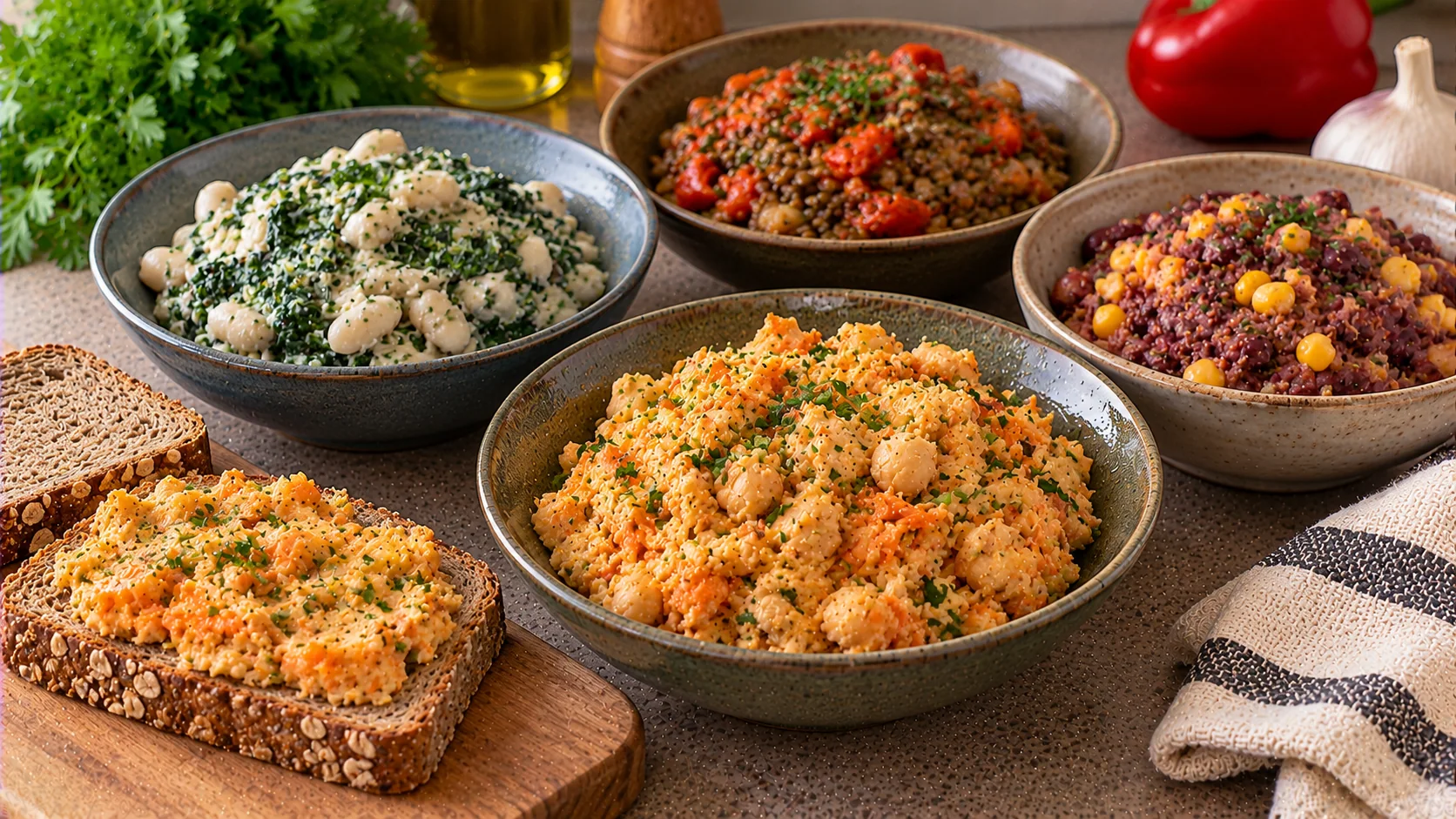
High-Fiber Vegetarian Sandwich Fillings: Four Recipes
A sandwich becomes a useful lunch when the filling is substantial rather than a thin garnish. Beans, lentils and peas help add fibre, protein and texture at a manageable cost. Here are four distinct vegetarian fillings, each yielding two sandwiches. The fillings can be made without purchasing special protein powders or expensive substitutes. This article concentrates on the filling, not on a general sandwich roundup or a complete weekly meal plan.
Four fillings at a glance
| Filling | Yield | Estimated fibre per sandwich from filling | Illustrative filling cost per sandwich |
|---|---|---|---|
| Lemon chickpea and carrot | 2 | 7.2 g | €0.60 |
| White bean and spinach | 2 | 6.1 g | €0.68 |
| Lentil and roasted pepper | 2 | 8.4 g | €0.73 |
| Pea, avocado and seeds | 2 | 7.4 g | €0.83 |
These are model estimates, not laboratory analyses. They exclude bread and optional toppings. Costs assume the quantity actually used, not a whole newly purchased jar or package. The nutritional assumptions are described below; brands, drained weights and processing change the result.
1. Lemon chickpea and carrot mash
Makes: two sandwiches. Prep: 10 minutes.
| Ingredient | Amount | How measured |
|---|---|---|
| Canned chickpeas | 160 g | Drained and rinsed |
| Carrot | 80 g | Peeled edible weight |
| Plain yogurt | 40 g | Unsweetened |
| Lemon juice | 10 g | Squeezed |
| Olive oil | 5 g | Weighed |
- Drain and rinse the chickpeas, then pat dry; use 160 g of edible chickpeas, not the total can weight.
- Crush with a fork, leaving small pieces for texture. Mix in yogurt, lemon and oil.
- Grate the carrot finely, stir through and divide equally between two sandwiches. Add pepper to taste. Spread onto bread close to serving to reduce sogginess.
Try chopped dill if available. The mixture is naturally soft; toast the bread for contrast. Check yogurt allergens and use a plant-based alternative if needed, adjusting the nutritional calculation.
2. White-bean and spinach spread
Makes: two sandwiches. Prep: about 15 minutes with pre-cooked spinach.
| Ingredient | Amount | How measured |
|---|---|---|
| White beans | 160 g | Cooked, drained |
| Spinach | 100 g | Cooked, cooled and squeezed |
| Plain yogurt | 30 g | Unsweetened |
| Lemon juice | 10 g | Squeezed |
| Mustard | 5 g | From jar |
- Heat spinach thoroughly if starting from frozen, cool promptly and squeeze off excess moisture.
- Mash the drained white beans with yogurt, lemon and mustard until spreadable, not liquid.
- Chop spinach, fold into the beans and divide between two portions. Taste before adding salt: canned beans and mustard vary widely in sodium.
This is especially useful for leftover cooked spinach, provided it was cooled and stored safely. If the mixture looks loose, mash more beans instead of adding extra sauce.
3. Lentil and roasted-pepper filling
Makes: two sandwiches. Prep: 15–20 minutes when lentils are already cooked.
| Ingredient | Amount | How measured |
|---|---|---|
| Lentils | 180 g | Cooked and drained |
| Red pepper | 100 g | Roasted, edible weight |
| Onion | 30 g | Chopped, edible weight |
| Olive or rapeseed oil | 5 g | Weighed |
| Smoked paprika | 2 g | To taste |
- Use pre-cooked lentils or simmer dry lentils separately until tender; 180 g means cooked drained weight, never 180 g dry.
- Cook onion in the weighed oil until soft. Stir in finely chopped roasted pepper and paprika.
- Fold in lentils and warm until steaming. Allow to cool safely before putting in a packed sandwich. Drain away free liquid so the bread remains intact.
Brown or green lentils hold their shape better than very soft red lentils. For a smoother sandwich, mash one-third of the lentils.
4. Pea, avocado and pumpkin-seed smash
Makes: two sandwiches. Prep: approximately 15 minutes.
| Ingredient | Amount | How measured |
|---|---|---|
| Peas | 180 g | Cooked edible weight |
| Avocado | 60 g | Flesh only, without skin or pit |
| Lemon juice | 10 g | Squeezed |
| Pumpkin seeds | 15 g | Shelled |
- Cook frozen peas according to the pack until thoroughly heated; drain and cool promptly.
- Roughly crush with avocado and lemon. Leave some peas whole so it holds its texture.
- Split into two portions and scatter pumpkin seeds over each just before serving. The seeds add bite; add them late to stop them softening.
Avocado browns on exposure to air. Lemon slows browning but does not make this a shelf-stable filling. Prepare close to eating or keep chilled in a sealed container for a short period.
How the fibre estimates were calculated
To make the examples reproducible, the model applies the following illustrative grams of fibre per 100 g of edible ingredient: drained chickpeas 7.6, carrots 2.8, cooked white beans 6.3, cooked spinach 2.2, cooked lentils 7.9, roasted red pepper 2.0, onion 1.7, cooked peas 5.5, avocado 6.7, and pumpkin seeds 6.0. Values vary by product and database entry; they are not guaranteed label values. Verify product-specific figures using USDA FoodData Central and the actual packaging.
| Filling | Fibre estimate for entire mixture | Divide by two |
|---|---|---|
| Chickpea/carrot | 160×0.076 + 80×0.028 = 14.40 g | 7.20 g |
| White bean/spinach | 160×0.063 + 100×0.022 = 12.28 g | 6.14 g |
| Lentil/pepper/onion | 180×0.079 + 100×0.020 + 30×0.017 = 16.73 g | 8.37 g |
| Pea/avocado/seeds | 180×0.055 + 60×0.067 + 15×0.060 = 14.82 g | 7.41 g |
The dairy, lemon and oils are assumed to contribute negligible fibre. Bread is not included: a sandwich using two slices with, for example, 3 g fibre per slice adds 6 g beyond the filling, but only if your bread label actually says 3 g per slice. A bread's claim of “multigrain” does not itself establish a fibre amount. For choosing bread, consult how to assess wholegrain bread. For other measured vegetarian meals, see measured vegetarian lunch examples.
Cost and shopping assumptions
The table assumes model total filling costs of €1.20, €1.35, €1.45 and €1.65 respectively. Divide each total by two sandwiches; the result is €0.60, €0.675 (rounded €0.68), €0.725 (rounded €0.73) and €0.825 (rounded €0.83). Bread, shopping-rounding, seasonings already in the pantry and electricity are excluded. These are teaching examples, not current retailer prices. A whole can or avocado may cost more than the fraction used: distinguish checkout spend from ingredient consumption, and plan to use leftovers.
For comparing two alternative fillings, keep bread amount fixed, weigh drained legumes and calculate actual ingredient cost as pack price × weight used / usable pack weight. Remember that avocado skin and pit are not edible, while canned-bean liquids are not part of the drained mass.
Packing sandwiches without soggy bread
Use two slices of wholegrain bread per sandwich (bread quantity and nutrition are separate from the filling calculations). For work lunches, keep wet filling in a chilled leakproof container and assemble shortly before eating; otherwise place a dry lettuce leaf between bread and filling. Pack moist vegetables separately. A small cool bag with ice packs helps keep perishables chilled in transit. Do not assume an unrefrigerated backpack stays cold.
Storage and food safety
Refrigerate cooked and mixed fillings promptly in shallow covered containers at 4 °C or below and follow product use-by dates. As a conservative approach, prepare these moist mixed fillings within a day of use when possible. For cooked leftovers generally, USDA FSIS advises 3–4 days refrigerated, but quality can decline sooner, and avocado mixtures are especially best fresh. Do not leave fillings at room temperature for more than two hours (one hour in very hot conditions). Reheat previously cooked lentils or peas thoroughly if serving hot. See USDA guidance on leftovers.
Sources
- USDA FoodData Central — reference database to check nutrient values for each precise ingredient state.
- USDA FSIS — Leftovers and Food Safety — cooling and cold-storage guidance.
Fibre and prices are transparent illustrative calculations; adjust for actual packaging, drained yields and bread.