
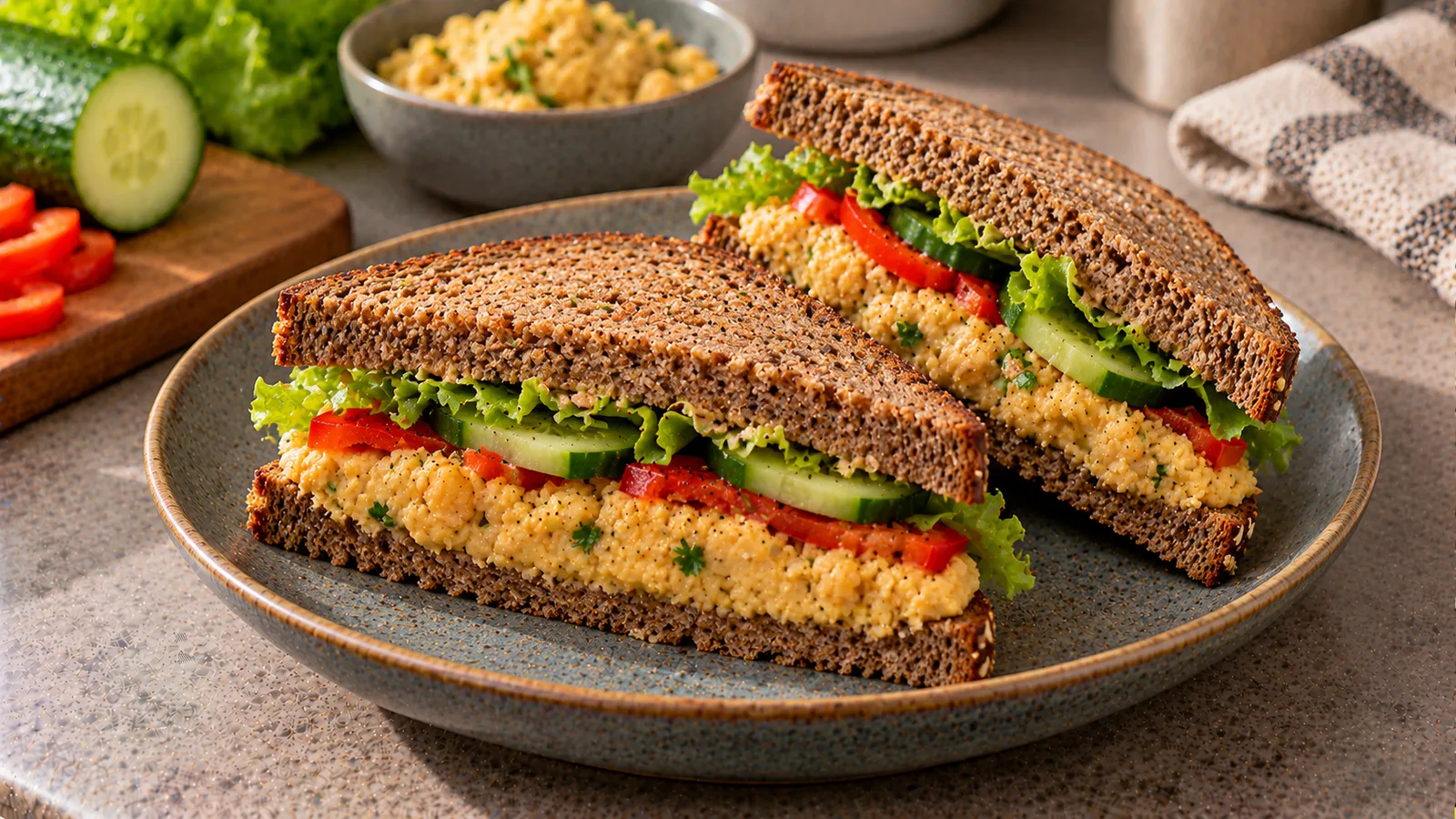
Four sandwiches can look nearly identical in size yet provide very different amounts of dietary fiber. Here each sandwich starts with the same 80 g of dmBio wholegrain rye bread. The filling then changes: hummus and cucumber; kidney beans and tomato; peanut butter and banana; or cannellini beans and carrot. Using the named reference foods, the finished sandwiches provide approximately 10.3–16.5 g of fiber. That is a calculation for these exact ingredients, not a promise about every bakery loaf or canned-bean brand.
A high-fiber sandwich is not necessarily a low-calorie sandwich. The peanut-butter version supplies more energy than the bean versions because nut butter is energy-dense, even though its fiber contributes to the total. You can use the figures below to choose a filling according to your appetite, budget and meal rather than treating a single ranking as the answer.
The reference foods behind the calculation
All values in the first table are per 100 g of edible food. The packaged-food values come from the named dmBio product labels: rye wholegrain bread, plain hummus, kidney beans, peanut butter and cannellini beans. Bean weights refer to drained contents, not the entire weight of the can and packing liquid. Fresh cucumber, tomato, banana and carrot use USDA SR Legacy entries for the raw, edible foods. The sources are listed below.
| Reference ingredient (per 100 g) | kcal | Fiber | Protein |
|---|---|---|---|
| Rye wholegrain bread | 188 kcal | 9.0 g | 4.40 g |
| Plain hummus | 251 kcal | 3.8 g | 3.80 g |
| Kidney beans (drained) | 101 kcal | 6.4 g | 7.70 g |
| Peanut butter | 630 kcal | 11.0 g | 28.00 g |
| Cannellini beans (drained) | 93 kcal | 5.9 g | 6.40 g |
| Cucumber (unpeeled) | 15 kcal | 0.5 g | 0.65 g |
| Tomato | 18 kcal | 1.2 g | 0.88 g |
| Banana (peeled) | 89 kcal | 2.6 g | 1.09 g |
| Carrot (raw) | 41 kcal | 2.8 g | 0.93 g |
The reference bread has 9 g of fiber per 100 g, so 80 g of this bread already gives 7.2 g fiber and about 150 kcal. Two slices might weigh less or more than 80 g; check the package or weigh them. A white loaf with a different fiber profile will change all four totals. The Mealisa high-fiber foods guide is useful for choosing alternative staples without copying numbers from a different product.
Four measured sandwiches: what each portion provides
All four are single sandwiches made with 80 g bread (for example, two 40 g slices). Weigh the edible filling before assembly. No oil, mayonnaise, butter, cheese or side dish is included. Calories and nutrients were summed at full precision from the reference foods before rounding. Prices are an expressly illustrative German shopping scenario, not verified checkout quotations.
| Ingredients per sandwich | Total mass | Energy | Fiber | Protein | Used-ingredient cost |
|---|---|---|---|---|---|
| Hummus and cucumber: Rye wholegrain bread 80 g, Plain hummus 70 g, Cucumber (unpeeled) 80 g | 230 g | 338 kcal | 10.3 g | 6.7 g | €1.06 |
| Kidney beans and tomato: Rye wholegrain bread 80 g, Kidney beans (drained) 120 g, Tomato 80 g | 280 g | 286 kcal | 15.8 g | 13.5 g | €1.00 |
| Peanut butter and banana: Rye wholegrain bread 80 g, Peanut butter 25 g, Banana (peeled) 100 g | 205 g | 397 kcal | 12.6 g | 11.6 g | €0.68 |
| White beans and carrot: Rye wholegrain bread 80 g, Cannellini beans (drained) 120 g, Carrot (raw) 80 g | 280 g | 295 kcal | 16.5 g | 11.9 g | €0.96 |
These estimates measure the ingredient combination, not a laboratory analysis of the finished sandwich. The vegetables matter, but most of the fiber comes from the wholegrain bread and the chosen bean or nut filling. All four use the same bread amount, which makes differences easier to interpret. For a smaller lunch, one slice and half the filling make an open sandwich with roughly half the displayed nutrition—provided the quantities really are halved.
1. Hummus and cucumber: a fast no-cook lunch
Spread 70 g of plain hummus over 80 g rye bread. Slice 80 g unpeeled cucumber, pat it dry, and layer it on the spread; close the sandwich just before eating. The calculated portion weighs 230 g, contains about 338 kcal, 10.3 g fiber, and 6.7 g protein. The hummus gives creaminess while cucumber adds crunch without requiring another sauce. The example cost of ingredients actually used is €1.06.
This is an easy assembly for a day when you have no access to a stove. It is not an especially high-protein lunch: hummus has much less protein per 100 g than many people assume. If you add tofu, cheese or eggs for more protein, count those ingredients and their calories separately. Hummus is also a sesame-containing product; check the label if allergens matter. The referenced dmBio hummus says to refrigerate after opening and use within three days.
Moist cucumber can make bread soggy. For commuting, carry the cucumber in a small box and assemble at lunchtime. You can also place the cucumber between two layers of spread and bread, but this does not replace proper chilling. A thick slice of rye bread can hold more filling than thin toast; treat the 80 g as the measured basis, not as a universal slice count.
2. Kidney beans and tomato: the highest-protein option here
Drain 120 g kidney beans, rinse if desired, and roughly mash them with a fork. Layer the mash onto 80 g rye bread and top with 80 g chopped tomato. Pepper, herbs and a squeeze of lemon can be used for flavor without assuming any dressing oil. The portion weighs 280 g; the ingredient calculation is about 286 kcal, 15.8 g fiber and 13.5 g protein, costing approximately €1.00 in the sample model.
This makes a practical vegetarian lunch because the beans add both fiber and protein. The beans should already be cooked and ready to eat; do not treat soaked raw kidney beans as a cold sandwich filling. The canned dmBio reference contains 240 g after draining, enough for two 120 g portions. An opened can should be transferred to a suitable container, refrigerated and consumed within the product's indicated period, generally three to four days for this reference.
Rinsing may change sodium content, but the displayed figures are based on the product's published nutrient label, not a separate test of your rinsed beans. Likewise, substituting hummus or lentils for the beans changes calories and fiber. Mash some of the beans but leave others whole for texture. Keep tomato separate during a long commute, because liquid from chopped tomatoes can soften the bread.
3. Peanut butter and banana: more energy, still fiber-rich
Spread 25 g unsweetened peanut butter onto 80 g rye bread, then add 100 g banana, weighed without the peel and sliced thinly. The sandwich contains about 397 kcal, 12.6 g fiber and 11.6 g protein, with €0.68 of the modeled purchase used. It is the most energy-dense of these four because peanut butter contributes around 158 kcal in only 25 g.
This version is convenient before an active afternoon or when you prefer a slightly sweeter lunch without a sweet spread. It does not make bananas or peanut butter inherently weight-loss foods: the relevant quantity is the serving you actually assemble. If you spread 40 g of nut butter rather than 25 g, calculate the extra amount instead of recording the original sandwich. A tablespoon is not a reliable substitute for weighing a sticky ingredient.
The specific dmBio peanut butter is made of peanuts and supplies 11 g of fiber per 100 g; other brands may contain sugar, added fat or different nutrient amounts. Peanut allergy makes this version unsuitable. Use a freshly opened or appropriately stored banana, and pack this sandwich carefully if warm conditions could affect the texture.
4. White beans and carrot: crunchy, economical and very high in fiber
Drain and lightly mash 120 g cannellini beans, then add 80 g finely grated raw carrot and spread the mix over 80 g rye bread. Season with pepper, vinegar or dried herbs. The portion weighs 280 g, providing about 295 kcal, 16.5 g fiber and 11.9 g protein by the reference calculation. Its modeled used-ingredient cost is €0.96.
This is the highest-fiber option in this exact comparison, slightly ahead of the kidney-bean sandwich. The difference is not proof that white beans are always higher in fiber than kidney beans: the carrot adds another 2.2 g, and bean varieties and labels differ. Finely grating the carrot helps the filling hold together; if the mixture is too wet, mash additional beans rather than adding oil automatically.
Use cooked or canned beans, not uncooked dried beans. A 240 g drained can yields two of these 120 g portions. If you prepare one sandwich today and another tomorrow, keep the remaining beans chilled in a clean covered container. For more recipe combinations, Mealisa's high-fiber recipes collection covers whole meals rather than these four sandwich builds.
Shopping list: checkout cost is not the same as eaten cost
The basket below assumes buying one unit of each product. Pack sizes and all prices are hypothetical German budgeting inputs; do not interpret them as a current dm or supermarket offer. Fresh-produce buying weights represent edible quantities for the cost model, not peel or trimming loss. Bread and packaged foods use their labelled net or drained basis as stated. This list makes exactly four sandwiches, with leftover ingredients available for other meals.
| Ingredient | Pack or assumed buying unit | Used in 4 sandwiches | Illustrative pack price | Used cost |
|---|---|---|---|---|
| Rye wholegrain bread | 500 g | 320 g | €1.79 | €1.15 |
| Plain hummus | 180 g | 70 g | €1.49 | €0.58 |
| Kidney beans (drained) | 240 g | 120 g | €0.85 | €0.43 |
| Peanut butter | 250 g | 25 g | €2.49 | €0.25 |
| Cannellini beans (drained) | 240 g | 120 g | €1.15 | €0.58 |
| Cucumber (unpeeled) | 400 g | 80 g | €0.99 | €0.20 |
| Tomato | 500 g | 80 g | €1.79 | €0.29 |
| Banana (peeled) | 1000 g | 100 g | €1.49 | €0.15 |
| Carrot (raw) | 1000 g | 80 g | €1.19 | €0.10 |
| TOTAL | — | 995 g | €13.23 | €3.70 |
Buying every full pack in this example costs €13.23, but only €3.70 of ingredients go into these four sandwiches, an average of €0.93 each before electricity, transport, waste or seasonings. The remaining nominal ingredient value is €9.53, not cash returned at checkout. If you already have bread or peanut butter, your incremental checkout cost might be much lower. If you cannot use the leftover hummus or vegetables, the true cost of food consumed can be higher than the simple weighed-portion model.
Buying only one sandwich's ingredients from scratch is a different question from using them across a week's meals. You can vary the bean fillings, put leftover carrots in soup, serve cucumber as a side, and finish an opened hummus container within its stated storage window. For an accurate diary, our portion size versus serving size explanation helps distinguish an actual weighed lunch from a package's example serving.
What does “high fiber” mean on a label?
In the EU, the regulated claim “high fibre” may be used for foods containing at least 6 g fiber per 100 g or 3 g per 100 kcal; “source of fibre” uses 3 g/100 g or 1.5 g/100 kcal. These are rules for commercial food claims, not a guarantee that a meal has any particular health effect. See the European Commission's nutrition-claims list.
Our sandwiches are home-assembled recipes. The displayed grams of fiber per sandwich do not by themselves establish that a package or a commercially marketed product qualifies for a regulated EU claim. If assessing such a claim, first calculate the finished food's fiber per 100 g and/or per 100 kcal, consider every ingredient, and apply the legal requirements. The guide to reading a nutrition label can help when you choose a bread or spread with very different numbers.
The German Federal Centre for Nutrition (BZfE) uses at least 30 g fiber per day as a general adult orientation and advises increasing fiber gradually and drinking sufficiently. These four sandwiches contribute meaningful fiber, but they do not need to deliver the entire day's amount. Someone who is unused to beans and wholegrains may feel better starting with smaller servings and increasing over time rather than suddenly eating the highest-fiber option every day. See BZfE's fiber guidance.
Packing, allergies and substitutions
For a packed lunch, use cool, clean ingredients and a food-safe container. Keep opened hummus and canned-bean fillings refrigerated, and keep perishable sandwiches chilled while transporting them. Put wet vegetables in a separate compartment if the sandwich will be carried for hours. Rye bread contains gluten; the hummus contains sesame; peanut butter contains peanuts. Check product labels for additional allergens and cross-contact warnings.
Changing the bread is the largest simple substitution: a different 80 g loaf may contain far less or more than 7.2 g fiber, which moves every result together. Changing drained beans to unweighed whole-can contents introduces another error. Likewise, lettuce, mayonnaise, oil, avocado or a cheese slice is not part of any of the calculations. Add toppings individually rather than assuming the ready-made totals still apply.
These four builds work as repeatable starting points rather than rigid prescriptions. Weigh the bread and filling once, save the combination you enjoy, and vary vegetables and seasonings while recording meaningful changes. The point of the calculation is to make the contribution of wholegrains and legumes visible: a sandwich can be a substantial source of fiber, but only if its actual ingredients and portions support that claim.
Sources
Manufacturer labels: dmBio rye wholegrain bread; dmBio hummus natur; dmBio kidney beans; dmBio peanut butter; dmBio cannellini beans. Fresh-food reference entries: USDA SR Legacy cucumber FDC 168409, tomato FDC 170457, banana FDC 173944 and carrot FDC 170393. Context: EU nutrition claims and BZfE dietary fiber. Calculations are arithmetic examples from those references; prices are hypothetical.