
What makes an air-fryer dinner a complete plate?
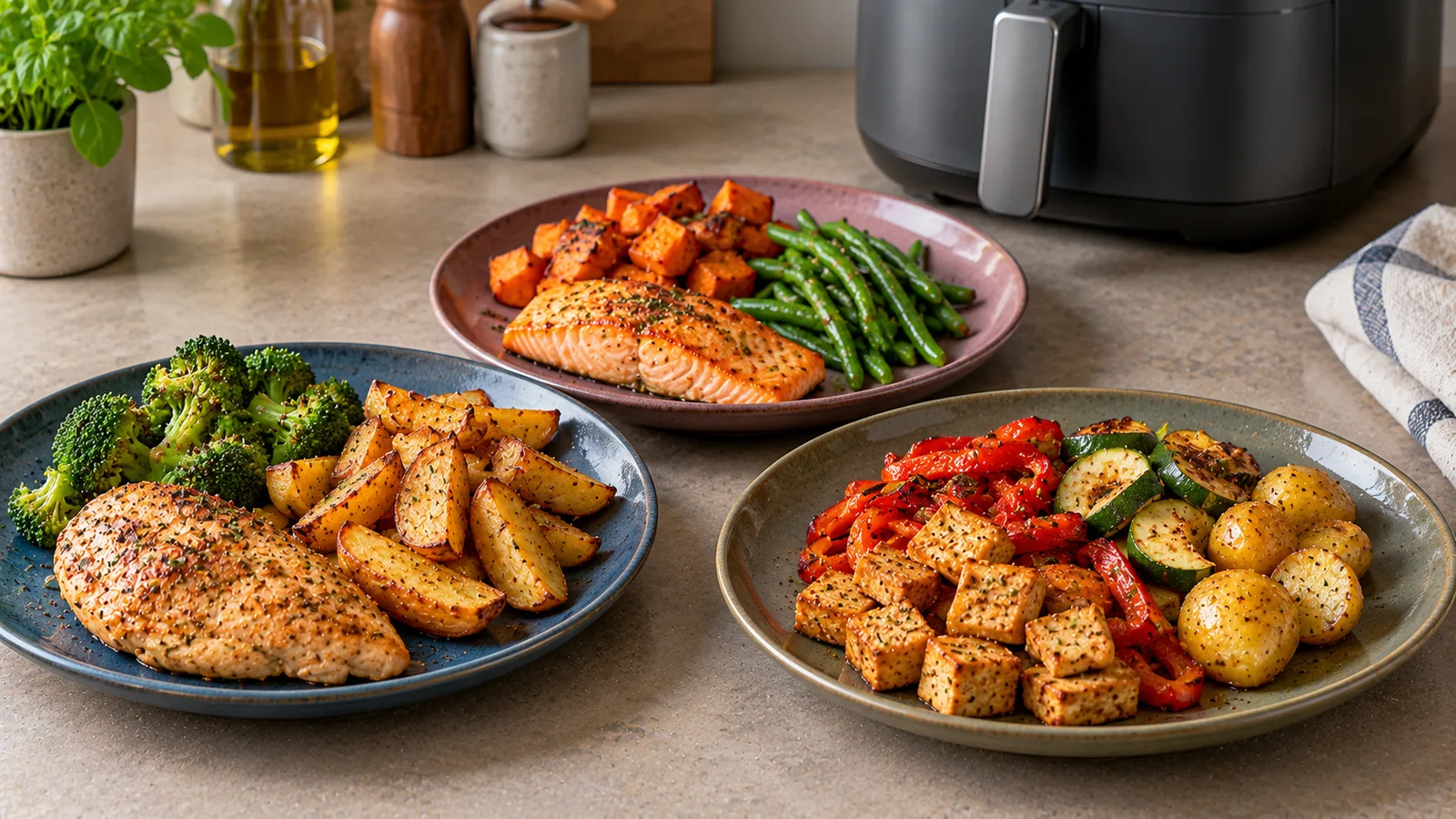
An air fryer can brown a few vegetables quickly, but vegetables alone are not automatically dinner. Each of the three plates below combines a protein source, vegetables and a starchy or legume component. Quantities are for one adult, measured before cooking unless marked drained. These are practical examples, not medically prescribed portions, and you can adjust them to appetite. No rice cooker, second oven or premade side dish is necessary. The timings are working ranges: a small basket, thick chicken pieces, chilled ingredients and crowded trays can change them.
The three plates deliberately use different proteins and different ways of filling the plate. You will get a crisp potato plate, a wholly plant-based tray and a fish-and-legume option. A single basket works if you stagger the ingredients; with a two-drawer machine you may cook components in parallel, but check each one separately.
Compare the three one-person dinners
| Dinner | Protein / vegetables / satisfying side | Raw or drained ingredients | Illustrative total |
|---|---|---|---|
| Chicken, potato and broccoli | Chicken / broccoli / potato | 150 g chicken, 170 g broccoli, 180 g potato, 10 g oil | about 465 kcal |
| Tofu, sweet potato and pepper | Tofu / pepper / sweet potato | 180 g tofu, 160 g pepper, 190 g sweet potato, 8 g oil | about 464 kcal |
| Salmon, chickpeas and courgette | Salmon / courgette / chickpeas | 130 g salmon, 180 g courgette, 120 g drained chickpeas, 8 g oil | about 540 kcal |
The totals are illustrative ingredient calculations, not laboratory measurements of a finished meal. The tofu example assumes a product with 100 kcal/100 g; salmon uses a 208 kcal/100 g raw farmed Atlantic reference. Other varieties, water content and labels change the result. Oils are weighed, not estimated from a spray count. A tablespoon or spray can deliver more or less than expected.
Dinner 1: chicken, crispy potatoes and broccoli
Ingredients for one: 150 g raw, skinless boneless chicken breast; 180 g raw potato; 170 g broccoli florets; 10 g olive oil; paprika, garlic powder, black pepper and a little salt. No breading is needed. Cut potatoes into roughly 1.5 cm cubes, chicken into even pieces about 2 cm thick, and broccoli into bite-size florets. Pat everything dry, especially the chicken, without rinsing it.
Method: Heat the air fryer to 190 °C if its instructions call for preheating. Toss potatoes with 6 g oil and seasoning and cook for about 12 minutes, shaking once. Add chicken using separate clean utensils and cook another 6–9 minutes. Then add broccoli with the remaining 4 g oil; continue around 7–9 minutes, moving pieces for even browning. Total time is often 25–30 minutes, but that range is not a safety guarantee. Chicken must measure at least 74 °C in its thickest centre with a clean food thermometer. If the broccoli threatens to burn before the chicken is ready, shield or reposition it without serving any food exposed to undercooked chicken juices.
Serving and adjustment: Plate all components together. A squeeze of lemon or a spoonful of plain yoghurt added after cooking changes the recorded meal, so include it when calculating calories. For softer potatoes, cut smaller rather than adding large amounts of oil. If you prefer a 200 g potato portion, add its weight and energy to the recipe calculation rather than pretending that the original plate is unchanged.
Dinner 2: crisp tofu, sweet potato and peppers
Ingredients for one: 180 g firm tofu, drained; 190 g raw sweet potato; 160 g red pepper; 8 g olive oil; smoked paprika, garlic and a squeeze of lemon. The tofu example uses a label value of 100 kcal per 100 g. Firm tofu sold in stores ranges widely in calories and protein; use the brand you actually buy. For crisper tofu, press it briefly in a clean towel and cut into 2 cm cubes. Cut sweet potato into roughly 1.5 cm pieces and peppers into broad strips.
Method: Toss sweet potato with 5 g oil and cook at about 190 °C for 11 minutes. Shake, then add tofu and pepper with the remaining 3 g oil and season. Continue about 10–14 minutes, turning once, until the sweet potato is tender in the centre, the tofu is hot through and the peppers are browned at the edges. Depending on air-fryer power and crowding, total working time is around 21–25 minutes. Avoid a very thick wet marinade during cooking: it steams the tofu and can burn on basket surfaces.
Serving and adjustment: Divide the basket into tofu, peppers and sweet potato on one plate. This is a complete plant-based dinner by composition, but the exact protein content depends heavily on the tofu label. If your tofu is 145 kcal/100 g instead of the illustrative 100 kcal/100 g, 180 g adds 81 kcal to the total. For a sesame finish, weigh the seeds and account for them separately.
Dinner 3: salmon, chickpeas and courgette
Ingredients for one: 130 g raw salmon fillet (skin weight excluded if not eaten); 120 g cooked canned chickpeas, drained; 180 g courgette; 8 g olive oil; lemon zest, dill and pepper. The recipe illustration uses 208 kcal/100 g for a particular raw farmed Atlantic salmon reference, 140 kcal/100 g for drained chickpeas and 17 kcal/100 g for courgette. Products differ, especially salmon species and canned chickpea labels.
Method: Rinse and thoroughly dry drained chickpeas; combine with 5 g oil and cook around 190 °C for 9 minutes. Add the salmon and courgette slices coated in the remaining 3 g oil, keeping pieces in a single layer as far as space allows. Cook roughly 10–13 minutes more. Check the salmon in its thickest point with a thermometer; the USDA safety reference is 63 °C. Fish thickness matters more than a timer, and a stuffed basket may need batches. The chickpeas should be hot and lightly browned, not necessarily crunchy all the way through.
Serving and adjustment: Serve the salmon alongside chickpeas and courgette, with lemon after cooking. If using 120 g chickpeas including brine, the edible amount is less than specified: drain and weigh after draining. For a different fish, replace the reference nutrition value instead of reusing salmon calories. Frozen salmon must be safely defrosted according to its packaging and can require a different schedule.
How these calorie estimates were calculated
To reproduce any total, multiply each ingredient's raw or drained weight by its kcal per 100 g and divide by 100; then add the calories from weighed oil and any condiments. The illustrative reference values used here, all per 100 g, are chicken 120, potato 77, broccoli 34, firm tofu 100, sweet potato 86, red pepper 31, farmed salmon 208, drained chickpeas 140, courgette 17 and olive oil 884 kcal. They are rounded planning assumptions, not a claim that every product has exactly this value. Hence chicken plate: 180 + 139 + 58 + 88 ≈ 465 kcal; tofu plate: 180 + 163 + 50 + 71 ≈ 464 kcal; salmon plate: 270 + 168 + 31 + 71 ≈ 540 kcal. A brand label takes precedence for packaged tofu and canned chickpeas.
When vegetables lose water during cooking, their kcal per 100 g cooked weight may rise while the total calories in the edible plate stay roughly the same. Do not calculate a cooked plate using raw grams and then switch to cooked-food nutrient entries: that can double-count concentration changes. The tables represent ingredient inputs, not the weight remaining after roasting. Oil left in the bowl or basket can make absorbed energy lower than oil weighed in; counting all added oil is a simple conservative estimate.
Air-fryer workflow and mistakes to avoid
A single layer permits air circulation; a packed basket makes food steam rather than brown. Cut dense vegetables small enough to cook before softer vegetables char. Start potatoes or sweet potatoes first, add quick-cooking vegetables later and verify animal proteins at the centre. Shake or turn only with clean utensils; do not let raw chicken juices contaminate cooked vegetables or the serving plate. Two drawers may run different durations simultaneously. Use oven-safe accessories only when the manufacturer explicitly allows them, and never block the air path with loose baking paper.
If the meal seems dry, use lemon, herbs or a measured yoghurt sauce rather than silently increasing oil. If vegetables are hard, give them more time rather than raising the temperature indiscriminately. If the outside of chicken or fish browns too early, lower heat if your device permits and continue to the safe internal temperature. A probe thermometer makes these recipes repeatable across machines.
Food safety, storage and serving one person
Poultry should reach 74 °C (165 °F) at its thickest point; fish should reach 63 °C (145 °F) under the cited US home-cooking guidance. Use a cleaned thermometer and check after the thickest section is cooked. Times in this article are estimates, never evidence of safe cooking. Raw chicken and fish stay chilled until use; wash hands and utensils after handling them. Refrigerate perishable cooked leftovers within 2 hours (or 1 hour above 32 °C/90 °F), in shallow covered containers. For reheating leftovers, the cited US reference is 74 °C (165 °F). These are dinner recipes for one, so cooking the amount you need reduces leftovers; do not sacrifice safe handling to avoid waste.
For related planning and ingredient calculations, see air-fryer meal planning from a fridge · a three-dinner vegetarian shopping basket · how to weigh and count potato calories.
Sources
- USDA FoodData Central — reference food composition; see each ingredient's correct raw, cooked or drained form, and check packaging for exact brands.
- FoodSafety.gov: safe minimum internal temperatures — chicken, fish and reheated leftovers.
- USDA FSIS: using food thermometers — probe placement and safe temperature measurement.