
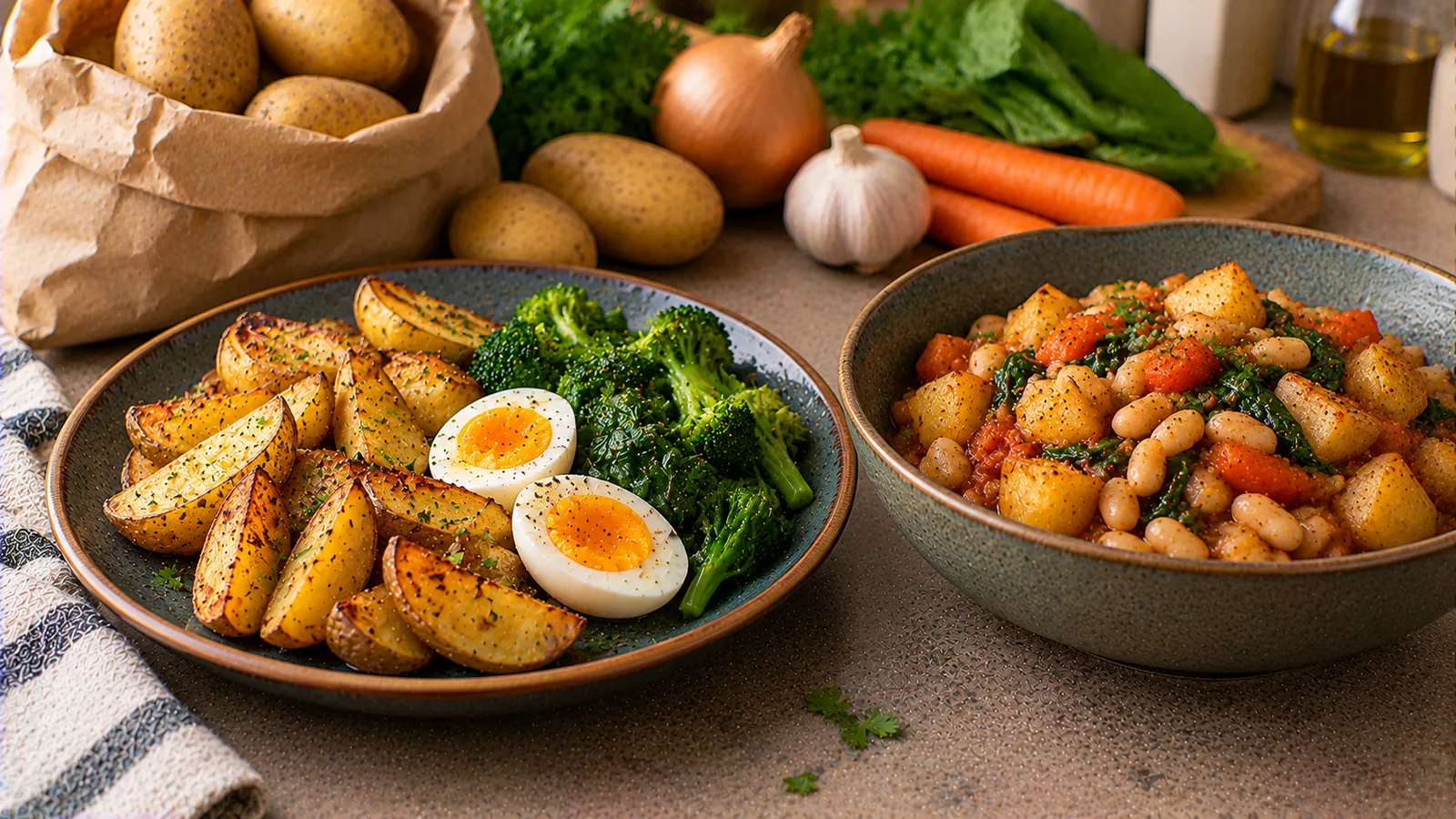
Three different dinners from one bag of potatoes
A 2 kg bag of potatoes can anchor three separate dinners for one adult without turning every evening into the same potato dish. Day 1 is a baked-potato plate with lemony white beans, cabbage and yogurt; day 2 is a potato, pea and bean vegetable stew; day 3 is a potato-and-egg skillet with peas and a yogurt dip. All three use 1,250 g potatoes weighed as bought, before peeling and trimming: 400 g + 450 g + 400 g. The other 750 g stay uncooked for a future meal rather than being discarded. Our one-person five-lunch grocery-basket guide covers a different one-person lunch basket; this plan is deliberately three dinners built around a single potato purchase.
This is a dinner-only plan, not three entire days of nutrition. Every dinner includes vegetables and a non-potato protein-containing food, but there is no claim that these plates deliver an individually appropriate calorie or protein target. Portion sizes are examples; appetite, energy requirements, allergies and actual packaging may require adjustment. A "low-waste" claim means a documented use or safe storage plan for the unused food—not that a multi-pack somehow becomes free after the first meal.
The shopping basket: checkout is not three dinner costs
The example uses illustrative German shelf-price assumptions, not observed offers or the current prices of a named retailer. A 2 kg potato bag is the gross purchase weight: the 400/450/400 g allocations are raw purchased weights. Removing peel, eyes and damaged portions reduces the edible yield. Canned beans are specified by drained weight, frozen peas by frozen weight, eggs by whole units, and oil by millilitres. Produce allocations are weights taken from the purchased products before ordinary trimming. Use your own labels and reweigh the edible result when precise nutritional data are needed.
| Item | Pack bought | Used in three dinners | Whole-pack price | Used-ingredient cost |
|---|---|---|---|---|
| Potatoes (2 kg bag; purchased raw weight) | 2000 g | 1250 g | €2.79 | €1.74 |
| White beans (400 g can; 240 g drained) | 240 g | 240 g | €0.89 | €0.89 |
| Plain frozen peas | 450 g | 290 g | €1.39 | €0.90 |
| White cabbage (approximate whole-head purchase) | 1000 g | 220 g | €1.99 | €0.44 |
| Onions (bag) | 1000 g | 220 g | €1.39 | €0.31 |
| Carrots (bag) | 1000 g | 260 g | €1.29 | €0.34 |
| Plain natural yogurt | 500 g | 200 g | €1.19 | €0.48 |
| Eggs (six-pack) | 6 | 2 | €2.29 | €0.76 |
| Lemon | 1 | 1 | €0.49 | €0.49 |
| Garlic bulb (50 g usable assumed) | 50 g | 12 g | €0.49 | €0.12 |
| Cooking oil (bottle) | 500 ml | 36 ml | €3.49 | €0.25 |
| Total | — | — | €17.69 | €6.71 |
In this model the entire checkout is €17.69, including all the unconsumed eggs, yogurt, oil and vegetables. The allocated cost of ingredients used in the three dinners is €6.71, approximately €2.24 per dinner. Those figures are not interchangeable: the checkout is what you pay today; the allocated cost is the fraction of each purchased pack consumed by the three recipes. Salt, pepper and optional dry spices are excluded, as are heat and electricity costs. If you must buy spices or choose different pack sizes, the checkout changes. Our €30 grocery-basket cost example gives a different, more general €30 food-shopping example.
Exact three-day allocation
Each column below means one adult's dinner, not the quantity for three people eating together. One 240 g-drained can of white beans is split between the first two days; refrigerate the Day 2 portion promptly in a clean covered container, following the can's shorter instructions if stated. The same yogurt tub appears on Days 1 and 3 but is used in different measured quantities. Two of six eggs are used on Day 3; four remain available for another purpose.
| Purchased/allocated ingredient | Day 1 | Day 2 | Day 3 |
|---|---|---|---|
| Potatoes (2 kg bag; purchased raw weight) | 400 g | 450 g | 400 g |
| White beans (400 g can; 240 g drained) | 160 g | 80 g | — |
| Plain frozen peas | — | 140 g | 150 g |
| White cabbage (approximate whole-head purchase) | 120 g | 100 g | — |
| Onions (bag) | 60 g | 80 g | 80 g |
| Carrots (bag) | 60 g | 100 g | 100 g |
| Plain natural yogurt | 80 g | — | 120 g |
| Eggs (six-pack) | — | — | 2 |
| Lemon | 0.3333333333333333 | 0.3333333333333333 | 0.3333333333333333 |
| Garlic bulb (50 g usable assumed) | 4 g | 4 g | 4 g |
| Cooking oil (bottle) | 12 ml | 12 ml | 12 ml |
| Allocated cost | €2.03 | €2.08 | €2.60 |
Cost allocated to each dinner, using unrounded underlying prices: Day 1 €2.03, Day 2 €2.08, Day 3 €2.60. The independently rounded line prices may total a cent differently from the exact combined €6.71. These are not restaurant menu prices or claims about what can be purchased individually for that amount.
Day 1 — Baked potatoes with lemony beans, cabbage and yogurt
Ingredients, one main serving: 400 g raw purchased potatoes, 160 g drained canned white beans, 120 g cabbage, 60 g onion, 60 g carrot, 80 g plain yogurt, 4 g garlic, 12 ml oil and one-third lemon. Add water, pepper and paprika only if you have them; they are not included in the cost calculation. Check yogurt and beans for allergens or other label information that matters to you.
Method. 1. Wash the potatoes, inspect for green parts, sprouts or damage, and peel or trim appropriately. Cut into medium wedges, then spread over a tray with approximately half the oil; roast at 200 °C conventional oven for 25–35 minutes, turning once, until fully tender and lightly golden. Time depends on thickness and oven, so do not rely on the clock alone. 2. In a pan, soften sliced onion and finely cut carrot in the remaining oil. Add thinly shredded cabbage and garlic, a splash of water and a lid; cook until the cabbage is tender. 3. Drain the can; measure 160 g drained beans, warm them completely in the vegetables and reserve the remaining 80 g covered in the refrigerator immediately for Day 2. 4. Mix the yogurt with some of the lemon juice and serve it cold alongside the cooked potatoes and beans. The yogurt is a sauce, not an extra potato filling that has been counted twice.
A properly cooked potato is fluffy and the beans make this more substantial than roasted potatoes alone. If the oven browns the wedges very darkly, lower the heat or shorten roasting: for potato products, EFSA recommends golden rather than dark-brown cooking. Do not describe deep, dark crisping as a nutritional benefit. Serve immediately; if you keep leftovers, follow the cooling rules below.
Day 2 — Potato, pea and white-bean vegetable stew
Ingredients, one main serving: 450 g raw purchased potatoes, the reserved 80 g drained beans, 140 g frozen peas, 100 g cabbage, 80 g onion, 100 g carrot, 4 g garlic, 12 ml oil and one-third lemon. Add approximately 300–450 ml water, adjusting for desired thickness, with optional salt, pepper or dried herbs. Water has no ingredient cost, and broth is not secretly included in the basket.
Method. 1. Peel/trim and dice the potatoes into pieces about 2 cm across. Chop carrot, onion and cabbage. 2. Cook onion and carrot briefly in the oil, add cabbage and garlic, stir, then add the potatoes and 300 ml water. Simmer with a lid until potatoes are tender, generally about 15–25 minutes, depending on size; add water in small amounts if needed. 3. Add 140 g frozen peas directly from the freezer according to their packaging instructions. Heat until cooked through, then fold in the 80 g reserved beans and bring the stew back to steaming hot. 4. Taste, add the second third of lemon, and serve.
This bowl is intentionally a stew rather than a second baked potato dinner. The first day's opened beans are not held beyond the second day; if their label requires faster use, use them sooner or choose a different storage arrangement. Keep frozen peas frozen until used. Do not calculate a nutrition label using the 450 g raw potato purchase weight as if it were 450 g peeled, cooked potato.
Day 3 — Potato-and-egg skillet with peas and cold yogurt dip
Ingredients, one main serving: 400 g raw purchased potatoes, 2 eggs, 150 g frozen peas, 80 g onion, 100 g carrot, 120 g plain yogurt, 4 g garlic, 12 ml oil and the final third of the lemon. There is no canned-bean allocation on Day 3: the complete can was used on Days 1 and 2.
Method. 1. Peel or trim the potatoes as needed, dice them and simmer in water until just tender, about 10–15 minutes for small cubes. Drain thoroughly and let surface steam escape; a wet surface will not brown evenly. 2. Warm the oil in a wide non-stick pan; gently colour the potatoes until lightly golden, then add diced onion and grated carrot. Cook until the carrot softens. 3. Add 150 g frozen peas and prepare them according to the pack's heat/cook instructions. 4. Make two spaces in the vegetables, crack in the 2 eggs, cover and cook until the whites and yolks are set; those who need a higher safety margin should ensure the eggs are cooked thoroughly rather than runny. 5. Mix 120 g plain yogurt, finely minced garlic and the remaining lemon into a cold dip, using clean utensils. Serve alongside the hot skillet.
The eggs and yogurt serve different roles from the previous evenings; the finished plate is not simply the Day 2 stew fried again. If an egg cracks while still raw or smells abnormal, discard it; do not treat visible appearance alone as a guarantee of safety.
Where every ingredient goes—and what remains
The three dinners use 1,250 g purchased potatoes, leaving 750 g raw potatoes from the original 2 kg bag. They also allocate 240 g drained canned beans (160 + 80), 290 g frozen peas (140 + 150), 220 g cabbage (120 + 100), 220 g onion (60 + 80 + 80), 260 g carrot (60 + 100 + 100), 200 g yogurt (80 + 120), 2 eggs, 12 g garlic (4 + 4 + 4), 36 ml oil (12 + 12 + 12) and one lemon in thirds. No canned beans or lemon are left open at the end. Our guide to a balanced plate with budget foods explains how to evaluate the wider dinner plate rather than labelling a meal "balanced" solely because it contains potatoes and vegetables.
The unallocated food has a purpose: store 750 g uncut potatoes dark, cool, dry and ventilated; keep 160 g unused frozen peas properly frozen; use the remaining cabbage, carrots and onions in later meals; use the 300 g yogurt by its label's safe date and storage instructions; and plan for the remaining four eggs. Remaining cooking oil and garlic stay within their recommended storage conditions. A partly used cabbage head can dry out, so cover the cut surface and refrigerate it. Check the actual quality of fresh items; a three-day meal plan cannot promise they stay fresh indefinitely.
Storage safety and the meaning of "low waste"
Store uncooked potatoes in a cool, dark, dry, airy place—preferably around 7–10 °C if suitable space is available—not in bright light or sealed wet plastic. Refrigeration is not generally preferred for potatoes intended for high-temperature browning because cold storage can change their sugar content. Remove green areas and sprouts generously, and discard heavily green, shrivelled or bitter potatoes. The German Federal Centre for Nutrition addresses potato storage, trimming and varieties; the plan's potato weights refer to purchased raw tubers, not edible cooked servings.
Do not prepare the three potato dinners in one room-temperature batch. Cooking each night avoids unnecessary holding. For cooked leftovers, refrigerate in shallow containers within 2 hours (within 1 hour if ambient temperature exceeds 32 °C) at 4 °C or below, eat safely stored leftovers within 3–4 days or freeze them, and reheat to 74 °C (165 °F). These times and temperatures come from USDA FSIS guidance; a shorter manufacturer's direction takes precedence. Opened dairy and bean containers also require prompt chilling. The low-waste claim does not excuse unsafe storage.
Adapt without inventing new budget or nutrient claims
The measured recipes are examples, not a prescription for a particular age, calorie intake, or weight-loss goal. Potatoes provide starch, while beans, peas, eggs and yogurt contribute varying amounts of protein; the exact totals depend on brands, edible trimming, cooking method and actual serving size. For a smaller appetite, reduce a component and recalculate the cost; for a higher energy or protein need, add food and treat that as an additional purchase or pantry ingredient, not as a free part of this basket. There is no computed kcal, protein or fibre promise for these plates.
If shopping for a vegan household, replace the yogurt and eggs with verified alternatives and recalculate quantities, costs and nutrients; the basket as written includes dairy and eggs and is vegetarian, not vegan. If avoiding lactose or eggs for allergies, do not use an unverified direct substitution. Three days of dinner-only planning also cannot prove daily nutritional adequacy.
Sources and calculation boundaries
- BZfE — potatoes: buying, storing and preparing: storage and trimming guidance.
- EFSA — acrylamide in food: prefer modest golden browning over darkly browned potato products.
- USDA FSIS — leftovers and food safety: prompt chilling, 3–4 days and reheating.
- Prices are illustrative purchasing assumptions, not live shop observations. Calculation: whole-pack checkout is the sum of prices; allocated cost = pack price × quantity used ÷ pack quantity. Potato and other produce allocations are purchased weights, whereas beans use drained weight.