
What the five-dinner plan actually buys
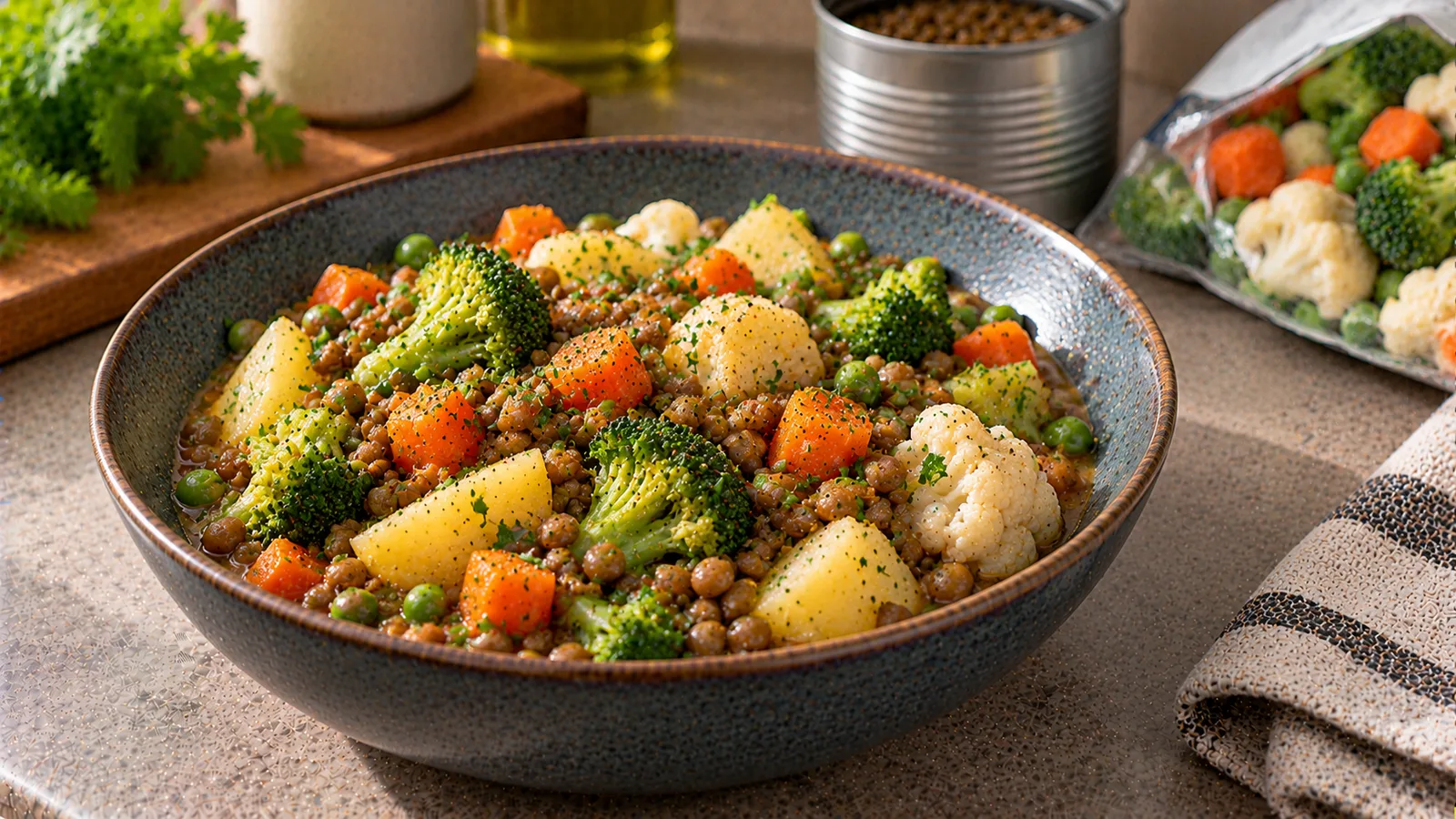
This plan makes five different dinners for two people, not five servings for one. Each recipe uses one 240 g drained can of lentils and 200 g plain frozen mixed vegetables. That means five cans supply 1,200 g edible lentils and one 1 kg vegetable bag is used exactly, with no opened cans sitting in the fridge between recipes. Keep the unused frozen vegetables frozen until their evening; do not thaw a full bag on Monday for use through Friday.
The common base saves time, but the starch and cooking style change: pasta, rice, potatoes, couscous and wraps. A family can substitute a different plain frozen blend, but the nutrition label, vegetable cooking time and price may change. The menu contains no meat, and the listed core ingredients are plant-based if the tortillas and pasta are egg-free. The reference product for lentils contains water and sea salt, so look at the label rather than calling canned lentils inherently salt-free.
The DGE advice on legumes supports eating legumes regularly as part of a varied diet. It does not say every dinner must be lentils or that five lentil dinners alone provide a complete daily diet.
One shopping list — checkout price versus food used
The basket uses one German published example for the lentils: dmBio brown lentils, 240 g drained per can, advertised at €1.15 per can when checked. Five cans are €5.75. All other numbers below are hypothetical German basket prices chosen to make the arithmetic reproducible, not live Aldi, Lidl or REWE offers. Oil is measured in millilitres, while the solid foods are measured in grams; the lemon is a whole item.
| Ingredient / buying unit | Buy | Example price | Used in five dinners | Allocated cost |
|---|---|---|---|---|
| Brown lentils, drained (five 240 g cans) | 5 × 240 g | €5.75 | 1200 g | €5.75 |
| Plain frozen vegetable mix | 1000 g | €2.29 | 1000 g | €2.29 |
| Pasta, dry | 500 g | €0.92 | 160 g | €0.29 |
| Rice, dry | 1000 g | €1.83 | 150 g | €0.27 |
| Potatoes | 1000 g | €1.49 | 500 g | €0.75 |
| Couscous, dry | 500 g | €1.49 | 150 g | €0.45 |
| Tortilla wraps | 300 g | €1.69 | 200 g | €1.13 |
| Tomato passata | 500 g | €0.89 | 500 g | €0.89 |
| Onions | 1000 g | €1.32 | 500 g | €0.66 |
| Vegetable oil | 500 ml | €2.79 | 50 ml | €0.28 |
| Lemon | 1 lemon | €0.49 | 1 lemon | €0.49 |
| Total | — | €20.95 | — | €13.25 |
At checkout the 11 items cost €20.95 under these assumptions. Only €13.25 worth of ingredients is allocated to the ten cooked servings, about €1.32 per serving when rounded from the unrounded total. The difference of approximately €7.70 is the purchase value of unconsumed pasta, grains, potatoes, tortillas, onions and oil—not a claim that these goods were thrown away. Spices, cooking electricity and transport are outside the basket.
A can is 400 g including liquid, but 240 g drained in this specific product. Pricing and recipes consistently use that drained number. Our guide on rinsing canned legumes explains why the liquid and sodium are separate questions. The manufacturer’s label for these lentils is the reference for drained weight, nutrition and published price.
Five dinners and their allocated costs
Every line below makes two plates. The amounts come from the single list, so the same can of lentils or gram of vegetables is never counted twice. These are ingredient allocations, not supermarket receipts for that evening.
| Dinner, two servings | Drained lentils | Frozen vegetables | Two-serving cost | Per person |
|---|---|---|---|---|
| Tomato lentil pasta | 240 g | 200 g | €2.45 | €1.22 |
| Mild lentil and rice skillet | 240 g | 200 g | €2.25 | €1.12 |
| Smoky lentils with crispy potatoes | 240 g | 200 g | €2.55 | €1.28 |
| Lemon lentil couscous bowls | 240 g | 200 g | €2.73 | €1.37 |
| Tomato lentil vegetable wraps | 240 g | 200 g | €3.27 | €1.63 |
There is intentionally no universal calorie total claimed for a finished plate: the chosen frozen mix, pasta, wraps and oil brands are not fixed, and their labels can change energy and protein. In contrast, one can of the reference lentils is a specific food with a traceable composition. You can log the other ingredients from their actual packages using the quantities stated in each recipe.
Dinner 1 — Tomato lentil pasta
For two: 240 g drained canned lentils, 200 g frozen mixed vegetables, 160 g dry pasta, 200 g passata, 100 g onion and 10 ml oil. Optional pantry additions: black pepper, dried basil and a little garlic. These seasonings are not included in the basket price.
Cook the pasta in boiling water to the package directions. Meanwhile, soften the chopped onion in measured oil for several minutes. Add the frozen vegetable mix straight from the freezer and cook until thoroughly hot. Pour in the passata, bring to a simmer and stir in the drained lentils. Heat until steaming throughout; the canned lentils are already cooked and only need reheating. Combine with the drained pasta, reserving a splash of pasta water if you want a looser sauce.
Split the pan evenly. This uses only 160 g dry pasta, not 160 g cooked pasta, and the 240 g of lentils is the drained weight of one entire can. If the sauce is thin because the vegetables release water, simmer it uncovered before mixing in the pasta. It is a tomato-and-lentil pasta meal, rather than a second general guide to eating legumes.
Dinner 2 — Mild lentil and rice skillet
For two: 240 g drained lentils, 200 g frozen vegetables, 150 g dry rice, 100 g onion, 100 g passata and 10 ml vegetable oil. Cumin or mild curry powder may be added from your pantry; the cost assumes you already have these seasonings.
Wash the rice if its instructions recommend it, then cook using the water ratio on its label. Do not guess the finished rice weight: different brands absorb different amounts of water. In a separate large pan, soften the onion in the oil, cook the frozen vegetables thoroughly, and add the passata with a little water. When the sauce bubbles, stir in the drained lentils and keep heating until the entire mixture is hot.
Spoon the vegetables and lentils over two equal rice portions. Use less water for a thicker skillet meal, more for a soft curry-style sauce. If you are cooking rice ahead, cool it promptly in small containers and refrigerate; do not leave a pot of cooked rice on the counter overnight. This dish gives a clear alternative to pasta while still using exactly one can.
Dinner 3 — Smoky lentils and potatoes
For two: 240 g drained lentils, 200 g frozen vegetables, 500 g raw potatoes, 100 g onion and 12 ml oil. Smoked paprika and pepper are optional pantry seasonings. If you want a completely dry skillet, thawing the vegetables is unnecessary but leave the pan uncovered to evaporate their liquid.
Dice the potatoes into small, even pieces. Roast or pan-cook them with part of the measured oil until tender and browned; the time depends on their size. In the same or a second pan, soften the onion in the rest of the oil, add the vegetables frozen and cook thoroughly. Add the lentils and paprika at the end, heating them without reducing them to a puree.
Serve two equal plates with the crisp potatoes alongside the lentil-vegetable mixture. The 500 g potato weight is raw and refers to the potatoes actually used, after any discarded damaged parts are removed. Air-frying or baking may reduce hands-on work but does not change how much purchased oil you should record: count the amount actually consumed.
Dinner 4 — Lemon lentil couscous bowls
For two: 240 g drained lentils, 200 g frozen vegetables, 150 g dry couscous, 100 g onion, 10 ml oil and one lemon. The cost model includes buying and using one lemon, although the precise amount of juice varies with size. A little pepper or dried parsley is optional.
Prepare the couscous with hot water according to the package and fluff it with a fork. Meanwhile, cook the diced onion and frozen vegetables in a hot pan with the measured oil. Heat the drained lentils in the vegetable mixture until steaming. Fold the hot lentils and vegetables through the couscous and finish with lemon juice, adding it little by little to taste.
Divide the complete mixture into two bowls. Couscous is weighed dry, and a cooked volume measure is not an equivalent replacement. If your vegetable blend contains cauliflower or large broccoli pieces, give them enough cooking time before adding the lentils. The lemon adds brightness without requiring a separate creamy dressing or an expensive seasoning mix.
Dinner 5 — Tomato lentil vegetable wraps
For two: 240 g drained lentils, 200 g frozen vegetables, four tortillas totalling 200 g, 200 g passata, 100 g onion and 8 ml oil. Use four approximately 50 g tortillas; if your pack contains larger wraps, weigh 200 g rather than assume the same count.
Cook the onion in the oil, then add frozen vegetables and simmer away any excess moisture. Add passata and the drained lentils. Keep the filling on the heat until thick and steaming hot. Heat the tortillas as directed on the pack, spread the filling evenly between all four and fold into two wraps per person. Serve immediately to prevent soggy bread.
This deliberately uses the final 200 g of passata and the final can of lentils. If your chosen tortillas weigh less or more than 50 g, the shopping and portion calculations must change. Leftover filling can be refrigerated promptly in a shallow container, but do not store filled wraps at room temperature for several hours as a meal-prep shortcut.
What lentils contribute before adding the other ingredients
The dmBio reference label gives 96 kcal, 7.7 g protein, 4.6 g fibre and 0.35 g salt per 100 g. It applies to the canned edible lentils, not the total weight of the can including water. In these recipes the 240 g drained can contributes about 230.4 kcal, 18.48 g protein and 11.04 g fibre in total. Divide each dish into two equal servings and lentils alone contribute approximately 115.2 kcal, 9.24 g protein and 5.52 g fibre per person. The following table intentionally excludes the pasta, rice, potatoes, couscous, wraps, vegetables and oil.
| Drained lentils eaten | Energy from lentils alone | Protein from lentils alone | Fibre from lentils alone |
|---|---|---|---|
| 100 g | 96.00 kcal | 7.70 g | 4.60 g |
| 120 g | 115.20 kcal | 9.24 g | 5.52 g |
| 240 g | 230.40 kcal | 18.48 g | 11.04 g |
The whole dinner will contain additional calories and nutrients from those ingredients. For example, 160 g dry pasta should not be entered as 160 g cooked pasta. Packaged mixed vegetables can include different proportions of carrots, peas, broccoli and corn, so the nutrition varies. For a fair comparison with another meal, weigh edible ingredients in the state specified by the chosen entry, and then divide the whole recipe by two. For how to measure a serving rather than a package serving size, see Mealisa’s portion guide.
Shopping without losing the savings
The first decision is whether you already own the pantry basics. If there is a partly used bag of rice at home, do not buy another merely to reproduce our example checkout total. If you have a half-full bottle of oil, count only the 50 ml you use in recipe costing, but your actual cash outlay may be €0 for oil this week. Conversely, if you need paprika, garlic and other spices for the first time, add them to your actual basket.
Compare packages by price per 100 g of usable food, not simply shelf price. Canned lentils include liquid: a €1.15 can that yields 240 g edible lentils costs about €0.48 per 100 g drained. A raw dried-lentil product needs soaking or cooking and has a different edible yield, so the printed dry weight cannot be directly substituted for 240 g drained lentils. A bigger can or a store brand might lower the cost; verify its drained weight and nutritional label before using it.
Frozen mixed vegetables are useful here because exactly 200 g can be removed on each evening. BZfE explains cooking frozen vegetables: put them directly into a hot pan or pot, following package directions. Stir or simmer thoroughly so large pieces heat all the way through. If a bag contains a sauce, cheese or butter, treat it as a different item with different costs and energy.
A budget grocery list is useful for ongoing shopping, whereas this article delivers five specific dinners and their recipe-level quantities.
Prepare in stages and store safely
You do not need to cook all five dinners on a Sunday. It is simpler to prepare the starch for each meal fresh and take 200 g vegetables straight from the freezer each day. Open one can per dinner, drain it and use the contents in that dinner. This avoids keeping five separate half-cans in the refrigerator. Diced onion can be cut just before cooking; the unused whole onions remain part of your pantry.
If you cook ahead, cool dishes in shallow containers and refrigerate promptly. The USDA leftover-safety guidance advises refrigerating perishable cooked food within two hours, eating most refrigerated leftovers within 3–4 days, and reheating leftovers thoroughly to 74 °C / 165 °F. A large pot left cooling overnight at room temperature is not a safe storage strategy. For rice in particular, cool promptly and follow the rice package or local food-safety advice, as bacterial spores can survive cooking.
The dmBio can label says that, after opening, its lentils should be transferred to a non-metal container, refrigerated and used within 3–4 days. Our recipes avoid relying on the maximum storage window by using one entire can each evening. If the freezer fails or the vegetable mix thaws during transport, follow the product’s safety instructions rather than treating it as shelf-stable.
Adaptations that keep the calculations honest
To make portions smaller, halve the whole recipe—not just the lentils—or keep the leftover meal promptly chilled. To feed three people, scale quantities by 1.5 and recalculate the shopping list; one 240 g can will not necessarily provide the same lentil portion to three diners. To increase vegetables, add 100 g per dinner but buy 1.5 kg, not the originally modelled 1 kg bag.
If someone dislikes couscous, replace 150 g dry couscous with a weighed quantity of dry bulgur or rice, then use that product’s nutrition facts and purchase price. A gluten-free version needs verified gluten-free pasta and wraps; couscous is usually made from wheat. If you add eggs, cheese or yogurt, the plan is no longer the all-plant-ingredient base described here, and the calories, allergens and price must be recalculated.
For households that have more time but less cash, dry lentils are another option, provided the edible cooked yield is measured. That is not an identical swap with five drained cans. Avoid declaring one choice universally cheapest, because water, energy, labour and local grocery prices can change the comparison. Planning dinners across a week can help when you want to use other ingredients on the remaining days.
Sources and calculation notes
dmBio brown canned lentils — drained mass, nutrition and price; DGE — legumes and nuts; BZfE — freezing and preparing vegetables; USDA FSIS — leftover food safety. Prices other than the lentil price are illustrative German assumptions, not observed current offers. The nutritional calculation uses this particular lentil label only; no unsourced macro totals are claimed for the complete dishes. Recipes give quantities for two, and ten servings are counted across five dinners.