
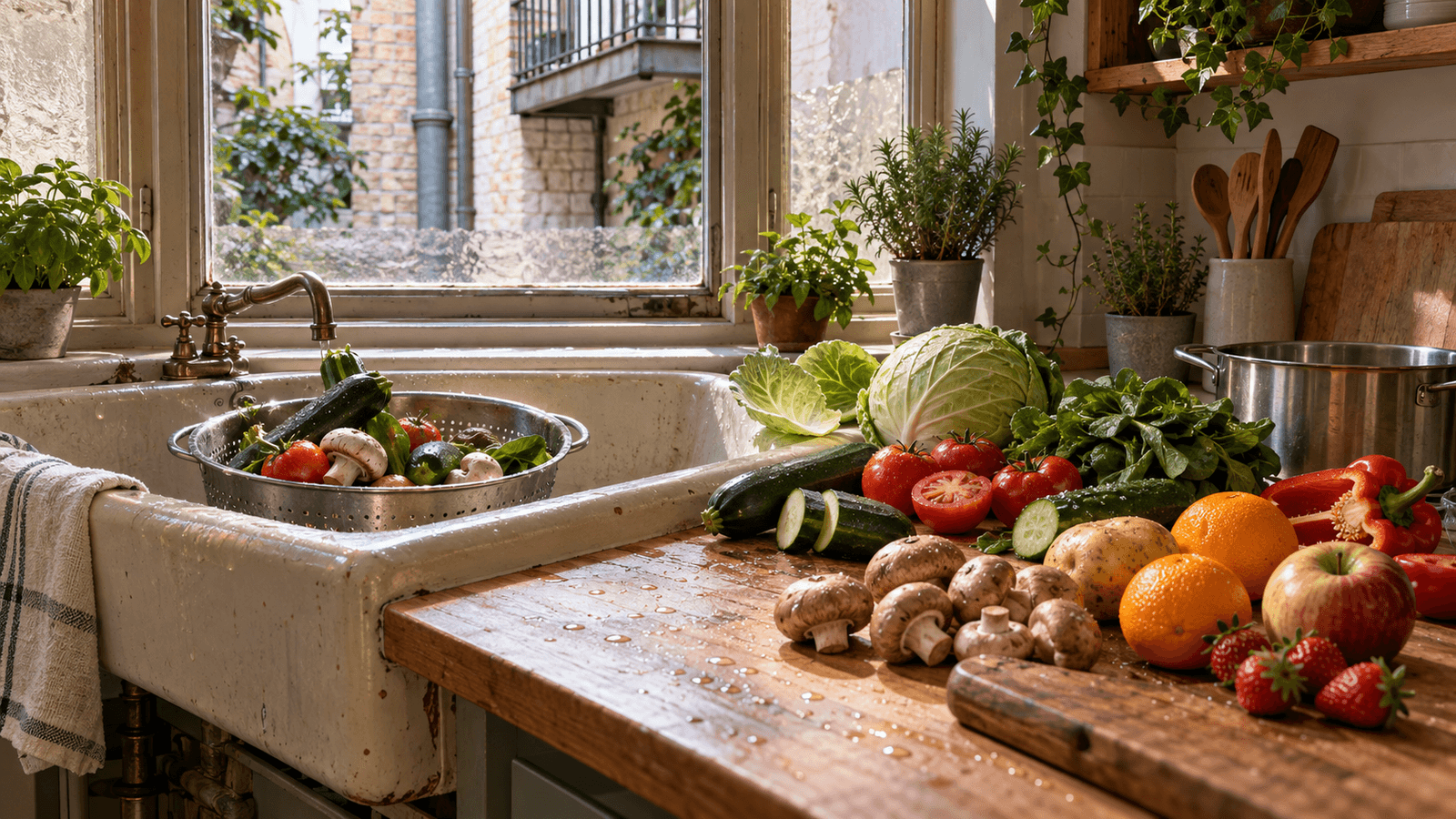
Low-calorie-density foods provide relatively few calories for the amount of food they contain.
They can be useful when you want meals that feel physically substantial without making the calorie total unnecessarily high.
Foods with low calorie density often contain a lot of:
- water
- fiber
- air or natural volume
Common examples include many vegetables, fruits, broth-based soups and some cooked starchy foods.
The idea is not to eat only low-calorie foods.
Instead, understanding calorie density can help you combine foods in a way that supports fullness, nutrition and your overall calorie needs.
What is calorie density?
Calorie density describes how many calories a food provides relative to its weight.
A food with low calorie density provides fewer calories per gram.
A food with high calorie density provides more calories per gram.
This means two foods with the same weight can provide very different amounts of energy.
Why does calorie density matter?
People do not experience food only as a number of calories.
The physical amount of food also matters.
A larger volume of food can take up more space in the stomach and may contribute to the feeling that you have eaten a substantial meal.
This is one reason foods rich in water and fiber can be useful when building satisfying meals.
Calorie density is therefore a practical way to think about the relationship between:
- food volume
- calories
- meal size
- satiety
- nutritional quality
What makes a food low in calorie density?
The biggest factor is usually water.
Water adds weight and volume without adding calories.
Foods naturally high in water include:
- many vegetables
- many fruits
- soups
- some cooked grains and starches
Fiber can also add bulk and slow the eating process.
Together, water and fiber can make a food physically substantial relative to its calorie content.
Foods with a lot of water
Many vegetables and fruits contain a high proportion of water.
Examples include:
- cucumber
- tomatoes
- zucchini
- lettuce
- cabbage
- mushrooms
- peppers
- watermelon
- strawberries
- oranges
- peaches
These foods can add considerable volume to a meal or snack.
Non-starchy vegetables
Non-starchy vegetables are among the most useful low-calorie-density foods.
Examples include:
- broccoli
- cauliflower
- zucchini
- mushrooms
- cabbage
- spinach
- green beans
- peppers
- tomatoes
- cucumber
- leafy greens
- eggplant
They can be:
- roasted
- steamed
- grilled
- sautéed
- added to soups
- mixed into sauces
- eaten raw
Preparation matters because added oil, cheese, creamy sauces or other calorie-dense ingredients can substantially change the calorie density of the final dish.
Fruit
Whole fruit can also have relatively low calorie density because it contains water and fiber.
Useful examples include:
- berries
- apples
- oranges
- peaches
- pears
- melon
- kiwi
- grapefruit
Fruit can be useful as:
- part of breakfast
- a snack
- dessert
- an addition to yogurt or oats
Whole fruit and fruit juice are not equivalent in terms of volume and eating experience.
Juice removes much of the structure of whole fruit and is easier to consume quickly.
Potatoes
Potatoes are sometimes assumed to be inherently high-calorie, but plain cooked potatoes contain substantial water.
Their calorie density can change dramatically depending on preparation.
For example, potatoes can be prepared by:
- boiling
- steaming
- baking
- roasting
- frying
Adding large amounts of oil, butter, cheese or creamy sauces can increase the calorie density considerably.
The potato itself and a fried potato product are therefore not nutritionally identical.
Broth-based soups
Soups can be a useful way to increase food volume because water becomes part of the meal.
Examples include soups based on:
- vegetables
- beans
- lentils
- potatoes
- tomatoes
- broth
However, not every soup is low in calorie density.
Cream, coconut milk, large amounts of oil, cheese and other calorie-dense ingredients can change the nutritional profile substantially.
Legumes
Beans, lentils, chickpeas and peas are not necessarily among the very lowest-calorie foods, but they can still be useful in filling meals.
They provide combinations of:
- protein
- fiber
- carbohydrates
- minerals
Cooked legumes also contain water.
They can help create meals that are both substantial and nutritionally useful.
Cooked grains
Cooked grains absorb water.
This means their calorie density is lower after cooking than it would appear from the dry grain alone.
Examples include:
- rice
- oats
- barley
- bulgur
- quinoa
Portion size still matters, but combining cooked grains with vegetables and protein can create a larger meal without relying entirely on calorie-dense ingredients.
Oatmeal
Oats are a useful example of how preparation changes food volume.
Dry oats absorb water or milk during cooking.
The finished oatmeal therefore weighs and occupies more volume than the dry oats alone.
The final calorie density depends on what is added.
Ingredients such as:
- nuts
- nut butter
- chocolate
- sugar
- cream
can raise the calorie density substantially.
Yogurt and skyr
Some yogurt products can provide substantial volume and protein for a moderate calorie amount.
However, products differ considerably.
Calories can change depending on:
- fat content
- added sugar
- flavorings
- toppings
Plain yogurt or skyr can be useful components of meals and snacks, especially when combined with fruit.
Lean protein foods
Some lean protein foods can help build satisfying meals without adding extremely high calorie density.
Examples may include:
- chicken breast
- lean fish
- shrimp
- low-fat dairy
- some tofu products
Protein itself can contribute to satiety.
But cooking oils, breading and sauces can change the calorie total significantly.
Air in foods
Air can also increase food volume without directly adding calories.
Some foods naturally or mechanically contain more air.
However, this does not automatically make them more nutritious or more filling.
Water, fiber, protein and the overall meal structure are usually more useful factors to consider.
Low calorie density does not mean zero calories
A common misunderstanding is that low-calorie-density foods can be eaten without limits.
They still contain calories.
The concept simply describes how many calories are contained in a given weight of food.
Total intake still matters if you are trying to maintain or change body weight.
High-calorie-density foods are not automatically unhealthy
Foods with high calorie density can still be nutritious.
Examples include:
- nuts
- seeds
- olive oil
- avocado
- cheese
- nut butter
These foods can provide useful nutrients.
The practical difference is that a relatively small portion can contain a substantial amount of energy.
They can be included intentionally rather than avoided completely.
How cooking changes calorie density
Cooking can change calorie density by changing water content or adding ingredients.
For example:
Boiling
Food may absorb water, increasing weight and volume.
Roasting
Food can lose water, making calories more concentrated by weight.
Frying
Food can lose water and absorb oil, increasing calorie density substantially.
Steaming
Usually adds little or no extra energy while retaining considerable moisture.
Adding sauces
The effect depends entirely on the sauce.
A tomato-based sauce and an oil-heavy cream sauce can have very different calorie densities.
Oil can change a low-calorie food quickly
Vegetables may start with low calorie density.
But adding a generous amount of oil can substantially increase the calorie content without adding much volume.
This does not mean oil should be avoided.
It simply means that oil is worth accounting for if calorie intake matters to you.
See How to Correct an AI Food Estimate.
Low-calorie-density foods and fullness
Low-calorie-density foods can help increase the physical size of a meal.
But fullness is influenced by more than volume.
Other important factors include:
- protein
- fiber
- fat
- meal composition
- eating speed
- individual appetite
- previous food intake
A very large meal consisting almost entirely of low-protein vegetables may not be as satisfying as a balanced meal containing vegetables plus protein, carbohydrates and some fat.
How to build a more filling meal
A practical meal can combine:
- a substantial amount of vegetables or another high-volume food
- a meaningful protein source
- a carbohydrate source that fits your needs
- some fat for flavor and nutrition
For example, instead of simply making every ingredient as low-calorie as possible, focus on building a meal that is both substantial and balanced.
See How to Build a Filling Meal for Weight Loss.
Low-calorie-density foods for breakfast
Useful options can include:
- berries
- apples
- oranges
- melon
- plain yogurt
- skyr
- oatmeal prepared with plenty of liquid
A breakfast can combine these with protein and other foods depending on your needs.
Low-calorie-density foods for lunch
Lunch can include high-volume ingredients such as:
- leafy vegetables
- tomatoes
- cucumber
- cabbage
- roasted vegetables
- vegetable soup
- potatoes
- fruit
The rest of the meal can provide protein, carbohydrates and fat.
Low-calorie-density foods for dinner
Dinner can use similar principles.
Examples of useful components include:
- cooked vegetables
- soups
- potatoes
- mushrooms
- cabbage
- zucchini
- tomatoes
- legumes
The goal is not to create a plate of vegetables alone.
The goal is to use lower-calorie-density foods to increase meal volume while maintaining a balanced meal.
Low-calorie-density snacks
Snack options can include:
- whole fruit
- berries
- raw vegetables
- plain yogurt
- skyr
But snack choice should depend on hunger and the time until your next meal.
Sometimes a more energy-dense snack may be more appropriate.
See Healthy Snacks: How to Build a More Satisfying Snack.
Can low-calorie-density foods help with weight loss?
They can be useful.
If lower-calorie-density foods replace some more calorie-dense ingredients, you may be able to eat a similar or larger physical amount of food for fewer calories.
That can make a calorie deficit easier for some people to maintain.
However, weight loss still depends on overall energy balance over time.
No specific low-calorie-density food causes weight loss on its own.
Volume eating
“Volume eating” usually refers to choosing foods and meals that provide a relatively large physical amount of food for the calories.
This often emphasizes:
- vegetables
- fruit
- soups
- potatoes
- lean protein
- lower-calorie cooking methods
The approach can be useful, but it does not need to become extreme.
You still need adequate:
- protein
- dietary fat
- carbohydrates
- micronutrients
- overall energy
Avoid turning every meal into the lowest-calorie option
The lowest-calorie meal is not automatically the best meal.
If meals are consistently too low in energy or protein, you may become hungry soon afterward.
A useful goal is not “minimum calories.”
It is a meal that fits your needs while providing enough volume, nutrition and satisfaction.
Grocery shopping for lower-calorie-density foods
Useful staples can include:
- frozen vegetables
- fresh seasonal vegetables
- fruit
- potatoes
- canned tomatoes
- beans
- lentils
- plain yogurt
- skyr
- oats
- broth ingredients
Frozen and canned foods can be practical options and may reduce food waste.
Check added sauces, syrups and oils when relevant.
Frozen vegetables
Frozen vegetables can be just as practical as fresh vegetables for increasing meal volume.
They are useful because they:
- store for longer
- require little preparation
- can reduce food waste
- are easy to add to soups, stir-fries and side dishes
Choose plain versions when you want more control over added fats and sauces.
Canned vegetables and legumes
Canned foods can also be useful.
Examples include:
- tomatoes
- beans
- chickpeas
- peas
- corn
Drain or rinse them when appropriate.
The main difference between products may be added salt, sauces or other ingredients.
Meal planning with calorie density in mind
You do not need to calculate calorie density for every food.
A simpler approach is to look at your planned meals and ask:
- Where is the food volume coming from?
- Is there a meaningful protein source?
- Are vegetables or fruit included?
- Are calorie-dense ingredients being used intentionally?
- Will the meal actually satisfy me?
This creates a more practical planning system than chasing the lowest possible calorie number.
Tracking low-calorie-density foods
Tracking can still be useful even when foods are relatively low in calories.
It helps you understand:
- portion size
- meal composition
- total calorie intake
- protein intake
- patterns across the day
For foods such as vegetables, exact precision may be less important than for calorie-dense ingredients such as oils, nuts or sauces.
Photo-based food tracking
A photo can often identify visible vegetables, fruit, potatoes and other foods.
However, the biggest uncertainty may come from ingredients that are difficult to see.
Examples include:
- oil
- butter
- dressing
- sauces
- sugar
- cheese
A visually large meal is not necessarily high in calories, and a visually small meal is not necessarily low in calories.
This is one reason calorie density can be a useful concept when interpreting food photos.
Common mistakes
Assuming healthy means low-calorie
Nutritious foods can be calorie-dense.
Avoiding all calorie-dense foods
Foods such as nuts, seeds and olive oil can still fit into a nutritious diet.
Eating vegetables without enough protein
Volume alone does not guarantee a satisfying meal.
Ignoring cooking oil
Oil can substantially change the calorie density of vegetables and other foods.
Assuming every soup is low-calorie
Cream, coconut milk, cheese and oil can make some soups energy-dense.
Focusing only on food weight
Calories, protein, fiber and overall meal composition also matter.
Trying to maximize volume at every meal
Sometimes a smaller, more energy-dense meal or snack may fit your needs better.
Frequently asked questions
What foods have the lowest calorie density?
Many non-starchy vegetables and water-rich fruits have very low calorie density. Broth-based soups can also provide substantial volume for relatively few calories depending on their ingredients.
Are potatoes low in calorie density?
Plain cooked potatoes contain substantial water and can have a relatively moderate calorie density. Frying or adding large amounts of fat can increase it considerably.
Is fruit low in calorie density?
Many whole fruits are relatively low in calorie density because they contain substantial water and fiber.
Are nuts low in calorie density?
No. Nuts are relatively calorie-dense because they contain substantial fat. They can still be nutritious and included in appropriate portions.
Is rice a low-calorie-density food?
Cooked rice contains water and is less calorie-dense by weight than dry rice. Portion size and the rest of the meal still matter.
Does low calorie density mean a food is healthier?
No. Calorie density describes energy relative to food weight. It does not measure the complete nutritional quality of a food.
Can I lose weight by eating only low-calorie-density foods?
A sustainable diet still needs adequate protein, fat, carbohydrates, micronutrients and energy. Low-calorie-density foods can be useful, but they do not need to make up your entire diet.
The bottom line
Low-calorie-density foods provide relatively fewer calories for their weight and volume.
Many are naturally rich in water and fiber.
Useful examples include:
- vegetables
- fruit
- broth-based soups
- potatoes prepared with modest added fat
- some cooked grains
- legumes
- lower-fat high-protein foods
They can help make meals physically larger and may support fullness without requiring extremely high calorie intake.
But calorie density is only one part of nutrition.
A practical approach is to combine high-volume foods with adequate protein, carbohydrates and dietary fat rather than trying to make every meal as low-calorie as possible.
This article provides general educational nutrition information and is not individualized medical or dietary advice.