
AI can make food tracking faster, but an estimate from a photo should not automatically be treated as exact.
A food photo contains useful visual information, but the camera cannot always see portion weight, hidden ingredients, cooking oil, recipe composition or the exact product used.
The practical solution is not to reject AI estimates. It is to know what to check and how to correct the parts that matter.
Why an AI food estimate may need correction
A photo-based estimate usually involves several separate steps:
- recognizing the food
- estimating the portion
- matching the food to nutrition data
- estimating calories and macronutrients
An error at any step can affect the final result.
For example, the AI may correctly recognize rice but estimate too much of it. Or it may correctly estimate the visible portion while missing oil used during cooking.
That is why corrections should focus on the source of the error rather than simply changing the final calorie number.
First check: was the food identified correctly?
Start with the most basic question:
Did the AI recognize the correct food?
Foods that look similar can have very different nutritional profiles.
Examples include:
- yogurt versus a higher-fat creamy dessert
- lean meat versus a fattier cut
- tofu versus cheese
- plain potatoes versus potatoes cooked with substantial oil
- grilled fish versus breaded fish
If the food itself is wrong, correct the food identity before adjusting anything else.
For more about recognition limitations, see How Accurate Is Food Recognition From Photos?.
Check each visible component separately
Mixed meals are easier to review when you mentally separate their components.
For example, a meal might contain:
- chicken
- rice
- vegetables
- sauce
- oil
- cheese
Instead of asking whether the total estimate “looks right,” check whether each important component is represented.
This makes errors easier to find.
Second check: is the portion reasonable?
Even perfect food recognition does not reveal exact weight.
A camera sees apparent size, not grams.
Portion estimation can be affected by:
- camera angle
- distance from the food
- container size
- overlapping ingredients
- food thickness
- perspective distortion
- ingredients hidden underneath others
If the detected food is correct but the quantity looks wrong, adjust the portion rather than replacing the food.
See Can AI Estimate Portion Size From a Photo?.
Use information you already know
You often know more about the meal than the photo does.
For example:
- you know there were two eggs
- you know the yogurt container size
- you know how much pasta you cooked
- you know you used half an avocado
- you know the recipe made four portions
- you know which packaged product you used
Use that information.
AI should reduce manual work, not force you to ignore facts you already have.
Correct obvious quantities first
You do not need to inspect every ingredient with the same intensity.
Start with obvious mismatches.
If the estimate shows a very large rice portion and you know you ate a small serving, correct that first.
If the system detects one egg but you ate three, change the egg quantity.
Large, obvious errors usually matter more than tiny differences.
Check calorie-dense ingredients carefully
Some ingredients contribute relatively little visual volume but can contribute substantial calories.
Examples include:
- oil
- butter
- nuts
- nut butter
- cheese
- creamy sauces
- mayonnaise
- dressings
A small visual error in lettuce usually matters less than missing a substantial amount of oil.
This does not make high-calorie foods “bad.”
It simply means they deserve attention when accurate calorie tracking is important.
Look for hidden cooking oil
Oil is one of the most common things a photograph cannot reliably reveal.
A photo may show roasted vegetables, but it cannot necessarily determine how much oil was used.
If you prepared the food yourself and know approximately how much oil went into the recipe, use that information.
If the food came from a restaurant or someone else cooked it, the amount may remain uncertain.
Do not invent precision that the available information cannot support.
Check sauces and dressings
Sauces can be difficult because:
- part of the sauce may be hidden
- ingredients may not be visually identifiable
- similar-looking sauces can have different nutrition
- the amount may be difficult to judge from a photograph
If you know the sauce type or quantity, correct it manually when necessary.
Check whether the food is raw or cooked
Raw and cooked weights are not interchangeable.
Cooking can change water content substantially.
For example, the same food can weigh differently before and after cooking even though the underlying amount of dry matter has not changed in the same proportion.
When correcting an entry, make sure the nutrition reference matches the state of the food you are tracking.
Check cooking method
The same ingredient can have different calorie content depending on preparation.
Compare:
- boiled versus fried potatoes
- plain chicken versus breaded chicken
- steamed vegetables versus vegetables cooked with oil
- plain fish versus battered fish
If the AI identifies the underlying food but misses the preparation method, correct the preparation.
Packaged food: use the package when possible
For packaged food, the package often provides better information than visual estimation.
If a barcode or nutrition label is available, use it when practical.
The exact product can differ from a generic database entry in:
- calories
- protein
- carbohydrate
- fat
- serving size
Photo recognition can still identify the type of food, but product-specific data may be more useful.
Homemade recipes need recipe context
A photograph cannot fully reveal a homemade recipe.
Two visually similar pasta dishes might contain very different amounts of:
- oil
- cheese
- cream
- meat
- vegetables
- sauce
If you cooked the recipe yourself, recipe-level information can improve the estimate.
A practical method is:
- estimate the nutrition of the whole recipe
- determine how much of the recipe you ate
- use that portion for your food log
Restaurant meals contain more uncertainty
Restaurant meals are especially difficult to estimate precisely because you usually do not know the full recipe.
You may not know:
- cooking oil quantity
- sauce ingredients
- exact meat weight
- butter added during cooking
- sugar in sauces
- ingredient ratios
In these situations, a reasonable estimate is often more realistic than pretending to know an exact value.
Do not correct only the final calorie total
Suppose an AI estimate says a meal contains more calories than you expected.
It may be tempting to simply lower the calorie number.
That can create inconsistencies.
Instead, identify what caused the difference.
Was there:
- too much rice?
- the wrong type of meat?
- extra oil?
- an incorrect sauce?
- an ingredient that was not actually present?
Correcting the components keeps calories and macros internally consistent.
Check macros after correcting components
Once the major foods and portions are corrected, review the macro estimate.
Protein, carbohydrates and fat should make sense for the foods present.
For example, if a meal clearly contains a substantial protein source but the estimate shows very little protein, something may still be wrong.
See Can AI Estimate Macros From a Food Photo?.
Use a kitchen scale when precision matters
Photo tracking is designed to reduce friction.
That does not mean a scale is never useful.
Weighing can be helpful when:
- learning typical portions
- tracking a calorie-dense ingredient
- preparing a recipe
- checking an estimate that looks clearly wrong
- precise intake matters for a specific goal
You do not necessarily need to weigh every food forever.
A scale can be used selectively.
Use visual references when weighing is inconvenient
When a scale is unavailable, visual context can improve an estimate.
Useful references may include:
- known container size
- a standard piece of cutlery
- a package with known quantity
- number of individual items
- known recipe portion
The goal is not perfect computer vision.
It is to give the estimate more context.
Better photos can reduce corrections
A useful food photo should make the important components visible.
When practical:
- photograph the food before components are heavily mixed
- avoid extreme camera angles
- keep the full portion in frame
- use adequate light
- avoid covering the food with objects
- take another photo if an important component is hidden
Better input cannot eliminate all uncertainty, but it can reduce avoidable errors.
Correct the estimate before relying on trends
A single imperfect estimate may have little effect on a long-term trend.
Repeated systematic errors can matter more.
For example, if cooking oil is consistently omitted from similar meals, the error can accumulate across many entries.
If you notice the same type of correction repeatedly, pay attention to that pattern.
Do not chase tiny differences
Food tracking is already an estimate in many everyday situations.
Correcting an obvious 100-gram portion error may be useful.
Trying to determine whether an uncertain restaurant sauce contained a few extra grams is usually less useful.
Focus correction effort where it can meaningfully improve the estimate.
A practical correction order
When an AI estimate looks wrong, review it in this order:
1. Food identity
Is the food itself correct?
2. Missing components
Is anything important absent?
3. Portion size
Are the major quantities reasonable?
4. Cooking method
Was the food fried, roasted, boiled, breaded or prepared another way?
5. Oil, sauce and toppings
Are visually subtle calorie sources represented?
6. Product or recipe information
Do you have better information than the image provides?
7. Calories and macros
After the components are corrected, does the final estimate make sense?
This order prevents unnecessary editing.
Example: correcting a simple meal
Imagine a photo contains chicken, potatoes and vegetables.
The AI recognizes all three correctly.
However:
- the chicken portion is approximately reasonable
- the potato portion appears too large
- oil used for the vegetables is missing
A useful correction would be to reduce the estimated potato quantity and add the known or reasonably estimated oil.
There is no need to replace every component.
Example: correcting a mixed pasta dish
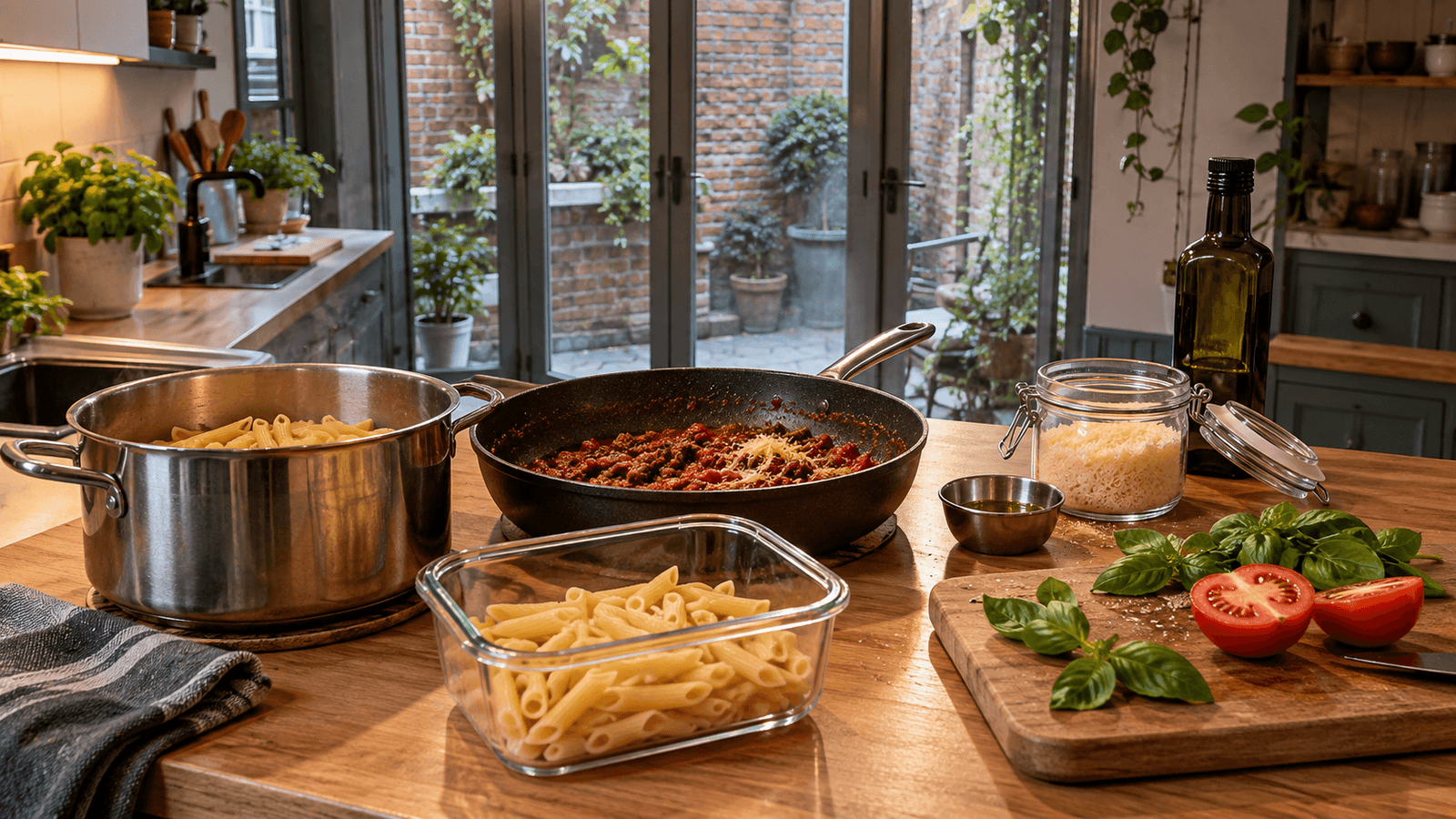
Suppose the AI recognizes pasta with tomato sauce.
You know the dish also contains minced meat, cheese and olive oil.
The useful corrections are:
- add the missing meat
- add the cheese
- account for the oil
- adjust the pasta portion if necessary
Simply increasing the final calorie number would provide less useful nutrition information.
Example: correcting breakfast
Suppose a photo contains yogurt, oats, berries and nuts.
The AI identifies the foods correctly but underestimates the nuts.
Because nuts are energy-dense, correcting that portion may matter more than a small difference in the estimated berry quantity.
What if you do not know the correct value?
Sometimes you cannot know.
That is normal.
If you did not prepare the food and do not have nutrition information, use a reasonable estimate rather than inventing exactness.
You can choose the closest appropriate food entry and portion based on the information available.
The objective is useful tracking, not fictional precision.
How Mealisa can approach corrections
A photo-first workflow works best when the AI handles the initial recognition and estimation while the user remains able to review important details.
A practical Mealisa workflow is:
- photograph the food
- review detected components
- correct obvious food-recognition errors
- adjust portions when necessary
- add hidden ingredients you know were present
- confirm the result
- continue with minimal manual input
Most meals should not require rebuilding the entire entry from scratch.
The correction process should focus on exceptions.
Corrections can improve your own tracking habits
Reviewing occasional AI mistakes can also teach you where your own meals are difficult to estimate.
You may notice that:
- oils are often forgotten
- restaurant sauces create uncertainty
- your usual cereal portion is larger than expected
- certain containers make portions difficult to judge
- mixed dishes need recipe information
This can make future tracking faster.
When not to spend time correcting
You may not need extensive correction when:
- the estimate is already reasonable
- the meal is simple and clearly visible
- a small difference would not affect your decision
- your goal is broad consistency rather than precise tracking
The correction process should not become more burdensome than manual food logging.
Common mistakes
Trusting the first estimate automatically
AI estimates should be reviewable.
Editing only calories
Correct the underlying food or portion when possible.
Ignoring oil and sauces
They may be visually difficult to detect.
Treating visual portion estimates as exact weights
A photograph cannot directly measure grams.
Overcorrecting tiny uncertainties
Focus on meaningful differences.
Ignoring information you already know
Known package sizes, recipes and ingredient quantities can improve the estimate.
Assuming restaurant estimates are precise
Unknown preparation creates unavoidable uncertainty.
Frequently asked questions
Can an AI food estimate be corrected?
Yes. A useful system should allow you to correct food identity, portions and missing ingredients rather than treating the first estimate as final.
What should I correct first?
Start with incorrect foods and missing components, then review major portions, cooking method, oils, sauces and product-specific information.
Should I change calories directly?
When possible, correct the underlying foods and quantities so calories and macros remain consistent.
Do I need to weigh food to correct an AI estimate?
Not always. Known quantities, package information, recipe portions and visual references can also help. A scale is useful when additional precision matters.
Why does AI miss cooking oil?
Oil can be visually subtle or completely hidden after cooking, so a photo often cannot determine the amount reliably.
Are restaurant meals harder to correct?
Usually. You may not know exact recipes, oil quantities or ingredient weights, so some uncertainty remains.
Should I correct every small error?
Not necessarily. Prioritize errors that meaningfully change the estimate or repeat frequently.
Can better photos improve the estimate?
Yes. Clear visibility, reasonable camera angles and keeping the whole portion in frame can reduce some recognition and portion-estimation errors.
The bottom line
Correcting an AI food estimate does not mean manually rebuilding every meal.
Use a simple hierarchy:
- confirm the food identity
- add important missing components
- correct clearly wrong portions
- check preparation method
- account for oils, sauces and toppings
- use package or recipe information when available
- review calories and macros after correcting the components
AI is most useful when it removes routine work while still letting you correct the exceptions.
The goal is not perfect certainty from a photograph.
It is a fast estimate that becomes more useful when combined with the information you already know.
This article provides general educational nutrition information and is not individualized medical or dietary advice.