
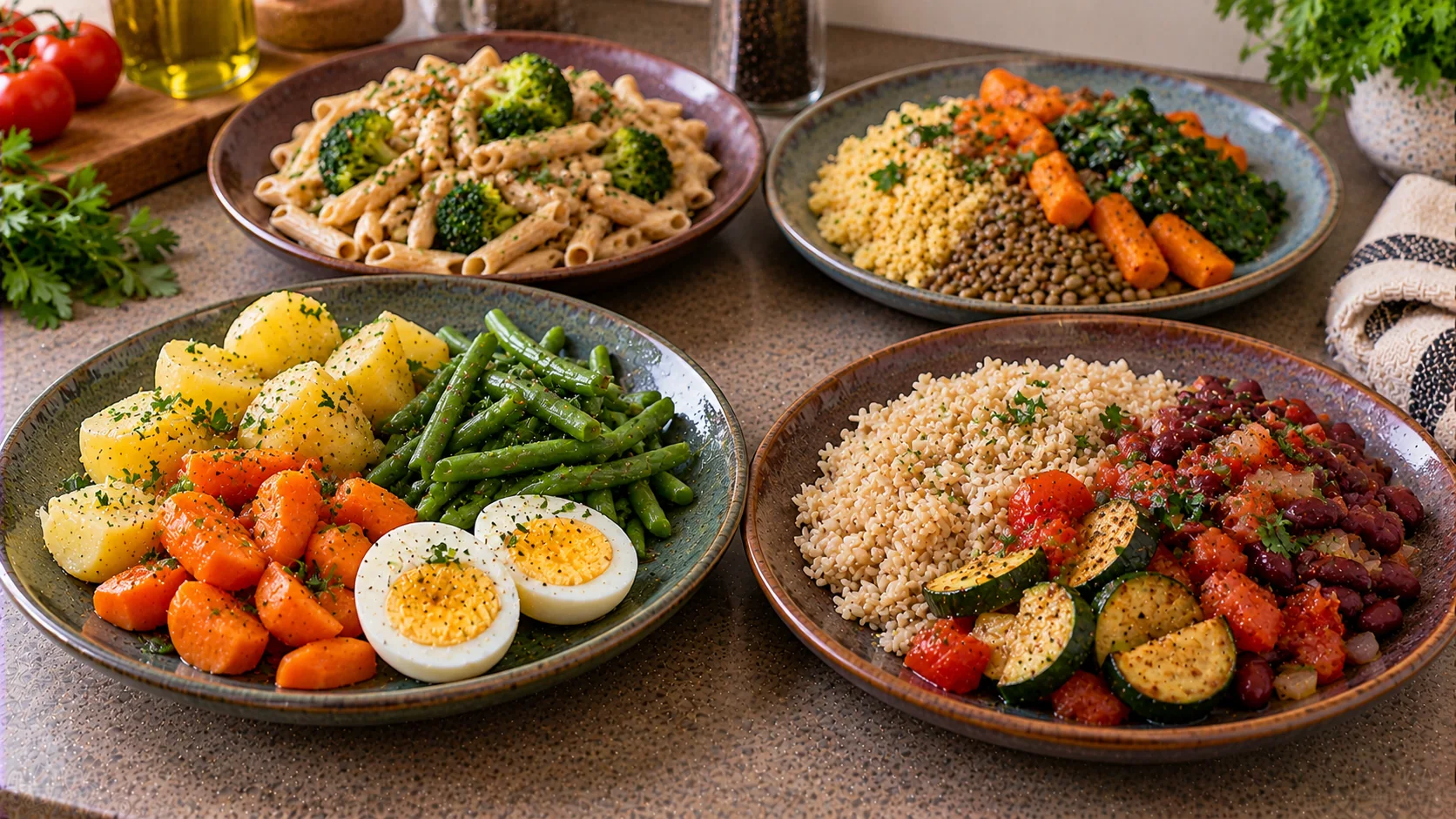
How to Build a Balanced Plate With Budget Foods: Four Weighed Examples
A balanced plate need not start with a costly specialty product. This guide shows four actual combinations of inexpensive foods with weights you can reproduce. The model is a visual planning aid, not a compulsory ratio or a personalized medical meal plan. Frozen vegetables, cooked beans, potatoes and basic grains all have a place.
Four weighed plates with example cost and protein
| Meal | Weighed ingredients | Protein model | Illustrative ingredient cost |
|---|---|---|---|
| Lentil rice plate | 120 g cooked lentils + 130 g cooked brown rice + 180 g frozen mixed vegetables + 10 g rapeseed oil | 18.7 g | €0.93 |
| Egg, potato and cabbage plate | 2 medium eggs (about 110 g edible) + 220 g boiled potato + 180 g shredded cabbage + 10 g rapeseed oil | 20.6 g | €1.33 |
| Chickpea couscous plate | 140 g drained chickpeas + 65 g dry whole-wheat couscous (about 155 g cooked) + 160 g frozen spinach + 10 g oil | 22.8 g | €0.98 |
| Tofu noodle and carrot plate | 150 g firm tofu + 70 g dry whole-wheat noodles (about 170 g cooked) + 180 g carrots/broccoli + 10 g oil | 30.0 g | €1.59 |
Example protein values are reference assumptions per 100 g of edible ingredient, not a promise about a brand. Always check packaging, particularly tofu and bread. Prices are invented arithmetic examples rather than live German shelf prices.
How to prepare
1. Lentil rice plate
Ingredients: 120 g cooked lentils + 130 g cooked brown rice + 180 g frozen mixed vegetables + 10 g rapeseed oil.
Cook rice and mixed vegetables separately. Heat lentils thoroughly and add the measured oil.
Calculation: 10.8 + 3.38 + 4.5 + 0.0 = 18.7 g protein. Illustrative ingredient cost: 0.24 + 0.18 + 0.47 + 0.04 = €0.93.
2. Egg, potato and cabbage plate
Ingredients: 2 medium eggs (about 110 g edible) + 220 g boiled potato + 180 g shredded cabbage + 10 g rapeseed oil.
Boil potatoes, cook eggs until set and sauté cabbage with the oil.
Calculation: 13.86 + 4.4 + 2.34 + 0.0 = 20.6 g protein. Illustrative ingredient cost: 0.58 + 0.39 + 0.32 + 0.04 = €1.33.
3. Chickpea couscous plate
Ingredients: 140 g drained chickpeas + 65 g dry whole-wheat couscous (about 155 g cooked) + 160 g frozen spinach + 10 g oil.
Hydrate couscous according to the packet. Cook spinach and heat drained chickpeas.
Calculation: 10.5 + 7.8 + 4.48 + 0.0 = 22.8 g protein. Illustrative ingredient cost: 0.45 + 0.17 + 0.32 + 0.04 = €0.98.
4. Tofu noodle and carrot plate
Ingredients: 150 g firm tofu + 70 g dry whole-wheat noodles (about 170 g cooked) + 180 g carrots/broccoli + 10 g oil.
Boil noodles and stir-fry tofu with vegetables until cooked through.
Calculation: 18.0 + 8.4 + 3.6 + 0.0 = 30.0 g protein. Illustrative ingredient cost: 0.95 + 0.18 + 0.42 + 0.04 = €1.59.
What a balanced plate means
Start with a substantial portion of non-starchy vegetables, a filling source of starch such as rice, potatoes or whole grains, and a source of protein such as beans, eggs or tofu. The often-shown half-vegetable, quarter-grain, quarter-protein plate is an illustration rather than a universal mass-based formula. A chickpea dish contributes both starch and protein; potatoes are a starchy food, not an exact nutritional substitute for broccoli.
Adjusting quantities to the person
A physically active adult may need more grain or potato, while someone with a smaller appetite may need less. Add an affordable fruit, dairy food or fortified alternative elsewhere in the day as relevant. None of the example plates alone establishes nutritional adequacy for a whole day. Use locally available foods, allergies and medical needs to guide substitutions.
How the calculations work
For each ingredient, protein = edible grams × assumed protein per 100 g ÷ 100. The lentil-rice model uses 9 g for cooked lentils, 2.6 g for cooked rice and 2.5 g for the chosen vegetable blend. Costs are ingredient-use estimates: for the rice plate, €0.24 + €0.18 + €0.47 + €0.04 = €0.93. The price of a whole shopping basket can be higher because you buy packets, not exact gram portions. This difference matters when working with a strict cash limit.
What to buy for the four example plates
A practical shopping list is 120 g cooked lentils, 140 g drained chickpeas, 150 g tofu, two eggs, 220 g potatoes, 130 g cooked brown rice, 65 g dry couscous, 70 g dry noodles, 180 g mixed vegetables, 180 g cabbage, 160 g spinach, 180 g carrot-broccoli mixture and 40 g oil. Check which items are already in your pantry; do not buy a new pack of oil just to measure 40 g. This buys ingredients for four different single-person plates, not a promised four-day meal plan.
Keeping nutrients in perspective
Protein is one component, not a score for whether the whole meal is healthy. Compare fibre, vegetable variety, unsaturated fats, salt and total portions. WHO recommends variety, adequate food and appropriate balance, with whole grains, vegetables and legumes as useful staples WHO healthy diet. Its guidance on fruit and vegetables applies across the day, not as a rigid weight rule for one dinner.
Storage and food safety
Refrigerate cooked foods promptly, use clean covered containers, and cool rice quickly. Do not assume that cooked rice can be left at room temperature. Prepare grains in small batches if refrigeration capacity is limited. Reheat leftovers thoroughly and follow local food-safety recommendations and product labels.
Making it cheaper without losing usefulness
Compare cooked edible cost rather than dry sticker price alone; frozen vegetables can reduce trimming waste, and beans can replace some expensive animal protein. Avoid assuming that bulk packs save money if they spoil before use. Compare the till receipt to the price per serving separately.
Further practical reading
For inexpensive meal combinations, see inexpensive protein-and-fibre meal ideas. For planning a weekly grocery budget, see budget grocery planning.
Sources
- WHO: Healthy diet — varied foods, vegetables, pulses and grains.
- USDA FoodData Central — source for looking up exact raw/cooked food states; example figures here are explicitly model assumptions.
This is a practical illustration, not an individualized nutrition prescription.