
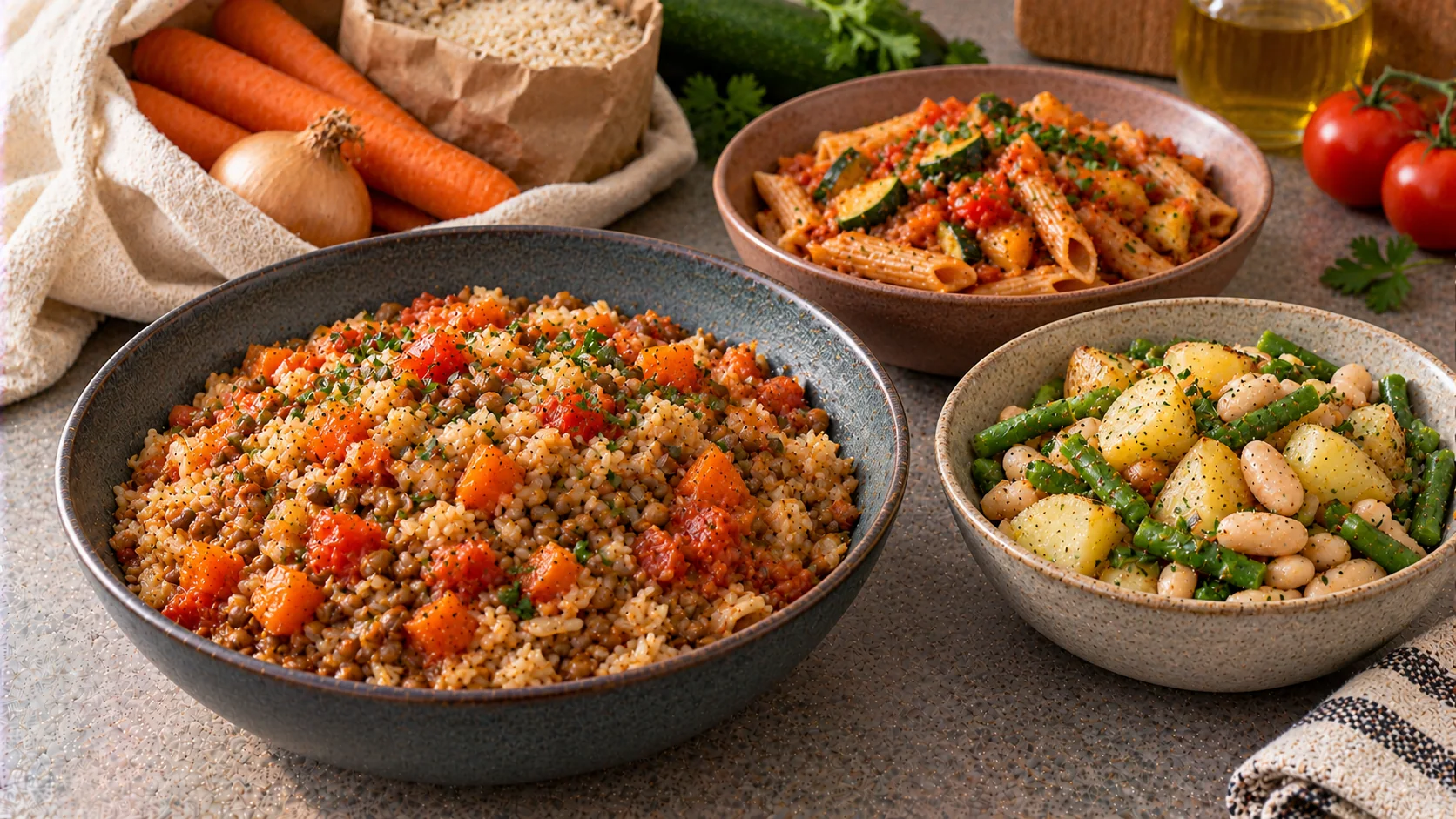
A €30 grocery basket is a checkout budget, not a claim that every household can purchase a complete week of food for €30. This worked example buys common supermarket packs for €27.44, then uses part of each pack to make eight meal servings: two servings of four distinct dishes. It is not a complete daily meal plan and does not cover every nutrient or all food required for a week. Prices are illustrative assumptions in euros, not verified current retail quotations. Local checkout prices, package sizes and food needs vary.
Example basket: quantities paid for
The table records full purchased packs. Do not substitute the cost of a tablespoon of oil for the price of its entire bottle when checking against the €30 ceiling. A kitchen stocked with spices or salt may season food differently; no extra condiments are required in the base recipes. Water is assumed available.
| Item / purchased pack | Quantity | Assumed checkout price |
|---|---|---|
| Rolled oats | 500 g | €0.99 |
| Dry rice | 1 kg | €1.79 |
| Dry couscous | 500 g | €1.49 |
| Dry red lentils | 500 g | €1.69 |
| Canned chickpeas | 400 g can (240 g drained) | €0.89 |
| Chopped tomatoes | 400 g can | €0.89 |
| Eggs | 6 | €2.79 |
| Plain yogurt | 500 g | €1.79 |
| Potatoes | 2 kg | €2.49 |
| White cabbage | 1 head (~1 kg) | €2.29 |
| Carrots | 1 kg | €1.49 |
| Onions | 1 kg | €1.29 |
| Apples | 1 kg | €2.49 |
| Rapeseed oil | 500 ml | €2.49 |
| Lemon | 1 | €0.69 |
| Frozen peas | 750 g | €1.89 |
| Total | 16 packs | €27.44 |
Eight servings from four recipes
Four distinct dishes make eight servings in total, not eight full days of meals. All grain and lentil amounts below are dry; chickpeas use drained edible weight. Prices above refer to packs bought, not individual ingredient usage.
1. Tomato lentil rice bowls — two portions
Ingredients for two: 130 g dry red lentils, 120 g dry rice, 300 g canned chopped tomatoes, 120 g onion, 180 g carrot, 10 ml rapeseed oil, 450 ml water for lentils plus rice-cooking water. Method (30 minutes): Rinse the rice and cook in water according to the packet. Dice onion and carrot. Heat oil in a saucepan, cook onion and carrot for 5 minutes, add lentils, tomatoes and 450 ml water. Simmer 15–20 minutes until lentils are soft; add water if necessary. Divide rice and lentil mixture evenly between two bowls.
2. Egg, potato and cabbage skillet — two portions
Ingredients for two: 500 g potatoes, 250 g finely shredded cabbage, 100 g onion, 3 eggs, 10 ml rapeseed oil, 70 ml water. Method (25–30 minutes): Cut potatoes into 1.5 cm cubes and boil 10–12 minutes until nearly tender. Drain. Cook onion and cabbage with oil and water in a covered skillet for 6–8 minutes. Add potatoes, cook uncovered 5 minutes, then add beaten eggs and stir gently until fully set. Split into two servings.
3. Chickpea, carrot and pea couscous — two portions
Ingredients for two: 140 g dry couscous, 240 g drained canned chickpeas, 220 g carrots, 200 g frozen peas, 20 g lemon juice, 10 ml rapeseed oil, 170 ml boiling water. Method (15–20 minutes): Pour boiling water over couscous, cover for 5 minutes and fluff. Slice carrots thinly and simmer with peas in a little water 8–10 minutes until cooked through; drain. Rinse and warm drained chickpeas. Mix with couscous, oil and lemon juice; divide equally.
4. Apple-yogurt oat bowls — two portions
Ingredients for two: 110 g dry rolled oats, 250 g plain yogurt, 300 g apple, 200 ml water. Method (10 minutes): Simmer oats in water 5–7 minutes. Wash, core and dice the apples; stir them into warm oats or soften briefly in the pot. Divide between two bowls, then top with 125 g yogurt each. Refrigerate immediately if making ahead; keep yogurt cold until serving.
Shopping cost versus used-food cost
The €27.44 total is what is assumed paid at checkout. Dividing by eight gives €3.43 per serving of purchased groceries, but that does not mean €3.43 of ingredients was consumed in each meal: rice, oats, oil, eggs, vegetables and other goods remain for later meals. A true used-ingredient cost requires unit prices and actual consumed amounts for every pack; do not present leftover goods as waste or silently value them at zero. The basket also omits any delivery charge and home energy costs.
What remains, what could spoil and what to reuse
Remaining dry grains, lentils and oil can be kept for other meals according to package instructions. Refrigerate opened yogurt and leftover cabbage promptly. Apples, potatoes, onions and carrots keep for variable periods depending on quality and storage; inspect them rather than assuming an exact shelf life. If only eight servings are required, freeze suitable unused ingredients or plan subsequent meals to prevent spoilage. The canned chickpeas are fully used at their drained 240 g weight; a can labelled 400 g does not supply 400 g of edible chickpeas.
Approximate nutrition: how to interpret it
Nutrient totals vary with brands, grain water uptake, the edible portion of cabbage, egg size and the exact cooking oil quantity. No precise kcal, protein, fat or fiber totals are claimed here without a verified food-by-food calculation. For personal targets, use the ingredient weights above with USDA FoodData Central or your own package labels and divide each recipe total by two. The recipes include legumes, grains, vegetables, eggs and dairy but are not intended to supply a full day of balanced nutrition.
Safe preparation, cooling and reheating
Cool cooked rice quickly and refrigerate promptly; follow local rice guidance for storage rather than holding five days of cooked rice in the fridge. Refrigerate perishable leftovers within two hours in shallow containers; USDA advises using most leftovers within 3–4 days and reheating to 74°C (165°F). Eggs should be fully cooked. Frozen peas should be heated according to package instructions. If batch cooking for later in the week, freeze portions promptly and label the date. See USDA leftovers guidance.
A realistic way to adapt the €30 limit
Prices might exceed €30 in your area. Check the shelf price for the whole pack first; replace the most expensive ingredient with a comparable lower-cost option, not by silently shrinking portions. If you own oil or rice already, label it as pantry stock rather than pretending its purchase cost is zero. For an explanation of meal planning beyond this eight-serving example, see guide to building a grocery list and budget meal ideas.
Sources
- USDA FoodData Central — ingredient nutrition lookup, not proof of prices.
- USDA FSIS: Leftovers and Food Safety — storage and reheating guidance.