
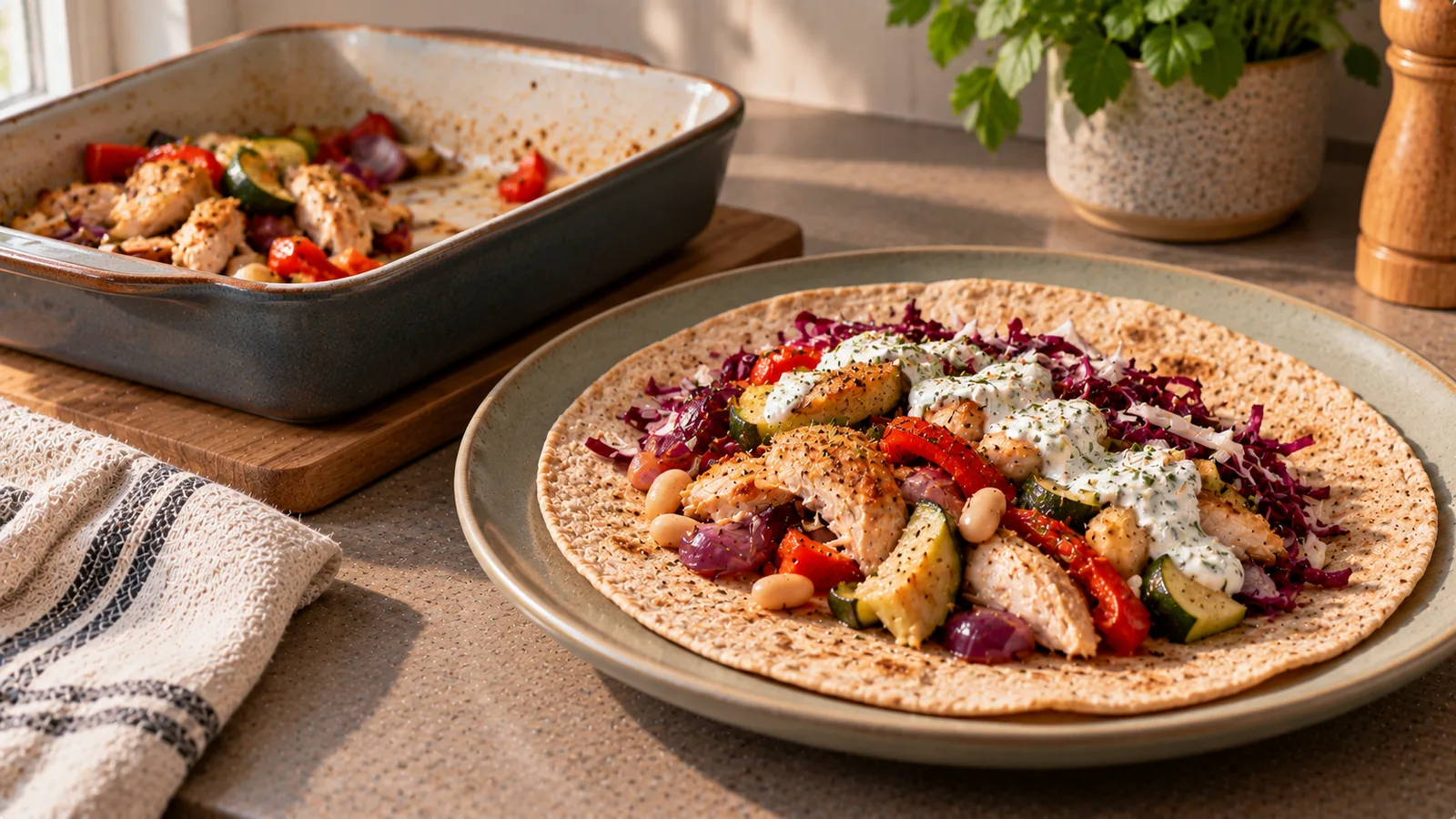
Leftovers do not have to mean eating exactly the same meal again.
Cooked rice can become fried rice. Roasted vegetables can become soup or frittata. Chicken can go into wraps, pasta or a grain bowl. Beans can become patties, soup or a quick skillet meal.
The most useful leftover recipes are flexible enough to work with what you already have.
Here are 15 practical ideas.
Before using leftovers
Use leftovers only when they have been stored safely.
Refrigerate cooked food promptly, keep it properly chilled and discard food if you are unsure how long it has been stored or whether it is still safe.
When reheating foods that require reheating, heat them thoroughly.
The exact safe storage period depends on the food and local food-safety guidance.
1. Leftover Chicken and Vegetable Wraps
A simple way to turn cooked chicken and vegetables into a different meal.
Ingredients
- 150 g cooked chicken, sliced
- 150 g leftover roasted or cooked vegetables
- 2 whole-grain wraps
- 80 g plain yogurt
- 1 tsp lemon juice
- lettuce or spinach
- black pepper
- herbs
Method
Mix the yogurt with lemon juice, pepper and herbs.
Warm the chicken and vegetables if appropriate.
Spread the yogurt sauce over the wraps, add the greens, chicken and vegetables, then roll tightly.
Easy substitutions
Turkey can replace chicken.
Use hummus instead of yogurt sauce for a different flavor.
2. Leftover Rice Fried Rice
Cold cooked rice works particularly well for a quick fried-rice-style meal.
Ingredients
- 300 g cooked rice
- 2 eggs
- 200 g mixed vegetables
- 100 g cooked chicken, tofu or edamame
- 1 tsp oil
- 1–2 tbsp reduced-salt soy sauce
- spring onion
Method
Heat the oil in a large pan.
Cook the vegetables until hot.
Push them to one side and scramble the eggs in the pan.
Add the rice and your chosen protein.
Stir-fry until everything is thoroughly heated, then season with soy sauce and spring onion.
Practical note
Rice requires careful cooling and storage. Use rice that was cooled promptly and refrigerated safely after cooking.
3. Roasted Vegetable Frittata
Leftover vegetables can become a completely different breakfast, lunch or dinner.
Ingredients
- 250 g roasted vegetables
- 5 eggs
- 50 ml milk
- 40 g feta
- handful of spinach
- black pepper
Method
Heat the oven to 190°C.
Place the vegetables and spinach in an oven-safe pan or baking dish.
Whisk the eggs with milk and pepper.
Pour over the vegetables and crumble the feta on top.
Bake until the eggs are fully set.
4. Leftover Chicken and Bean Soup
Cooked chicken and a small amount of vegetables can become a substantial soup.
Ingredients
- 150 g cooked chicken
- 240 g drained beans
- 200 g leftover vegetables
- 400 g canned chopped tomatoes
- 600 ml low-salt stock
- 1 tsp smoked paprika
- dried oregano
Method
Add the tomatoes, stock, beans, vegetables and seasonings to a saucepan.
Simmer until the vegetables and beans are hot.
Add the cooked chicken near the end and heat thoroughly.
Adjust the consistency with additional stock or water if needed.
5. Leftover Pasta Vegetable Bake
A useful option when you have cooked pasta but not enough sauce for another full pasta meal.
Ingredients
- 300 g cooked pasta
- 250 g cooked vegetables
- 300 g tomato sauce
- 100 g mozzarella
- 100 g cottage cheese
- dried basil or oregano
Method
Heat the oven to 200°C.
Mix the pasta, vegetables, tomato sauce and cottage cheese.
Transfer to a baking dish.
Top with mozzarella and herbs.
Bake until hot throughout and lightly browned on top.
6. Leftover Potato and Tuna Cakes
Cooked potatoes can become quick savory patties.
Ingredients
- 300 g cooked potatoes
- 120 g drained canned tuna
- 1 egg
- 30 g breadcrumbs
- 2 spring onions
- parsley
- black pepper
- 1 tsp oil
Method
Mash the potatoes.
Mix with tuna, egg, breadcrumbs, spring onion, parsley and pepper.
Shape into patties.
Cook in a lightly oiled pan until golden on both sides and thoroughly heated.
Serve with vegetables or salad.
7. Leftover Grain and Chickpea Bowl
Small amounts of cooked quinoa, bulgur, couscous or another grain can form the base of a quick bowl.
Ingredients
- 200 g cooked grain
- 150 g drained chickpeas
- 150 g leftover vegetables
- cucumber
- tomato
- 30 g feta
- 1 tsp olive oil
- lemon juice
Method
Warm the grain, chickpeas and cooked vegetables if desired.
Add fresh cucumber and tomato.
Top with feta.
Finish with olive oil and lemon juice.
8. Leftover Vegetable Soup
This recipe works especially well when several small portions of vegetables remain in the refrigerator.
Ingredients
- 400–500 g cooked vegetables
- 1 small onion
- 500–700 ml low-salt stock
- 100 g cooked beans or lentils
- herbs and spices
- 1 tsp olive oil
Method
Cook the onion in the oil until softened.
Add the leftover vegetables, beans and stock.
Simmer until everything is thoroughly heated.
Leave the soup chunky or blend some or all of it depending on the vegetables used.
Add more liquid if necessary.
9. Leftover Meat and Vegetable Tacos
Small amounts of cooked beef, chicken, pork or turkey can stretch across several tacos.
Ingredients
- 150 g cooked meat
- 150 g cooked vegetables
- 6 small tortillas
- shredded lettuce
- chopped tomato
- 100 g plain yogurt
- lime juice
- coriander
Method
Slice or shred the meat.
Heat it thoroughly with the cooked vegetables.
Warm the tortillas.
Fill each tortilla with lettuce, tomato, meat and vegetables.
Top with yogurt, lime and coriander.
10. Leftover Lentil Tomato Pasta
Cooked lentils can quickly increase the volume and protein content of a simple tomato sauce.
Ingredients
- 200 g cooked lentils
- 300 g tomato sauce
- 250 g cooked or freshly prepared pasta
- 100 g spinach
- garlic
- oregano
- 20 g grated Parmesan, optional
Method
Heat the tomato sauce with lentils, garlic and oregano.
Add the spinach and cook until wilted.
Combine with the pasta.
Serve with a small amount of Parmesan if desired.
11. Leftover Salmon Potato Bowl
A small piece of cooked salmon can become another complete meal when combined with potatoes and vegetables.
Ingredients
- 120 g cooked salmon
- 250 g cooked potatoes
- 150 g green beans or other vegetables
- 80 g plain yogurt
- 1 tsp mustard
- lemon juice
- dill
Method
Heat the potatoes and vegetables if appropriate.
Flake the salmon into large pieces.
Mix yogurt, mustard, lemon and dill for the dressing.
Arrange everything in a bowl and spoon the dressing over the top.
12. Leftover Chicken Pasta Salad
This works well when both cooked chicken and pasta need to be used.
Ingredients
- 200 g cooked pasta
- 150 g cooked chicken
- 100 g cherry tomatoes
- cucumber
- 50 g peas
- 80 g plain yogurt
- 1 tsp mustard
- lemon juice
- herbs
Method
Cut the chicken into small pieces.
Combine the pasta, chicken, tomatoes, cucumber and peas.
Mix the yogurt, mustard, lemon juice and herbs.
Stir the dressing through the pasta mixture.
Keep chilled until serving.
13. Leftover Vegetable and Bean Quesadillas
Cooked vegetables can be combined with beans and a modest amount of cheese for a quick meal.
Ingredients
- 200 g cooked vegetables
- 150 g drained beans
- 80 g grated cheese
- 4 whole-grain tortillas
- paprika
- cumin
Method
Roughly mash some of the beans.
Mix them with the vegetables and spices.
Spread the mixture over half of each tortilla and add cheese.
Fold the tortillas and cook in a dry pan until crisp and hot, turning once.
14. Leftover Roast Vegetable Couscous
A useful no-fuss option for a small quantity of roasted vegetables.
Ingredients
- 250 g leftover roasted vegetables
- 150 g cooked couscous
- 120 g chickpeas
- handful of parsley
- 1 tsp olive oil
- lemon juice
- 20 g pumpkin seeds
Method
Combine the couscous, vegetables and chickpeas.
Add parsley, olive oil and lemon juice.
Top with pumpkin seeds.
Serve warm or chilled depending on the ingredients and how they have been stored.
15. Leftover Banana Oat Pancakes
Very ripe bananas do not have to be discarded.
Ingredients
- 2 ripe bananas
- 2 eggs
- 80 g rolled oats
- 80 g plain yogurt
- 1/2 tsp baking powder
- cinnamon
Method
Mash the bananas.
Mix with the eggs, oats, yogurt, baking powder and cinnamon.
Allow the mixture to sit for several minutes.
Cook small pancakes in a non-stick pan over medium heat until set and browned on both sides.
A simple leftover formula
You do not always need a dedicated recipe.
A practical meal can often be built from four parts:
1 leftover base + 1 protein source + vegetables + sauce or seasoning
For example:
| Leftover | Add | Result |
|---|---|---|
| Rice | Eggs + vegetables | Fried rice |
| Potatoes | Tuna + egg | Potato cakes |
| Pasta | Lentils + tomato sauce | Lentil pasta |
| Roast vegetables | Eggs | Frittata |
| Chicken | Beans + tomatoes | Soup |
| Grain | Chickpeas + fresh vegetables | Grain bowl |
| Meat | Tortillas + salad | Tacos |
This approach makes small amounts of leftovers easier to use before they are forgotten.
Combine leftovers deliberately
Before cooking something new, check what is already available.
Ask:
- Which cooked food needs to be used first?
- Is there enough for a full meal?
- Can two small leftovers be combined?
- What protein, vegetable or carbohydrate is missing?
- Can the food become a different dish rather than a repeat of yesterday's meal?
For example, a container with a small amount of roasted vegetables may not be a meal by itself.
Combined with eggs, it becomes a frittata.
Combined with chickpeas and couscous, it becomes a grain bowl.
Combined with stock and beans, it becomes soup.
Label leftovers when useful
If several containers accumulate in the refrigerator, it can become difficult to remember when each one was prepared.
Labeling containers with the preparation date can make it easier to decide what should be used first.
A simple “use first” area in the refrigerator can also help prevent older cooked food from disappearing behind newer ingredients.
Freeze food you are unlikely to use soon
Some cooked foods freeze better than others.
Soups, stews, cooked beans, many sauces and some cooked grains can often be frozen successfully.
If you already know you will not eat a large batch soon, freezing a portion early can be more useful than waiting until it is almost too old to use.
Use suitable containers and follow food-safety guidance for cooling, freezing, thawing and reheating.
Do not force incompatible leftovers into one meal
Reducing food waste does not mean every leftover must be combined.
Sometimes the best option is to use different leftovers in separate meals.
The goal is to create food you actually want to eat.
A practical leftover system should make meals easier, not turn every refrigerator clean-out into an experiment.
Keep the recipe flexible
Quantities in leftover recipes are naturally approximate because your available food will vary.
If you have:
- less rice, add more vegetables;
- more chicken, divide it between two meals;
- fewer vegetables, add frozen vegetables;
- no yogurt, use another suitable sauce;
- no specific grain, use one you already have.
The useful skill is not following a leftover recipe perfectly.
It is learning how to turn already-cooked ingredients into a balanced new meal.
Use leftovers as ingredients, not obligations
Leftovers become easier to manage when they are treated as ingredients.
Yesterday's roasted vegetables do not have to remain yesterday's side dish.
They can become:
- soup;
- frittata;
- pasta;
- tacos;
- a grain bowl.
Cooked chicken can become:
- wraps;
- soup;
- salad;
- pasta;
- tacos.
Cooked rice can become:
- fried rice;
- a grain bowl;
- a side for beans or vegetables.
That flexibility can reduce food waste while keeping meals varied.