
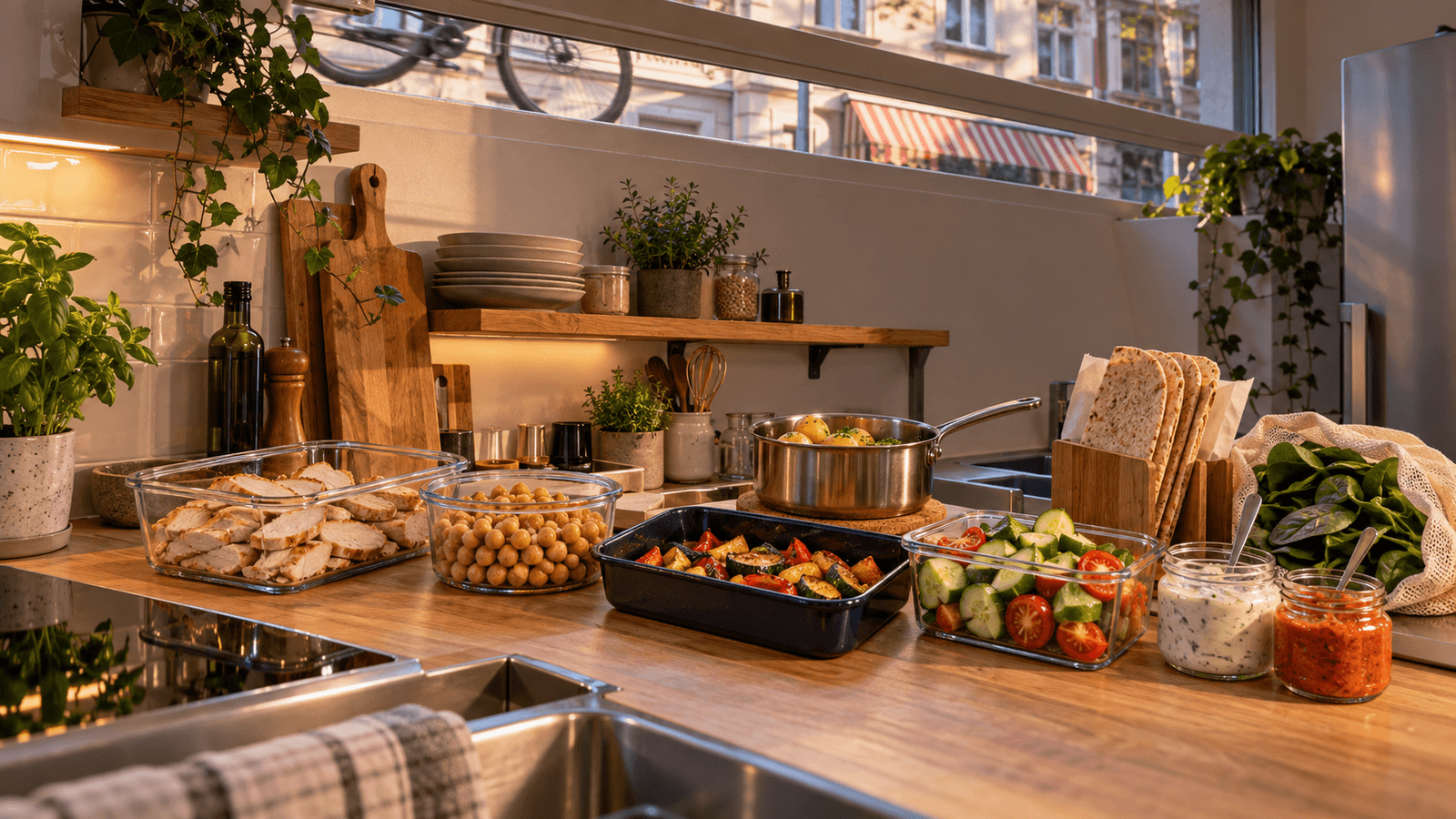
Meal prep can make weight loss easier, but it does not have to mean eating the same container of food every day.
A more flexible approach is to prepare several useful components and combine them differently throughout the week.
This can reduce cooking time while preserving variety, making it easier to build meals that fit your calorie needs without turning your diet into a repetitive routine.
What is meal prep for weight loss?
Meal prep for weight loss means preparing some or all of your food in advance so that meals are easier to assemble while you are trying to maintain a calorie deficit.
The goal is not to create a perfect row of identical containers.
Meal prep can be as simple as preparing:
- one or two protein sources
- one or two carbohydrate sources
- several vegetables
- one or two sauces or flavor bases
- a few convenient snacks
You can then combine these components in different ways.
Why meal prep can help with weight loss
Weight loss generally requires a sustained energy deficit over time.
Meal prep can make that easier by reducing some of the decisions that happen when you are already hungry.
It can help you:
- keep useful foods available
- reduce last-minute takeaway decisions
- make portions easier to estimate
- use groceries before they spoil
- prepare protein and vegetables in advance
- spend less time cooking on busy days
Meal prep is a practical tool, not a requirement for losing weight.
The problem with identical meal-prep boxes
Preparing five identical meals can be efficient.
But it does not work for everyone.
By the third or fourth day, you may no longer want the food you prepared.
That can lead to:
- wasted food
- ordering something else
- feeling restricted
- abandoning the plan completely
If repetition helps you, identical meals are fine.
If repetition makes the plan harder to follow, use a more flexible system.
Prep components instead of complete meals
One of the easiest ways to create variety is to prepare ingredients separately.
For example, you might prepare:
Protein
- chicken
- tofu
- lentils
- eggs
- fish
- yogurt or skyr
Carbohydrates
- potatoes
- rice
- pasta
- couscous
- bread
- cooked grains
Vegetables
- roasted vegetables
- chopped raw vegetables
- leafy greens
- frozen vegetables ready to cook
Flavor components
- yogurt-based sauce
- tomato sauce
- herbs
- lemon
- mustard
- spices
The same ingredients can then become different meals.
One set of ingredients can create several meals
Suppose you prepare chicken, potatoes, cooked lentils, roasted vegetables and a yogurt-herb sauce.
You do not need to eat them in the same combination every day.
You could use them for:
- chicken with potatoes and vegetables
- lentils with vegetables and yogurt sauce
- chicken in a wrap with vegetables
- a warm potato and lentil combination
- vegetables with chicken and a different sauce
Small changes can make meals feel substantially different.
Use two protein options
Preparing two protein sources instead of one can immediately create more variety.
For example:
- chicken and lentils
- tofu and eggs
- fish and beans
- turkey and chickpeas
You do not need large quantities of both.
The purpose is simply to avoid making every meal depend on one ingredient.
Protein can also support satiety during weight loss.
See How Much Protein Do You Need Per Day?.
Prepare carbohydrates that can be used differently
A carbohydrate source does not have to appear in the same form at every meal.
Potatoes can be:
- eaten warm
- added to a mixed meal
- combined with eggs
- served with fish
- used with vegetables and a sauce
Cooked grains can work with different proteins and vegetables.
Bread or wraps can provide another quick option without requiring a second full cooking session.
Let vegetables provide variety
Using several vegetables with different textures can change a meal considerably.
You might combine:
- roasted zucchini
- carrots
- peppers
- cabbage
- cucumber
- tomatoes
- leafy greens
You do not need to prepare every vegetable in advance.
Some can be cooked, while others remain raw until the meal is assembled.
Change sauces and seasonings
Flavor is one of the easiest ways to prevent meal-prep fatigue.
The same basic ingredients can taste different with:
- yogurt and herbs
- lemon and pepper
- tomato-based sauce
- mustard-based dressing
- garlic and herbs
- different spice blends
If you track calories, remember that sauces and oils can contribute meaningful energy.
A lighter sauce is not mandatory, but the amount used should fit your overall plan.
Do not prep every meal
Meal prep does not need to cover your entire week.
Preparing every breakfast, lunch, dinner and snack can create unnecessary rigidity.
Instead, identify the meals that cause the most difficulty.
For example, you might prep:
- weekday lunches
- protein for several dinners
- chopped vegetables
- two emergency meals for busy evenings
Leave other meals flexible.
A simple 3-day flexible meal-prep structure
For three days, you might prepare:
- two protein sources
- one cooked grain or potato
- three vegetables
- one sauce
- one convenient backup food
Then create different combinations each day.
This reduces preparation while still allowing choice.
Portion before you are extremely hungry
Meal prep can make portion decisions easier because you can make them before hunger becomes intense.
You do not necessarily need to weigh every ingredient.
Depending on your tracking style, you can:
- weigh portions
- use consistent household containers
- estimate visually
- photograph the meal and review the estimate
- use a combination of these methods
The best method is one you can use consistently.
Do not make portions unnecessarily small
Weight-loss meal prep should still produce satisfying meals.
Very small containers may look disciplined but can leave you hungry and make the plan difficult to maintain.
A useful meal can include:
- a meaningful protein source
- vegetables or fruit
- a carbohydrate source when appropriate
- some dietary fat
- enough total food to be satisfying
For more on meal composition, see How to Build a Filling Meal for Weight Loss.
Use calorie density strategically
Foods with lower calorie density can increase the physical volume of a meal without increasing calories as quickly.
Vegetables, fruit and other water-rich foods can therefore be useful when preparing weight-loss meals.
That does not mean every ingredient needs to be low in calories.
Foods such as nuts, cheese, olive oil and sauces can still fit.
Their portions simply matter because they are more energy-dense.
Include fat rather than eliminating it
Fat is an essential macronutrient.
The goal of weight-loss meal prep is not to remove all oil, nuts, seeds, cheese or other fat-containing foods.
Because fat is energy-dense, however, large amounts can change the calorie content of a meal quickly.
Use portions that fit your overall intake.
See How Much Fat Do You Need Per Day?.
Keep some foods unprepared
Not everything benefits from being prepared several days in advance.
For variety and texture, you can leave some foods untouched until you need them.
Examples include:
- fresh tomatoes
- cucumber
- fruit
- bread
- yogurt
- eggs
- frozen vegetables
- canned beans
These foods can help you create a different meal without much additional work.
Use the freezer
The freezer can make meal prep more flexible.
Instead of eating the same prepared food for four consecutive days, freeze some portions.
You can then use them later.
This can work well for:
- soups
- stews
- cooked grains
- sauces
- cooked legumes
- some cooked proteins
Follow appropriate food-safety guidance for cooling, freezing, storage and reheating.
Keep one emergency option
A practical meal-prep system should account for days when the plan fails.
Keep one easy backup option available.
For example:
- frozen vegetables with a convenient protein source
- eggs and bread
- yogurt with fruit and oats
- canned beans with vegetables
- a previously frozen homemade meal
The purpose is not to create the perfect emergency meal.
It is to have something easier than starting from zero when you are tired.
Meal prep and calorie tracking
Meal prep can make calorie tracking easier because ingredients and portions may be more predictable.
If you prepare a recipe in a large batch, you can estimate the nutrition of the whole recipe and divide it among the portions you actually use.
For meals assembled from separate components, track the components you use rather than assuming every meal contains identical quantities.
Photo tracking and meal prep
Photo-based tracking can work especially well with flexible meal prep.
You can prepare ingredients in advance but decide the exact combination later.
When you assemble the meal, photograph what you actually eat rather than relying on the original meal-prep plan.
This helps account for real-world changes in:
- portion size
- sauces
- side dishes
- substitutions
- extra ingredients
The logged meal should reflect what you ate, not what you originally intended to eat.
Avoid false precision
Meal prep can make portions more consistent, but that does not mean every container is nutritionally identical.
Differences can occur because:
- one portion contains more sauce
- pieces of meat differ in size
- oil is not distributed perfectly
- cooked food contains different amounts of water
- you add something at serving time
If precise tracking matters, review the actual meal.
Meal prep around your schedule
Prepare food for the days when preparation will actually help.
If Tuesday and Thursday are busy, prioritize those days.
If you work from home on Friday and enjoy cooking, there may be no reason to prepare Friday dinner on Sunday.
Meal prep should reduce friction, not create extra work.
Shop with flexible combinations in mind
When shopping, choose foods that can work in more than one meal.
For example:
- a protein that works with potatoes, rice or bread
- vegetables that can be eaten raw or cooked
- yogurt that can be breakfast, snack or sauce base
- legumes that can be added to several meals
- fruit that needs no preparation
This gives you more options without requiring a much larger grocery list.
Use leftovers deliberately
Leftovers do not have to be repeated in exactly the same form.
A cooked ingredient from dinner can become part of lunch the next day.
For example:
- roasted vegetables can go into a wrap
- cooked chicken can be added to another meal
- potatoes can be combined with eggs
- lentils can become the base of a different dish
Reusing components is different from eating the same finished meal repeatedly.
How much should you prep?
Start smaller than you think.
Preparing food for two or three days can be easier than preparing an entire week.
This reduces:
- boredom
- food-quality decline
- uncertainty about changing plans
- the risk of preparing more than you actually eat
You can always prepare another small batch later.
A practical meal-prep workflow
1. Check what you already have
Look in the refrigerator, freezer and pantry before shopping.
2. Choose the difficult meals
Identify where advance preparation would help most.
3. Select two flexible protein sources
Choose options that can work with several meals.
4. Add one or two carbohydrate bases
Do not prepare excessive amounts if your schedule may change.
5. Prepare several vegetables
Use a mix of cooked and fresh options.
6. Choose one or two flavor directions
Sauces, herbs and seasonings create variety.
7. Store components separately
This allows you to choose combinations later.
8. Freeze what you are unlikely to eat soon
Do not wait until the food is already near the end of its useful storage life.
9. Assemble according to hunger and plans
Your meals do not need to be predetermined perfectly.
Example of flexible meal prep
Imagine you prepare:
- chicken
- chickpeas
- potatoes
- roasted peppers and zucchini
- fresh cucumber and tomatoes
- yogurt-herb sauce
Possible combinations include:
Day one: chicken, potatoes and roasted vegetables.
Day two: chickpeas, cucumber, tomatoes and yogurt sauce with bread.
Day three: chicken with fresh vegetables and potatoes in a different combination.
The ingredients overlap, but the meals do not need to feel identical.
Meal prep does not need special containers
You do not need a matching set of meal-prep boxes.
Ordinary food-safe containers are enough.
In fact, storing components separately in different-sized containers can make flexible meal assembly easier than dividing everything into identical boxes immediately.
Food safety matters
Meal prep involves storing cooked and raw foods, so food safety is important.
Use appropriate refrigeration, avoid leaving perishable foods at room temperature for extended periods, keep raw and cooked foods separated, and reheat foods appropriately when required.
Storage time varies by food and preparation.
When uncertain, follow current local food-safety guidance.
How Mealisa can help
Mealisa can support flexible meal prep without forcing you into a rigid weekly menu.
You can use your actual meals, photos and daily intake to see how prepared components fit into your calorie and macro targets.
If your plan changes, the useful question is not whether you followed the original menu perfectly.
It is whether the food you actually ate still fits your broader goals.
Common mistakes
Preparing too much food
A full week of prepared meals can become repetitive or go unused.
Making every meal identical
Efficiency is useful only if you still want to eat the food.
Using too few flavor options
Small seasoning and sauce changes can create substantial variety.
Making portions too small
Weight-loss meals still need to be practical and satisfying.
Ignoring oils and sauces
They can contribute meaningful calories.
Preparing food you do not normally enjoy
Meal prep does not make an unpopular food more appealing.
Treating the plan as mandatory
Plans should adapt when your schedule, appetite or preferences change.
Frequently asked questions
Is meal prep good for weight loss?
It can be. Meal prep may make portions, grocery use and food choices easier to manage, but weight loss still depends on maintaining an appropriate energy deficit over time.
Do I have to eat the same meal every day?
No. Preparing components separately can let you build several different meals from overlapping ingredients.
How many days should I meal prep for?
There is no required number. Starting with two or three days can be more flexible than preparing an entire week.
Should I weigh every meal-prep portion?
Not necessarily. Weighing can improve precision, but visual estimation, consistent containers or photo-based tracking may also be useful depending on your goals.
Can I freeze meal-prep food?
Many prepared foods freeze well. Suitability and storage time depend on the specific food, so follow appropriate food-safety guidance.
Should all meal-prep meals be low fat?
No. Dietary fat is essential. The amount should fit your overall calorie and nutritional needs.
What if I no longer want the food I prepared?
Use flexible components, freeze suitable portions or repurpose ingredients into another meal rather than forcing yourself to eat the same dish.
Do I need special meal-prep containers?
No. Any suitable food-safe storage containers can work.
The bottom line
Meal prep for weight loss does not need to mean eating the same meal every day.
A flexible system can be more practical:
- prepare components rather than every finished meal
- use more than one protein source
- vary vegetables, sauces and seasonings
- keep some foods fresh or frozen for flexibility
- prep only the meals that actually benefit from advance work
- adjust portions and combinations to what you really eat
The best meal-prep system is not the one with the most perfectly identical containers.
It is the one that makes your weight-loss plan easier to follow in everyday life.
This article provides general educational nutrition information and is not individualized medical or dietary advice.