
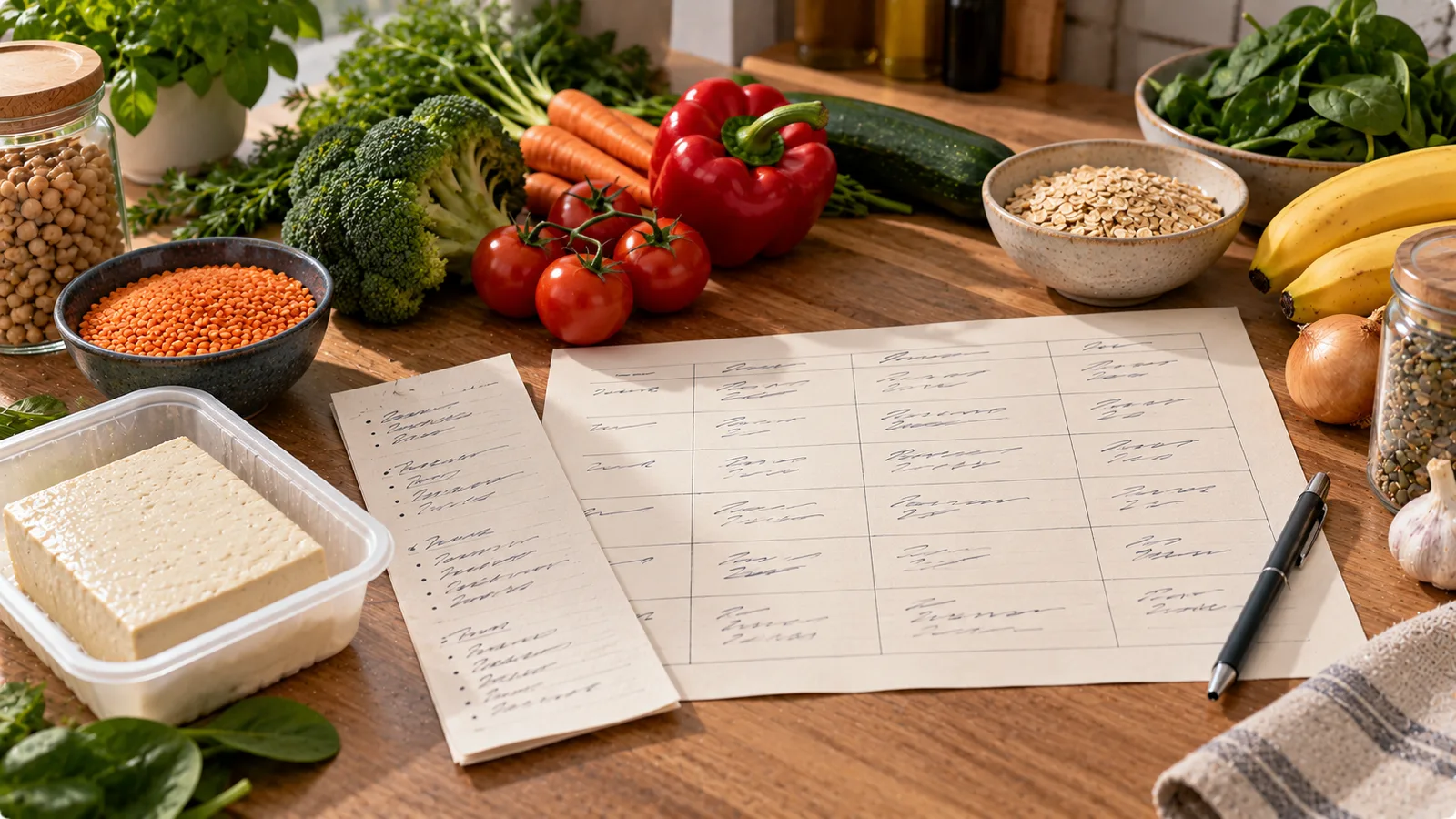
A vegan meal plan is easier to follow when the meals share ingredients, leftovers have a clear purpose and the grocery list matches the recipes.
This seven-day plan uses familiar foods: oats, fortified soy milk, tofu, lentils, beans, rice, potatoes, vegetables, fruit and nuts.
It is designed as a practical example for one adult, not a personalised prescription. The meals are entirely plant-based, with no meat, fish, eggs, dairy or honey.
The plan includes three meals and one snack each day. It also shows how to prepare several components in advance without spending every evening cooking from scratch.
What this plan provides
The example targets approximately 1,950–2,250 kcal per day, with roughly 75–105 g protein.
Those figures are estimates. Actual nutrition depends on product brands, cooking losses, portions and any substitutions.
The plan is not designed to meet every person's energy needs. Someone with higher activity levels may need larger portions, while another person may prefer smaller ones.
Importantly, a vegan diet requires attention to certain nutrients even when the meals look varied. Vitamin B12 needs a reliable source, and iodine, calcium, vitamin D, iron, zinc and omega-3 intake also deserve consideration.
The seven-day overview
| Day | Breakfast | Lunch | Dinner | Snack |
|---|---|---|---|---|
| Monday | Overnight oats with berries | Lentil and rice bowl | Tofu stir-fry with noodles | Apple and peanut butter |
| Tuesday | Tofu scramble on toast | Leftover tofu noodle bowl | Chickpea and spinach curry | Fortified soy yogurt and walnuts |
| Wednesday | Banana peanut oat porridge | Chickpea curry with rice | Black bean burrito bowl | Orange and pumpkin seeds |
| Thursday | Soy yogurt, oats and fruit | Black bean wrap | Lentil bolognese pasta | Banana and almonds |
| Friday | Peanut butter banana toast | Leftover lentil pasta | Baked potatoes with beans | Soy yogurt and berries |
| Saturday | Berry oat smoothie bowl | Hummus and roasted vegetable wrap | Tofu and broccoli rice bowl | Apple and mixed nuts |
| Sunday | Cinnamon apple porridge | Leftover tofu rice bowl | Chickpea vegetable stew | Wholegrain toast and peanut butter |
The portions below are for one person.
Monday
Breakfast: berry overnight oats
Combine:
- 70 g rolled oats.
- 250 ml fortified unsweetened soy milk.
- 100 g mixed berries.
- 15 g chia seeds.
- 15 g peanut butter.
Mix the oats, soy milk and chia seeds the evening before. Refrigerate overnight and add berries and peanut butter before eating.
Lunch: lentil and rice bowl
Use:
- 180 g cooked lentils.
- 180 g cooked brown rice.
- 150 g roasted vegetables.
- 10 g olive oil.
- Lemon juice, garlic and herbs.
Combine the ingredients and season with lemon and herbs.
Dinner: tofu noodle stir-fry
Use:
- 180 g firm tofu.
- 85 g dry wholewheat noodles.
- 200 g mixed stir-fry vegetables.
- 10 g rapeseed oil.
- 15 ml reduced-salt soy sauce.
Brown the tofu, cook the noodles and stir-fry the vegetables. Combine and season.
Snack
One medium apple with 25 g peanut butter.
Estimated daily total: 2,100 kcal and 91 g protein.
Tuesday
Breakfast: tofu scramble on toast
Use:
- 180 g firm tofu.
- 100 g wholegrain bread.
- 100 g tomatoes.
- 50 g spinach.
- 5 g olive oil.
- Turmeric, black pepper and optional black salt.
Crumble the tofu and cook with the vegetables and seasonings. Serve with toast.
Lunch: leftover tofu noodle bowl
Prepare an extra portion of Monday's tofu noodle stir-fry, or assemble:
- 150 g cooked tofu.
- 180 g cooked noodles.
- 150 g vegetables.
- A small amount of soy sauce.
Refrigerate leftovers promptly and reheat thoroughly.
Dinner: chickpea and spinach curry
Use:
- 200 g drained cooked chickpeas.
- 150 g chopped tomatoes.
- 100 g spinach.
- 100 ml light coconut milk.
- 150 g cooked rice.
- 5 g oil.
- Curry spices.
Simmer the tomatoes, coconut milk and spices, add chickpeas and spinach, and serve over rice.
Snack
200 g fortified unsweetened soy yogurt with 25 g walnuts.
Estimated daily total: 2,080 kcal and 94 g protein.
Wednesday
Breakfast: banana peanut oat porridge
Cook:
- 75 g rolled oats.
- 250 ml fortified soy milk.
- One medium banana.
- 20 g peanut butter.
- Cinnamon.
Lunch: chickpea curry with rice
Use a second portion of Tuesday's chickpea curry, with approximately 150 g cooked rice.
If the curry was prepared in advance, keep it refrigerated and reheat until thoroughly hot.
Dinner: black bean burrito bowl
Combine:
- 200 g drained black beans.
- 180 g cooked rice.
- 100 g sweetcorn.
- 100 g tomatoes.
- 70 g avocado.
- 50 g lettuce.
- Lime juice and spices.
Snack
One orange with 30 g pumpkin seeds.
Estimated daily total: 2,170 kcal and 81 g protein.
Thursday
Breakfast: soy yogurt and oat bowl
Combine:
- 250 g fortified soy yogurt.
- 65 g rolled oats.
- 100 g berries.
- 20 g pumpkin seeds.
- One small banana.
Lunch: black bean wrap
Fill two medium wholegrain tortillas with:
- 170 g drained black beans.
- 100 g roasted vegetables.
- 40 g hummus.
- Lettuce and tomato.
Warm the tortillas and serve.
Dinner: lentil bolognese pasta
Use:
- 100 g dry wholewheat pasta.
- 180 g cooked lentils.
- 200 g passata.
- 100 g mushrooms.
- 80 g onion and carrot.
- 10 g olive oil.
- Garlic and Italian herbs.
Cook the vegetables, add lentils and passata, then simmer. Serve with pasta.
Snack
One banana and 30 g almonds.
Estimated daily total: 2,140 kcal and 88 g protein.
Friday
Breakfast: peanut butter banana toast
Serve:
- 120 g wholegrain bread.
- 35 g peanut butter.
- One medium banana.
- 250 ml fortified soy milk.
Lunch: leftover lentil bolognese
Use a second portion of Thursday's lentil sauce with approximately 90 g dry wholewheat pasta, cooked fresh.
Dinner: baked potatoes with beans
Prepare:
- 350 g potatoes.
- 200 g drained kidney beans.
- 150 g tomatoes.
- 100 g fortified unsweetened soy yogurt.
- 100 g side salad.
- 10 g olive oil.
- Herbs and spices.
Bake the potatoes until tender. Warm the beans with tomatoes and serve with soy yogurt and salad.
Snack
200 g fortified soy yogurt and 100 g berries.
Estimated daily total: 2,120 kcal and 91 g protein.
Saturday
Breakfast: berry oat smoothie bowl
Blend:
- 250 ml fortified soy milk.
- 70 g rolled oats.
- 150 g frozen berries, prepared according to package instructions.
- One banana.
- 20 g peanut butter.
If frozen berries require heating before consumption, follow that instruction and cool them before blending.
Lunch: hummus and roasted vegetable wraps
Use:
- Two wholegrain tortillas.
- 100 g hummus.
- 200 g roasted vegetables.
- 50 g lettuce.
- 20 g pumpkin seeds.
Dinner: tofu and broccoli rice bowl
Cook:
- 200 g firm tofu.
- 200 g broccoli.
- 180 g cooked brown rice.
- 100 g carrots.
- 10 g rapeseed oil.
- 15 ml reduced-salt soy sauce.
Snack
One apple and 30 g mixed nuts.
Estimated daily total: 2,190 kcal and 90 g protein.
Sunday
Breakfast: cinnamon apple porridge
Cook:
- 75 g rolled oats.
- 250 ml fortified soy milk.
- One apple, chopped.
- 20 g almond butter.
- Cinnamon.
Lunch: leftover tofu rice bowl
Use a second portion of Saturday's tofu and broccoli bowl.
Dinner: chickpea vegetable stew
Simmer:
- 200 g drained chickpeas.
- 250 g mixed vegetables.
- 200 g chopped tomatoes.
- 250 g potatoes.
- 10 g olive oil.
- Garlic, paprika and herbs.
Serve with 60 g wholegrain bread.
Snack
60 g wholegrain toast with 25 g peanut butter.
Estimated daily total: 2,100 kcal and 84 g protein.
Estimated daily calories and protein
| Day | Calories | Protein |
|---|---|---|
| Monday | 2,100 kcal | 91 g |
| Tuesday | 2,080 kcal | 94 g |
| Wednesday | 2,170 kcal | 81 g |
| Thursday | 2,140 kcal | 88 g |
| Friday | 2,120 kcal | 91 g |
| Saturday | 2,190 kcal | 90 g |
| Sunday | 2,100 kcal | 84 g |
| Daily average | 2,129 kcal | 88 g |
These are illustrative daily targets, not values calculated from specific supermarket products. They should not be used as exact nutrition facts for the ingredient quantities above.
To obtain accurate totals, enter the ingredients and actual package values into a nutrition calculator and account for the quantities eaten.
Grocery list for one adult
This is a consolidated shopping guide. Quantities are rounded to practical package sizes and include a small allowance for preparation differences.
Grains and bread
| Ingredient | Buy approximately |
|---|---|
| Rolled oats | 500 g |
| Brown or regular rice, dry | 500 g |
| Wholewheat pasta, dry | 250 g |
| Wholewheat noodles, dry | 200 g |
| Wholegrain bread | 1 loaf, about 500 g |
| Wholegrain tortillas | 1 pack, 6 pieces |
Legumes and protein foods
| Ingredient | Buy approximately |
|---|---|
| Firm tofu | 800–1,000 g |
| Dry lentils | 300 g |
| Cooked chickpeas | 3 cans of about 400 g each |
| Cooked black beans | 2 cans of about 400 g each |
| Cooked kidney beans | 1 can of about 400 g |
| Hummus | 200 g |
Canned bean weights include liquid. The edible drained weight is lower, so check the package.
If cooking dry beans instead of using canned beans, follow appropriate soaking and cooking instructions. Kidney beans in particular must be cooked thoroughly.
Dairy alternatives
| Ingredient | Buy approximately |
|---|---|
| Fortified unsweetened soy milk | 2 litres |
| Fortified unsweetened soy yogurt | 1 kg |
| Light coconut milk | 1 small can |
Choose fortified products when possible and compare calcium, vitamin B12 and vitamin D information on the label.
Vegetables
| Ingredient | Buy approximately |
|---|---|
| Potatoes | 1 kg |
| Broccoli | 400–500 g |
| Carrots | 500 g |
| Tomatoes | 700 g |
| Spinach | 200 g |
| Mushrooms | 250 g |
| Onions | 400 g |
| Lettuce or salad leaves | 200 g |
| Mixed vegetables for roasting and stir-frying | 1.2–1.5 kg |
| Sweetcorn | 1 small can |
| Passata | 500 g |
| Chopped tomatoes | 2 cans |
| Garlic | 1 bulb |
| Lemons or limes | 2–3 |
Frozen vegetables are suitable for many cooked dishes and can reduce food waste.
Fruit
| Ingredient | Buy approximately |
|---|---|
| Bananas | 6 |
| Apples | 4 |
| Orange | 1 |
| Mixed berries | 600–750 g |
Nuts, seeds and pantry ingredients
| Ingredient | Buy approximately |
|---|---|
| Peanut butter | 250 g |
| Almond butter | 1 small jar |
| Walnuts | 100 g |
| Almonds | 100 g |
| Mixed nuts | 100 g |
| Pumpkin seeds | 100 g |
| Chia seeds | 100 g |
| Olive or rapeseed oil | 150 ml |
| Reduced-salt soy sauce | 1 small bottle |
| Curry powder, paprika, cinnamon, herbs and pepper | As needed |
The list includes full retail packages rather than assuming every package will be finished during the week.
How to prepare the week efficiently
Sunday: 60–90 minutes
- Cook a batch of lentils.
- Prepare rice for the first meals.
- Roast a tray of mixed vegetables.
- Wash and portion fresh produce.
- Make Monday's overnight oats.
- Portion nuts and seeds into small containers.
Refrigerate cooked food promptly.
Do not keep all seven days of cooked rice or other perishable meals in the refrigerator. Freeze later portions and thaw safely when needed.
Tuesday: 30–40 minutes
Prepare a double batch of chickpea curry for Tuesday dinner and Wednesday lunch.
Cook rice as needed or use safely stored frozen portions.
Thursday: 30–40 minutes
Prepare a double batch of lentil bolognese sauce.
Use half for dinner and refrigerate the remainder for Friday.
Saturday: 25–35 minutes
Prepare two portions of tofu and broccoli.
Eat one for dinner and store the second promptly for Sunday lunch.
Food safety for meal preparation
A practical meal plan also needs safe storage.
- Refrigerate perishable cooked foods promptly.
- Keep refrigerated foods at a safe temperature.
- Freeze meals intended for later in the week.
- Reheat leftovers thoroughly.
- Follow package instructions for tofu, frozen berries and other products.
- Avoid leaving cooked rice at room temperature for extended periods.
Rice deserves particular care because spores of Bacillus cereus can survive cooking. Cool cooked rice quickly, refrigerate promptly and avoid repeated cycles of warming and cooling.
For general food-safety guidance, consult the UK Food Standards Agency or the relevant authority in your country.
Nutrients that need attention on a vegan diet
A varied vegan meal plan can provide protein, fibre and many micronutrients, but some nutrients require deliberate planning.
Vitamin B12
Vitamin B12 is essential.
Unfortified plant foods are not reliable sources.
People following a vegan diet need a dependable source from suitable fortified foods or a vitamin B12 supplement.
The correct supplement regimen depends on the product and individual circumstances.
Do not assume that occasional consumption of fortified soy milk automatically covers requirements.
Calcium
Calcium-fortified soy milk and yogurt can help.
Check the label because not all plant-based alternatives are fortified.
Calcium-set tofu and some green vegetables may also contribute.
Iodine
Iodine intake can be inadequate without suitable sources.
Iodised salt or appropriately formulated supplements may be useful, depending on local food practices and individual needs.
Seaweed can contain highly variable amounts of iodine, so it is not a consistently controlled substitute.
Vitamin D
Vitamin D needs depend on sun exposure, season, diet and individual factors.
Fortified foods or supplementation may be necessary in some circumstances.
Iron and zinc
Beans, lentils, tofu, whole grains, nuts and seeds contribute iron and zinc.
Combining plant iron sources with vitamin C-rich vegetables or fruit can improve non-haem iron absorption.
Omega-3 fatty acids
Chia seeds, ground flaxseed and walnuts provide alpha-linolenic acid, or ALA.
An algae-derived EPA/DHA supplement may be worth considering depending on individual circumstances.
For nutrient guidance, see the NHS vegan diet overview.
Adjusting the plan to your needs
If you need more calories
Increase one or more of:
- Rice, pasta, oats or potatoes.
- Nuts, seeds or nut butter.
- Olive oil used in meals.
- Bread or additional snacks.
For example, adding 30 g of nuts contributes roughly 170–200 kcal, depending on the type.
If you need fewer calories
Reduce energy-dense additions first rather than automatically removing beans, tofu or vegetables.
Examples include smaller amounts of oil, nut butter or large grain portions.
Preserve adequate protein and overall nutrient intake.
If you need more protein
Increase tofu, lentils, beans or protein-rich soy products.
Compare labels: some plant-based yogurts are much lower in protein than others.
If you have allergies
This plan includes soy, peanuts, tree nuts, sesame-containing hummus in some recipes, wheat and other potential allergens.
Substitutions must account for both nutritional adequacy and allergen safety.
A generic vegan label does not mean a food is allergen-free.
Keeping the grocery budget manageable
The biggest savings often come from ingredient overlap.
In this plan:
- Oats appear in several breakfasts.
- Rice supports multiple lunches and dinners.
- Lentils become both a grain bowl and pasta sauce.
- Chickpeas appear in curry and stew.
- Tofu is used in several different meals.
- Frozen vegetables and berries can reduce spoilage.
Compare the price per kilogram rather than only the package price.
If an ingredient is expensive, choose a suitable substitution instead of buying a specialty product for one meal.
For example, seasonal vegetables can replace more expensive fresh produce in cooked dishes.