
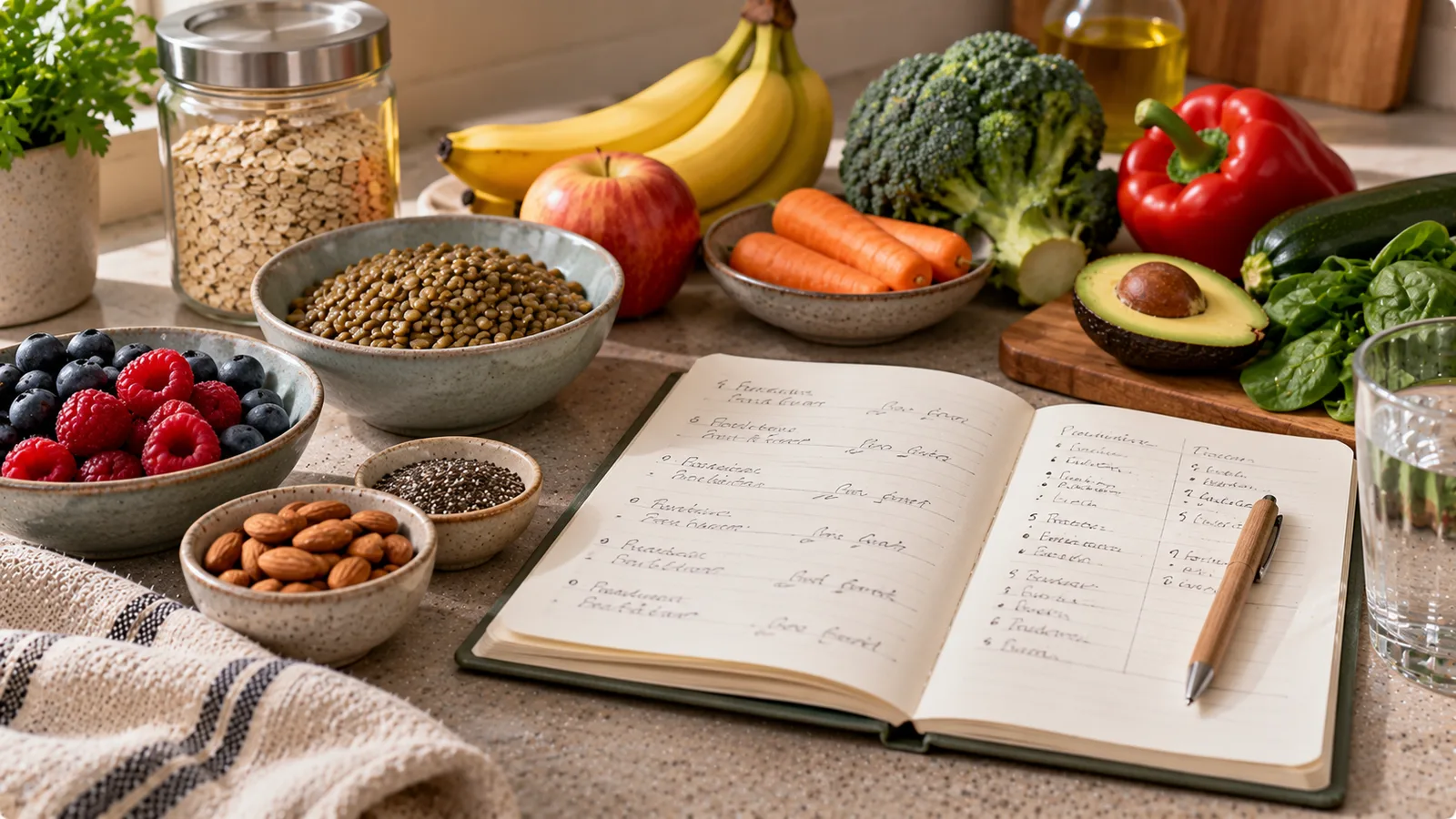
A 7-Day High-Fiber Meal Plan
This seven-day meal plan is designed for one adult who wants to eat more fiber through ordinary foods rather than supplements.
It includes 21 meals, specific ingredient quantities, estimated fiber totals and one consolidated shopping list.
The plan uses oats, lentils, beans, chickpeas, whole grains, vegetables, fruit, nuts and seeds. Several ingredients appear in different dishes so that shopping and preparation remain manageable.
Most days provide approximately 30–40 g of dietary fiber from the three planned meals, depending on the products used. Snacks, drinks and optional additions are not included in those totals.
This is a fiber-focused menu, not an individually calculated calorie prescription. Energy and protein needs vary, so adjust portions and add suitable foods according to your needs.
Before you start: increase fiber gradually
A sudden increase in fiber can cause gas, bloating or abdominal discomfort.
If your usual intake is low, start with smaller portions of beans, lentils and whole grains. Increase them gradually over several days or weeks.
Drink fluids regularly and prepare legumes properly.
People with gastrointestinal conditions, medically prescribed low-fiber diets or specific digestive symptoms may need an individual approach.
The European Food Safety Authority considers 25 g of dietary fiber per day adequate for normal bowel function in adults. Individual needs and dietary recommendations may differ.
Source: EFSA Dietary Reference Values.
The seven-day menu at a glance
Fiber estimates refer to the listed portions. Values are rounded and can vary with brands, edible weights and preparation.
| Day | Breakfast | Lunch | Dinner | Estimated daily fiber |
|---|---|---|---|---|
| Monday | Overnight oats with berries and chia | Lentil and vegetable soup | Chickpea and quinoa bowl | 38 g |
| Tuesday | Whole-grain toast with avocado and egg | White bean and tomato salad | Chicken with barley and broccoli | 34 g |
| Wednesday | Apple-cinnamon porridge | Leftover lentil soup and rye bread | Black bean and sweet potato chili | 38 g |
| Thursday | Yogurt with pear, oats and flaxseed | Chickpea whole-wheat wrap | Salmon with brown rice and vegetables | 33 g |
| Friday | Berry oat smoothie bowl | Black bean chili leftovers | Whole-wheat pasta with lentil sauce | 38 g |
| Saturday | Peanut butter banana toast | Barley and roasted vegetable salad | Baked potato with beans and yogurt | 35 g |
| Sunday | Raspberry chia oatmeal | Hummus and vegetable sandwich | Lentil and spinach curry with rice | 38 g |
These totals are estimates, not laboratory measurements.
Day 1 — Monday
Breakfast: overnight oats with berries and chia
Ingredients, one serving
- 50 g rolled oats
- 150 g plain yogurt
- 100 g raspberries
- 10 g chia seeds
- 100 ml milk or unsweetened fortified plant drink
- Cinnamon
Preparation: Mix oats, yogurt, milk and chia. Refrigerate overnight. Add raspberries and cinnamon before eating.
Estimated fiber: 13 g.
Raspberries, oats and chia each contribute fiber. The exact total depends on the berries and oat product.
Lunch: lentil and vegetable soup
Ingredients
- 70 g dry brown or green lentils
- 100 g carrots
- 80 g onion
- 100 g chopped tomatoes
- 50 g spinach
- 5 g olive oil
- 400 ml water or low-salt stock
- Garlic, paprika and pepper
Preparation: Soften the onion and carrot in oil. Add lentils, tomatoes and stock. Simmer until the lentils are tender, then stir in spinach.
Estimated fiber: 13 g.
Make a second portion for Wednesday's lunch. Refrigerate promptly.
Dinner: chickpea and quinoa bowl
Ingredients
- 120 g cooked, drained chickpeas
- 50 g dry quinoa
- 100 g cucumber
- 100 g tomatoes
- 50 g leafy greens
- 10 g olive oil
- Lemon juice and herbs
Preparation: Cook the quinoa. Combine with rinsed chickpeas and chopped vegetables. Dress with lemon and olive oil.
Estimated fiber: 12 g.
Monday total: approximately 38 g fiber.
Day 2 — Tuesday
Breakfast: avocado and egg on whole-grain toast
Ingredients
- 80 g whole-grain bread
- 70 g avocado
- 1 egg
- 100 g tomatoes
- Lemon juice and pepper
Preparation: Toast the bread. Mash avocado with lemon and pepper. Add the cooked egg and tomatoes.
Estimated fiber: 11 g.
Bread composition makes a significant difference. Choose a bread with a clearly stated fiber value.
Lunch: white bean and tomato salad
Ingredients
- 150 g cooked, drained white beans
- 150 g tomatoes
- 100 g cucumber
- 50 g red onion
- 30 g leafy greens
- 10 g olive oil
- Lemon juice or vinegar
Preparation: Rinse canned beans, chop vegetables and combine. Add dressing immediately before serving.
Estimated fiber: 12 g.
Dinner: chicken with barley and broccoli
Ingredients
- 150 g chicken breast
- 60 g dry pearl barley
- 180 g broccoli
- 80 g carrots
- 10 g olive oil
- Herbs and spices
Preparation: Cook barley until tender. Cook chicken thoroughly, steam broccoli and carrots, and serve with measured olive oil.
Estimated fiber: 11 g.
Tuesday total: approximately 34 g fiber.
Day 3 — Wednesday
Breakfast: apple-cinnamon porridge
Ingredients
- 60 g rolled oats
- 150 g apple with skin
- 15 g ground flaxseed
- 200 ml milk or unsweetened plant drink
- Cinnamon
Preparation: Cook oats in milk. Stir in chopped apple and cinnamon. Add flaxseed before serving.
Estimated fiber: 12 g.
Lunch: lentil soup with rye bread
Ingredients
- One prepared portion of Monday's lentil soup
- 60 g whole-grain rye bread
Preparation: Reheat the soup thoroughly until steaming hot. Serve with bread.
Estimated fiber: 17 g.
The total depends on the bread's fiber content and the actual lentil portion.
Dinner: black bean and sweet potato chili
Ingredients
- 130 g cooked, drained black beans
- 180 g sweet potato
- 150 g chopped tomatoes
- 80 g bell pepper
- 60 g onion
- 5 g olive oil
- Chili, cumin and paprika
Preparation: Soften onion and pepper in oil. Add diced sweet potato, tomatoes and a little water. Simmer until tender. Stir in beans and heat through.
Estimated fiber: 9 g.
Prepare an extra serving for Friday.
Wednesday total: approximately 38 g fiber.
Day 4 — Thursday
Breakfast: yogurt with pear, oats and flaxseed
Ingredients
- 200 g plain yogurt or fortified soy yogurt
- 150 g pear with skin
- 40 g rolled oats
- 15 g ground flaxseed
- Cinnamon
Preparation: Combine all ingredients in a bowl. Allow the oats to soften briefly if preferred.
Estimated fiber: 11 g.
Lunch: chickpea whole-wheat wrap
Ingredients
- 1 whole-wheat tortilla, approximately 65 g
- 120 g cooked, drained chickpeas
- 80 g carrots
- 50 g lettuce
- 50 g cucumber
- 40 g plain yogurt
- Lemon and herbs
Preparation: Mash some chickpeas with yogurt, lemon and herbs. Add the remaining chickpeas and vegetables, then wrap.
Estimated fiber: 13 g.
Dinner: salmon with brown rice and vegetables
Ingredients
- 150 g salmon
- 65 g dry brown rice
- 180 g broccoli
- 100 g carrots
- 5 g olive oil
- Lemon and herbs
Preparation: Cook rice according to the package. Cook salmon thoroughly and steam vegetables. Add lemon and olive oil.
Estimated fiber: 9 g.
Thursday total: approximately 33 g fiber.
Day 5 — Friday
Breakfast: berry oat smoothie bowl
Ingredients
- 45 g rolled oats
- 150 g mixed berries
- 100 g banana
- 150 g plain yogurt
- 10 g chia seeds
- Water or milk to adjust consistency
Preparation: Blend yogurt, banana and part of the berries. Stir in oats and chia. Top with remaining berries.
Estimated fiber: 13 g.
A smoothie bowl retains the ingredients' fiber when the whole fruit is blended rather than strained.
Lunch: leftover black bean chili
Ingredients
- One additional portion of Wednesday's black bean and sweet potato chili
- 50 g whole-grain bread
Preparation: Reheat the refrigerated chili thoroughly and serve with bread.
Estimated fiber: 13 g.
Dinner: whole-wheat pasta with lentil tomato sauce
Ingredients
- 75 g dry whole-wheat pasta
- 55 g dry red lentils
- 180 g passata
- 80 g carrots
- 60 g onion
- 5 g olive oil
- Garlic and oregano
Preparation: Cook pasta. Simmer lentils with passata, finely chopped vegetables and water until soft. Combine with pasta.
Estimated fiber: 12 g.
Friday total: approximately 38 g fiber.
Day 6 — Saturday
Breakfast: peanut butter and banana toast
Ingredients
- 80 g whole-grain bread
- 25 g peanut butter
- 120 g banana
- 10 g chia seeds
Preparation: Toast bread, spread with peanut butter and add banana slices and chia.
Estimated fiber: 12 g.
Lunch: barley and roasted vegetable salad
Ingredients
- 60 g dry pearl barley
- 120 g cooked, drained chickpeas
- 150 g zucchini
- 100 g bell pepper
- 50 g leafy greens
- 10 g olive oil
- Lemon juice
Preparation: Cook barley. Roast zucchini and pepper with oil. Combine with chickpeas, greens and lemon.
Estimated fiber: 13 g.
Dinner: baked potato with beans and yogurt
Ingredients
- 250 g potato with skin
- 130 g cooked, drained white beans
- 100 g plain yogurt
- 100 g tomatoes
- Chives, pepper and lemon
Preparation: Bake the potato until tender. Warm beans, split the potato and top with beans, yogurt, tomatoes and chives.
Estimated fiber: 10 g.
Saturday total: approximately 35 g fiber.
Day 7 — Sunday
Breakfast: raspberry chia oatmeal
Ingredients
- 50 g rolled oats
- 120 g raspberries
- 15 g chia seeds
- 200 ml milk or unsweetened plant drink
- Cinnamon
Preparation: Cook oats in milk. Stir in chia and top with raspberries.
Estimated fiber: 15 g.
Lunch: hummus and vegetable sandwich
Ingredients
- 90 g whole-grain bread
- 80 g hummus
- 100 g carrots
- 80 g cucumber
- 50 g lettuce
Preparation: Spread hummus on bread. Add sliced vegetables and lettuce. Serve any remaining vegetables on the side.
Estimated fiber: 11 g.
Dinner: lentil and spinach curry with brown rice
Ingredients
- 65 g dry red lentils
- 55 g dry brown rice
- 100 g spinach
- 150 g chopped tomatoes
- 80 g onion
- 50 ml light coconut milk
- 5 g olive oil
- Curry spices
Preparation: Cook rice separately. Soften onion, add lentils, tomatoes, coconut milk, spices and enough water to simmer. Cook until lentils are tender and stir in spinach.
Estimated fiber: 12 g.
Sunday total: approximately 38 g fiber.
Complete shopping list for one person
Quantities are rounded to practical purchase amounts and include the extra soup and chili portions.
Check what you already have before shopping.
Legumes and grains
| Ingredient | Approximate amount to buy |
|---|---|
| Rolled oats | 300 g |
| Dry brown or green lentils | 140 g |
| Dry red lentils | 120 g |
| Cooked chickpeas, drained | 360 g |
| Cooked white beans, drained | 280 g |
| Cooked black beans, drained | 260 g |
| Dry quinoa | 50 g |
| Dry pearl barley | 120 g |
| Dry brown rice | 120 g |
| Dry whole-wheat pasta | 75 g |
| Whole-grain or rye bread | 450 g |
| Whole-wheat tortilla | 1 |
| Hummus | 80 g |
For canned legumes, buy enough tins to obtain the stated drained weights.
Vegetables
| Ingredient | Approximate amount |
|---|---|
| Carrots | 750 g |
| Onions, including red onion | 550 g |
| Tomatoes, fresh | 600 g |
| Chopped tomatoes and passata | 1 kg |
| Spinach and other leafy greens | 450 g |
| Broccoli | 400 g |
| Cucumbers | 350 g |
| Bell peppers | 300 g |
| Zucchini | 150 g |
| Sweet potatoes | 360 g |
| Potatoes | 250 g |
| Lettuce | 100 g |
| Garlic, lemons, herbs | As needed |
Some items overlap with prepared leftovers. Quantities are deliberately rounded to reduce the risk of running short.
Fruit, nuts and seeds
| Ingredient | Approximate amount |
|---|---|
| Raspberries | 220 g |
| Other mixed berries | 150 g |
| Apples | 150 g |
| Pears | 150 g |
| Bananas | 250 g |
| Chia seeds | 35 g |
| Ground flaxseed | 30 g |
| Peanut butter | 25 g |
| Avocado | 70 g |
Frozen berries work well in oatmeal and smoothie bowls.
Dairy, alternatives and protein foods
| Ingredient | Approximate amount |
|---|---|
| Plain yogurt or fortified soy yogurt | 650 g |
| Milk or fortified plant drink | 600 ml |
| Eggs | 1 |
| Chicken breast | 150 g |
| Salmon | 150 g |
| Light coconut milk | 50 ml |
Pantry ingredients
Olive oil, salt, pepper, cinnamon, paprika, cumin, chili, oregano, curry spices, lemon juice and low-salt stock.
Prepare the week in approximately one hour
A short preparation session can make the plan easier to follow.
- Cook a batch of lentil soup for Monday and Wednesday.
- Prepare the black bean chili for Wednesday and Friday, or freeze Friday's portion promptly.
- Cook quinoa and barley for their first planned uses.
- Wash and portion vegetables.
- Measure oats, chia and flaxseed into small containers.
- Keep dressings separate from salads until serving.
Store cooked food promptly in the refrigerator.
Refrigerated leftovers should generally be used within three to four days under appropriate storage conditions; freeze portions intended for later use.
Cooked rice requires particular care: cool it quickly, refrigerate promptly and follow local food-safety guidance for storage and reheating.
Do not leave cooked food at room temperature for extended periods.
What if 30–40 g of fiber feels like too much?
The full plan may be too high in fiber for someone who currently eats very little.
A gradual approach is reasonable.
For example:
- Begin with half the suggested bean portion.
- Replace one whole-grain serving with a lower-fiber alternative temporarily.
- Start with 5 g chia instead of 15 g.
- Increase portions gradually as tolerated.
- Maintain regular fluid intake.
There is no benefit in forcing a particular fiber number if it causes persistent discomfort.
Seek individual advice if you have ongoing gastrointestinal symptoms or a condition requiring dietary modification.
Adjusting calories without losing the fiber focus
The plan's calorie content varies by day and is not designed to meet every person's energy needs.
If you need more energy, you can add:
- Extra rice, potatoes or whole-grain bread.
- Olive oil, nuts or nut butter.
- An additional protein-rich food.
- A snack containing fruit and yogurt.
If you need less energy, adjust calorie-dense additions first rather than automatically removing vegetables, legumes and other fiber sources.
Protein requirements also differ between individuals.
The menu should be adapted to personal energy, protein, allergy and medical requirements.
How accurate are the fiber estimates?
Fiber content varies with:
- Food variety.
- Brand and processing.
- Whether weights are dry, cooked or drained.
- Bread and tortilla composition.
- Fruit size and edible portions.
- Recipe substitutions.
For example, two whole-grain breads may have substantially different fiber content per 100 g.
When precision matters, use product labels and a reliable food composition database.
The USDA FoodData Central database provides food-specific nutrient information.
Sources
- EFSA — Dietary Reference Values
- USDA FoodData Central
- NIDDK — Eating, Diet, and Nutrition for Constipation
- USDA Food Safety and Inspection Service — Leftovers and Food Safety
A useful high-fiber eating pattern does not require complicated recipes. The main idea is to include fiber-rich foods consistently, adjust portions to your tolerance and make the weekly plan practical enough to repeat.