
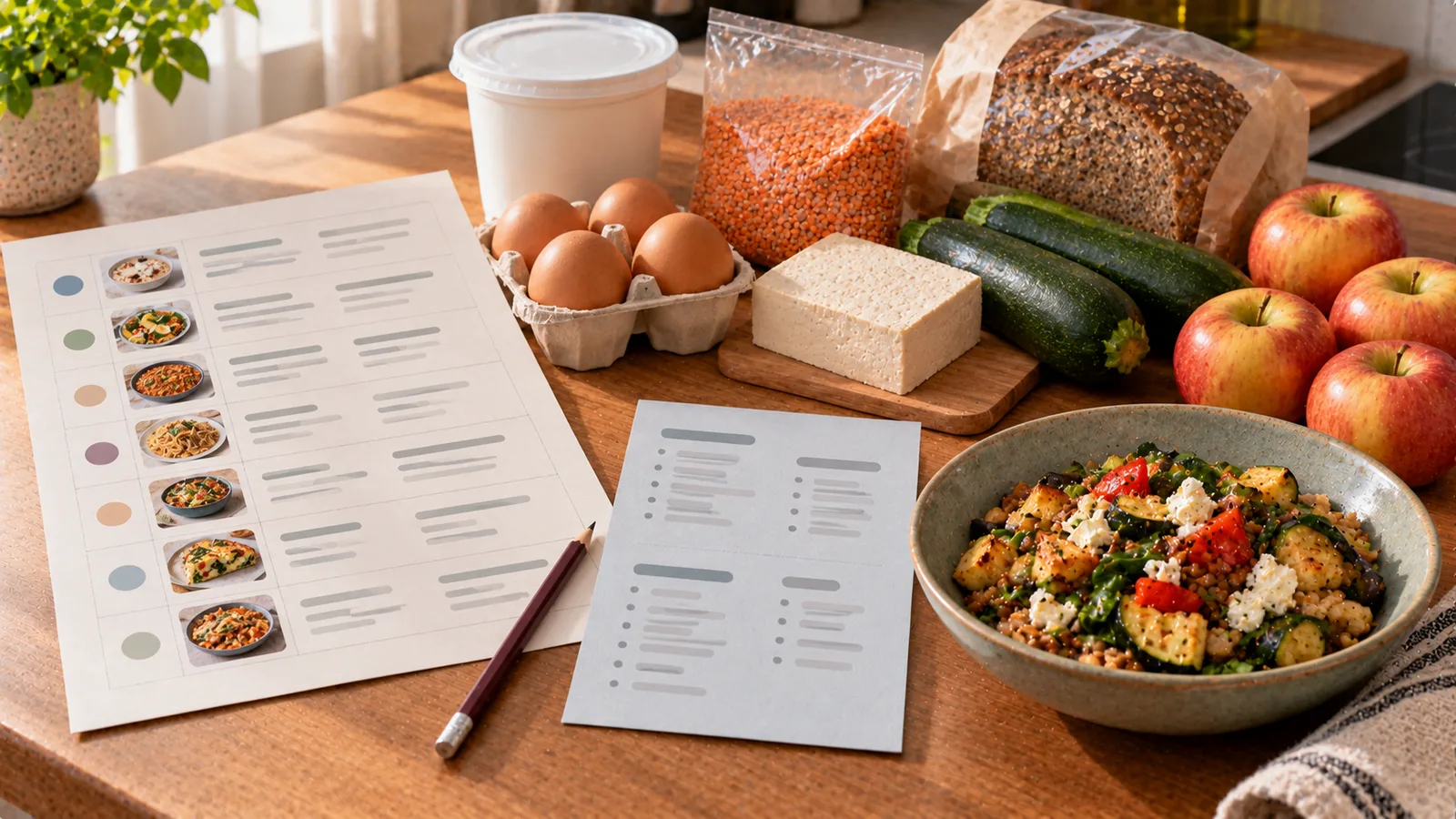
A vegetarian meal plan is easier to follow when the same ingredients work across several meals without making every day feel identical.
This seven-day plan uses a lacto-ovo vegetarian pattern, meaning it includes plant foods, eggs and dairy but no meat or fish.
It is designed as a practical example rather than a personalized calorie prescription. Portion sizes can be increased or reduced according to appetite, energy needs and individual goals.
The basic structure
The plan uses a relatively small group of foods repeatedly:
- eggs;
- Greek yogurt or skyr;
- lentils;
- chickpeas;
- beans;
- tofu;
- oats;
- rice;
- pasta;
- potatoes;
- whole-grain bread;
- vegetables;
- fruit;
- nuts and seeds.
The goal is to make the grocery list manageable while still changing flavors and meal formats throughout the week.
Day 1
Breakfast: yogurt, oats and berries
Combine:
- 250 g Greek yogurt or skyr;
- 50 g oats;
- 100 g berries;
- 15 g walnuts.
Lunch: chickpea rice bowl
Use:
- 150 g cooked chickpeas;
- 150 g cooked rice;
- 150–200 g mixed vegetables;
- 1 tablespoon yogurt-based sauce.
Add herbs, lemon, garlic or spices according to preference.
Dinner: lentil tomato pasta
Use:
- 80 g dry whole-grain pasta;
- 150 g cooked lentils;
- 200 g tomato sauce;
- spinach or another vegetable;
- 20 g grated cheese if desired.
Cook an extra portion of lentils for later in the week.
Day 2
Breakfast: eggs on toast with fruit
Use:
- 2 eggs;
- 2 slices whole-grain bread;
- tomato or cucumber;
- 1 piece of fruit.
Lunch: leftover lentil pasta
Use the extra portion from Day 1.
Add fresh vegetables or a side salad if available.
Dinner: tofu vegetable stir-fry
Use:
- 180 g tofu;
- 150 g cooked rice;
- 250 g mixed vegetables;
- soy sauce;
- garlic and ginger.
Frozen mixed vegetables work well here and reduce the number of separate fresh ingredients needed.
Day 3
Breakfast: overnight oats
Combine the night before:
- 60 g oats;
- 200 g yogurt or skyr;
- 100 ml milk;
- 1 banana;
- 10 g chia seeds.
Lunch: bean and potato bowl
Use:
- 250 g potatoes;
- 150 g cooked kidney or black beans;
- cucumber;
- tomato;
- yogurt-herb sauce.
Dinner: vegetable omelet with bread
Use:
- 3 eggs;
- 150–200 g vegetables;
- 30 g cheese;
- 2 slices whole-grain bread.
Good vegetables include peppers, spinach, mushrooms, onions or leftover vegetables from earlier meals.
Day 4
Breakfast: yogurt, banana and nuts
Use:
- 250 g yogurt or skyr;
- 1 banana;
- 40 g oats;
- 15 g nuts.
Lunch: chickpea wrap
Fill 2 medium whole-grain tortillas with:
- 150 g chickpeas;
- lettuce or spinach;
- tomato;
- cucumber;
- yogurt sauce.
Dinner: red lentil curry with rice
Use:
- 80 g dry red lentils;
- 150 g cooked rice;
- 200 g canned tomatoes;
- onion;
- 150–200 g vegetables;
- curry spices.
Cook enough curry for tomorrow's lunch.
Day 5
Breakfast: eggs, potatoes and vegetables
Use:
- 2 eggs;
- 200 g potatoes;
- tomato, spinach or peppers.
This works well if cooked potatoes are already available from Day 3.
Lunch: leftover lentil curry
Reheat the extra curry from Day 4.
Serve with leftover rice if needed.
Dinner: tofu pasta with vegetables
Use:
- 160–180 g tofu;
- 80 g dry pasta;
- 200 g tomato sauce;
- vegetables such as spinach, mushrooms or peppers.
Season with herbs, garlic and black pepper.
Day 6
Breakfast: oatmeal with apple
Cook:
- 60 g oats;
- 250 ml milk;
- 1 apple;
- cinnamon;
- 15 g peanut butter or nuts.
Lunch: bean and egg salad bowl
Use:
- 150 g beans;
- 2 eggs;
- lettuce or spinach;
- cucumber;
- tomato;
- 1 slice whole-grain bread.
Dinner: baked potatoes with cottage cheese
Use:
- 350 g potatoes;
- 200 g cottage cheese;
- cucumber and tomato salad;
- herbs.
Add roasted or steamed vegetables if desired.
Day 7
Breakfast: yogurt bowl
Use:
- 250 g yogurt or skyr;
- 50 g oats;
- 1 piece of fruit;
- 10 g chia seeds;
- 15 g nuts.
Lunch: leftover vegetable and bean wrap
Use:
- 2 tortillas;
- 120–150 g remaining beans or chickpeas;
- remaining vegetables;
- yogurt sauce.
This meal is intentionally flexible so you can use ingredients left from the week.
Dinner: lentil and vegetable soup
Use:
- 80 g dry lentils or about 180–200 g cooked lentils;
- 250–300 g mixed vegetables;
- 200 g canned tomatoes;
- onion and garlic;
- vegetable stock;
- 2 slices whole-grain bread.
The final dinner also works as a use-up meal for vegetables remaining in the refrigerator.
Seven-day overview
| Day | Breakfast | Lunch | Dinner |
|---|---|---|---|
| 1 | Yogurt, oats, berries | Chickpea rice bowl | Lentil tomato pasta |
| 2 | Eggs and toast | Leftover lentil pasta | Tofu stir-fry |
| 3 | Overnight oats | Bean-potato bowl | Vegetable omelet |
| 4 | Yogurt, banana, nuts | Chickpea wraps | Lentil curry |
| 5 | Eggs and potatoes | Leftover curry | Tofu pasta |
| 6 | Apple oatmeal | Bean and egg salad | Potatoes with cottage cheese |
| 7 | Yogurt bowl | Leftover bean wrap | Lentil vegetable soup |
Complete grocery list for one person
Quantities are approximate because package sizes differ and individual portions vary.
Eggs and dairy
- 12 eggs;
- 1.2–1.5 kg Greek yogurt or skyr;
- 200 g cottage cheese;
- 100–150 g cheese;
- 1 liter milk.
Legumes and tofu
- 2 cans chickpeas, about 400 g each;
- 2 cans beans, about 400 g each;
- 500 g dry lentils or a combination of dry and pre-cooked lentils;
- 400 g tofu.
You may have some legumes left depending on drained weight and package size.
Grains and starches
- 500 g oats;
- 500 g rice;
- 500 g whole-grain pasta;
- 1 loaf whole-grain bread;
- 1 package whole-grain tortillas;
- about 1.5 kg potatoes.
Not all dry staples will necessarily be used completely during the week.
Vegetables
A practical basket could include:
- 1 kg mixed frozen vegetables;
- 500 g tomatoes;
- 2 cucumbers;
- 3 bell peppers;
- 300–400 g spinach;
- 250 g mushrooms;
- 4–5 onions;
- 1 bulb garlic;
- 1 lettuce or another salad green.
You can substitute vegetables according to season, price and preference.
Fruit
For example:
- 4 bananas;
- 3 apples;
- 300 g berries, fresh or frozen;
- 3 additional pieces of seasonal fruit.
Nuts, seeds and extras
- 100–150 g walnuts or mixed nuts;
- small package chia seeds;
- peanut butter;
- vegetable oil or olive oil;
- soy sauce;
- vegetable stock;
- herbs;
- curry powder or curry spices;
- cinnamon;
- black pepper;
- lemon if desired.
How the ingredients overlap
The plan deliberately reuses ingredients.
For example:
Yogurt appears in breakfasts and sauces.
Lentils appear in pasta, curry and soup.
Chickpeas become both a rice bowl and wraps.
Beans work in potato bowls, salads and the flexible Day 7 lunch.
Rice accompanies chickpeas, tofu and curry.
Potatoes appear in a bowl, breakfast and dinner.
Spinach and other vegetables can move between omelets, pasta, curry, wraps and soup.
This overlap keeps the grocery list smaller without requiring identical meals.
A simple preparation session
You do not need to prepare every meal on Sunday.
A short preparation session can make the first half of the week easier.
You might:
- cook several portions of rice;
- cook a batch of lentils;
- wash and chop durable vegetables;
- make a yogurt-herb sauce;
- boil several eggs;
- portion nuts and oats if useful.
Store foods appropriately and follow safe refrigeration guidance for cooked foods.
Prepare another small batch later in the week rather than trying to keep every cooked component for seven days.
Protein in a vegetarian plan
Removing meat does not automatically make a diet low in protein.
This plan repeatedly uses:
- eggs;
- yogurt or skyr;
- cottage cheese;
- tofu;
- lentils;
- chickpeas;
- beans.
Grains, nuts and seeds also contribute smaller amounts.
Actual protein intake depends on the specific brands and portions used.
If you have a particular protein target, calculate it from the foods and quantities you actually eat rather than assuming every vegetarian meal has the same protein content.
Adjusting portions
This plan is not tied to one calorie level.
A person who needs more energy might increase:
- rice;
- pasta;
- potatoes;
- bread;
- oats;
- nuts;
- oil;
- portions of protein foods.
A person needing smaller portions might reduce some of those amounts while keeping the overall meal structure.
Avoid treating a generic online meal plan as an exact individualized prescription.
Swaps that keep the plan practical
You do not need every exact ingredient.
You can swap:
- chickpeas ↔ beans;
- tofu ↔ tempeh;
- rice ↔ bulgur or couscous;
- Greek yogurt ↔ skyr;
- spinach ↔ another leafy vegetable;
- berries ↔ seasonal fruit;
- whole-grain pasta ↔ another preferred pasta;
- cottage cheese ↔ another suitable dairy option.
The most useful substitutions preserve the role of the ingredient while using foods you actually enjoy and can buy easily.
How to reduce food waste
Before buying everything on the list, check what you already have.
Then use the most perishable ingredients first.
A simple order might be:
Use early:
- salad greens;
- fresh berries;
- mushrooms;
- opened dairy.
Use throughout the week:
- peppers;
- cucumbers;
- tomatoes;
- yogurt;
- tofu.
Use later:
- potatoes;
- onions;
- dry grains;
- canned legumes;
- frozen vegetables.
The Day 7 meals are intentionally flexible so remaining ingredients have somewhere to go.
If you cook for two people
The simplest starting point is to double the meal quantities.
However, grocery packages do not always scale perfectly.
For example, doubling a recipe may mean one full package instead of two partial packages.
Check the actual package sizes before doubling the shopping list mechanically.
If you need lunches for work
Most lunches in this plan can be packed:
- chickpea rice bowl;
- leftover pasta;
- bean-potato bowl;
- wraps;
- lentil curry;
- bean and egg salad.
If refrigeration or reheating is limited at work, choose meals that fit the storage conditions available to you.
The practical goal
A useful vegetarian meal plan should do more than provide seven unrelated days of recipes.
It should make the week easier to shop for and easier to cook.
This plan does that by using a small set of protein foods, grains and vegetables in different combinations.
The result is a full seven-day vegetarian framework with enough repetition to keep shopping practical and enough variation to avoid eating exactly the same meal every day.