
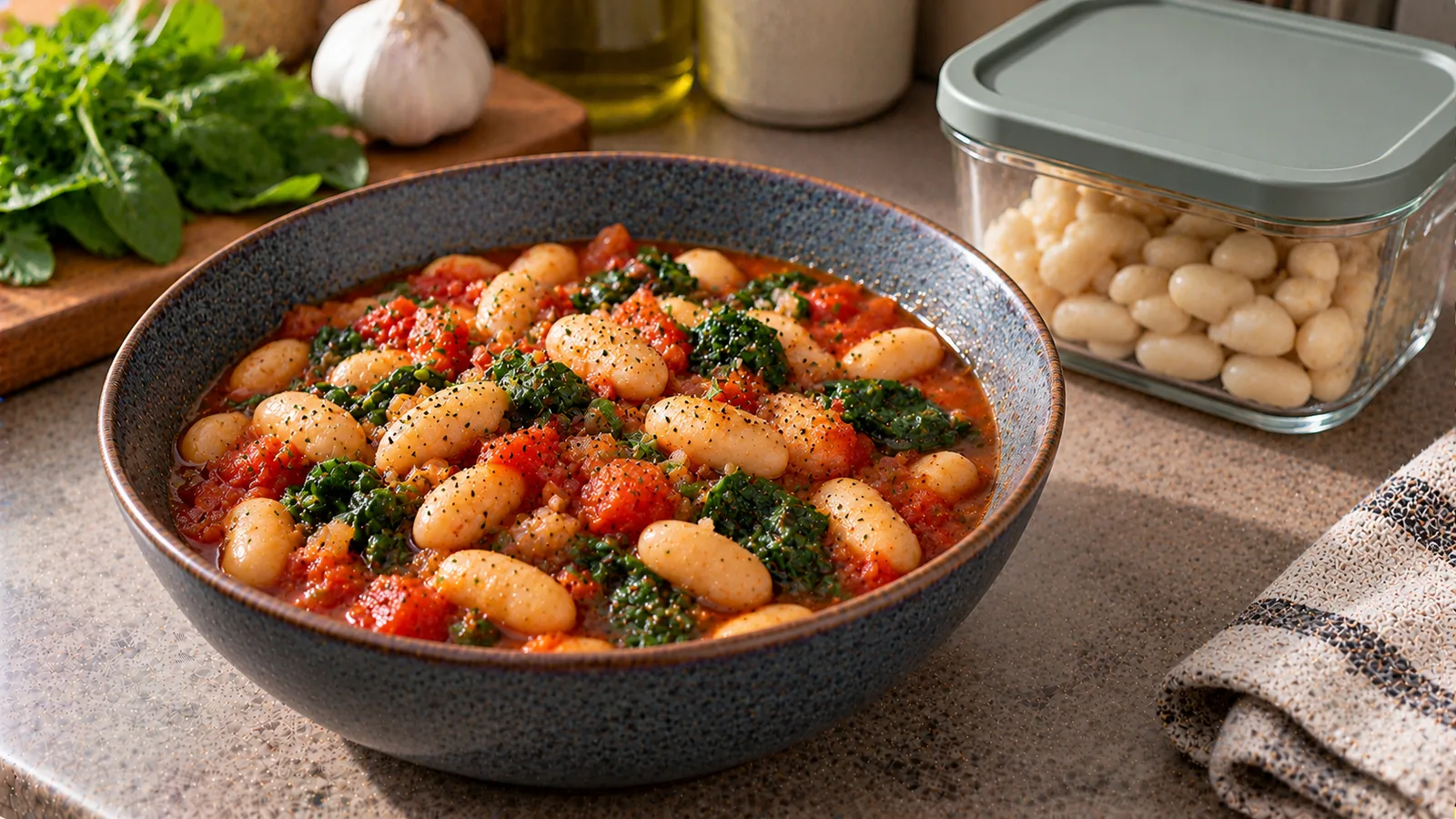
Cooking for one often leaves a half-empty can at the back of the fridge. A recipe needs 120 g of beans, but the can contains 240 g drained. The solution is not to eat the same stew twice, or to keep opened cans until the weekend. Pair two different dinners around one can: use 120 g tonight and 120 g tomorrow. Then open the next can. This is a concrete six-dinner rotation rather than another general guide to weekly meal planning.
The worked menu uses three 240 g drained cans — white beans, chickpeas and kidney beans — for six one-person dinners. All 720 g of the drained beans are assigned to meals. Each recipe includes vegetables, a starchy food and a source of protein, although portions and nutritional needs vary. The quantities and prices are a planning example for Germany, not measured supermarket offers or a medically prescribed menu. Breakfasts, lunches and drinks are outside the budget.
Start with the drained weight and two-meal rule
Read Abtropfgewicht / drained weight rather than the total weight including water. A can marked 400 g may contain roughly 240 g of beans after draining, but that amount must be checked on the individual package. Two equal servings of a 240 g drained can provide 120 g per dinner. If the label reports values for the full contents rather than drained beans, do not automatically assume the nutrient values apply after rinsing.
A single-person plan only works if tomorrow's use is decided before opening the can. Transfer the untouched 120 g to a clean, covered container; refrigerate promptly and label it with the opening date. The second serving is scheduled the next day, so there is no need to gamble on what still looks edible several days later. The basic Mealisa meal-planning-for-one guide covers scheduling more broadly; this page solves the narrower problem of using open cans, down to the gram.
Six dinners and the exact can allocation
The menu uses one can over Monday–Tuesday, one over Wednesday–Thursday and one over Friday–Saturday. The last dinner is not cooked in advance on Monday. The table uses uncooked weight for rice, couscous and pasta, cooked/drained weight for canned beans and ordinary food weight for vegetables. Costs cover measured ingredients, not whole new packages purchased for every dish.
| Day / dinner | Edible beans | Main starch (dry unless noted) | Illustrative ingredient cost |
|---|---|---|---|
| Monday — Lemon white-bean couscous bowl | 120 g White beans, drained | 65 g couscous | €1.82 |
| Tuesday — Tomato white beans on toasted bread | 120 g White beans, drained | 90 g bread | €1.64 |
| Wednesday — Chickpea–carrot rice with yogurt | 120 g Chickpeas, drained | 65 g rice | €1.12 |
| Thursday — Chickpea, egg and spinach skillet | 120 g Chickpeas, drained | 60 g bread | €2.18 |
| Friday — Smoky kidney bean and potato hash | 120 g Kidney beans, drained | 250 g potatoes | €1.85 |
| Saturday — Kidney bean tomato pasta | 120 g Kidney beans, drained | 70 g pasta | €1.16 |
How to cook the six dinners without repeating a recipe
Monday — lemon white-bean couscous bowl
Ingredients for one: White beans, drained — 120 g; Couscous, dry — 65 g; Cucumber — 100 g; Carrots — 70 g; Bell peppers — 80 g; Onions — 50 g; Lemon (edible use) — 20 g; Cooking oil — 8 g.. Put the dry couscous in a bowl, cover with hot water according to its label and let it hydrate. Soften chopped onion and carrot with the measured oil; add the peppers. Fold in 120 g drained white beans until hot, then add cucumber and lemon off the heat. Combine with couscous. The contrast of cool cucumber and warm beans makes this a different meal from Tuesday's tomato-based dinner. Use a clean fork to move the other 120 g to a covered refrigerator container before seasoning Monday's portion.
This meal is flexible: a different vegetable blend can replace pepper, but the basket total must then be recalculated. The 65 g couscous is dry, not the weight after adding water. If you log nutrition, weigh the dry grain once rather than entering both dry and cooked amounts.
Tuesday — tomato white beans on wholegrain toast
Ingredients for one: White beans, drained — 120 g; Wholegrain bread — 90 g; Tomato passata — 150 g; Frozen spinach — 80 g; Onions — 70 g; Cooking oil — 8 g; Paprika powder — 1 g.. Cook onion in the oil, add passata, paprika and frozen spinach; simmer until the sauce is hot and the spinach has fully cooked. Stir in yesterday's refrigerated 120 g white beans, heat through and spoon over freshly toasted bread. The tomato and spinach provide a different flavour profile from Monday's lemon bowl. If the beans were left out of the fridge, discard them instead of assuming reheating makes unsafe storage harmless.
The passata package is 500 g, but this dish uses 150 g. Freeze a separate 170 g portion immediately after opening for Saturday's pasta; do not save an opened carton from Tuesday to Saturday in the refrigerator without considering its label and storage duration. The remaining 180 g can also be frozen or used in another meal. This is an example of planning beyond the half-can itself.
Wednesday — chickpea and carrot rice with yogurt
Ingredients for one: Chickpeas, drained — 120 g; Rice, dry — 65 g; Carrots — 100 g; Onions — 60 g; Plain yogurt — 70 g; Lemon (edible use) — 20 g; Cooking oil — 8 g.. Cook 65 g dry rice following the package instructions. Soften the onion and carrot in the oil, heat 120 g drained chickpeas with a splash of water and combine with the rice. Add plain yogurt and lemon at the table, keeping the yogurt chilled before serving. Immediately put the second 120 g chickpeas in a separate clean container for Thursday. Cooling the cooked rice promptly matters: do not hold a warm pot of rice on the stove overnight.
Rice adds a different texture and starch source from Monday's couscous. The yogurt is not a reason to leave the food at room temperature; pack the rice and chickpeas chilled if taking them away from home, and carry the yogurt separately in an insulated lunch bag when necessary.
Thursday — chickpea, egg and spinach skillet
Ingredients for one: Chickpeas, drained — 120 g; Eggs (pieces) — 1 pc; Frozen spinach — 120 g; Bell peppers — 80 g; Onions — 60 g; Wholegrain bread — 60 g; Cooking oil — 8 g; Plain yogurt — 50 g.. Sauté onion and peppers, add frozen spinach and heat thoroughly, then stir in the refrigerated chickpeas. Crack in one egg and cook it until the egg is properly set; use a food thermometer if your recipe or household safety needs require one. Serve with 60 g wholegrain bread and a 50 g yogurt spoonful. The egg and bread turn the same chickpeas into a skillet meal rather than a rice bowl. Refrigerate yogurt between uses.
The one egg belongs to the ingredient-cost calculation; the pack contains six eggs and five remain for other meals. That leftover stock is not counted as five wasted eggs. If you prefer no egg, substitute another protein food and redo the cost and nutrition calculations; don't silently claim the meal is identical.
Friday — smoky kidney-bean potato hash
Ingredients for one: Kidney beans, drained — 120 g; Potatoes — 250 g; Carrots — 80 g; Onions — 80 g; Frozen spinach — 80 g; Bell peppers — 80 g; Cooking oil — 8 g; Paprika powder — 2 g.. Dice 250 g potatoes and cook until tender. Brown onion and carrot in oil, add chopped pepper, spinach and a little paprika; mix in the cooked potatoes and 120 g drained kidney beans. Cook until the mixture is thoroughly hot. The potato gives this dinner a different structure from the grain-based meals. Transfer the remaining 120 g kidney beans into a covered container immediately and use them on Saturday.
The kidney beans in the plan are commercially canned, already cooked beans. If replacing them with dried kidney beans, follow strict soaking and vigorous boiling instructions; simply warming soaked dried beans in a skillet is unsafe. The portion would also need to be weighed again after cooking.
Saturday — kidney-bean tomato pasta
Ingredients for one: Kidney beans, drained — 120 g; Pasta, dry — 70 g; Tomato passata — 170 g; Onions — 70 g; Cooking oil — 8 g; Paprika powder — 2 g.. Cook 70 g dry pasta and drain it. Sauté onion in measured oil, add 170 g of passata safely frozen on Tuesday and thawed in the refrigerator, and simmer until hot. Add the refrigerated kidney beans and paprika, heat thoroughly, then toss with pasta. This uses the can opened yesterday and avoids both a third bean day and a half-can left until next week.
A tomato-based pasta and potato hash share one can without becoming identical leftovers. If Saturday's dinner changes, freeze the untouched, promptly chilled reserved beans on Friday rather than waiting beyond their safe refrigerated window. Label the frozen container with quantity and date.
One grocery basket, two different cost totals
The sample prices below are illustrative euro assumptions for a Germany-based shop. They have not been independently verified as current shelf prices. The model assumes purchasing complete packs even though most are only partly used. A pantry already stocked with oil, rice or paprika would make the actual cash outlay lower, while a different store or package size would change both totals.
| Ingredient / package | Buying amount | Full pack cost | Used in six dinners | Cost of amount used | Unspent amount |
|---|---|---|---|---|---|
| White beans, drained | 240 g | €0.99 | 240 g | €0.99 | 0 g |
| Chickpeas, drained | 240 g | €0.89 | 240 g | €0.89 | 0 g |
| Kidney beans, drained | 240 g | €0.85 | 240 g | €0.85 | 0 g |
| Couscous, dry | 500 g | €1.39 | 65 g | €0.18 | 435 g |
| Wholegrain bread | 500 g | €1.69 | 150 g | €0.51 | 350 g |
| Rice, dry | 1000 g | €2.09 | 65 g | €0.14 | 935 g |
| Potatoes | 2000 g | €2.49 | 250 g | €0.31 | 1750 g |
| Pasta, dry | 500 g | €0.95 | 70 g | €0.13 | 430 g |
| Eggs (pieces) | 6 pcs | €1.89 | 1 pcs | €0.32 | 5 pcs |
| Carrots | 1000 g | €1.29 | 250 g | €0.32 | 750 g |
| Frozen spinach | 450 g | €1.69 | 280 g | €1.05 | 170 g |
| Tomato passata | 500 g | €1.19 | 320 g | €0.76 | 180 g |
| Onions | 1000 g | €1.19 | 390 g | €0.46 | 610 g |
| Cucumber | 300 g | €0.99 | 100 g | €0.33 | 200 g |
| Plain yogurt | 500 g | €1.19 | 120 g | €0.29 | 380 g |
| Lemon (edible use) | 200 g | €0.89 | 40 g | €0.18 | 160 g |
| Cooking oil | 500 g | €4.99 | 48 g | €0.48 | 452 g |
| Bell peppers | 320 g | €1.99 | 240 g | €1.49 | 80 g |
| Paprika powder | 50 g | €0.95 | 5 g | €0.10 | 45 g |
| Cost lens | Six dinners | Per dinner |
|---|---|---|
| Checkout for 19 full packages | €29.59 | Not allocated |
| Ingredients actually used | €9.77 | €1.63 |
| Value of remaining groceries | €19.82 | Reusable stock, not waste |
For example, the 500 g couscous pack is priced at €1.39, while Monday uses only 65 g. Its dinner allocation is therefore €1.39 × 65 ÷ 500 ≈ €0.18. Treating the whole €1.39 as Monday's ingredient cost and then charging it again next week would double-count pantry stock. The €19.82 difference between checkout and allocated ingredient cost is the book value of the other groceries, not automatic savings and not an assertion they cannot spoil.
A single person does not have to buy all nineteen packs on day one. Check pantry and freezer stock first. The Mealisa portion-size guide helps distinguish a planned ingredient amount from a manufacturer's serving claim. For packaged foods, use the label of the actual product if nutritional tracking is important.
Safe refrigeration, freezing and the half-can schedule
| Can opened | First half | Remaining half | Safety checkpoint |
|---|---|---|---|
| Monday: white beans | Monday 120 g | Tuesday 120 g | Cool and eat next day |
| Wednesday: chickpeas | Wednesday 120 g | Thursday 120 g | Cool and eat next day |
| Friday: kidney beans | Friday 120 g | Saturday 120 g | Cool and eat next day |
The USDA Food Safety and Inspection Service says that opened low-acid canned foods such as beans generally keep 3–4 days in the refrigerator, subject to proper handling. The menu deliberately uses each opened can on consecutive days instead of exploiting the maximum. It also recommends transferring food to glass or plastic for better flavour, though storing it in the opened can is not intrinsically unsafe. See USDA guidance on opened cans.
For cooked dishes, USDA advises cooling promptly in shallow containers, refrigerating within two hours (one hour when it is over 32 °C / 90 °F) and using most cooked leftovers within 3–4 days. Reheat leftovers thoroughly; USDA recommends 74 °C / 165 °F for reheated leftovers. Consult the USDA leftovers and food-safety advice. Your appliance, refrigerator temperature, original product label and any special health requirements may call for shorter storage.
Passata is a separate case: tomato products are higher-acid than beans, but the safe, simple workflow here is to freeze Saturday's portion on Tuesday rather than rely on the theoretical maximum for an open bottle. Freeze or use the remaining vegetables and bread appropriately. The German BZfE storage guide recommends suitable containers, freezer labels and rotation. Cold food is not made safe by smell alone; if storage history is unknown, discard it.
When the plan changes: a small decision tree
If Tuesday becomes a restaurant dinner, the unopened chickpea can should remain closed; only Monday's already-open white beans require attention. Eat those beans at another safe opportunity or freeze the untouched reserved portion promptly. Do not open Wednesday's can just because the plan says Wednesday. If a can contains 265 g drained rather than 240 g, split it into two 132.5 g portions, or adjust the meals intentionally; keep the drained-weight accounting accurate instead of assuming every tin is identical.
If a person wants bigger portions, increase vegetables, grain or beans as appropriate and update the grocery list; these six dinners are examples rather than a complete dietary prescription. If there is a food allergy or a prescribed diet, change ingredients according to personal needs. Before shopping again, check what remains in the pantry, use the earliest-expiring ingredients first and choose another recipe for leftover pepper, spinach or bread. This follows the practical BZfE food-waste recommendations without pretending that every purchase can be exhausted in six meals.
The difference from a general food-waste article is operational: three specific cans, six different meals, a known opening day, the next meal assigned before the lid comes off, and an auditable basket. The broader Mealisa guide to rinsing canned legumes and sodium explains rinsing; here rinsing is simply an optional preparation step, not a claim that one fixed percentage of salt disappears. For more background on canned beans, see calories and portions of white beans.
Sources: USDA FSIS — opened cans; USDA FSIS — leftovers and food safety; BZfE — storing food; BZfE — making use of leftovers. All food weights and euro prices in the tables are illustrative planning inputs, not a laboratory food-composition analysis or live shopping quote.