
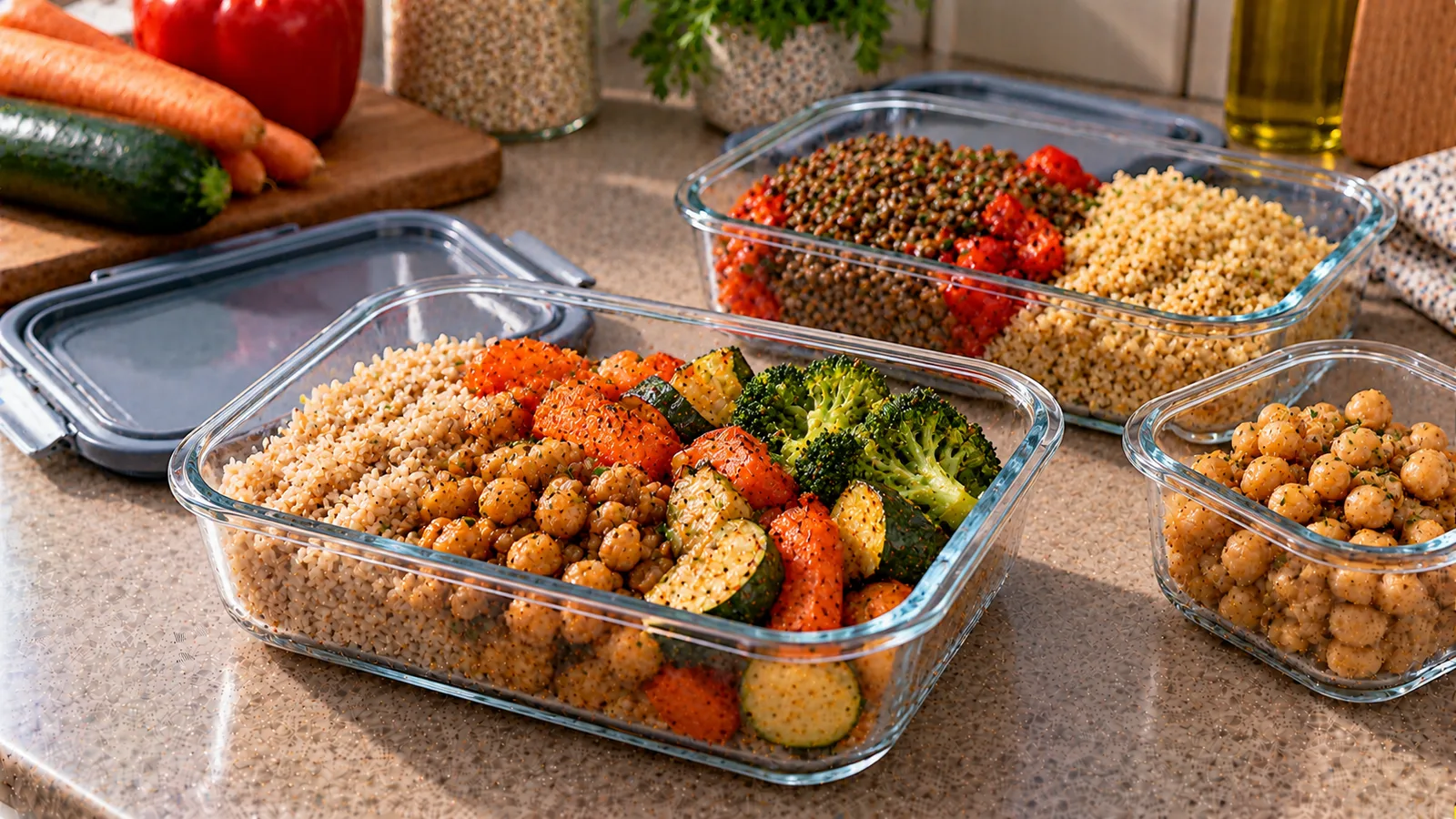
Five take-to-work lunches can be organised with one grocery trip without cooking five boxes on Sunday and hoping they remain safe until Friday. This plan gives one adult five different lunches, each with measured ingredients. It uses a Sunday, Tuesday-evening and Thursday-evening preparation rhythm, rather than treating a refrigerator as five-day unlimited storage. With the transparent illustrative German prices below, the whole 17-line shop costs €23.23; the ingredients actually allocated to the five lunches are €9.03, or about €1.81 per lunch. The remaining €14.20 is food retained for later use, not money back at checkout.
This is a worked grocery-cost model, not a claim about current Lidl, Aldi, REWE or dm prices. Water, salt, spices, electricity, packing equipment and travel are not priced. It is also not an all-day calorie or meal plan: your breakfast, dinner and other foods still matter. More importantly, lunch boxes must stay chilled in transit. The German BZfE guidance on meal-prep lunches recommends planning ingredients and keeping dressings separately until eating.
Your five-day lunch timetable
The pasta, red lentils and couscous are weighed dry. Chickpea and white-bean weights refer to drained contents, not the can plus liquid. Oil quantities are millilitres; vegetables and tofu are weighed as purchased. Every row makes one adult lunch, not a batch for five people.
| Day / preparation | One packed lunch | Allocated food cost |
|---|---|---|
| Monday | Red-lentil tomato pasta | €0.82 |
| Tuesday | Chickpea and cucumber couscous salad | €1.77 |
| Wednesday | Potato, egg and spinach skillet | €1.62 |
| Thursday | White-bean tomato soup and bread | €2.01 |
| Friday | Tofu, mixed vegetables and couscous | €2.81 |
| TOTAL / five lunches | 5 | €9.03 |
The five rounded lunch costs are €0.82 + €1.77 + €1.62 + €2.01 + €2.81 = €9.03. These are ingredient allocations: the beans and tofu are costed as full edible packs, but pasta, eggs and oil leave unused stock. For deciding what to eat across a week, see our broader how to plan lunches for the week guide. Here the aim is narrower: exact packed lunches, one invoice and safe storage times.
One shopping list, with the entire checkout price
All numbers below are explicitly assumed, not scraped from a particular shop. A 400 g can of chickpeas or white beans is treated as 240 g drained; verify the label because drained quantities differ by brand. The cucumber is modelled as 350 g edible purchased product; buy the closest real cucumber and use its actual weight. The 500 ml oil bottle is fully included in checkout, although the lunches use only 25 ml. Dry ingredients need a sealed storage place after opening.
| Grocery / pack | Purchased | Checkout price |
|---|---|---|
| Whole-wheat pasta | 500 g | €0.99 |
| Dry red lentils | 500 g | €1.79 |
| Plain passata | 500 g | €0.89 |
| Carrots | 1000 g | €1.19 |
| Onions | 1000 g | €1.29 |
| Cooking oil | 500 ml | €2.49 |
| Dry couscous | 500 g | €1.49 |
| Chickpeas, drained | 240 g | €0.79 |
| Cucumber | 350 g | €0.89 |
| Plain yogurt | 500 g | €0.99 |
| Potatoes | 1000 g | €1.59 |
| Eggs | 6 | €1.89 |
| Frozen spinach | 450 g | €1.19 |
| White beans, drained | 240 g | €0.89 |
| Wholegrain bread | 500 g | €1.39 |
| Plain tofu | 200 g | €1.69 |
| Frozen mixed vegetables | 750 g | €1.79 |
| TOTAL / complete shopping basket | 17 | €23.23 |
The grocery total is €23.23 at checkout. Dividing €23.23 by five yields €4.65 per lunch in this particular first shopping trip, but that number assumes you throw away all unused products, which this plan expressly does not do. The €9.03 allocated amount represents 5 measured recipes; the rest remains in the pantry, refrigerator or freezer. A different store, region, special offer, package size or dietary swap changes both figures. Track the real receipt and edible weights, then recalculate rather than presenting the example as a live bargain.
Sunday preparation: Monday pasta and Tuesday couscous
Use about 45–60 minutes for two different lunches. Wash hands and produce and prepare two clean shallow containers. Keep the Tuesday yogurt in a separate, leakproof small pot; do not pour it onto cucumber two days ahead and expect the same texture. If you will be away from a fridge at midday, put two frozen cold sources around perishables in an insulated lunch bag, as recommended by USDA guidance for packed lunches.
Monday: whole-wheat pasta with red lentils and tomato
Ingredients for one box: 70 g dry whole-wheat pasta, 50 g dry red lentils, 160 g passata, 100 g carrots, 60 g onion and 5 ml oil. Example allocated cost: €0.82. Add water and pantry seasonings to taste; their purchase cost is excluded. This is a warm lunch with cereal, pulses and vegetables rather than a packet of pasta alone.
- Simmer the rinsed red lentils in sufficient water until tender. Separately boil the pasta according to its package; 70 g means uncooked pasta, not 70 g after draining.
- Dice the carrot and onion. Cook gently in the measured oil, then stir in passata and a little water. Add cooked lentils and simmer briefly into a spoonable sauce.
- Mix pasta with sauce or pack separately for better texture. Place into a shallow box, refrigerate promptly and label Monday.
- Reheat only once when practical, stirring to eliminate cool pockets; USDA advises 74 °C / 165 °F for leftover reheating. A microwave at the office is useful but not permission to leave the box warm all morning.
Immediately after opening passata on Sunday, refrigerate according to the packet and freeze the 200 g reserved for Thursday in a clean labelled small container; thaw it safely in the fridge by Tuesday evening for the soup. Freeze the other unused 140 g if it will not be used promptly. Do not rely on an opened carton lasting until Thursday.
Do not double-count lentils as a cooked entry if you track the recipe from the 50 g dry quantity. This recipe costs €0.82 in the example, not the price of buying a whole pasta bag and lentil bag every Monday. The budget meal-planning framework explains how to reuse such staples elsewhere.
Tuesday: chickpea, cucumber and couscous salad
Ingredients for one box: 50 g dry couscous, 240 g drained chickpeas, 200 g cucumber, 80 g carrot, 100 g plain yogurt and 5 ml oil. Example cost: €1.77. This is intentionally a hearty cold salad: an entire drained can of chickpeas is used and no opened chickpea can is kept for days.
- Pour hot water onto couscous according to the packet, fluff and cool promptly rather than leaving it warm for hours.
- Rinse and drain the chickpeas; wash and cut cucumber and carrot. Pack the vegetables and couscous in one chilled box.
- Put 100 g yogurt and 5 ml oil into a separate small chilled container with optional herbs. Combine at lunch, not on Sunday.
- Keep the assembled food refrigerated; for the journey, use a chilled bag and cold packs. If the Tuesday box cannot be kept cold, do not rely on this schedule—prepare a suitable shelf-stable alternative instead.
The recipe includes 240 g edible chickpeas, not a 240 g weight including can or brine. No guaranteed protein or calorie claim is made without checking the exact product labels; these are practical portion examples, not a clinical prescription.
Tuesday evening preparation: Wednesday and Thursday boxes
Prepare the next two lunches Tuesday evening rather than four days earlier. Wash the pan between cooking egg dishes and foods ready to eat. For the egg-and-potato lunch, cool quickly and keep in the coldest suitable part of the refrigerator. For the bean soup, transfer into a shallow separate container before chilling. This short preparation window follows the conservative recommendation on BZfE's hygiene guidance: prepared food should generally be kept covered and refrigerated for only about two days.
Wednesday: potatoes, eggs and spinach
Ingredients: 300 g potatoes, 2 eggs, 150 g frozen spinach, 70 g onion and 5 ml oil. Ingredient cost: €1.62. This is a single serving; two eggs are not the total for the entire working week.
- Cut and cook the potatoes thoroughly, allowing water to drain off. Cook the onion in the oil, add spinach and heat it completely.
- Beat the two eggs into the vegetables and cook until the mixture is fully set; mix with the potatoes or keep separate.
- Transfer to a shallow box and chill promptly. If your place of work has a fridge, store it there immediately on Wednesday morning.
- Reheat thoroughly if eating hot. Do not assume that a food smelling fine is proof of safe storage; hygiene and time matter more.
Potatoes are priced from a 1 kg purchased bag, eggs from a six-pack and frozen spinach from a 450 g pack. The unused potatoes, four eggs and some spinach remain available for later meals; they are not part of the Wednesday serving.
Thursday: white-bean tomato soup with bread
Ingredients: 240 g drained white beans, 200 g passata, 100 g carrots, 60 g onion, 100 g frozen spinach, 100 g wholegrain bread and 5 ml oil. Example food cost: €2.01. The bread belongs to the lunch but should be carried dry, separately from the soup.
- Soften onion and carrots with 5 ml oil. Add passata and enough water for a thick soup, then stir in spinach and the drained white beans.
- Bring the mixture to a thorough heat, adjust the water and cool it rapidly in a shallow covered container.
- Pack the 100 g bread separately to avoid sogginess. Heat the soup until steaming throughout; for leftovers, USDA gives 74 °C / 165 °F as a reheating target.
- Use a reliable leakproof box or a suitable food thermos following its own instructions. A lukewarm soup held unrefrigerated all morning is not a safe convenience shortcut.
This dinner-style soup is suitable as a substantial lunch because it has pulses, vegetables and bread. It is not the same search task as a generic leftover meal: the batch size is one, the shopping cost is calculated and the soup is designed around Thursday storage.
Thursday evening: Friday tofu and vegetable couscous
Ingredients: 200 g plain tofu, 250 g frozen mixed vegetables, 75 g dry couscous, 60 g onion, 100 g yogurt and 5 ml oil. Example cost: €2.81, the highest of the five. Use plain vegetables without an included sauce; otherwise calories, salt and cost can differ from this ingredient model.
- Dice the tofu and onion. Brown gently in the measured oil, add the frozen vegetables and cook until completely hot.
- Hydrate 75 g dry couscous in hot water following the packet instructions. Portion it with the tofu and vegetables.
- Cool the cooked portion quickly. Carry 100 g yogurt chilled and separately as an optional creamy finishing sauce; do not add it to a hot pan and then leave it warm overnight.
- On Friday keep the food cold until lunch, then reheat the cooked portion as appropriate and add the cold yogurt afterward. If there is no reliable cooling or reheating at work, adjust the menu rather than compromise safe handling.
The tofu pack is used in full; the bag of frozen vegetables and couscous are not. If you change tofu for meat or fish, the ingredient cost and required cooking temperature must be recalculated. This article intentionally avoids pretending different protein sources have identical nutrient values.
What is left after the five lunches?
The next table subtracts ingredients once from the purchased amount. Everything with a positive remainder is inventory for later meals, subject to its storage instructions. A zero means the full edible pack was assigned to a lunch.
| Ingredient | Used in five lunches | Still available |
|---|---|---|
| Whole-wheat pasta | 70 g | 430 g |
| Dry red lentils | 50 g | 450 g |
| Plain passata | 360 g | 140 g |
| Carrots | 280 g | 720 g |
| Onions | 250 g | 750 g |
| Cooking oil | 25 ml | 475 ml |
| Dry couscous | 125 g | 375 g |
| Chickpeas, drained | 240 g | 0 g |
| Cucumber | 200 g | 150 g |
| Plain yogurt | 200 g | 300 g |
| Potatoes | 300 g | 700 g |
| Eggs | 2 | 4 |
| Frozen spinach | 250 g | 200 g |
| White beans, drained | 240 g | 0 g |
| Wholegrain bread | 100 g | 400 g |
| Plain tofu | 200 g | 0 g |
| Frozen mixed vegetables | 250 g | 500 g |
The remaining inventory has an illustrative allocated value of €14.20, calculated as the original checkout total of €23.23 minus €9.03 in food used, after rounding. For the two opened packs of passata and yogurt, check the manufacturer's post-opening instructions; freeze surplus passata promptly if it cannot be used within its stated period. Freeze spare bread in slices. Keep unused frozen vegetables and spinach frozen, not thawed in the refrigerator for five days. The extra eggs are still raw and should be kept and used according to the date and storage directions.
A realistic food-safety plan for carrying lunch
Sunday: make only Monday and Tuesday's food and cool the portions promptly. Tuesday evening: make Wednesday's egg skillet and Thursday's soup. Thursday evening: make Friday's tofu bowl. Refrigerate cooked food promptly, ideally in shallow boxes, within two hours of cooking; the safe holding time depends on the food, fridge temperature and local guidance. This conservative two-day cycle avoids asking whether a cooked meal from Sunday is safe late on Friday.
The USDA leftovers guidance generally allows three to four days for promptly chilled leftovers at 4 °C or colder, while the German BZfE gives an approximately two-day rule of thumb for homemade prepared food. We follow the shorter working schedule rather than describing either number as an unconditional guarantee. Reheat appropriate leftovers thoroughly to 74 °C / 165 °F; chilled salads should not be reheated merely to fit this rule. Transport dairy, cooked grains, cooked eggs and prepared vegetables with sufficient cooling, or refrigerate immediately on arrival. Throw food out when cold-chain safety is uncertain.
What makes these lunches balanced—and what the figures do not tell you
Across the week there are pulses, whole-wheat pasta, couscous, eggs, tofu, vegetables, yogurt and wholegrain bread. The NHS Eatwell Guide recommends considering the balance of food groups across a day or week, not forcing every plate into identical proportions. These lunches can support variety, but they do not guarantee a person's calorie, iron, protein or fibre requirements without the rest of their diet and individual circumstances.
For lactose intolerance or milk allergy, replace yogurt with a suitable labelled product and recalculate the shopping model. For coeliac disease, ordinary wheat pasta, couscous and bread are not gluten-free; choose verified alternatives. Check soy allergy for tofu and egg allergy for Wednesday. Dry weights and drained weights should not be confused. A higher real price for tofu may make Friday more expensive, while a cheaper bulk pulse pack may lower food-used cost without lowering checkout as much. The point is a reproducible five-lunch grocery-and-storage plan, not a universal claim that any lunch costs €1.81.
For dealing with stock remaining in your fridge, see planning meals with leftovers and reducing food waste with meal planning. Label what is open, what is frozen and what must be used first. Next week, use the remaining pasta, lentils, couscous and oil before buying another full pack: that is when the difference between cash spent and ingredient cost becomes useful.