
Meal planning can make a limited food budget much easier to manage.
Instead of deciding what to eat shortly before every meal, you can decide in advance which ingredients will be used, how often they will appear and what needs to be purchased.
The goal is not to create the cheapest possible menu.
A useful budget meal plan should balance:
- cost
- nutrition
- food you actually enjoy
- preparation time
- ingredient reuse
- flexibility
- minimal waste
A good plan gives every major ingredient a purpose before it enters your shopping basket.
Why meal planning can reduce food costs
Food spending often increases through many small decisions.
You buy an ingredient for one recipe.
You use half of it.
The remainder stays in the refrigerator.
A few days later, you buy something else because you do not know what to make with what you already have.
Eventually some of the original food is thrown away.
Meal planning can interrupt this cycle.
When several meals intentionally share ingredients, groceries are more likely to be used completely.
Planning can also reduce:
- duplicate purchases
- unnecessary convenience food
- last-minute takeout
- forgotten produce
- unused leftovers
- impulse grocery purchases
Start with a weekly food budget
Before choosing meals, decide roughly how much you want to spend.
The amount will vary depending on:
- household size
- country and city
- dietary preferences
- current food prices
- how often you eat outside the home
- whether household items are included in the same budget
You do not need a perfectly precise number.
A realistic weekly range is enough to guide decisions.
If you want to build the budget itself first, see How to Make a Weekly Food Budget.
Check what you already have
Before writing a meal plan, look through:
- refrigerator
- freezer
- pantry
- cupboards
Identify foods that should be used soon.
These might include:
- vegetables approaching the end of their useful life
- open dairy products
- leftover cooked grains
- bread
- eggs
- half-used sauces
- frozen meat or fish
- opened packages of pasta or rice
These foods can become the starting point for the week's meals.
Using existing food first means you need to buy less.
Plan around ingredients, not seven unrelated recipes
A common mistake is choosing seven completely different recipes.
That can create a long shopping list containing many ingredients that are used only once.
Instead, choose ingredients that can appear in several different meals.
For example:
chicken can become:
- a rice dish
- a wrap
- a pasta meal
- a soup
Potatoes can become:
- roasted potatoes
- a soup ingredient
- a side dish
- part of a tray bake
Yogurt can become:
- breakfast
- a snack
- a sauce
- a topping
This does not mean eating identical meals every day.
It means giving ingredients more than one job.
Choose a few flexible protein sources
Protein can be one of the more expensive parts of a grocery basket.
Instead of buying a different protein for every meal, choose a smaller number of flexible options.
Examples include:
- eggs
- lentils
- beans
- chickpeas
- chicken
- canned tuna
- yogurt or skyr
- cottage cheese
- tofu
The best options depend on local prices and your preferences.
You can also combine different protein sources across the week rather than relying on meat at every meal.
Use affordable carbohydrate staples
Many inexpensive staples are extremely versatile.
Examples include:
- potatoes
- rice
- oats
- pasta
- bread
- couscous
- bulgur
They can form the base of multiple meals.
The important point is not to buy every staple at once.
Choose the ones that match the meals you actually plan to make.
Make vegetables work across several meals
Vegetables are easier to use efficiently when you deliberately choose overlapping ingredients.
For example, carrots can work in:
- soup
- roasted vegetables
- rice dishes
- pasta sauce
- snacks
Cabbage can work in:
- stir-fries
- soups
- salads
- wraps
Zucchini can work in:
- pasta
- rice dishes
- omelets
- tray bakes
The same ingredient can create very different meals depending on preparation and seasoning.
Frozen vegetables can reduce waste
Frozen vegetables are useful for budget meal planning because you can use exactly what you need and return the rest to the freezer.
They can work well in:
- soups
- curries
- pasta
- rice dishes
- stir-fries
- omelets
They also provide a backup when fresh vegetables have been used up.
This can reduce the temptation to order food because there is "nothing left to cook."
Build meals from a simple structure
You do not need a complicated recipe for every meal.
A practical structure is:
protein + carbohydrate + vegetables + flavor.
For example:
chicken + rice + frozen vegetables + soy-based sauce
or:
lentils + potatoes + carrots + herbs
or:
eggs + bread + tomatoes + yogurt-based sauce
This makes meal planning faster and makes ingredient substitutions easier.
Use one ingredient in different ways
Ingredient reuse should not mean eating the exact same dish repeatedly.
Suppose you buy a cabbage.
You could use it:
- cooked with rice and chicken
- raw in a wrap
- in vegetable soup
- as a side salad
The ingredient repeats.
The meal does not.
This is one of the most useful principles of budget meal planning.
Plan expensive ingredients first
If you want to include a more expensive ingredient, place it into the plan before filling the rest of the week.
For example, if you want salmon one evening, plan it intentionally.
Then use less expensive meals on other days.
This is usually easier than choosing meals freely and discovering at checkout that the total is too high.
Use cheaper meals strategically
Not every meal needs to cost the same amount.
A week can include:
- a more expensive fish dinner
- an inexpensive lentil soup
- eggs for breakfast
- pasta with vegetables
- chicken and potatoes
- bean-based lunch
What matters is the total pattern.
A few very inexpensive meals can create room in the budget for foods you value more.
Plan breakfast simply
Breakfast is often easy to standardize without becoming boring.
You might rotate between:
- oats with fruit
- yogurt with oats
- eggs and bread
- overnight oats
- cottage cheese and fruit
Using a smaller set of breakfast ingredients can simplify shopping.
If you enjoy the same breakfast several days per week, there is no need to create unnecessary variety.
Plan lunches around leftovers
Lunch is one of the easiest places to use leftovers intentionally.
Dinner can be prepared in a slightly larger quantity so that part becomes lunch the next day.
Examples:
- extra chili
- extra soup
- extra pasta sauce
- extra roasted vegetables
- extra chicken
- extra rice
This can reduce both cooking time and food waste.
The important part is to plan the extra portion rather than hoping leftovers happen accidentally.
Keep some meals deliberately simple
A budget plan becomes difficult if every meal requires significant cooking.
Include simple options such as:
- eggs and bread
- yogurt, oats and fruit
- soup with bread
- pasta with a simple sauce
- baked potatoes with a protein topping
- beans with rice and vegetables
Simple meals make the plan easier to follow on busy days.
Plan one flexible meal
Do not schedule every ingredient so tightly that one change ruins the entire week.
Keep at least one flexible meal.
It might use:
- leftovers
- eggs
- frozen vegetables
- pasta
- rice
- pantry foods
If plans change, this meal can move or disappear without wasting expensive fresh ingredients.
Do not plan every day as if life is predictable
A meal plan should help you adapt.
You may:
- come home late
- eat outside unexpectedly
- have leftovers
- change your mind
- need a faster dinner
A realistic plan includes this uncertainty.
Planning five or six main dinners may work better than planning seven completely fixed dinners.
Build your shopping list from the plan
Once meals are selected, create the grocery list directly from them.
Then remove anything you already have.
Organize the remaining list into practical categories such as:
- vegetables and fruit
- protein foods
- dairy
- grains and starches
- pantry items
- frozen foods
A focused list makes it easier to notice unnecessary additions.
For a more detailed system, see How to Build a Budget Grocery List.
Compare unit prices when useful
The cheapest package is not always the best value.
A larger package may have a lower price per kilogram, but it is only a saving if you actually use it.
Consider:
- unit price
- shelf life
- freezer space
- how many meals will use the ingredient
- whether the household likes the food
Buying more and throwing part away is not a bargain.
Store brands can be useful
For many staple foods, store-brand products can reduce costs without changing the basic function of the ingredient.
Possible examples include:
- oats
- rice
- pasta
- canned beans
- canned tomatoes
- frozen vegetables
- yogurt
- flour
Compare the actual product rather than assuming the cheapest or most expensive option is automatically better.
Seasonal produce can help
Fresh produce prices change during the year.
When one vegetable becomes expensive, substitute another that serves a similar purpose.
For example:
- replace one leafy green with another
- use cabbage instead of a more expensive salad vegetable
- choose seasonal fruit
- use frozen berries when fresh berries are expensive
Meal plans work better when ingredients are flexible.
Use the freezer deliberately
The freezer can protect your budget.
Useful foods to freeze may include:
- bread
- cooked portions
- meat
- fish
- some prepared sauces
- chopped ingredients
- leftovers
The freezer is most useful when you know what is inside it.
Keep a simple mental or written inventory so frozen food does not disappear for months.
Batch cooking can save money, but it is optional
Cooking several portions at once can reduce:
- cooking time
- energy use in some cases
- temptation to buy convenience food
But you do not need to eat identical containers for five days.
You can batch-cook components instead.
For example:
- cook rice
- roast vegetables
- prepare chicken
- make a sauce
Then combine them differently during the week.
Avoid buying ingredients for one tablespoon
Some recipes require a long list of specialty ingredients.
That can be expensive if you do not already own them.
Before buying a new sauce, spice or condiment, ask:
Will I use this again?
If not, consider:
- substituting something you already have
- choosing another recipe
- omitting a nonessential ingredient
A budget meal plan should fit your pantry rather than constantly expanding it.
Reduce food waste by planning perishables
Use the most perishable foods earlier in the week.
For example:
early week:
- delicate greens
- fresh fish
- berries
later week:
- cabbage
- carrots
- potatoes
- frozen vegetables
- pantry foods
This reduces the chance that fragile foods spoil before you reach them.
First in, first out
When unpacking groceries, move older food forward and place newer food behind it.
This simple habit can reduce forgotten ingredients.
It works particularly well for:
- yogurt
- vegetables
- dairy products
- opened sauces
- packaged foods
Visibility matters.
Food you cannot see is easier to forget.
Plan portions realistically
Buying exactly the right amount is difficult if you do not know how much your household actually eats.
Over time, notice:
- how much rice you normally cook
- how many potatoes you use
- how much meat is needed
- how much bread is consumed
- how quickly fruit disappears
This makes future grocery planning more accurate.
Budget meal planning for one person
Single-person households can face a specific problem:
many foods are sold in packages larger than one person needs.
Useful strategies include:
- freezing bread
- buying frozen vegetables
- cooking two portions and saving one
- choosing ingredients that work in several meals
- avoiding too many perishables at once
Meal planning for one person benefits especially from ingredient reuse.
Budget meal planning for families
Families need more flexibility because preferences and schedules differ.
Useful strategies include:
- build meals from shared components
- keep toppings or sides flexible
- use larger economical packages only when they will be consumed
- plan leftovers intentionally
- maintain one quick backup meal
The cheapest plan is not useful if family members will not eat it.
Example of a low-cost weekly meal structure
This is an example of structure, not a required menu.
Breakfast options
- oats + banana + yogurt
- eggs + bread + fruit
Lunch options
- leftovers from dinner
- lentil soup + bread
- bean and rice bowl
Dinner options
- chicken + potatoes + carrots
- lentil and vegetable soup
- pasta + tomato sauce + zucchini
- rice + beans + vegetables
- omelet + potatoes + salad
- leftover-based dinner
The same ingredients appear repeatedly, but the meals remain different.
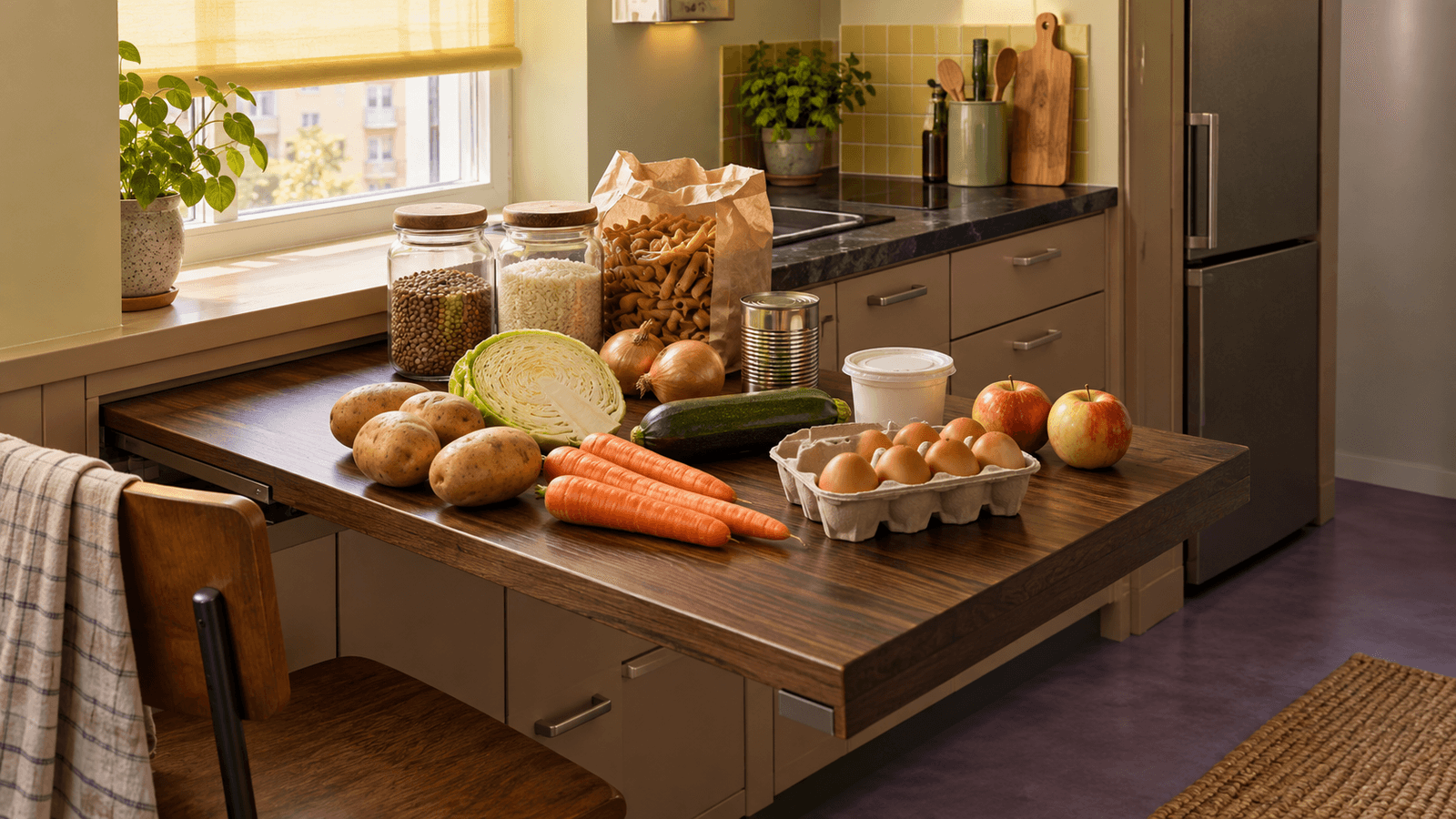
Example ingredient overlap
Suppose the main groceries are:
- potatoes
- carrots
- onions
- zucchini
- cabbage
- eggs
- chicken
- lentils
- yogurt
- oats
- rice
- pasta
- canned tomatoes
- bread
- apples
From this relatively compact list you can create many combinations.
That is the advantage of planning ingredients as a system rather than treating every recipe independently.
Nutrition still matters
A budget meal plan should not focus only on price.
Try to include a practical mix of:
- protein sources
- vegetables
- fruit
- carbohydrate staples
- dietary fats
You can learn more about structuring meals in What Is a Balanced Meal?.
Affordable food can still provide useful nutrition.
Cheap does not always mean good value
A food can be inexpensive but not particularly useful for your plan.
Likewise, a slightly more expensive ingredient may be good value if it:
- provides several portions
- prevents takeout
- works in multiple meals
- is highly likely to be eaten
Think about cost per useful meal, not only the lowest shelf price.
Convenience can sometimes save money
Pre-cut or frozen ingredients can cost more per kilogram.
But they may still make sense if they prevent waste or make you more likely to cook.
For example, frozen chopped vegetables may be more practical than buying several fresh vegetables that eventually spoil.
Budget planning is about real behavior, not theoretical perfection.
Do not ignore snacks
Snacks can quietly increase grocery spending.
If you normally eat snacks, include them in the plan.
Possible affordable options include:
- fruit
- yogurt
- popcorn
- bread with a topping
- boiled eggs
- homemade oat-based snacks
A plan that ignores your actual habits is unlikely to match your real spending.
Drinks belong in the budget too
Coffee, milk, juice, soft drinks and other beverages can contribute meaningfully to grocery costs.
If they are part of your normal routine, include them.
Otherwise your food budget may look accurate on paper but fail in practice.
Keep emergency foods at home
A few reliable backup foods can prevent expensive last-minute choices.
Examples:
- frozen vegetables
- eggs
- pasta
- canned tomatoes
- beans
- rice
- frozen bread
The goal is not to stockpile.
It is to have enough flexibility to make a simple meal when the original plan fails.
When a sale is actually useful
A discount is useful when:
- the food is already part of your plan
- it can replace something more expensive
- it stores well
- you can freeze it
- you will genuinely use the quantity
A discount on food you did not need is still extra spending.
Adapt the plan to prices
Meal planning should not be completely fixed before you enter the store.
If an ingredient is unusually expensive, substitute it.
For example:
- chicken instead of a more expensive meat
- lentils instead of some meat meals
- frozen vegetables instead of expensive fresh options
- seasonal fruit instead of imported berries
A flexible plan is often cheaper than a rigid one.
Track what you actually spend
If your planned budget and real spending differ every week, look at the reason.
Maybe:
- portions were underestimated
- snacks were forgotten
- drinks were excluded
- too many ingredients spoiled
- takeout replaced planned meals
- specialty ingredients increased costs
This information improves the next plan.
Mealisa and budget meal planning
Mealisa is designed to connect meal planning with nutrition and food spending.
A useful planning system can consider:
- calorie targets
- protein and macro goals
- preferred number of meals
- available cooking time
- dietary preferences
- food budget
This makes it possible to think about cost before meals are generated rather than only after groceries have been purchased.
Meal tracking can also show which foods are actually being eaten.
Over time, this can help identify ingredients that are repeatedly purchased but rarely used.
A practical weekly planning routine
A simple routine can take only a few steps.
Step 1: Check existing food
Look through the refrigerator, freezer and pantry.
Step 2: Identify food that needs to be used
Prioritize perishables and opened packages.
Step 3: Set the week's food budget
Use a realistic range.
Step 4: Choose flexible core ingredients
Pick a small number of proteins, carbohydrates and vegetables.
Step 5: Build meals with overlap
Give important ingredients more than one purpose.
Step 6: Add breakfasts, lunches and snacks
Do not plan dinners only.
Step 7: Keep one flexible meal
Allow for leftovers or schedule changes.
Step 8: Build the grocery list
Subtract everything already at home.
Step 9: Shop with substitutions in mind
Respond to actual prices.
Step 10: Review the week
Notice what was eaten, wasted or missing.
The next plan becomes easier.
Common mistakes
Choosing too many unrelated recipes
This creates long shopping lists and partially used ingredients.
Buying in bulk automatically
Large packages only save money if you use them.
Planning only dinners
Breakfasts, lunches, snacks and drinks still cost money.
Ignoring leftovers
Leftovers should have a planned destination.
Buying fresh food for the entire week without considering shelf life
Use fragile foods earlier or rely partly on frozen ingredients.
Making the plan too strict
Unexpected changes are normal.
Choosing the cheapest food regardless of preference
Food that nobody wants to eat often becomes waste.
Forgetting what is already at home
Inventory is part of meal planning.
Treating sales as savings automatically
Buying unnecessary discounted food is still spending.
Frequently asked questions
How much can meal planning save?
There is no universal amount. Savings depend on your current habits, food prices, household size and how much waste or unplanned spending you currently have.
Do I need to meal prep everything?
No. Meal planning and meal prep are different. You can decide what you will eat without cooking everything in advance.
How many meals should I plan?
Plan enough to guide your shopping while leaving room for leftovers and changes. For many households, not every dinner needs to be fixed in advance.
Is frozen food good for budget meal planning?
Frozen vegetables, fruit, meat, fish and prepared portions can be useful because they last longer and can reduce waste.
Should I buy everything in bulk?
No. Bulk buying makes sense only when the unit price is better and you can realistically use or store the quantity.
Is eating the same meals every day cheaper?
It can simplify shopping, but it is not required. Reusing ingredients across different meals provides many of the same cost advantages with more variety.
How do I plan meals when grocery prices change?
Choose flexible ingredients and identify substitutes before shopping. Replace unusually expensive foods with alternatives that serve a similar role.
Can healthy meal planning be affordable?
Yes. Staples such as oats, potatoes, rice, lentils, beans, eggs, seasonal produce and frozen vegetables can support nutritious meals at relatively modest cost.
The bottom line
Meal planning on a budget is less about finding the cheapest recipes and more about building a system in which groceries are actually used.
Start with what you already have.
Choose a manageable number of flexible ingredients.
Use those ingredients across several different meals.
Plan leftovers intentionally.
Keep frozen and pantry foods available for changes.
Build the shopping list from the plan rather than planning meals after shopping.
And leave enough flexibility for real life.
The most effective budget meal plan is not the one with the lowest theoretical cost.
It is the one you can actually follow while eating food you enjoy and wasting as little as possible.
This article provides general nutrition and meal-planning information and is not a substitute for individualized medical or dietetic advice.