
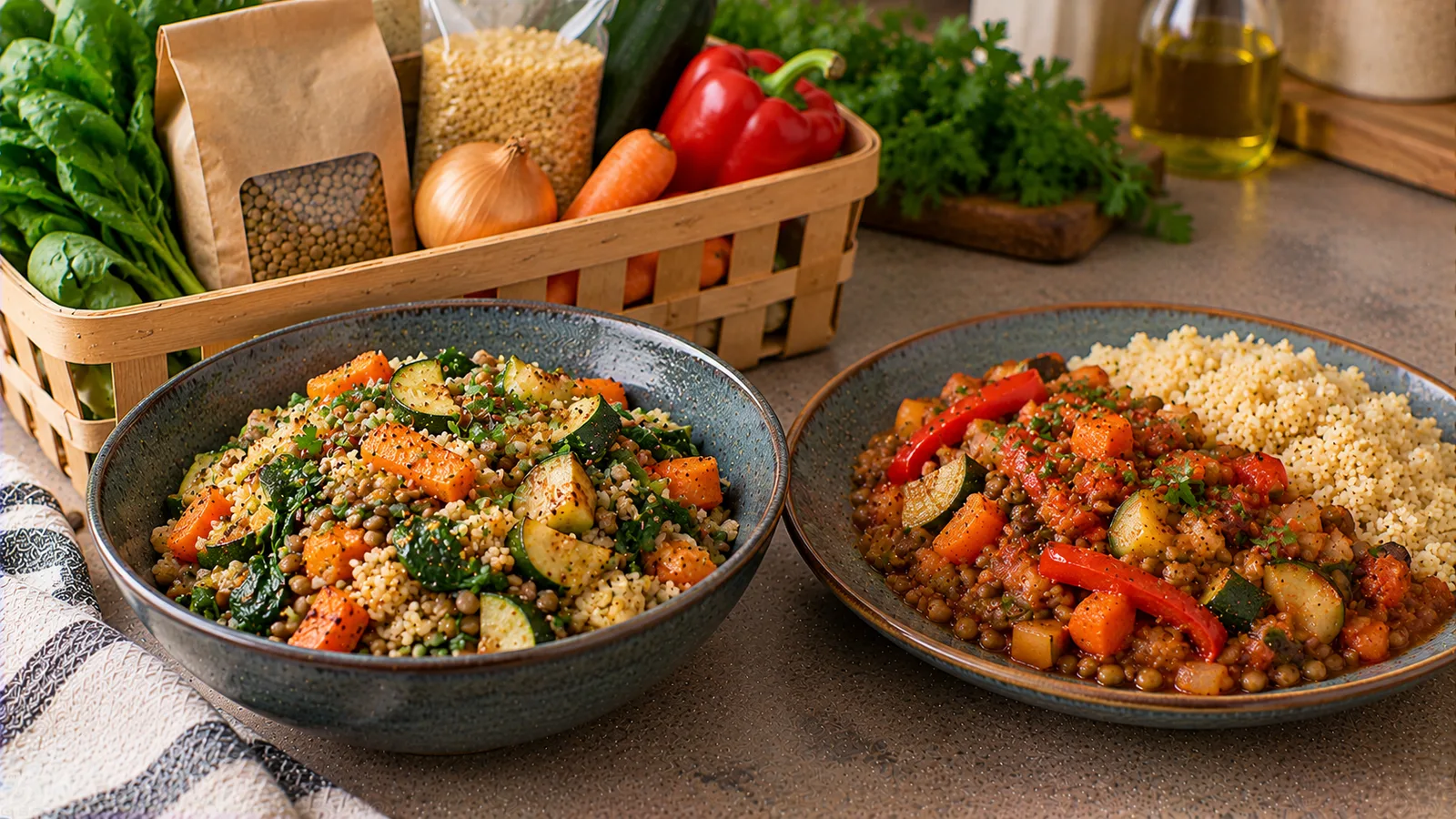
Four weeknight dinners, one shopping trip
One basket can make four different dinners for one adult: a tomato-lentil rice bowl, a substantial lentil-potato soup, a spinach-lentil pasta and a crispy potato-cabbage skillet. This is a four-dinner shopping plan, not a full-day diet, a plan for four people or a promise of a fixed calorie or protein target. The same dry lentils anchor all four meals while the serving format changes, so dinner need not taste like the same reheated stew every night.
The example below uses 280 g dry brown or green lentils, not 280 g cooked. Together with 90 g dry rice, 100 g dry pasta, 500 g potatoes, 440 g carrots, 320 g onion, 350 g cabbage, 400 g canned tomatoes, 300 g frozen spinach, one lemon, 15 g garlic and 34 ml oil, it makes four generous main dishes. Actual plate size varies with vegetable trimming, lentil absorption and the water used in soup. our five-day dinner plan for two covers a different five-day plan for two people; here every allocation is for one person across four evenings.
The single shopping list: what you buy versus what you eat
The following are illustrative German shelf-price assumptions, not observed offers, live retailer quotes or a claim that any shop sells these packs today. Quantities refer to usable ingredients where stated: lentils, rice and pasta are weighed dry; potatoes, cabbage and carrots are edible pre-cooking weights; tomatoes are the whole can contents; spinach is weighed frozen. The model assumes a cabbage portion is sold within a roughly 1 kg head and a garlic bulb yields 50 g usable cloves.
| Ingredient | Pack bought | Amount used | Assumed checkout price |
|---|---|---|---|
| Brown/green dry lentils | 500 g | 280 g | €1.59 |
| Dry rice | 1000 g | 90 g | €1.99 |
| Dry pasta | 500 g | 100 g | €0.99 |
| Potatoes | 1000 g | 500 g | €1.49 |
| Carrots | 1000 g | 440 g | €1.29 |
| Onions | 1000 g | 320 g | €1.49 |
| White cabbage | 1000 g | 350 g | €1.99 |
| Canned chopped tomatoes | 400 g | 400 g | €0.79 |
| Frozen spinach, plain | 450 g | 300 g | €1.39 |
| Lemon | 1 piece | 1 piece | €0.49 |
| Garlic bulb (50 g usable assumed) | 50 g | 15 g | €0.49 |
| Cooking oil | 500 ml | 34 ml | €3.49 |
Total hypothetical checkout: €17.48 when buying every listed pack, including the entire oil bottle. Allocated cost of ingredients used in four dinners: €6.34, around €1.59 per dinner. The two amounts answer different questions. You pay €17.48 at the till, not €6.34, unless you already have some of these groceries. The allocation costs use exact unrounded arithmetic; totals may differ a few cents from summing independently rounded lines. Salt, pepper, dried paprika and other optional cupboard spices are not priced. If you need to buy them, the checkout total rises.
Unused rice, pasta, lentils, oil, frozen spinach and some vegetables remain for future meals. That is an inventory benefit, not a discount on today's receipt. Replace every assumed price with a real price before advertising a budget guarantee. the €30 grocery-basket cost example explains how to treat checkout totals and ingredient costs in a larger €30 basket.
Four dinners and their measured allocations
Each row is one finished main-dish serving for one adult. Prices below allocate only the consumed ingredients, not a new purchase of every pack each night.
| Night | Complete dinner | Ingredient cost used |
|---|---|---|
| 1 | Tomato-lentil rice bowl | €1.40 |
| 2 | Thick lentil, potato and cabbage soup | €1.86 |
| 3 | Spinach and lentil tomato pasta | €1.51 |
| 4 | Crispy potato, lentil and cabbage skillet | €1.57 |
Evening 1 — Tomato-lentil rice bowl
Use 75 g dry lentils, 90 g dry rice, 120 g carrot, 80 g onion, 150 g canned tomatoes, 60 g frozen spinach, 5 g garlic, 8 ml oil and one-quarter lemon. The estimated ingredient allocation is €1.40. Rinse the lentils, then simmer in fresh water until tender as directed on their packet; brown and green varieties often need about 20–30 minutes, but packet instructions take priority. Cook the rice separately using its stated water ratio and time. Heat the oil in a skillet, soften finely cut onion and carrot, add garlic and tomatoes, and simmer until the carrot is tender. Add frozen spinach and cook thoroughly. Fold in drained cooked lentils, serve over the rice, and finish with lemon. This is a bowl rather than a mixed meal-prep base: keep the cooked rice and sauce separate until serving for better texture.
Evening 2 — Thick lentil, potato and cabbage soup
Use 65 g dry lentils, 300 g potatoes, 140 g carrot, 80 g onion, 150 g cabbage, 100 g canned tomatoes, 60 g frozen spinach, 5 g garlic, 8 ml oil and one-quarter lemon. Estimated used-ingredient cost: €1.86. Sweat onion and diced carrot briefly in oil. Add washed lentils, chopped potato, shredded cabbage, tomatoes and about 550 ml water, plus more if needed. Simmer until the lentils and potatoes are fully tender; the packet's lentil cooking time still applies. Stir in frozen spinach and cook until steaming hot throughout. Mash a few potato pieces against the pan for thickness; finish with lemon and optional pepper. This is a complete vegetable-and-legume soup, not a side broth. Its final yield depends on evaporation, so do not claim a fixed weight per bowl.
Evening 3 — Spinach-lentil tomato pasta
Use 70 g dry lentils, 100 g dry pasta, 80 g carrot, 60 g onion, 150 g canned tomatoes, 120 g frozen spinach, 5 g garlic, 8 ml oil and one-quarter lemon. Estimated ingredient allocation: €1.51. Cook the rinsed lentils until tender and drain. Boil pasta according to its pack and reserve a little cooking water. In a separate pan, cook onion, finely grated carrot and garlic with oil; add tomatoes and simmer until the vegetables soften. Heat the frozen spinach thoroughly in the sauce, then add the cooked lentils. Toss with the pasta and enough reserved water to coat it. Add lemon just before eating. Weigh the 100 g pasta dry; cooked pasta weighs more because it absorbs water, not because its dry-food calories multiply.
Evening 4 — Crispy potato, lentil and cabbage skillet
Use 70 g dry lentils, 200 g potatoes, 100 g carrot, 100 g onion, 200 g cabbage, 60 g frozen spinach, 10 ml oil and one-quarter lemon. Estimated allocation: €1.57. Cook rinsed lentils until tender and drain well. Dice potatoes small and boil or steam until just tender, then let surface moisture evaporate. Heat the oil in a broad pan, brown the potato pieces, add sliced onion, grated carrot and thinly cut cabbage, and cook until soft with browned edges. Add frozen spinach and heat until fully cooked; fold through lentils at the end. Finish with lemon. Adding wet lentils too early steams the potatoes and prevents the intended crisp surface. This meal has no tomato sauce, deliberately changing the texture and flavour of the week's basket.
Allocation check: no invisible second basket
The four recipes use exactly 280 g dry lentils (75 + 65 + 70 + 70), 500 g potatoes (300 + 200) and 400 g canned tomatoes (150 + 100 + 150). Carrots add to 440 g, onions to 320 g, cabbage to 350 g, spinach to 300 g, garlic to 15 g and oil to 34 ml. Rice and pasta are used on only one night each. A single lemon supplies four quarters. Optional salt and dry spices come from your cupboard and were excluded from the price model. No ingredient is silently counted twice.
how to build a balanced plate with budget foods is useful if you want to judge the plate's vegetable, protein-food and starchy components rather than relying on the word “healthy” alone. These dinners provide legumes and vegetables but are not individually validated against your energy requirements. If you need a larger dinner, increase an ingredient and recalculate its cost; if you need a specific protein or energy target, calculate it from the actual brand labels and portions. This plan does not invent nutrient totals from an unknown supermarket basket.
Timing, safe cooking and leftovers
The simplest schedule is one shopping trip and four separate cooking sessions. Refrigerate fresh vegetables according to their labels, keep spinach frozen until needed, and store dry rice, pasta and lentils cool and dry. On day 1, transfer the 250 g unused canned tomatoes to a clean covered food-safe container, refrigerate promptly and use the allocated 100 g on day 2 and 150 g on day 3 within a safe refrigerated window and any shorter manufacturer instruction. Never leave an open tin uncovered or assume canned food stays shelf-stable once opened.
Rinse and cook dry lentils thoroughly; never treat dry lentils as ready to eat. Brown or green lentils generally need roughly 20–30 minutes, whereas other types may differ. The German Federal Centre for Nutrition's lentil guidance explains varieties and cooking, and EFSA's 2026 lectin assessment explains why adequate preparation of legumes matters.
If you batch-cook any components, cool them quickly in shallow containers and place them in a refrigerator kept at 4 °C or below within 2 hours (within 1 hour above 32 °C). Use properly handled cooked leftovers within 3–4 days, or freeze suitable portions promptly; reheat leftovers to 74 °C (165 °F). These figures follow USDA FSIS leftover guidance. Cooking a small fresh portion each day avoids holding cooked rice through the whole four-day plan. Label instructions that are stricter take precedence.
Sources and methodology
- BZfE — selecting and cooking dried legumes: preparation times vary by variety; cook thoroughly.
- EFSA — risks from plant lectins in underprepared foods (2026): handling caution for legumes.
- USDA FSIS — leftovers and food safety: cooling, refrigeration, reheating.
- Prices are a clearly defined hypothetical German basket. Checkout equals the sum of whole pack prices; used cost equals pack price × quantity used ÷ pack quantity. No current retail price or nutrient label is asserted.