
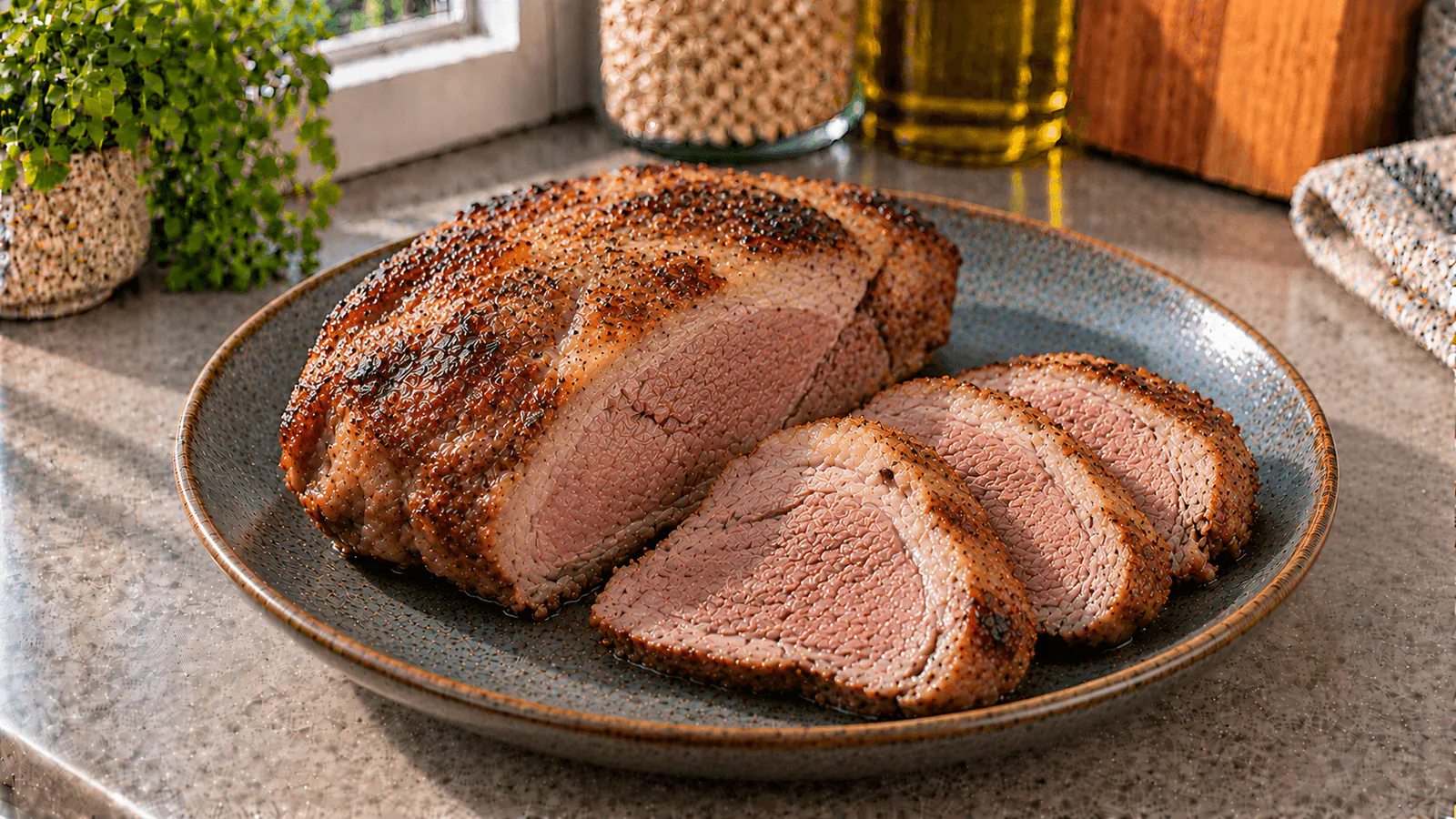
A lamb leg roast can be a relatively lean protein dish or a much richer serving, depending on which parts of the joint reach the plate. The USDA reference for raw lean lamb leg is 128 kcal per 100 g, while roasted lean leg is 191 kcal per 100 g of edible cooked meat. When the separable fat is included, the corresponding examples are 230 kcal raw and 258 kcal roasted per 100 g. These are four specifically defined reference foods, not a universal range for every farm, cut or recipe.
For a practical dinner estimate, identify whether the recorded weight is raw or roasted, remove any bone from the edible portion, and decide whether the fat on the outside was eaten. The distinction can matter more than small differences between lamb breeds.
Lamb leg calories and nutrition per 100 g
The table draws on USDA FoodData Central SR Legacy records for domestic lamb, whole leg (shank and sirloin), choice grade, trimmed to approximately 1/4 inch of external fat. “Lean only” means the separable fat is excluded; “lean and fat” means it is included. In every case the data concern the edible meat rather than a whole leg with the bone still attached.
| USDA lamb leg reference | Calories | Protein | Fat | Carbohydrate | Sodium |
|---|---|---|---|---|---|
| Raw, lean only — FDC 174313 | 128 kcal | 20.56 g | 4.51 g | 0 g | 62 mg |
| Roasted, lean only — FDC 174314 | 191 kcal | 28.3 g | 7.7 g | 0 g | 68 mg |
| Raw, lean and fat — FDC 174311 | 230 kcal | 17.9 g | 17.1 g | 0 g | 56 mg |
| Roasted, lean and fat — FDC 174312 | 258 kcal | 25.55 g | 16.48 g | 0 g | 66 mg |
The four source records are raw lean lamb leg, roasted lean lamb leg, raw lamb leg including fat, and roasted lamb leg including fat. The figures are laboratory-derived reference values. They should not be treated as exact measurements for an individual supermarket package.
Note that raw lean meat has more water per 100 g than the roasted reference. The roasted portion therefore contains more protein and calories per 100 g; that does not mean heat created energy. For a particular roast, water, fat and juices move or are lost during cooking, and the finished weight differs from the starting weight.
How many calories are in a serving of lamb leg?
These portions use the cooked edible weight, after removing the bone and anything that was not eaten. The lean column uses 191 kcal/100 g; the meat-and-fat column uses 258 kcal/100 g. Values are rounded to the nearest whole calorie.
| Cooked edible lamb | Roasted, lean only | Roasted, lean and fat |
|---|---|---|
| 50 g | 96 kcal | 129 kcal |
| 75 g | 143 kcal | 194 kcal |
| 85 g | 162 kcal | 219 kcal |
| 100 g | 191 kcal | 258 kcal |
| 125 g | 239 kcal | 323 kcal |
| 150 g | 287 kcal | 387 kcal |
| 200 g | 382 kcal | 516 kcal |
| 250 g | 478 kcal | 645 kcal |
For example, 150 g of roasted, trimmed lamb leg contains about 287 kcal and 42.5 g protein using the lean reference. If the same edible mass includes the external fat reflected in the fattier database entry, it contains about 387 kcal, not 287 kcal. You should not add the fat-column calories on top of the lean-column calories: they represent alternative descriptions of the same portion.
There is no single accepted weight for “one slice”. A thin 40 g carved slice is different from a thick 90 g one. Weigh several slices together if the meal includes more than one. If only a restaurant description is available, label the estimate as approximate rather than inventing a standard slice size.
Raw leg of lamb versus roasted leg: use one weighing method
For 250 g of raw lean lamb, multiplying 128 by 2.5 gives approximately 320 kcal from the reference meat before additional ingredients. For 250 g of roasted lean lamb, the separate roasted reference gives approximately 478 kcal. These numbers are not a before-and-after calorie total for one identical piece of meat. The raw and cooked USDA entries describe states on different weight bases.
To track a home roast consistently, choose either of these approaches. Weigh the trimmed raw meat and record a raw lamb-leg food entry together with the oil and other additions, then divide the recipe total among the portions actually eaten. Alternatively, weigh the meat on your plate after cooking and select the corresponding roasted entry. Avoid logging the raw amount and the cooked amount as two separate foods.
Imagine a raw joint of 1.4 kg that includes a sizable bone, exterior fat and a packaging pad. The 1.4 kg purchase weight does not mean 1.4 kg of edible lamb meat. After roasting, a household might carve 700 g of cooked meat from it; the yield is only an example, not a standard conversion ratio. The 700 g should be weighed separately from bone, drippings and any fat discarded at the table.
Does leaving the fat on change calories?
Yes. In the quoted roasted USDA data, edible lean meat averages 191 kcal/100 g, whereas the reference including separable fat averages 258 kcal/100 g. The difference is 67 kcal per 100 g of the edible mixture. It is not a claim that every visible strip of fat contains precisely 67 extra calories; the tables compare two complete reference samples with different compositions.
If you roast a leg with the fat cap attached but remove the cap before eating, do not automatically log the whole serving as the lean-and-fat reference. Conversely, removing some fat before roasting does not guarantee that the remaining bite is precisely identical to the lean-only database food. Choose the closest entry and use product-specific information when available.
Lamb fat is not nutritionally identical to olive oil or other cooking fats. It contributes saturated as well as unsaturated fatty acids. The overall balance of the meal and the frequency of consumption matter more than claiming a single lamb serving is either “good” or “bad”.
A roasted lamb dinner with oil: a worked example
Consider 150 g roasted lean lamb leg served after cooking with 10 g olive oil actually consumed. The latter is calculated at roughly 9 kcal per gram as a kitchen estimate. Do not automatically count every millilitre poured into a roasting tray as eaten; some oil and meat drippings may remain in the pan.
| Ingredient in the eaten portion | Quantity | Estimated calories |
|---|---|---|
| Roasted lean lamb leg | 150 g | 287 kcal |
| Olive oil retained in serving | 10 g | 90 kcal |
| Lamb plus measured oil | Total | 377 kcal |
The 377 kcal total excludes side dishes, gravy, wine, yogurt sauce and vegetables. For a fuller meal calculation, record them separately. Our guide to calories in olive oil explains how a small measured quantity of fat affects the total. If the lamb was cooked in its own fat without an additional 10 g of oil being eaten, the 90 kcal line would be inappropriate.
There is an equally common mistake with a fatty piece of lamb: selecting the lean-and-fat USDA entry and then adding estimated calories for the same animal fat once again. Added butter or oil is a separate ingredient; the fat naturally included in the selected meat reference is not.
Roast leg, leg steaks, shank and mince are not interchangeable
“Lamb leg” can describe a whole bone-in roast, a boneless rolled joint, a leg steak or meat carved from the shank end. Their portions can contain different amounts of bone, connective tissue, external fat and trimming. A lean sliced roast is especially different from a ready-made lamb pie, a kebab with marinade or a heavily sauced stew.
Likewise, a leg steak with a visible rim of fat may not match an entry for lean-only roasted whole leg. Frozen lamb can be a valid raw product reference after thawing, but ready-marinated meat needs its own label: the seasoning or added oil may contribute energy or sodium. For packaged seasoned lamb, look at whether the declaration is per 100 g as sold or per 100 g after cooking.
When comparing animal proteins, our beef steak calorie guide and pork tenderloin guide explain the importance of cuts and trimming. These are distinct foods, and their values should not be substituted for lamb leg simply because the meat appears similarly lean.
Protein, iron, zinc and vitamin B12
Roasted lean lamb leg supplies about 28.3 g protein per 100 g in the chosen USDA entry. It also contains iron, zinc and vitamin B12; the precise amount varies between references. Those nutrients are useful in a balanced diet, but a protein-rich meal does not by itself establish that anyone needs more meat or that a health condition can be treated with lamb.
The cut contains very little carbohydrate before marinades or accompanying foods are added. If a meal of lamb and potatoes has appreciable carbohydrate, that amount comes chiefly from the potatoes, bread, sauce or other sides rather than plain lamb leg.
A serving-size number on a package may be unrelated to how much you have actually eaten. The Mealisa explanation of portion size versus serving size helps distinguish a reference serving from measured food on the plate.
Food safety when cooking a leg of lamb
According to the USDA Food Safety and Inspection Service, whole lamb steaks, chops and roasts should reach 63 °C (145 °F) at the thickest point and rest for at least three minutes before carving. Use a food thermometer rather than relying on the colour of the meat. The USDA provides separate advice for ground lamb, for which the recommended minimum is 71 °C (160 °F). See the USDA safe-temperature chart.
The target is a food-safety minimum, not a promise about the precise final weight or calories. Refrigerate leftovers promptly; a large bone-in joint should not be left at room temperature for extended periods while people continue serving themselves.
How to record lamb leg without distorting the result
Use the raw reference when you have accurately weighed uncooked edible meat, or the roasted reference when you have weighed cooked edible meat. Exclude bone and discarded fat. Decide whether you ate mostly lean slices or portions containing visible fat, and note any additional oil, stuffing, glaze or sauce. Finally, check how much of the shared joint you actually ate.
For home recipes, the raw ingredient method is useful when the cut is trimmed before cooking. For restaurant plates, the cooked-weight method may be more practical. Both can be reasonable estimates, but blending the two without a yield measurement can double-count or misstate a meal substantially.
Primary nutrition sources: USDA SR Legacy raw lean lamb leg, FDC 174313; roasted lean lamb leg, FDC 174314; raw leg with fat, FDC 174311; roasted leg with fat, FDC 174312. The serving figures are rounded arithmetic estimates from those references, not separate laboratory measurements.