
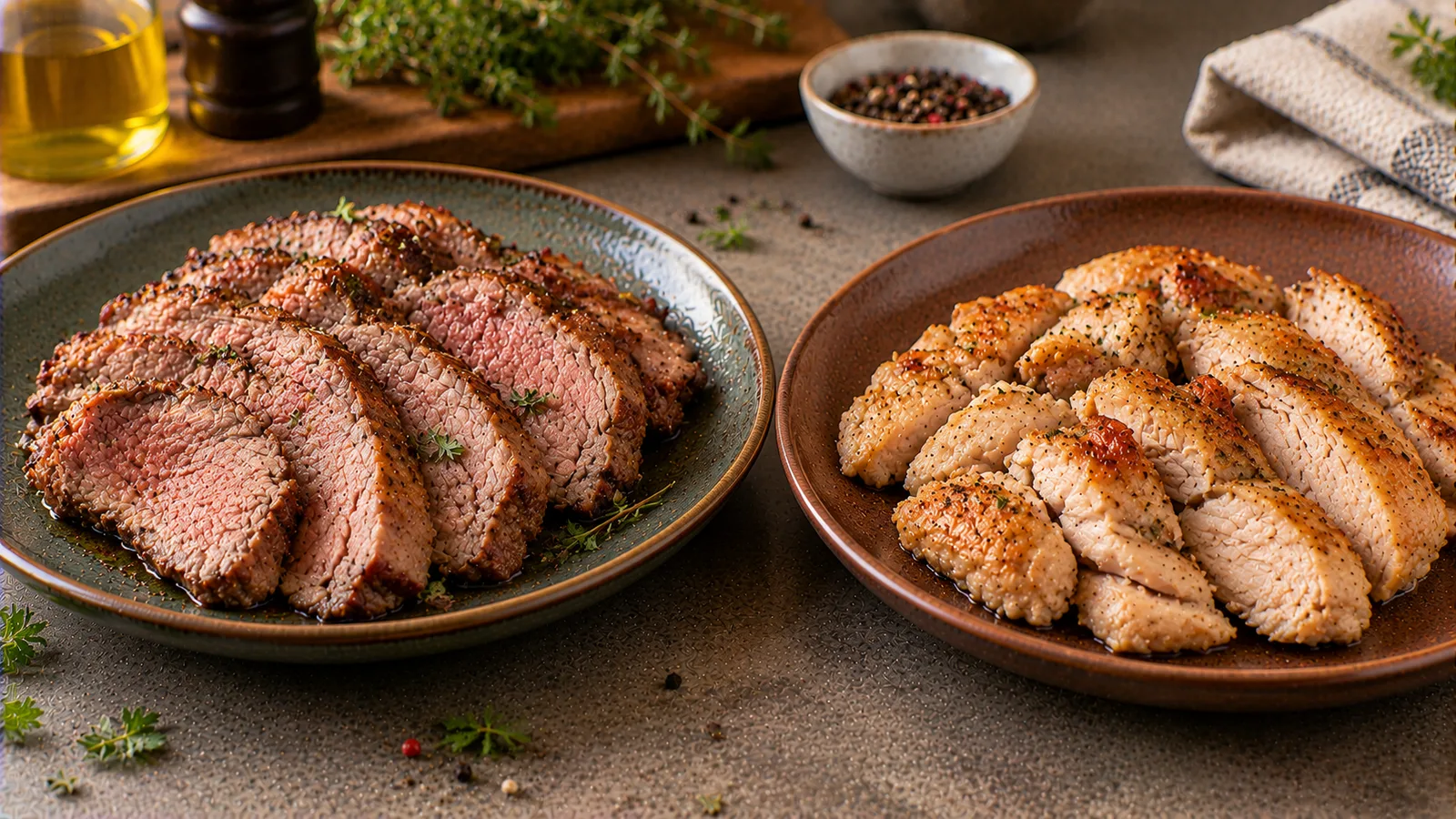
The comparison changes depending on what you weigh. A raw lamb leg can include a large bone; a chicken thigh can come with both bone and skin. Neither supermarket package weight is equivalent to a 150 g cooked, edible, boneless serving. For dinner planning, first compare the meat you actually eat, then work backwards to the weight you have to buy.
Using two specifically identified USDA food records, 150 g roasted lean lamb leg contains about 42.9 g protein, versus 37.14 g in 150 g roasted chicken thigh meat without skin. The lamb lead is 5.76 g protein in this narrow matched-weight comparison. Lamb does not automatically offer better protein value for money: raw purchase price, skin, bone and cooking loss can reverse the apparent bargain. The tables below keep those quantities separate.
Exactly which cuts are compared?
This is boneless edible meat on the cooked plate, not a 150 g bone-in portion and not 150 g of raw meat. For lamb we use the USDA entry for Australian lamb, leg, bottom, boneless, separable lean only, cooked, roasted, trimmed to 1/8-inch fat, reproduced in the USDA-linked nutrient record. For chicken we use chicken, broilers or fryers, thigh, meat only, cooked, roasted, in its USDA-linked record. Both are per 100 g cooked edible meat. The labels 'lean only' and 'meat only' matter: lamb with visible fat and chicken with skin can have different calories and fat.
| Cooked edible meat | Lean lamb leg, 100 g | Skinless chicken thigh, 100 g |
|---|---|---|
| Protein | 28.6 g | 24.76 g |
| Energy | 190 kcal | 179 kcal |
| Total fat | 8.35 g | 8.15 g |
| Carbohydrate | 0 g | 0 g |
These are nutrient-database reference values, not measurements of your own roast. Breed, muscle, cooking method, doneness and fat trimming all affect the result. The comparison is deliberately much narrower than a generic claim that 'lamb is fattier than chicken': selecting a different lamb cut or leaving the skin on the chicken changes the answer.
Protein in 150 g cooked, without bone
Multiply each 100 g value by 1.5. Do not multiply raw retail weight by cooked nutrition figures. The cooked serving contains less water than the raw purchase, so misaligning the states can overstate the protein on a food diary.
| Per 150 g cooked edible meat | Lamb leg, lean | Chicken thigh, no skin |
|---|---|---|
| Protein | 42.9 g | 37.14 g |
| Energy | 285 kcal | 268.5 kcal |
| Total fat | 12.53 g | 12.23 g |
| Protein difference | +5.76 g for lamb | Reference |
Unrounded fat calculations are 8.35 × 1.5 = 12.525 g and 8.15 × 1.5 = 12.225 g, displayed to two decimals. Lamb provides 16.5 kcal more in this model, and the two selected lean/meat-only records are similar in total fat. These numbers do not include roasting oil, sauce, skin, visible fat that you leave on, potatoes or vegetables.
How much raw meat must you purchase?
Edible cooked yield is the weight you can actually serve, divided by the paid-for raw weight. With a bone-in joint, it combines removal of bone or skin and moisture/fat lost in cooking. The USDA's lamb handling guide says one pound of raw bone-in lamb leg or roast gives approximately 8–9 ounces of cooked edible meat, around 50–56% of original weight; for boneless lamb it gives about 10.5 ounces, around 66%. Those are broad guide values, not a guarantee for a specific store pack.
To illustrate a comparable shop, this article uses 66% boneless lamb, 53% bone-in lamb (within the USDA approximate range), 75% boneless skinless chicken, and 55% bone-in chicken after removing skin and bone. The chicken percentages are explicit example assumptions, not verified yield measurements for the USDA nutrient record. Check your own result with a kitchen scale; cooking style and trimming can change them substantially.
| Purchase format | Assumed cooked edible yield | Raw weight for 150 g cooked edible |
|---|---|---|
| Boneless lean lamb leg | 66% | 227 g |
| Bone-in lamb leg | 53% | 283 g |
| Boneless skinless chicken thigh | 75% | 200 g |
| Bone-in chicken thigh, skin removed | 55% | 273 g |
For example, bone-in lamb: 150 ÷ 0.53 = 283 g of raw paid-for joint, rounded. A whole leg is usually sold much larger than this; the value is the allocated cost of one portion, not a claim that a retailer sells a 283 g joint. Slice and portion the roast after cooking. For bone-in chicken, a family-size pack may be cheaper per kilogram, but the bone and skin are not part of the specified edible serving.
Price per kilogram versus price per edible plate
The next prices are illustrative calculation inputs in euros, not verified current REWE, Lidl, Aldi or French supermarket offers. They deliberately use different purchase forms so you can replace them with prices on your own receipt. Divide the raw price per kilogram by 1,000, multiply by raw grams required, and round only the final cost.
| Purchase format | Example raw shelf price | Raw amount needed | Estimated meat cost/150 g cooked |
|---|---|---|---|
| Boneless lean lamb | €24.00/kg | 227.27 g | €5.45 |
| Bone-in lamb leg | €16.00/kg | 283.02 g | €4.53 |
| Boneless skinless chicken thigh | €10.00/kg | 200 g | €2.00 |
| Bone-in chicken thigh, skin removed | €6.50/kg | 272.73 g | €1.77 |
At these assumed prices and yields, the bone-in chicken example is about €2.76 cheaper per 150 g edible cooked meat than bone-in lamb; among boneless options, chicken is €3.45 cheaper. That is a worked example, not a universal country-level price ranking. A discount on boneless lamb or poor trimming of an inexpensive bone-in chicken pack can narrow the gap.
A price per 100 g raw cannot be read as the cost of 100 g on the cooked plate. Use the yield factor, or your comparison will favour the cuts that retain less edible meat. If your actual purchase is frozen, check for added water, glaze and the weight printed on the package. A coated or marinated product is not directly the same as plain raw meat.
Protein per euro: a useful, but limited, second lens
We have now matched the cooked edible weight. In the boneless illustration, 42.9 g ÷ €5.45 ≈ 7.9 g protein per euro for lamb, versus 37.14 g ÷ €2.00 = 18.6 g per euro for chicken. For bone-in purchases, the corresponding examples are roughly 9.5 g/€ and 21.0 g/€. These are derived from the same nutrient references and hypothetical prices, not independent empirical protein-per-euro measurements.
This does not make the lowest-cost protein the best meal every evening. Taste, dietary preference, shopping access, other nutrients, leftovers and the size of the roast matter. Lamb can offer a different flavour and substantial protein; chicken thigh may fit a tight grocery budget better in many ordinary price scenarios. If one food becomes much cheaper where you shop, recalculate rather than assume the answer.
Bone-in versus boneless: why the cheapest sticker can mislead
If two pieces have different yields, the break-even test is raw price per kilogram divided by the edible yield fraction. For example, €16.00 ÷ 0.53 ≈ €30.19 per kilogram of edible cooked lamb, while €24.00 ÷ 0.66 ≈ €36.36/kg for boneless lamb. Bone-in lamb is cheaper per edible cooked kilogram under these exact assumptions, but it brings a large joint, roasting time and bone-disposal work.
For chicken the worked prices give €6.50 ÷ 0.55 ≈ €11.82/kg edible, compared with €10.00 ÷ 0.75 ≈ €13.33/kg edible boneless. If you prefer to save preparation time, the boneless option may be worth its price. A useful three-step home check is to weigh the purchased meat, weigh the trimmed fully cooked edible portion and then divide. Keep a note of whether you ate the skin; it changes both yield and the appropriate nutrient record.
A real dinner is more than 150 g of meat
Build the plate around roughly 150 g cooked meat, for example 200 g vegetables and 150 g cooked potatoes or another starch, plus a measured amount of oil or sauce. The nutrition table here counts meat only; there is no calculated total-plate calorie claim, because vegetable choice, salt, cooking fat and sauce vary. Pair lamb with roasted carrots, greens and lemon yogurt, or chicken thigh with cabbage, potatoes and herbs. Using the same side dishes makes a fairer comparison of the meat choice.
A 'leg of lamb' is not a standardized personal portion. A large joint may make multiple dinners; the correct per-plate price is the cost allocated to edible cooked servings, not the checkout amount divided by an arbitrary number of people. Portion the cooked roast, freeze the extras safely and record leftovers as their own meal rather than waste.
Safe cooking and handling are different for the two meats
The USDA FSIS safe-temperature chart specifies 63°C (145°F) plus at least three minutes of rest for whole lamb leg roasts, and 74°C (165°F) for chicken thighs and other poultry. Those are separate minimums; do not apply the lamb-rosé rule to chicken. Use a thermometer in the thickest part away from the bone, and follow local guidance when it differs. Ground lamb has another minimum, so this page concerns whole-leg cuts only.
Refrigerate cooked leftovers promptly. The USDA leftovers guidance says to refrigerate perishable cooked food within two hours (within one hour above 32°C/90°F), use most refrigerated cooked leftovers within 3–4 days, and reheat leftovers to 74°C (165°F). A cooked-protein chart is not a food-safety temperature chart: the percentages above estimate weight yield, not safe doneness.
What should you buy for your goal?
If the goal is protein in exactly 150 g of roasted boneless meat, this specific lean lamb record wins 42.9 g versus 37.14 g. If the goal is lower meat cost for 150 g cooked edible, the chicken examples win under the stated hypothetical shopping prices. If you are buying a bone-in roast, measure or estimate yield before deciding which shelf sticker is cheaper. Neither meat needs a blanket healthy/unhealthy label; look at the actual cut, the fat you eat, the overall dinner and your budget.
For lamb calories independent of chicken or shopping yield, read lamb-leg calories and serving sizes. That page answers a different question: the energy and serving sizes of lamb leg itself. This comparison answers the cooked, boneless, matched-weight and edible-cost question.
Sources
- USDA FoodData Central, SR Legacy lamb-leg lookup; the identifiable lamb nutrient entry has 28.6 g protein per 100 g cooked lean meat.
- USDA FoodData Central, SR Legacy chicken-thigh lookup; the identifiable chicken nutrient entry has 24.76 g protein per 100 g cooked skinless thigh meat.
- USDA FSIS: lamb from farm to table — approximate raw-to-edible cooking yields for bone-in and boneless lamb.
- USDA FSIS: safe minimum internal temperatures — distinct temperatures for whole lamb and poultry.
- USDA FSIS: leftovers and food safety — cooling, storage and reheating advice.
Methods note: All euro prices and chicken yield factors are illustrative; food-composition values are database estimates for specifically named cooked edible cuts. No supermarket pricing or individual cooking outcome is being guaranteed.