
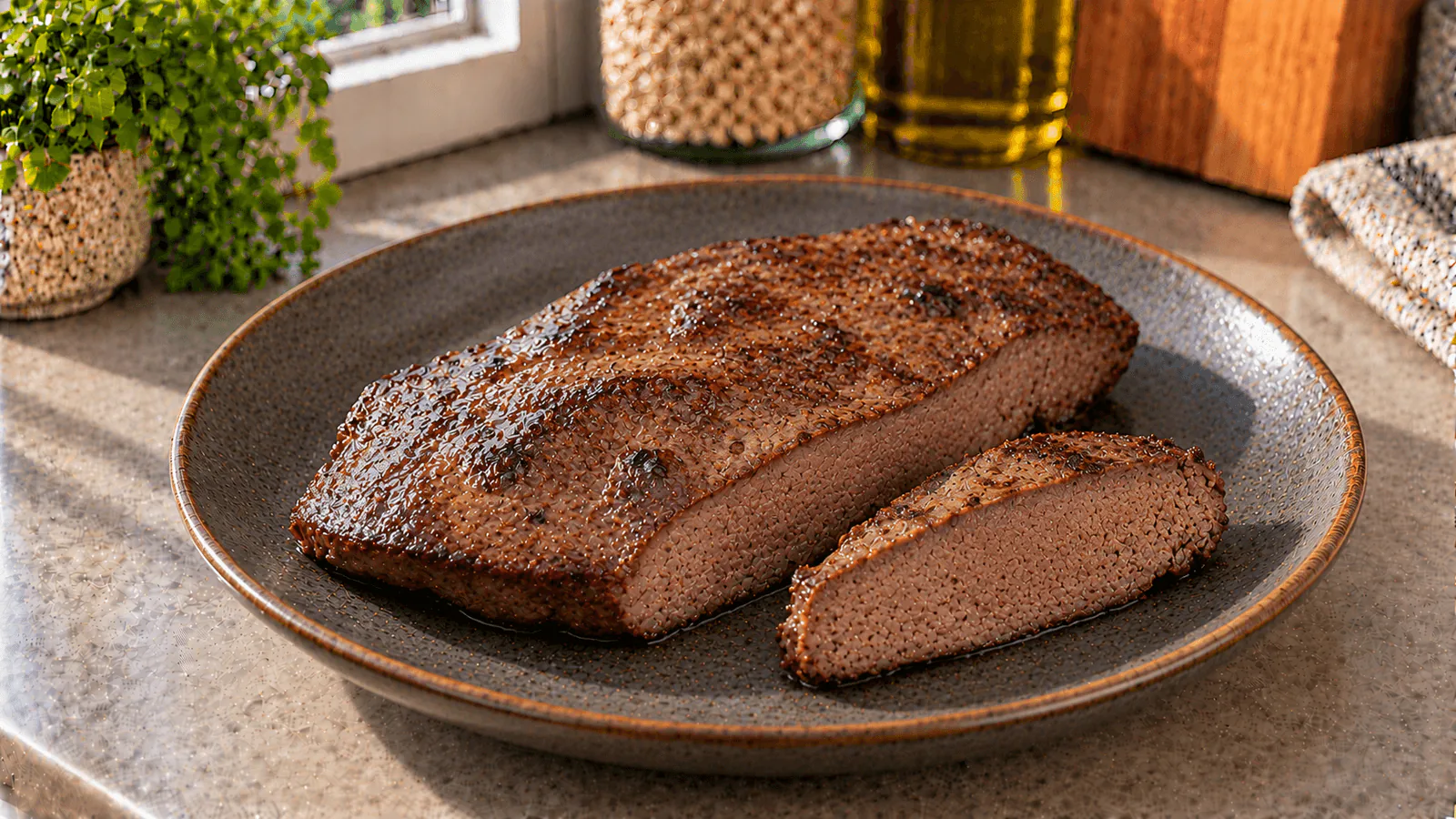
Beef liver is often described as a high-protein, nutrient-dense food, but the number of calories depends on whether you weigh it raw, braised or pan-fried. The difference matters when you record dinner: 100 g of raw liver and 100 g of cooked liver are not interchangeable portions. Liver also deserves more attention than a typical meat cut because of its exceptionally high preformed vitamin A content.
Quick answer: USDA FoodData Central's SR Legacy entries report 135 kcal per 100 g of raw beef liver, 191 kcal per 100 g of braised beef liver, and 175 kcal per 100 g of pan-fried beef liver. The values describe the edible food in the stated condition. Use the one that matches what you actually weighed; count butter, flour and sauce separately when relevant.
Beef liver nutrition per 100 g: raw, braised and pan-fried
The table uses three distinct USDA entries. The prepared foods are not simply identical raw samples with an arbitrary calorie adjustment: cooking changes moisture, nutrient concentration and sometimes what remains in the pan. All figures are for 100 g of the stated edible food, not a piece weighed before cooking.
| USDA beef liver description | Calories | Protein | Fat | Carbohydrate | Sodium |
|---|---|---|---|---|---|
| Raw beef liver | 135 kcal | 20.4 g | 3.63 g | 3.89 g | 69 mg |
| Beef liver, cooked, braised | 191 kcal | 29.1 g | 5.26 g | 5.13 g | 79 mg |
| Beef liver, cooked, pan-fried | 175 kcal | 26.5 g | 4.68 g | 5.16 g | 77 mg |
Sources: USDA raw beef liver, FDC 169451, USDA braised beef liver, FDC 168626, and USDA pan-fried beef liver, FDC 168627. These are reference averages, not laboratory measurements of a particular supermarket package.
Protein is a major contributor to the food's energy. Liver is not completely carbohydrate-free: the USDA entries contain roughly 4–5 g carbohydrate per 100 g. It contains practically no dietary fiber in these records. That does not make liver a substitute for vegetables or whole grains, and it should not be treated as an unrestricted everyday source of protein.
The apparently higher calorie value for braised liver does not mean a pan of plain liver acquires calories merely because it is heated. Water changes the final weight, while any added ingredients change the energy in the complete dish. The two cooked USDA profiles also reflect their particular preparation and sampling; neither can predict the exact calorie density of your homemade recipe.
Calories in a portion of cooked beef liver
Use a kitchen scale after cooking if you are selecting a cooked reference. The following figures are calculated from 175 kcal/100 g for pan-fried liver and 191 kcal/100 g for braised liver. They do not include separately added butter, oil, gravy or breading.
| Cooked edible portion | Pan-fried reference | Braised reference |
|---|---|---|
| 50 g | 88 kcal | 96 kcal |
| 75 g | 131 kcal | 143 kcal |
| 85 g | 149 kcal | 162 kcal |
| 100 g | 175 kcal | 191 kcal |
| 125 g | 219 kcal | 239 kcal |
| 150 g | 263 kcal | 287 kcal |
| 200 g | 350 kcal | 382 kcal |
For example, a 100 g cooked pan-fried portion supplies about 175 kcal before separately added fat. A 150 g cooked pan-fried portion is about 263 kcal using the same USDA profile. If your pan-fried portion includes 10 g of cooking oil that you actually eat, another 90 kcal brings that 150 g serving plus oil to approximately 353 kcal. Fat left behind in the pan should not be charged to your plate.
A 125 g braised serving supplies about 239 kcal before any extra sauce. A soup or gravy that includes oil, cream or flour may change the total substantially even if the portion of liver stays constant. On the other hand, a tablespoon of liquid broth should not automatically be counted as a tablespoon of oil. Record ingredients according to what they are.
Portion labels are useful starting points, but a piece sold as one slice can vary considerably in thickness and weight. The distinction between an actual plate portion and a suggested serving is explained in portion size versus serving size. Weighing the edible portion is more reliable than assuming every slice weighs a fixed number of grams.
What if the liver is weighed raw?
For a raw ingredient, use 135 kcal per 100 g as the reference. A 200 g raw piece therefore represents around 270 kcal of raw beef liver, before any added ingredients. If it becomes lighter during cooking, that does not mean its original food energy has disappeared in proportion to the lost water. Some fat or juices may leave the food, so the exact retained energy is not always known from weight change alone.
A practical choice is to use one consistent logging method: weigh all ingredients raw and calculate the batch from their raw entries, or weigh the finished cooked liver and use a matching cooked entry. Do not multiply the original 200 g raw weight by 175 or 191 kcal per 100 g. Those values describe cooked weight. Also avoid adding the USDA cooked figure on top of a raw ingredient entry; that would count the same liver twice.
Suppose you start with 300 g raw liver, one onion and 10 g of oil. The starting liver contributes approximately 405 kcal using 135 kcal/100 g. If all 10 g of oil end up in the dish, it contributes 90 kcal; the onion must be counted separately. After cooking, divide the edible result into actual portions. This raw-ingredient method is particularly convenient for a family-sized pan because you do not need to guess how much water evaporated from each slice.
Why beef liver differs from ordinary beef
Both liver and muscle meat supply protein, but they have different nutrient profiles and culinary uses. If you are comparing calories alone, choose the relevant cut and state. Beef steak calories vary by cut, visible fat and cooking method, while ground beef calories depend heavily on the labeled fat percentage. A single number for “beef” cannot represent all three foods.
Beef liver is notable for vitamin B12, iron, copper and preformed vitamin A. The raw USDA record lists roughly 4.9 mg iron per 100 g and a particularly large amount of retinol-related vitamin A. Iron in animal foods is not directly equivalent to iron from plant ingredients in terms of absorption. For a complementary perspective, see iron in plant foods and what affects absorption. Food diversity matters more than ranking every ingredient by one nutrient.
Liver is also a source of dietary cholesterol. Its presence does not mean a single portion determines a person's blood cholesterol, but medical nutrition advice may need to account for the whole diet and individual health conditions. Calorie counting alone cannot capture all of these factors. If you have been given a medically restricted diet, use your clinician's advice rather than treating a food diary as a prescription.
Vitamin A: a major reason portion and frequency matter
Liver contains preformed vitamin A (retinol), not merely the plant carotenoids found in carrots. Large and repeated intakes of preformed vitamin A can be harmful. NHS guidance says not to eat liver or liver products more than once a week; it also cautions against taking vitamin A supplements when eating liver weekly. This is a food-specific consideration that a calorie table alone would hide.
During pregnancy, avoid liver and liver products. The NHS pregnancy food-safety guidance explicitly advises avoidance because of high vitamin A content. This includes dishes containing liver rather than only plain fried slices. If you are pregnant, planning pregnancy or have a condition affecting vitamin A handling, discuss any individual dietary uncertainty with a qualified healthcare professional. A small calorie count does not make a high-retinol food appropriate in pregnancy.
The general NHS guidance on vitamin A is also relevant outside pregnancy. It explains why someone taking multivitamins, fish-liver oil or other retinol-containing products should pay attention to cumulative intake. Do not try to use liver as a high-dose vitamin supplement, and do not infer a universally safe daily amount from the calorie calculations above.
Pan-fried liver, flour coating and sauces
A label such as “fried liver” does not fully describe a recipe. Thin slices cooked in a nonstick pan with little retained oil may resemble the USDA pan-fried reference more closely than liver breaded in flour and shallow-fried in a generous amount of fat. Coating, butter, bacon, onions, cream or sweet sauces all change the finished meal. The table gives calories for the liver itself, not automatically for every plate called liver and onions.
For a transparent estimate, weigh the edible liver and the additions separately. If you eat 100 g of the pan-fried reference (175 kcal) plus 10 g of retained oil (90 kcal), the component estimate is 265 kcal, before vegetables or other extras. This is a simplified calculation, not a laboratory analysis of a real frying pan: some oil may remain on the pan, and an existing packaged nutrition entry might already include fat used in processing. Avoid counting the same oil twice.
When using a restaurant menu, estimate the entire dish, including gravy and accompaniments, rather than recording only the liver. With homemade liver pâté or liver sausage, do not substitute the raw-beef-liver values: recipes may contain added fat, cream and other meats. Use the nutrition information for the actual product or recipe.
Food safety: cook organ meats thoroughly
Beef liver is an organ meat, not a regular intact steak. The USDA FSIS guidance for beef and organ meats recommends cooking organ meats, including liver, to an internal temperature of 160°F (71°C) as checked with a food thermometer. That is distinct from the lower temperature plus rest time listed for some intact steaks.
Keep raw liver separate from ready-to-eat foods, clean utensils and work surfaces, and refrigerate promptly. Do not rely on a browned outside or a recipe's exact number of minutes to establish a safe temperature; slice thickness and stove settings vary. If the liver has been frozen and thawed, handle it like other raw meats. Food safety is independent of whether the dish is low in calories.
A useful way to log beef liver
Start with the state of the food on your scale. For raw liver, select the 135 kcal/100 g reference. For cooked, use the 175 kcal/100 g pan-fried or 191 kcal/100 g braised reference that better matches the preparation. Scale by the actual edible grams, add separately eaten oil and sauces, then consider the vitamin A guidance rather than choosing portions solely to hit a calorie target.
The underlying USDA references are available for raw beef liver (169451), braised beef liver (168626) and pan-fried beef liver (168627). These values can help with logging, but the package label, ingredient list and actual cooking method should take priority when they describe your food more precisely.