
Iron is an essential mineral involved in oxygen transport and many normal physiological processes. Plant foods can contribute meaningful amounts of iron, but the amount listed in a nutrition database is not the same as the amount the body absorbs.
That distinction is particularly important for people who eat little or no meat.
Plant-based meals can be planned to include iron-rich foods and combinations that support absorption. However, no single ingredient guarantees that someone will meet their iron needs.
The NIH Office of Dietary Supplements iron fact sheet provides an evidence-based overview of iron sources, requirements, absorption and deficiency.
Which plant foods contain iron?
Legumes, soy products, seeds, some grains, leafy vegetables and iron-fortified foods can all contribute dietary iron.
The following values are approximate examples. They depend on the specific food, variety, preparation and database entry.
| Food | Example serving | Approximate iron |
|---|---|---|
| Cooked lentils | 150 g | 5.0 mg |
| Cooked chickpeas | 150 g | 4.3 mg |
| Cooked kidney beans | 150 g | 4.4 mg |
| Firm tofu | 150 g | Highly variable; check product |
| Pumpkin seeds | 30 g | 2.6 mg |
| Cooked spinach | 100 g | 3.6 mg |
| Cooked quinoa | 150 g | 2.2 mg |
| Oatmeal, cooked in water | 200 g | About 1–2 mg |
| Iron-fortified breakfast cereal | One labelled serving | Depends on fortification |
These are reference estimates, not guaranteed amounts in every product.
The values for individual foods can be explored using USDA FoodData Central. For tofu and fortified products especially, the nutrition label or a product-specific database entry is preferable.
Plant iron is mostly non-heme iron
Dietary iron occurs in two broad forms.
Heme iron is found in animal foods such as meat and seafood.
Non-heme iron is found in plant foods and is also present in some animal-derived foods.
Non-heme iron absorption is generally more sensitive to other components of the meal.
This does not mean plant iron is useless or that a plant-based diet automatically causes deficiency.
It means that meal composition and overall iron intake deserve attention.
The NIH iron guidance describes these differences and the factors influencing absorption.
Why the iron amount on a label is not the absorbed amount
Suppose a meal contains 6 mg of iron according to food-composition data.
That number describes the iron present in the food.
It does not mean the body will absorb all 6 mg.
Absorption varies with iron status, physiological needs, food composition and other factors.
Someone with depleted iron stores may regulate absorption differently from someone whose stores are adequate.
Therefore, multiplying every plant-food iron value by one fixed absorption percentage is not a reliable way to calculate personal iron status.
Dietary assessment can identify patterns, but blood tests and clinical evaluation are needed when deficiency is suspected.
Vitamin C can help non-heme iron absorption
Vitamin C can enhance absorption of non-heme iron when consumed as part of the same meal.
Practical vitamin C sources include:
- Red bell pepper.
- Citrus fruit.
- Kiwi.
- Strawberries.
- Broccoli.
- Tomatoes.
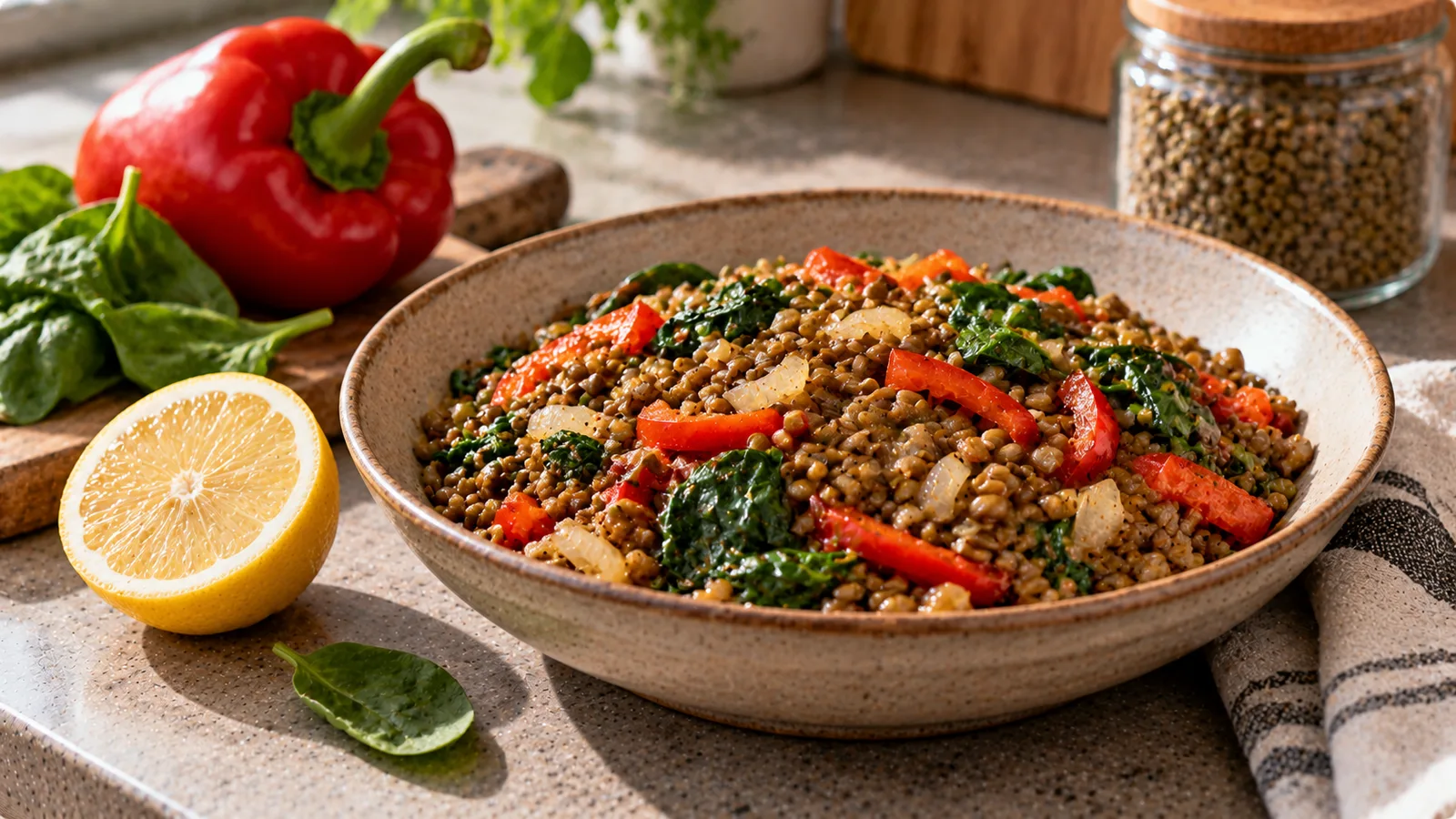
Examples of useful combinations are lentils with bell pepper, chickpeas with lemon dressing, or tofu with broccoli.
The effect depends on the meal as a whole. Adding lemon juice does not guarantee that all the iron will be absorbed.
The mechanism and evidence are discussed in the NIH iron fact sheet.
Do tea and coffee reduce iron absorption?
Tea and coffee contain polyphenols that can inhibit non-heme iron absorption when consumed with a meal.
The effect depends on the drink, its preparation and the meal.
For someone who is trying to improve iron absorption, a practical strategy is to drink tea or coffee between meals rather than with the main iron-containing meal.
This is not a universal requirement for everyone.
It also does not mean coffee permanently removes iron from the body.
The concern is mainly its potential effect on absorption of iron consumed around the same time.
See the NIH overview of iron absorption.
Phytates in legumes, grains and seeds
Phytates are naturally present in many plant foods, including whole grains, legumes, nuts and seeds.
They can reduce non-heme iron absorption within a meal.
However, foods containing phytates also provide protein, fibre and other useful nutrients.
Avoiding all legumes or whole grains because they contain phytates would be an unnecessarily restrictive approach.
Instead, focus on dietary variety, sufficient iron intake and appropriate meal combinations.
Preparation methods such as fermentation and certain soaking or sprouting processes may change phytate content, although the effect varies.
The NIH iron fact sheet identifies phytates as an important absorption factor.
Does calcium interfere with iron absorption?
Calcium can influence iron absorption in some meal studies.
However, the practical long-term implications are more complex than a simple rule that calcium-rich foods must never be eaten with iron-rich foods.
For most people, maintaining an adequate overall diet is more important than separating every calcium-containing ingredient.
People receiving medical treatment for iron deficiency should follow the timing instructions given for their prescribed iron preparation.
Do not change supplement timing or dosage solely on the basis of general meal-planning advice.
The NIH iron guidance discusses calcium and other dietary interactions.
Iron-rich plant meals in practice
A useful meal does not have to contain the highest possible amount of iron.
It can combine a substantial iron source with vegetables or fruit that contribute vitamin C.
| Meal | Main iron-containing ingredient | Vitamin C-containing addition |
|---|---|---|
| Lentil salad | Lentils | Red bell pepper and lemon |
| Chickpea bowl | Chickpeas | Tomatoes and citrus dressing |
| Tofu stir-fry | Tofu | Broccoli and bell pepper |
| Bean chilli | Kidney beans | Tomatoes and peppers |
| Oat breakfast | Oats and seeds | Kiwi or strawberries |
| Hummus sandwich | Chickpeas and tahini | Fresh pepper strips |
The combinations are practical examples, not guaranteed treatments for low iron.
Actual iron content depends on serving sizes and products.
Example: building a lentil lunch
Imagine a lunch containing:
- 150 g cooked lentils.
- 100 g red bell pepper.
- 100 g tomatoes.
- 10 g olive oil.
- Lemon juice and herbs.
The lentils provide a substantial share of the meal's iron.
The pepper, tomatoes and lemon contribute vitamin C.
Olive oil adds energy and helps with flavour, but is not itself a major iron source.
This is an example of meal composition rather than a prescription for a particular iron intake.
For an accurate nutrient total, calculate the actual ingredients using USDA FoodData Central or reliable product data.
Are spinach and other leafy greens good iron sources?
Spinach contains iron, but its reputation as a uniquely effective iron source is misleading.
It also contains compounds that affect mineral availability.
A serving of cooked spinach can contribute iron to the diet, but it should not be treated as a dependable standalone solution to iron deficiency.
Legumes, seeds, fortified foods and varied meals can also play important roles.
Using multiple sources is more practical than relying on one vegetable.
Tofu and soy products: check the specific product
Tofu can provide iron, but its composition varies considerably.
Differences may result from manufacturing methods, coagulants, moisture and brand.
Two packages of tofu with the same weight may have noticeably different iron values.
If the package declares iron, use that information.
Otherwise, select a database entry that matches the type of tofu as closely as possible.
The same principle applies to tempeh, soy mince and fortified plant-based alternatives.
Fortified foods can be useful
Some breakfast cereals and plant-based products have iron added during manufacturing.
Their iron content may be much higher than that of an unfortified equivalent.
But fortification levels vary across products and countries.
Read the declared iron amount per 100 g and per serving.
In the EU, nutrient declarations and relevant nutrition claims are governed by food-information rules.
See Regulation (EU) No 1169/2011 for the general nutrition-labelling framework.
A food advertised as containing iron should still be assessed in the context of the complete diet.
How much iron do people need?
Iron requirements vary by age, sex, physiological status and the reference system used.
Menstruation, pregnancy and certain medical conditions can materially change needs.
The NIH dietary reference tables and the German Nutrition Society reference values provide established recommendations, but their figures and assumptions are not always identical.
For example, the NIH lists a recommended dietary allowance of 8 mg per day for many adult men and 18 mg per day for women aged 19–50 who menstruate, with separate recommendations for pregnancy.
These are population reference values, not a diagnosis or a personalised prescription.
Vegetarians and vegans should pay particular attention to dietary iron because non-heme iron absorption differs from that of heme iron.
What are the signs of insufficient iron?
Possible symptoms of iron deficiency or iron-deficiency anaemia include fatigue, weakness, reduced exercise tolerance and shortness of breath.
These symptoms are not specific to iron deficiency.
They can have many other causes.
Iron deficiency can also occur before anaemia develops.
If deficiency is suspected, a clinician may consider tests such as a complete blood count and ferritin, interpreted alongside medical history and other relevant factors.
The WHO information on anaemia describes the broader clinical context.
Do not diagnose iron deficiency from symptoms or a food diary alone.
Should you take an iron supplement?
Not automatically.
Iron supplements can cause adverse effects and excessive iron intake can be harmful.
A person with confirmed deficiency may need treatment that cannot be replaced by food changes alone.
The appropriate product, dose and duration depend on the clinical situation.
If you are pregnant, have ongoing blood loss, have a gastrointestinal condition or have abnormal iron tests, seek individual medical advice.
The NIH iron fact sheet explains upper intake levels, interactions and risks.
How to interpret iron values in a nutrition app
A nutrition app estimates the amount of iron in recorded foods.
It usually cannot determine how much iron an individual absorbed from a particular meal.
For better estimates:
- Record realistic portion weights.
- Distinguish dry and cooked weights.
- Use product-specific values for fortified foods.
- Include sauces, seeds and toppings.
- Review dietary patterns over multiple days.
If a database entry has no iron value, that does not necessarily mean the food contains no iron.
Missing data and true zero values are different.
Use nutrient totals as a planning tool, not as a substitute for medical assessment.
A practical approach to plant-based iron
Build meals around varied iron-containing foods, especially legumes, soy products, seeds and suitable fortified foods.
Include vitamin C-rich vegetables or fruit regularly.
If iron status is a concern, consider moving tea and coffee away from main iron-rich meals.
Avoid unnecessarily excluding nutritious whole grains and legumes because of phytates.
Most importantly, do not assume that the iron listed on a label is the exact amount your body absorbs.
A varied diet supports iron intake, while suspected deficiency requires appropriate clinical evaluation.