
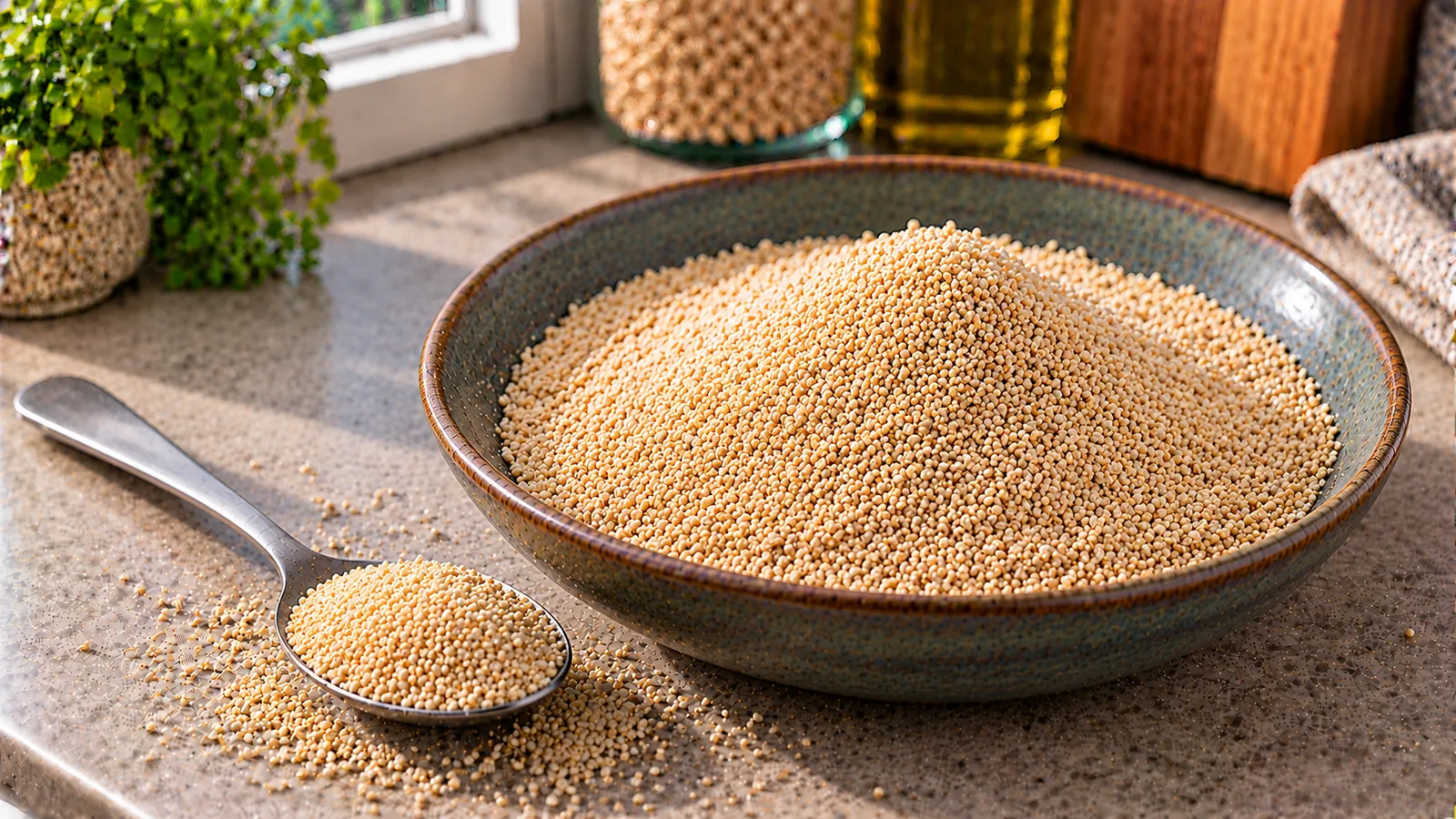
Amaranth grain provides 371 calories per 100 g dry or 102 calories per 100 g cooked in water, according to USDA FoodData Central. Both are valid numbers, but they answer different questions. Dry amaranth is concentrated because it contains little water; the cooked grain absorbs water and therefore has fewer calories in the same 100 g weight. A bowl of cooked amaranth should not be logged using the dry-grain number.
These figures apply to plain amaranth grain, not amaranth leaves, flour, breakfast cereal, popped amaranth or sweetened porridge. This guide compares the two relevant USDA records, calculates realistic portions and shows how to avoid miscounting the cooking water, oil, milk or toppings.
Amaranth calories and nutrition per 100 g
The two records below are separate USDA FoodData Central SR Legacy foods: amaranth grain, uncooked (FDC 170682), and amaranth grain, cooked (FDC 170683). Values refer to 100 g of the named edible food. The carbohydrate column follows the US database convention of carbohydrate by difference, which includes fibre; on EU labels, available carbohydrate and fibre are usually listed separately.
| Nutrition per 100 g | Dry grain | Cooked grain, plain |
|---|---|---|
| Energy | 371 kcal | 102 kcal |
| Protein | 13.56 g | 3.80 g |
| Fat | 7.02 g | 1.58 g |
| Carbohydrate by difference | 65.20 g | 18.69 g |
| Dietary fibre | 6.70 g | 2.10 g |
| Magnesium | 248 mg | 65 mg |
| Iron | 7.61 mg | 2.10 mg |
| Sodium | 4 mg | 6 mg |
Primary sources: USDA dry amaranth grain, FDC 170682 and USDA cooked amaranth grain, FDC 170683. These are reference-food averages, not measurements of every bag sold in Germany, France or elsewhere. The small sodium difference does not mean that plain cooked amaranth has been heavily salted.
The dry record is useful for weighing ingredients before a recipe. The cooked entry is useful when you weigh a ready bowl of plain cooked grain. Do not mix those bases in a single calculation. Packaged products and amaranth blends can have different values; their labels should be used when they describe the specific product.
How many calories are in a portion of cooked amaranth?
All weights in this table mean cooked, edible amaranth without toppings. Each calorie estimate is calculated from 102 kcal per 100 g and rounded to the nearest whole calorie. A serving is not fixed by the USDA record; choose the weight you actually eat.
| Cooked amaranth weight | Estimated calories | Protein |
|---|---|---|
| 50 g | 51 kcal | 1.9 g |
| 75 g | 77 kcal | 2.9 g |
| 100 g | 102 kcal | 3.8 g |
| 125 g | 128 kcal | 4.8 g |
| 150 g | 153 kcal | 5.7 g |
| 180 g | 184 kcal | 6.8 g |
| 200 g | 204 kcal | 7.6 g |
| 250 g | 255 kcal | 9.5 g |
For example, 180 g of cooked amaranth contains about 184 kcal and 6.8 g of protein before any additions. The USDA cooked record also lists approximately 246 g for a household cup, corresponding to about 251 kcal. A measuring cup in another household may be filled differently; weighing the actual food is more precise than assuming every cup holds the same amount. Our portion size versus serving size explains this distinction.
For dry grain, 40 g contributes approximately 148 kcal (40 × 371 ÷ 100); 60 g is approximately 223 kcal, and 80 g approximately 297 kcal. These are amounts of dry ingredient, not the calories in an equal mass of porridge. Keep dry and cooked weights separately labelled in your diary.
Dry versus cooked amaranth: what changes in the saucepan?
Water absorption changes the finished weight. Suppose a recipe begins with 60 g dry amaranth. The plain grain contributes about 223 kcal before additions. If the cooked pot weighs 180 g after water is absorbed, the batch still starts from those approximately 223 kcal, subject to cooking losses and what remains stuck to the pan. Dividing 223 by 180 and multiplying by 100 gives roughly 124 kcal per 100 g for this particular batch. That is different from the generic USDA cooked entry of 102 kcal per 100 g.
This example does not say that 60 g always becomes 180 g. The ratio depends on water, simmering time, draining and desired consistency. A looser porridge contains more water and yields fewer calories per 100 g of finished food than a thick preparation made from the same starting dry mass.
The most consistent method for a homemade batch is to weigh the dry amaranth once, count additions once, and divide the resulting recipe energy by the portions eaten. If only a cooked serving is available, use a cooked database food resembling its texture. Do not log both the 60 g dry ingredient and the resulting cooked bowl as separate foods.
What if you cook amaranth in milk or add oil?
The USDA cooked entry describes plain grain, not a prepared breakfast with milk, sugar or nuts. Water adds no calories. Milk and sweeteners do, as do butter, oil and nut butter. Measure edible additions and avoid counting anything left in a saucepan.
Consider a small savoury bowl containing 150 g plain cooked amaranth, 10 g olive oil actually consumed, and 100 g non-starchy vegetables. The vegetables are assigned an illustrative 30 kcal per 100 g; their real value depends on which vegetables and preparation were used.
| Eaten ingredient | Basis | Calories |
|---|---|---|
| Cooked amaranth | 150 g × 102 kcal/100 g | 153 kcal |
| Olive oil | 10 g × about 9 kcal/g | 90 kcal |
| Vegetables (example only) | 100 g at assumed 30 kcal/100 g | 30 kcal |
| Total example bowl | Excluding sauces or other sides | 273 kcal |
The 273 kcal total is an arithmetic example, not a universal amaranth meal. If the same grain is boiled in milk, estimate the milk consumed rather than applying the water-cooked reference blindly. And if you use a manufacturer's ready-to-eat amaranth porridge, its complete recipe label is generally preferable to rebuilding it from raw-grain averages.
Is amaranth a good source of protein or fibre?
Dry amaranth has 13.56 g protein and 6.7 g fibre per 100 g, but 100 g dry grain makes more than 100 g of cooked food. A 150 g cooked portion from the USDA reference provides around 5.7 g protein and 3.2 g fibre. Calling a finished bowl a 13.6 g-protein meal simply by quoting the dry value would exaggerate the amount. It is sensible to add beans, yogurt, eggs, tofu or another protein source if your actual meal needs more protein.
The grain provides minerals including magnesium and iron, but the amount eaten depends on serving size and product. Iron in plant foods is non-haem iron, and its absorption is affected by the wider meal. A nutrient table alone cannot establish an individual deficiency or a medical benefit. Dry grains, cooked grains and enriched packaged cereals should not be treated as nutritionally identical.
Amaranth is a seed used like a cereal grain and is often described as a pseudocereal. That classification changes neither its calorie calculation nor the importance of checking the full recipe.
Amaranth versus quinoa, millet and buckwheat
If you are choosing a cooked side dish, compare cooked weights against cooked weights, not dry amaranth against cooked rice or quinoa. A single 100 g cooked-grain calorie number cannot show which food will be most filling, most affordable or most useful in a complete meal. The cooking method, serving size, sauce and accompanying protein source matter.
For related grain-specific reference values, consult Mealisa's calories in quinoa, millet nutrition and calories and calories in buckwheat. Those are separate ingredient pages. They should not replace the USDA amaranth entry just because these grains can appear in similar bowls or salad recipes.
Is amaranth gluten-free?
Plain amaranth grain does not naturally contain the gluten proteins of wheat, rye or barley. However, a bag of grain or a prepared mix may have gluten cross-contact from shared handling or added wheat ingredients. The US FDA guidance on gluten-free food labelling explains this difference and its less-than-20-ppm rule for labelled foods in the United States. That US rule should not be mistaken for a complete description of every European labelling requirement.
If avoiding gluten is medically important, check the actual product's ingredients, allergen information and credible gluten-free claim rather than relying on the general identity of the seed. The same caution applies to amaranth flour, granola, puffed grains and restaurant dishes, which may contain other ingredients.
How to select the right entry for your food diary
For a package of dry amaranth, use the nutrition label per 100 g as sold and weigh the grains before cooking. For a plain already-cooked portion, use a cooked reference and weigh the portion after cooking. For homemade porridge made with milk, log dry grain, milk and toppings as a recipe; divide by the finished amount actually eaten. For puffed amaranth or processed cereal, use the matching product-specific entry instead of the cooked-grain value.
One last distinction matters: many American databases include fibre within carbohydrate-by-difference, while EU labels usually report digestible carbohydrate separately from fibre. If you compare their carb figures, check how each source defines carbohydrate rather than assuming that one of the two is necessarily inaccurate.
Calculation basis: USDA FoodData Central SR Legacy dry amaranth FDC 170682 and cooked amaranth FDC 170683. Portion numbers are calculations from rounded per-100-g reference values. Your finished grain weight and packaged ingredients may differ.