
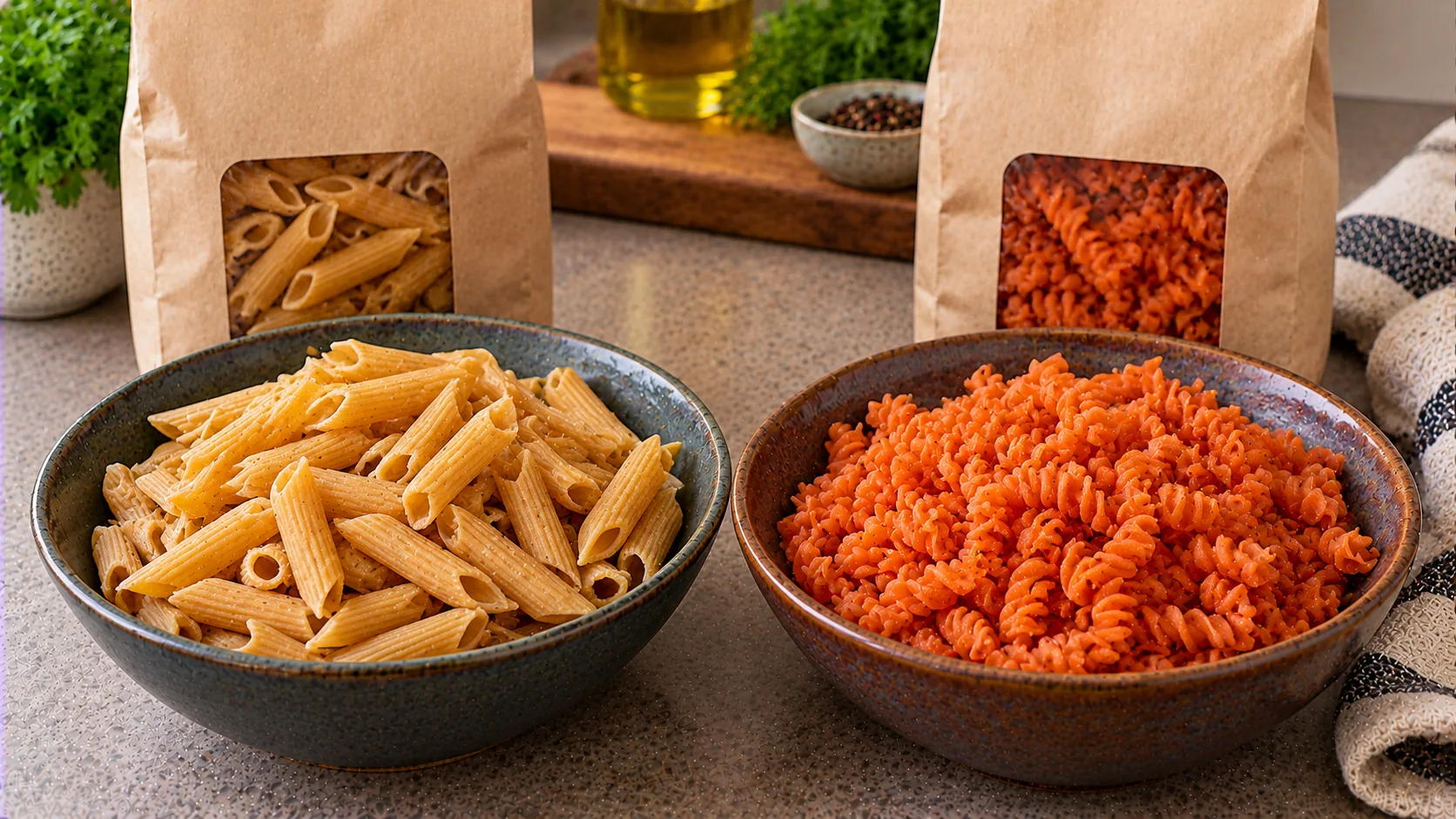
Protein Pasta vs Lentil Pasta: Cost per 20g Protein
Quick answer
Lentil pasta is not automatically the cheaper source of protein. A wheat-based protein pasta can contain more or less protein depending on added wheat gluten, pea protein or other ingredients. Compare the actual dry-food nutrition label and pack price. This article uses openly declared hypothetical label numbers to demonstrate the method, not live retail prices or a ranking of brands.
What counts as protein pasta?
Protein pasta is a product description, not one standard formula. Some products start with wheat and add concentrated protein; others use pulses. For this comparison, “protein pasta” means a wheat-based product fortified with protein, and “lentil pasta” means pasta whose main ingredient is lentil flour. Check the ingredient list: blends can contain both. Wheat-based pasta normally contains gluten. Lentil-only pasta may be gluten-free by ingredients but people avoiding gluten should check allergen and cross-contact declarations.
Three illustrative dry-product labels
The following are sample assumptions only, not verified market offers. They deliberately do not imply a nutritional advantage for every product.
| Per 100 g dry | Wheat-based protein pasta A | Red lentil pasta B |
|---|---|---|
| Protein | 25 g | 23 g |
| Energy | 355 kcal | 345 kcal |
| Fibre | 7 g | 10 g |
| Pack size | 250 g | 250 g |
| Assumed pack price | €2.49 | €2.29 |
| Price per 100 g dry | €1.00 | €0.92 |
These are calculation examples; the actual pasta in your cupboard may differ substantially. A nutrition declaration on EU prepacked foods is ordinarily provided per 100 g or 100 ml, with per-portion numbers optional. European Commission nutrition labelling guidance explains this basis.
How much dry pasta delivers 20 g of protein?
Use this formula: grams of dry pasta = 20 ÷ (label protein in grams per 100 g) × 100.
- Product A: 20 ÷ 25 × 100 = 80.0 g dry.
- Product B: 20 ÷ 23 × 100 = 87.0 g dry (rounded from 86.96 g).
A 250 g pack provides 250 ÷ 80 = 3.13 theoretical 20 g-protein equivalents for A and 250 ÷ 86.96 = 2.88 for B; these are not complete meals or exact cooked servings. If a normal pasta serving is 75 g dry, the pasta itself provides about 18.75 g protein for A or 17.25 g for B, before sauce.
Cost per 20 g protein
Use pack price ÷ pack grams × required dry grams. With the assumed values:
| Calculation | A: fortified wheat | B: red lentil |
|---|---|---|
| Dry grams for 20 g protein | 80.00 g | 86.96 g |
| Euro per dry gram | €0.00996 | €0.00916 |
| Cost for 20 g protein | €0.80 | €0.80 |
| Fibre in that amount | 5.60 g | 8.70 g |
| Energy in that amount | 284 kcal | 300 kcal |
Unrounded costs are €0.7968 and €0.7965, respectively; they both display as €0.80. The comparison is effectively a tie under these assumptions. Do not claim a cost winner based on rounded cents. This is a pasta-only calculation excluding sauce, oil, cooking energy and wasted portions.
A sensitivity check using your own label
Suppose a different 250 g lentil pasta costs €3.25 but still has 23 g protein per 100 g. It would cost €3.25 ÷ 250 × 86.96 = €1.13 per 20 g protein. If a wheat protein pasta costs €1.79 for 250 g at 25 g protein per 100 g, its 20 g protein portion costs €0.57. Promotions, package weight and ingredient differences can reverse the result. Record the shelf price and protein per 100 g instead of relying on “high protein” at the front of the pack.
Protein claims, fibre and other nutrients
In the EU, the authorised claim “source of protein” requires at least 12% of energy to come from protein; “high protein” requires at least 20%. These conditions are not the same as having 20 g protein in one meal. Consult the European Commission register of nutrition claims. The sample lentil option has more fibre, but the precise amount depends on the product. Check salt, ingredients and any fortification as well as protein. Compare labelled kcal for dry pasta separately from oils or sauces.
Does cooking change the comparison?
Water absorbed during cooking raises weight and lowers protein per 100 g cooked without creating new protein. Both 80 g dry pasta A and 86.96 g dry pasta B represent 20 g labelled protein before cooking, even if the resulting cooked weights differ. Nutrient losses in cooking water and product-specific cooking behaviour may affect the final plate; the calculation is a label-based purchasing model, not a laboratory analysis. Cook to the maker’s instructions, taste early and avoid assuming identical times or shapes.
Two practical plates
Plate A: spinach and tomato protein pasta (one serving). Use 80 g dry wheat-based protein pasta, 120 g chopped tomatoes, 80 g spinach, 5 g olive oil and pepper. Cook pasta according to its pack, warm tomatoes and spinach in the oil until hot, then combine. The pasta contributes a labelled 20 g protein, with sauce adding a variable amount.
Plate B: lemon lentil pasta with peas (one serving). Use 87 g dry lentil pasta, 100 g peas, 10 g lemon juice, 5 g oil and parsley. Cook pasta as directed; warm peas separately, combine and season. Pasta alone contributes approximately 20 g labelled protein; peas add more. Both dishes need fresh-food handling and the complete meal cost is higher than the pasta-only calculation.
Storage and planning
Keep unopened dry pasta in a cool dry cupboard according to its date and package directions. Refrigerate cooked pasta promptly in shallow containers and consume refrigerated leftovers within 3–4 days according to USDA FSIS leftover guidance; reheat leftovers thoroughly to 74 °C / 165 °F where appropriate. Cooked rice and pasta should not be left at room temperature for extended periods. For broader budget protein comparisons, see comparing pasta ingredients and meals and for meal applications read budget-friendly vegetarian protein meals.
How to choose in the shop
First confirm the product type and allergens, then read protein per 100 g dry, actual shelf price, package weight and fibre. Divide the price by total grams of protein in the pack, or use the 20 g formula above. Finally check serving size and cooking instructions. Choose the option that fits your needs, taste and budget; neither category is always better.
Sources
- European Commission: Nutrition labelling — EU per-100-g declarations.
- European Commission: Permitted nutrition claims — thresholds for protein claims.
- USDA FoodData Central — reference for generic ingredient composition; not the source of illustrative brand-label scenarios.
- USDA FSIS: Leftovers and Food Safety — storage guidance.