
The short answer
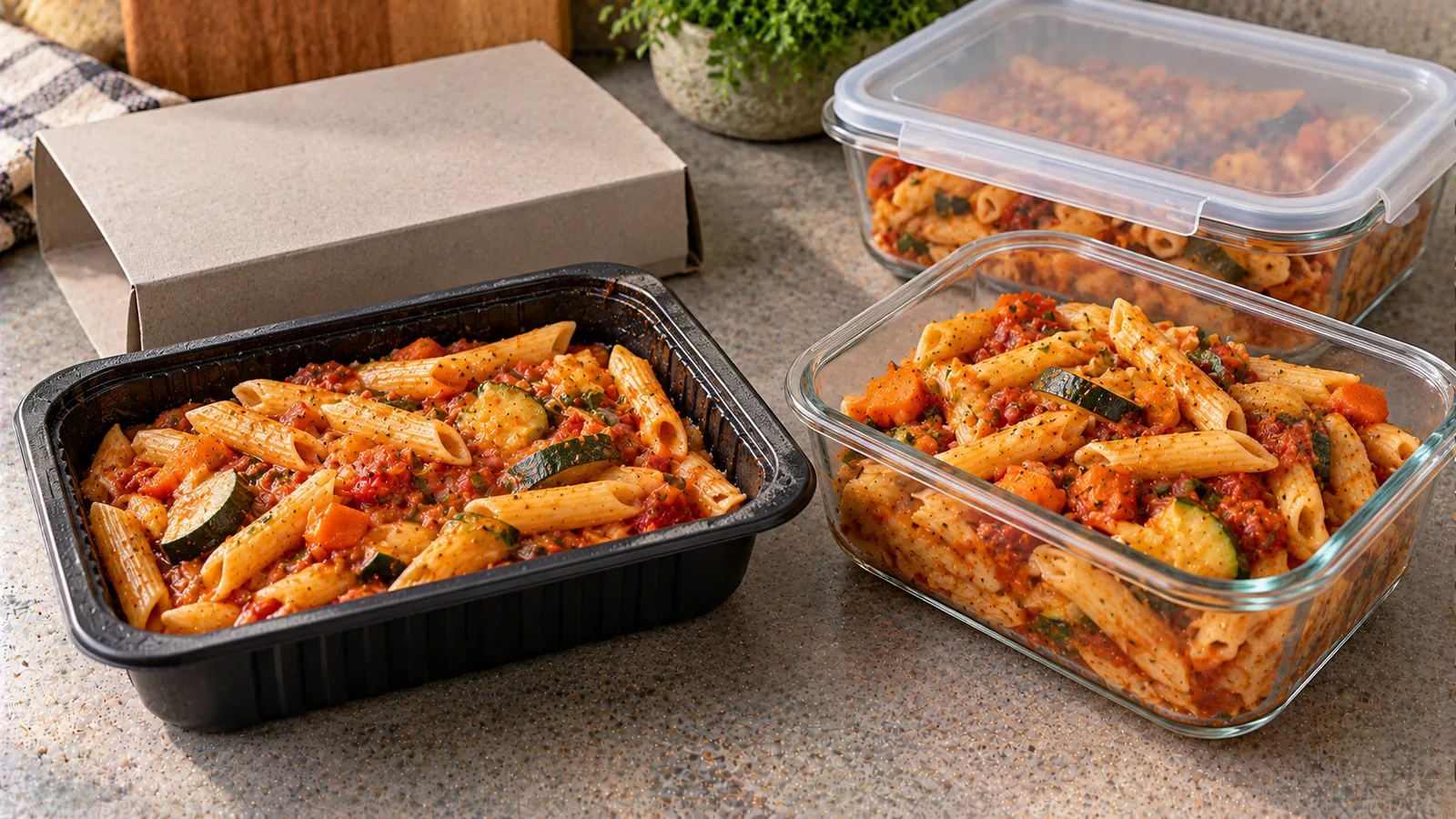
A frozen ready meal can be the economical choice for one unpredictable evening. Batch cooking can reduce the cost of several comparable dinners, but only when the food gets eaten and the preparation time suits your week. The useful comparison is not one package against a whole saucepan: it is the cost, usable portion and effort of the same number of meals. The decisive unit is an eaten portion, not a purchased package or an ingredient weight before cooking. The package label tells you the net weight, while a batch recipe should specify cooked yield. A package advertised as a complete meal may also contain a smaller or less filling portion than your usual dinner. If you add bread, vegetables or dessert to one option, price those extras on both sides where appropriate. portion guide explains the difference between a declared serving and the amount you actually eat.
Choose a genuinely comparable meal
A fair ingredient basket could be dry pasta, frozen mixed vegetables, canned beans, tomatoes, onion, a small quantity of oil and seasoning. Compare these with a frozen tomato-pasta vegetable meal and check protein, vegetables and serving weight. Ready meals vary widely: a cheese-heavy pasta bake is not a fair substitute for a bean-and-vegetable pasta. What matters is functional equivalence at dinner, not identical packaging.
Worked example: four pasta-and-vegetable dinners
The example assumes four 400 g meals with broadly similar pasta, vegetables and protein ingredients; it does not assert equivalent nutrition. The homemade ingredient basket is an illustrative €7.20, not a verified October 2026 shop receipt. Electricity is estimated rather than measured: 2.0 kWh for reheating four frozen meals and 3.0 kWh for the batch at €0.30/kWh. The €0.20 container allowance applies only to homemade storage and is not also added to packaged meals.
| Metric | Frozen meals (four) | Homemade batch (four) |
|---|---|---|
| Food or shelf price | €13.96 (€3.49 × 4) | €7.20 ingredients |
| Cooking or reheating energy | €0.60 | €0.90 |
| Packaging or containers | Included in shelf price | €0.20 allocated wear |
| Total illustrative spend | €14.56 | €8.30 |
| Cost per eaten serving | €3.64 | €2.08 |
The arithmetic is straightforward: 4 × €3.49 = €13.96; 2.0 × €0.30 = €0.60, giving €14.56 or €3.64 per ready meal. For home cooking, €7.20 + (3.0 × €0.30) + €0.20 = €8.30, or €2.075, rounded to €2.08. Across four eaten meals, the illustrative difference is €6.26. This is a worked scenario, not a claim about average German supermarket prices.
What the headline price leaves out
Shopping trips, special delivery charges and trips made only to obtain a particular dinner can alter the calculation. However, do not assign the full cost of an ordinary weekly grocery trip to four homemade meals if it serves many other purchases. Likewise, freezer electricity is a household overhead that is difficult to allocate precisely. Ingredient waste belongs in the model when it actually occurs: a half-used cream carton discarded after cooking is not free.
Counting electricity without double counting
Appliance nameplate wattage multiplied by elapsed time may overestimate electricity use because thermostats cycle on and off. A plug meter works for some small appliances, while a compatible household energy monitor can help with an electric oven or hob. Keep the boundary consistent: count batch cooking and reheating on the homemade side; count reheating or cooking the frozen ready meals on the other side. Do not count the same reheating cycle twice.
Active time versus elapsed time
Suppose preparing and portioning the homemade batch takes 35 minutes of hands-on work and 55 minutes elapsed, plus 5 minutes hands-on reheating per stored serving. Four ready meals might require 4 × 5 = 20 minutes of handling and 4 × 12 = 48 minutes of elapsed heating. For homemade food the total active time is 35 + 4 × 5 = 55 minutes, or 13.75 minutes per serving, compared with 5 minutes per ready meal. Elapsed time is not labour and should not be multiplied by an hourly wage without explaining why.
Batch cooking needs planning, chopping, cookware cleanup and portioning at the beginning, but later meals are simpler. A convenient frozen meal saves active effort, yet it might need comparable oven time to a homemade frozen portion. Separate active minutes from total elapsed minutes and avoid adding overlapping steps. If you cook while doing other things, report the time without pretending it is economically worthless or uniformly billable.
When homemade is not cheaper
Two portions eaten instead of four make the homemade cost per actually eaten meal €8.30 ÷ 2 = €4.15, above the illustrative frozen price of €3.64. If the other two are frozen and eaten later, the denominator returns to four, but any extra reheating electricity should be added if missing. A higher-cost ingredient choice, an expensive oven cycle, or buying too many vegetables can also reverse the result. Never claim batch cooking automatically saves money.
Portion size and nutrition labels
Inspect the nutrition declaration per 100 g and per package, rather than assuming a homemade dish has more protein or less salt. Compare energy, saturated fat, salt, fibre where stated, and the vegetable portion. For homemade cooking, estimate from ingredient amounts and actual cooked yield; oil, cheese and sauces are especially easy to omit. balanced meal guide provides a useful meal-composition checklist, but it does not certify either dinner as universally healthier.
Storage, cooling and reheating safely
For cooked leftovers, USDA FSIS advises prompt cooling in shallow containers, refrigeration for 3–4 days, or freezing for longer storage. Reheat leftovers thoroughly to 74°C / 165°F and follow a packaged meal’s preparation instructions, including whether it must be cooked from frozen. Do not assume a frozen dinner may safely be thawed on the counter.
Prepare clean containers before the food is done, divide a hot batch into shallow portions and chill promptly. Mark the preparation date; plan refrigerator meals first and freeze later portions early. A frozen ready meal remains subject to the instructions printed on its packaging. USDA food-safety guidance is a reference, while local packaging directions and stricter applicable recommendations take precedence.
A practical five-minute comparison
Write down the price of four comparable ready meals and the ingredient amounts needed for four homemade servings. Add actual cooking energy if available; then allocate storage containers only to the homemade option. Count how many servings you will genuinely eat, and divide costs by that number. Record active minutes separately. Do the calculation again if portion sizes differ considerably. portion guide can help you normalize the comparison.
Deciding which option fits your week
If you buy one meal, live alone or often discard cooked leftovers, the ready meal may deliver better value despite a higher shelf price. If you reliably eat four portions, enjoy making a batch, and use low-cost ingredients, homemade food can be substantially less expensive. Calculate with your own till receipts, appliance energy use and time, not these demonstration prices.
Choose frozen convenience when unpredictable schedules make leftovers risky; choose batch cooking when repetition is acceptable and storage is available. Combining both is often practical: cook twice weekly, freeze some servings, and keep one ready meal for nights that change unexpectedly. The winning approach may alternate from one week to the next, depending on offers, household size and how much food you waste.