
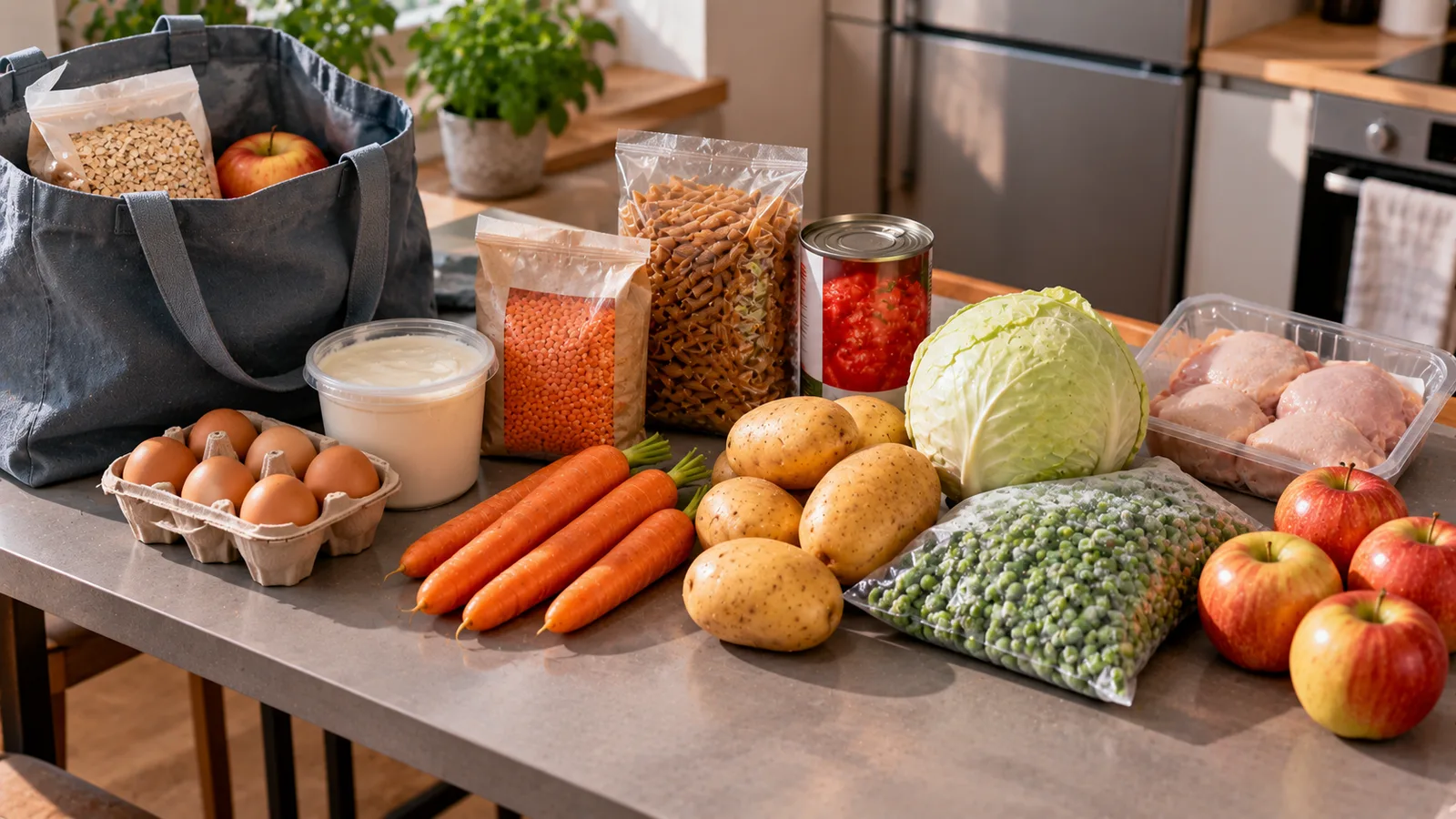
Can one adult eat for a week on about €40?
It can be possible with a carefully designed grocery basket, simple meals and deliberate use of leftovers. But €40 should be treated as a planning target, not a guaranteed current price.
Food prices vary by country, city, retailer, brand, package size, promotions and date.
This example is designed around discount-supermarket-style prices in Germany and uses approximate prices recorded for planning purposes in October 2026. Check the actual prices where you shop before relying on the total.
The plan assumes basic salt, pepper and water are already available. Everything else important to the meals is included in the basket.
The €40 grocery basket
| Food | Quantity purchased | Example price |
|---|---|---|
| Rolled oats | 500 g | €0.99 |
| Milk | 1 L | €1.09 |
| Plain yogurt | 500 g | €0.99 |
| Eggs | 10 | €2.49 |
| Wholegrain bread | 500 g | €1.49 |
| Rice | 1 kg | €1.99 |
| Pasta | 500 g | €0.99 |
| Red lentils | 500 g | €1.49 |
| Potatoes | 2 kg | €2.99 |
| Canned kidney beans | 2 × 400 g | €1.58 |
| Canned chopped tomatoes | 3 × 400 g | €1.77 |
| Frozen mixed vegetables | 1 kg | €2.19 |
| Carrots | 1 kg | €1.29 |
| Onions | 1 kg | €1.49 |
| Cabbage | about 1 kg | €1.49 |
| Bananas | about 1 kg | €1.49 |
| Apples | about 1 kg | €2.29 |
| Chicken thighs | about 1 kg | €4.49 |
| Quark | 500 g | €1.19 |
| Rapeseed oil | 500 ml | €1.79 |
| Tomato paste | 200 g | €0.89 |
Illustrative basket total: about €36.46
That leaves roughly €3.54 of the €40 target as a buffer for local price differences, another seasoning, garlic or a slightly more expensive package.
These are example planning prices, not a promise that the basket will cost exactly this amount at a particular shop.
What the basket is designed to do
The plan deliberately reuses ingredients.
Instead of buying a different set of foods for every recipe:
- oats appear in several breakfasts;
- rice is used with chicken, beans and lentils;
- potatoes support multiple dinners;
- cabbage and carrots appear in both cooked meals and simple salads;
- frozen vegetables provide flexible portions;
- tomatoes, onions and tomato paste form the base of several dishes;
- chicken is cooked once and reused;
- lentils and beans provide inexpensive alternatives to meat.
The goal is not maximum recipe variety. It is enough variety without buying ingredients that are used only once.
Seven-day overview
| Day | Breakfast | Lunch | Dinner |
|---|---|---|---|
| 1 | Banana oatmeal | Lentil-tomato soup + bread | Chicken, potatoes & vegetables |
| 2 | Yogurt oats + apple | Leftover chicken rice bowl | Bean-tomato pasta |
| 3 | Eggs on toast + banana | Lentil rice bowl | Potato, cabbage & egg skillet |
| 4 | Apple oatmeal | Bean and rice bowl | Chicken vegetable rice |
| 5 | Yogurt, oats & banana | Lentil soup + bread | Tomato lentil pasta |
| 6 | Eggs on toast + apple | Potato and bean bowl | Vegetable egg fried rice |
| 7 | Banana oatmeal | Leftover lentil rice | Potato, chicken & cabbage skillet |
Fruit or remaining yogurt can be used as snacks according to appetite and personal energy needs.
This is an example meal structure, not an individualized calorie prescription.
Day 1
Breakfast: banana oatmeal
Use:
- 60 g oats;
- 250 ml milk;
- 1 banana.
Cook the oats with milk and slice the banana over the top.
If you prefer a thinner consistency, add water rather than using more milk.
Lunch: lentil-tomato soup
Make multiple portions at once.
Use approximately:
- 150 g dry red lentils;
- 1 onion;
- 2 carrots;
- 1 can chopped tomatoes;
- 1 tablespoon oil;
- water;
- salt and pepper.
Chop the onion and carrots.
Cook them briefly in oil, add lentils, tomatoes and enough water for a thick soup.
Simmer until the lentils and vegetables are tender.
Eat one portion with approximately 2 slices of bread.
Refrigerate the remaining portions promptly for later meals.
Dinner: chicken, potatoes and vegetables
Use approximately:
- 250 g chicken thighs;
- 300 g potatoes;
- 150 g frozen vegetables;
- 1/2 onion;
- 1 teaspoon oil.
Roast or pan-cook the chicken thoroughly.
Cook or roast the potatoes and heat the vegetables.
Cook poultry to a safe internal temperature and avoid cross-contamination between raw chicken and ready-to-eat foods.
Cook additional chicken now for later meals if you can cool and refrigerate it safely.
Day 2
Breakfast: yogurt oats with apple
Use:
- 50 g oats;
- 150 g plain yogurt;
- 1 apple.
Mix the oats and yogurt. Add chopped apple.
A little water or milk can loosen the mixture if needed.
Lunch: leftover chicken rice bowl
Use:
- about 150 g cooked chicken;
- 75 g dry rice;
- 150 g frozen vegetables;
- some onion.
Cook the rice.
Heat the chicken and vegetables thoroughly and serve them over the rice.
Using yesterday's cooked chicken saves both preparation time and energy.
Dinner: bean-tomato pasta
Use:
- 100 g dry pasta;
- about 1/2 can kidney beans, drained;
- 1/2 can chopped tomatoes;
- 1/2 onion;
- 1 carrot;
- 1 teaspoon tomato paste;
- 1 teaspoon oil.
Cook the pasta.
Cook onion and grated or finely chopped carrot in oil.
Add tomato paste, tomatoes and beans.
Simmer briefly and combine with the pasta.
Store the remaining beans safely for the next planned meal.
Day 3
Breakfast: eggs on toast
Use:
- 2 eggs;
- 2 slices wholegrain bread;
- 1 banana.
Cook the eggs as preferred and serve with toast.
Lunch: lentil rice bowl
Use:
- 75 g dry rice;
- about 60 g dry red lentils;
- 150 g frozen vegetables;
- onion;
- 1 teaspoon oil.
Cook the rice and lentils.
Heat the vegetables with onion and combine everything in a bowl.
Season from your basic pantry.
Dinner: potato, cabbage and egg skillet
Use:
- 350 g potatoes;
- about 200 g cabbage;
- 1 carrot;
- 2 eggs;
- 1/2 onion;
- 1 teaspoon oil.
Cook the potatoes until nearly tender.
Slice the cabbage, carrot and onion thinly.
Cook the vegetables in a large pan, add potatoes and finish with the eggs.
This meal turns inexpensive vegetables into a substantial one-pan dinner.
Day 4
Breakfast: apple oatmeal
Use:
- 60 g oats;
- 200 ml milk;
- 1 apple.
Cook the oats and milk.
Add diced or grated apple near the end.
Lunch: bean and rice bowl
Use:
- 75 g dry rice;
- remaining beans from the opened can plus more if needed;
- 150 g frozen vegetables;
- 1/2 can chopped tomatoes;
- onion.
Cook the rice.
Heat the beans, vegetables, tomatoes and onion together and serve over rice.
Dinner: chicken vegetable rice
Use:
- about 200–250 g chicken;
- 75 g dry rice;
- 200 g frozen vegetables;
- 1/2 onion;
- 1 teaspoon oil.
Cook the chicken thoroughly.
Cook the rice separately or prepare everything as a simple rice skillet if you can do so safely.
This meal uses another portion of the chicken pack without requiring a separate set of ingredients.
Day 5
Breakfast: yogurt, oats and banana
Use:
- 50 g oats;
- 150 g yogurt;
- 1 banana.
Combine and serve.
Lunch: lentil soup and bread
Use one of the previously prepared lentil soup portions.
Serve with bread.
If the soup has thickened in the refrigerator, add a little water while reheating.
Dinner: tomato lentil pasta
Use:
- 100 g pasta;
- 70 g dry red lentils;
- 1/2 can chopped tomatoes;
- 1/2 onion;
- 1 carrot;
- 1 teaspoon tomato paste;
- 1 teaspoon oil.
Cook the lentils until tender.
Prepare onion and carrot in oil, add tomatoes and tomato paste, then mix in the lentils.
Serve with pasta.
Lentils give the sauce more substance without requiring another meat purchase.
Day 6
Breakfast: eggs on toast with apple
Use:
- 2 eggs;
- 2 slices bread;
- 1 apple.
Lunch: potato and bean bowl
Use:
- 300 g potatoes;
- about 1/2 can kidney beans;
- 150 g cabbage;
- 1 carrot;
- 1 teaspoon oil.
Cook the potatoes.
Cook or lightly sauté the cabbage and carrot.
Add the drained beans and combine.
Dinner: vegetable egg fried rice
Use:
- 80 g dry rice;
- 200 g frozen vegetables;
- 2 eggs;
- onion;
- 1 teaspoon oil.
For food safety, if using previously cooked rice, cool it promptly after cooking, refrigerate it and reheat it thoroughly. Otherwise, cook fresh rice for the meal.
Heat the vegetables, add rice and finish with eggs.
Day 7
Breakfast: banana oatmeal
Use:
- 60 g oats;
- remaining milk as available;
- 1 banana.
Water can replace part of the milk if needed.
Lunch: leftover lentil rice
Use remaining cooked lentils or prepare approximately:
- 60 g dry lentils;
- 75 g dry rice;
- frozen vegetables;
- onion.
Combine into a simple bowl.
Dinner: potato, chicken and cabbage skillet
Use:
- remaining chicken;
- 300–400 g potatoes;
- 200 g cabbage;
- onion;
- carrot if available;
- 1 teaspoon oil.
Cook the chicken thoroughly if starting raw.
Cook potatoes and vegetables, then combine.
This final dinner is deliberately flexible so the remaining perishable ingredients can be used instead of opening unnecessary new products.
Where does the quark fit?
The 500 g quark provides flexible additional food across the week.
Use it as:
- a snack with chopped apple or banana;
- a breakfast alternative;
- a simple spread for bread;
- an addition to potatoes.
For example, 150–200 g quark with fruit can provide a more substantial snack on a day when the planned meals are not enough for your appetite or energy needs.
The plan does not force every gram into a fixed meal because individual requirements differ.
Approximate quantities used during the week
The exact amount depends on portion choices, but the plan is structured around roughly:
| Ingredient | Planned weekly use |
|---|---|
| Oats | 280–350 g |
| Rice, dry | 450–550 g |
| Pasta, dry | about 200 g |
| Red lentils, dry | about 350–450 g |
| Potatoes | about 1.6–2 kg |
| Chicken | about 1 kg |
| Eggs | 8–10 |
| Frozen vegetables | about 900–1,000 g |
| Kidney beans | 2 cans |
| Chopped tomatoes | about 3 cans |
| Carrots | most of 1 kg |
| Cabbage | about 1 kg |
| Onions | used throughout |
| Bread | about 500 g |
| Fruit | distributed across breakfasts and snacks |
Some dry rice, oats, lentils or oil may remain after the week.
That is not wasted money. Shelf-stable leftovers can reduce the cost of the following week.
Why the plan does not spend exactly €40
A budget meal plan should not deliberately add unnecessary food just to make the total equal the budget.
If the basket costs approximately €36.46, the remaining €3.54 is useful.
It provides protection against:
- regional price differences;
- a larger required package;
- temporary price increases;
- missing pantry ingredients;
- an additional piece of fruit or seasoning.
A budget ceiling is more useful than a target that must be spent completely.
How to adjust if your basket costs more than €40
If your local total exceeds the target, adjust the highest-impact items first.
1. Compare chicken prices
Chicken is one of the larger costs in the basket.
If the planned pack is expensive, consider a smaller pack and use more lentils, beans or eggs.
2. Use the cheapest suitable fruit
The plan does not depend specifically on apples and bananas.
Choose affordable fruit available where you shop.
3. Compare fresh and frozen vegetables
Use whichever gives you a useful quantity at the better current price.
4. Choose store brands
Basic oats, rice, pasta, canned tomatoes and legumes often have lower-priced store-brand options.
Compare unit prices and ingredients rather than assuming every store brand is cheapest.
5. Do not buy duplicate pantry items
If you already have oil, tomato paste, rice or oats, your weekly cash outlay can be lower.
If you already have cooking oil
Oil is included in the €40 basket because a realistic first-week grocery plan should not silently assume that every ingredient is already available.
But 500 ml will not be consumed in one week.
If oil is already in your kitchen, that money can instead be used for:
- extra fruit;
- another yogurt;
- more eggs;
- additional vegetables;
- a larger protein portion.
Batch cooking reduces repeated work
The plan becomes easier if you prepare several components together.
For example, on Day 1 you can:
- cook several portions of lentil soup;
- cook extra chicken;
- chop some cabbage and carrots;
- portion frozen vegetables mentally or into containers.
Later meals then require less work.
However, cooked foods should be cooled, refrigerated and reheated according to food-safety guidance.
A €40 plan is not a universal calorie plan
One adult may need considerably more or less food than another.
Energy requirements vary with factors such as:
- body size;
- age;
- sex;
- activity;
- goals;
- health circumstances.
Therefore, this plan should not be interpreted as a fixed calorie prescription.
If the portions are too small for your needs, increase quantities using the remaining staples or raise the grocery budget.
If they are too large, reduce portions and carry safe leftovers into later meals.
The cheapest week is not necessarily the best week
Budget planning should still produce meals you are willing to eat.
Buying a large quantity of a cheap food that you dislike can lead to waste.
A useful low-cost plan balances:
- price;
- nutrition;
- convenience;
- storage;
- personal preference;
- realistic portions.
How to reuse this system next week
You do not need to repeat these exact meals.
Use the same framework:
- choose two or three inexpensive staple carbohydrates;
- choose several affordable protein sources;
- buy vegetables that can appear in multiple dishes;
- add fruit you will actually eat;
- choose two or three flavor bases;
- design meals around overlapping ingredients;
- calculate the basket before shopping;
- leave a small price buffer.
This creates a budget meal plan without forcing every week to look identical.
Final shopping checklist
Before paying, confirm that you have:
Staples
- oats;
- rice;
- pasta;
- potatoes;
- bread.
Protein foods
- chicken;
- eggs;
- lentils;
- kidney beans;
- quark;
- yogurt.
Vegetables
- frozen mixed vegetables;
- carrots;
- onions;
- cabbage;
- canned tomatoes.
Fruit
- bananas;
- apples.
Cooking basics
- oil;
- tomato paste;
- any required seasoning not already at home.
The practical takeaway
A €40 weekly food target is most realistic when you do not treat every meal as a separate shopping project.
The important techniques are:
- reuse ingredients;
- cook several portions at once;
- use inexpensive legumes alongside animal protein;
- choose flexible vegetables;
- control food waste;
- compare actual prices;
- leave room for price variation.
The example basket comes to approximately €36.46 using the illustrative October 2026 prices above, leaving a small buffer below €40.
Your real basket may cost more or less.
Use the quantities and meal structure as a template, then recalculate the basket using the current prices in the store where you actually shop.
Sources
- Destatis, German consumer price statistics for food and non-alcoholic beverages.
- Bundeszentrum für Ernährung (BZfE), guidance on balanced eating, food planning and food handling.
- Deutsche Gesellschaft für Ernährung (DGE), food-based dietary guidance.
- USDA FoodData Central, reference food composition data.
- Bundesinstitut für Risikobewertung (BfR), consumer guidance on safe food handling and storage.