
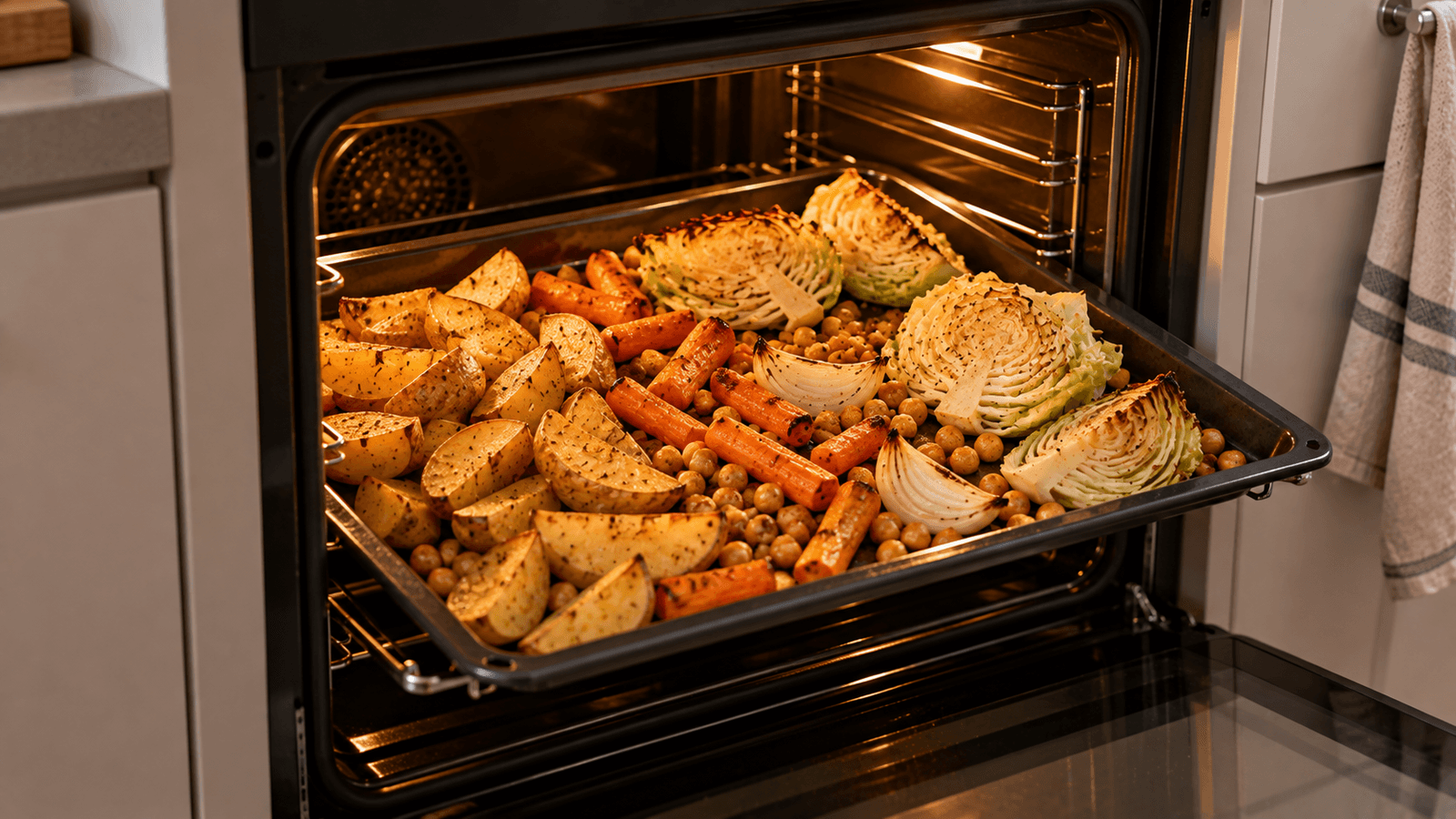
A cheap healthy dinner does not require a long list of special ingredients.
Some of the most useful budget meals are built from ordinary staples that can appear in several dinners during the same week:
- potatoes
- rice
- pasta
- lentils
- beans
- eggs
- canned tomatoes
- frozen vegetables
- seasonal vegetables
- affordable protein sources
The goal is not to find the cheapest possible food.
It is to build satisfying dinners while getting useful meals from the groceries you already buy.
Here are 20 flexible ideas.
20 cheap healthy dinner ideas
| Dinner | Main budget ingredients | Why it works |
|---|---|---|
| 1. Lentil tomato pasta | Pasta, lentils, canned tomatoes | Lentils extend the sauce and add protein and fiber |
| 2. Potato and egg skillet | Potatoes, eggs, onions, vegetables | Uses inexpensive staples in one pan |
| 3. Chickpea vegetable curry | Chickpeas, vegetables, rice | Easy to adapt to seasonal or frozen vegetables |
| 4. Bean chili with rice | Beans, tomatoes, rice | Pantry-based and suitable for batch cooking |
| 5. Lentil potato soup | Lentils, potatoes, carrots | Low-cost ingredients create a substantial meal |
| 6. Egg fried rice | Rice, eggs, frozen vegetables | Useful for cooked leftover rice |
| 7. Bean tomato pasta | Pasta, beans, tomatoes | Simple pantry dinner with few ingredients |
| 8. Baked potatoes with cottage cheese | Potatoes, cottage cheese, vegetables | Minimal preparation with a clear protein component |
| 9. Chickpea couscous bowl | Couscous, chickpeas, vegetables | Fast and flexible |
| 10. Vegetable omelet with bread | Eggs, vegetables, bread | Good for using small amounts of vegetables |
| 11. Lentil bolognese | Lentils, tomatoes, pasta | A meat-free sauce that freezes well |
| 12. Chicken cabbage rice bowl | Chicken, cabbage, rice | Cabbage adds inexpensive volume |
| 13. Bean and potato stew | Beans, potatoes, tomatoes | Built almost entirely from inexpensive staples |
| 14. Tuna tomato pasta | Pasta, canned tuna, tomatoes | Shelf-stable protein with a familiar base |
| 15. Red lentil curry | Red lentils, tomatoes, rice | Quick-cooking legumes reduce preparation time |
| 16. Vegetable frittata with potatoes | Eggs, potatoes, leftover vegetables | Turns small leftovers into a complete dinner |
| 17. Chickpea tomato stew | Chickpeas, tomatoes, carrots | Simple pantry meal that scales easily |
| 18. Leftover grain bowl | Cooked grain, protein, vegetables | Uses food already prepared |
| 19. Bean quesadilla or wrap | Beans, wraps, cheese, vegetables | Flexible and quick to assemble |
| 20. Freezer vegetable soup with eggs and bread | Frozen vegetables, eggs, bread | Useful when fresh groceries are running low |
These are meal frameworks rather than strict recipes.
That is intentional: budget dinners work best when ingredients can be replaced according to what is inexpensive and already available.
1. Lentil tomato pasta
Cook pasta and make a simple sauce from canned tomatoes, onions and lentils.
If you already use minced meat in pasta sauce, lentils can also replace part of the meat rather than all of it.
Add whatever vegetables are practical:
- carrots
- courgette
- spinach
- mushrooms
- frozen mixed vegetables
This meal works particularly well for batch cooking because the sauce can be made in a larger quantity.
2. Potato and egg skillet
Potatoes and eggs are useful ingredients when you want a dinner built from a short shopping list.
Cook diced potatoes with onion and available vegetables, then add eggs.
The vegetables can change with the season.
For example:
- cabbage
- peppers
- spinach
- tomatoes
- mushrooms
You do not need to buy vegetables specifically for this dish if something suitable is already in the refrigerator.
3. Chickpea vegetable curry
A basic version can use:
- chickpeas
- canned tomatoes
- onion
- curry spices
- vegetables
- rice
Frozen vegetables work well when fresh produce is expensive or likely to spoil before you use it.
If rice is already cooked, the meal becomes particularly quick.
4. Bean chili with rice
Beans, canned tomatoes, onion and spices create a flexible base.
Use one type of bean or combine several.
You can add:
- corn
- carrots
- peppers
- frozen vegetables
Cook a larger batch and use another portion for lunch or freeze it.
The value of batch cooking is not only lower effort later. It can also reduce the chance that partially used ingredients are forgotten.
5. Lentil potato soup
A basic soup can combine:
- lentils
- potatoes
- carrots
- onions
- stock or seasoning
- optional leafy vegetables
Soup is particularly useful for budget cooking because the recipe can absorb vegetables that need to be used soon.
Serve with bread if you want a larger meal.
6. Egg fried rice
Cooked rice from a previous meal can become dinner with:
- eggs
- frozen peas or mixed vegetables
- onion
- a small amount of cooking oil
- seasonings
When using cooked leftovers, cool and store them appropriately and reheat them thoroughly.
The important budget principle is simple: an ingredient already cooked for one meal can sometimes become the base of another instead of being discarded.
7. Bean tomato pasta
This is one of the simplest pantry combinations:
pasta + canned beans + tomato sauce
Add herbs, garlic, onions or vegetables depending on what you have.
Beans make it possible to create a more substantial pasta meal without relying on a large amount of meat.
8. Baked potatoes with cottage cheese
Potatoes can be paired with cottage cheese and vegetables for a simple dinner.
Possible additions include:
- cucumber
- tomatoes
- cabbage salad
- frozen vegetables
- herbs
If cottage cheese is expensive where you shop, use another protein source that fits your budget.
Budget cooking should adapt to local prices rather than treating one ingredient as universally cheap.
9. Chickpea couscous bowl
Couscous is useful on evenings when cooking time is limited.
Combine it with:
- chickpeas
- vegetables
- herbs or spices
- a simple dressing
Frozen vegetables, leftover roasted vegetables or raw vegetables can all work.
10. Vegetable omelet with bread
An omelet can turn small amounts of vegetables into a usable dinner.
For example, use:
- half an onion
- one remaining pepper
- a handful of spinach
- mushrooms
- tomatoes
Serve with bread or potatoes when you want a larger meal.
This is a useful "end of the week" dinner because the ingredients do not need to match a rigid recipe.
11. Lentil bolognese
Use lentils as the base of a tomato pasta sauce.
A simple version needs:
- lentils
- canned tomatoes
- onion
- carrots
- herbs
- pasta
Make extra sauce and freeze individual portions.
The next dinner then requires only reheating the sauce and cooking pasta.
12. Chicken cabbage rice bowl
When chicken fits your budget, combine a moderate portion with inexpensive ingredients that provide the rest of the meal.
For example:
- rice
- cabbage
- carrots
- chicken
- simple sauce
Cabbage is useful because it can work raw, sautéed or cooked and often keeps longer than more delicate vegetables.
Compare the unit price of different chicken cuts rather than assuming one package is always cheaper.
13. Bean and potato stew
Combine potatoes, beans and tomatoes with onion and seasonings.
The ingredients are inexpensive in many markets and can be kept on hand for other meals.
You can change the flavor profile without changing the basic ingredients by using different herbs and spices.
14. Tuna tomato pasta
Canned tuna can provide a convenient shelf-stable protein source.
Combine:
- pasta
- tuna
- tomatoes
- onion
- optional vegetables
Compare tuna with other protein sources at your local store. It is useful when the price fits your budget, but it does not need to be the default budget protein.
15. Red lentil curry
Red lentils cook relatively quickly and break down into a thick sauce.
A simple dinner can use:
- red lentils
- tomatoes
- onion
- spices
- rice
Add spinach, carrots, cauliflower or frozen vegetables when available.
16. Vegetable frittata with potatoes
A frittata is useful when the refrigerator contains several small leftovers that are not enough for separate meals.
Combine eggs with cooked potatoes and vegetables.
For example:
- leftover broccoli
- roasted peppers
- spinach
- onions
- mushrooms
This is less about following a recipe and more about giving existing ingredients another use.
17. Chickpea tomato stew
Cook chickpeas with canned tomatoes, onions and vegetables.
Serve it with:
- bread
- rice
- couscous
- potatoes
Changing the carbohydrate lets you use whichever staple is already open or currently cheaper.
18. Leftover grain bowl
A grain bowl can be a deliberate leftover strategy rather than a special recipe.
Start with cooked:
- rice
- couscous
- bulgur
- another grain you normally buy
Add a protein source and vegetables.
Finish with a simple sauce or seasoning.
See How to Plan Meals With Leftovers.
19. Bean quesadilla or wrap
Fill a wrap with beans, vegetables and a modest amount of cheese.
If wraps are expensive, the same filling can be served with rice, potatoes or bread.
The filling is the useful meal idea; the exact format can change according to price.
20. Freezer vegetable soup with eggs and bread
When fresh groceries are nearly gone, frozen vegetables can become a quick soup.
Add eggs separately or into the soup, depending on the recipe, and serve with bread.
This type of dinner is useful as a backup because several ingredients can remain available for relatively long periods.
A simple formula for a cheap healthy dinner
Instead of planning every dinner as a unique recipe, build meals from four parts.
| Part | Budget-friendly examples |
|---|---|
| Protein | Eggs, beans, lentils, chickpeas, tofu, canned fish, yogurt/cottage cheese, appropriately priced meat |
| Carbohydrate | Potatoes, rice, pasta, oats, bread, couscous |
| Vegetables or fruit | Seasonal produce, cabbage, carrots, onions, frozen vegetables |
| Flavor | Tomato sauce, herbs, spices, yogurt sauce, small amount of cheese, dressing |
You do not need every dinner to fit this structure perfectly.
It is simply a useful starting point when deciding what to buy and cook.
Reuse ingredients across several dinners
Budget meal planning becomes easier when one ingredient has several jobs.
Suppose you buy:
- potatoes
- eggs
- lentils
- canned tomatoes
- carrots
- onions
- cabbage
- rice
- frozen vegetables
- bread
Those ingredients can produce several different dinners:
Dinner 1
Lentil potato soup.
Dinner 2
Egg and potato skillet with cabbage.
Dinner 3
Lentil tomato curry with rice.
Dinner 4
Egg fried rice with frozen vegetables.
Dinner 5
Bean or lentil stew with bread.
The meals are different, but the shopping list remains compact.
Compare cost per usable amount, not just package price
The cheapest-looking package is not always the cheapest choice.
When comparing products, consider:
- package weight
- price per kilogram or 100 g
- edible amount
- whether part of it is likely to be wasted
- number of meals you can realistically make from it
A large package is not a saving if part of it regularly spoils.
Likewise, a slightly more expensive frozen vegetable may be economical if you use the entire bag over several meals.
Use frozen and canned foods strategically
Budget meals do not need to rely entirely on fresh ingredients.
Frozen vegetables can be useful because you can take only the amount needed.
Canned foods such as:
- beans
- lentils
- tomatoes
- fish
can make quick meals possible without an additional grocery trip.
Compare unit prices because fresh, frozen and canned versions do not have the same relative price everywhere.
Make one dinner create another meal
When a recipe stores well, intentionally cook extra.
For example:
Monday
Make a large lentil tomato sauce.
Tuesday lunch
Use one portion with pasta.
Thursday dinner
Use another portion over potatoes or rice.
Freezer
Store one portion for a busy day.
This is different from eating the exact same dinner every night.
The prepared component is reused while the meal around it changes.
Keep one low-effort dinner available
A weekly dinner plan becomes fragile when every meal requires fresh ingredients and 30–45 minutes of cooking.
Keep at least one dinner that can be made from long-life ingredients.
For example:
- pasta + beans + tomatoes
- eggs + frozen vegetables + bread
- lentil soup + toast
- couscous + chickpeas + frozen vegetables
This can prevent an unexpected late day from turning into an unplanned grocery trip or expensive convenience purchase.
See How to Build a Backup Meal List for Busy Days.
Example five-dinner shopping strategy
Instead of buying ingredients for five unrelated recipes, choose overlapping ingredients.
Core groceries
- potatoes
- rice
- pasta
- eggs
- lentils
- beans
- canned tomatoes
- onions
- carrots
- cabbage
- frozen vegetables
- one additional protein source
- bread
Five dinners
| Day | Dinner |
|---|---|
| Monday | Lentil tomato pasta |
| Tuesday | Potato and egg skillet with cabbage |
| Wednesday | Bean chili with rice |
| Thursday | Vegetable omelet with bread |
| Friday | Potato, bean and tomato stew |
This is only an example.
The important principle is ingredient overlap.
The fewer one-purpose ingredients you buy, the easier it becomes to use what you paid for.
Cheap does not mean the same ingredients everywhere
Food prices vary by:
- country
- season
- supermarket
- promotions
- package size
- whether a product is fresh, frozen or canned
That is why a useful budget meal system should be flexible.
If chicken is expensive this week, use another protein.
If fresh peppers are expensive, use carrots, cabbage or frozen vegetables.
If rice has a better unit price than another grain, adjust the meal.
A budget recipe should survive substitutions.
Start with the food you already have
Before planning dinner, check:
- What needs to be used soon?
- What protein sources are already available?
- Which carbohydrate staples are open?
- What is in the freezer?
- Which ingredients can appear in more than one meal?
Then buy only what is needed to connect those ingredients into meals.
This is often more useful than choosing several recipes first and buying a separate list for each one.
Cheap healthy dinners are not primarily about finding one exceptionally inexpensive recipe.
They come from a repeatable system: flexible staples, ingredient overlap, realistic portions and less wasted food.