
The comparison method
Protein powder is not essential to make a filling breakfast. These five practical combinations use ordinary shop ingredients and simple cooking methods. Each makes one adult breakfast serving, not a universal protein target. The grams below refer to the listed form of the ingredient: oats are dry, pulses are drained and cooked, bread is ready to eat, and dairy refers to the edible product as purchased. Read labels, especially for quark, skyr, cottage cheese and tofu, because their protein content varies.
The modeled protein values use transparent approximate amounts per 100 g: egg 6.3 g per large egg, low-fat quark 12 g, wholegrain bread 9 g, plain skyr 11 g, dry oats 13 g, seeds 20 g, firm tofu 14 g, pepper 1 g, cooked beans 7 g, cottage cheese 12 g, plain strained yogurt 9 g and peanuts 26 g. These are illustrative calculation factors, not certified measurements of any specific brand. Check the ingredient state and the label before logging the meal. USDA FoodData Central is a reference for standard food composition and its records distinguish ingredient forms.
Five measured breakfasts
Each recipe serves one. Values below are rounded illustrative models and prices are not live offers.
| Breakfast | Protein per serving | Ingredient-use cost | Time |
|---|---|---|---|
| Egg, quark and toast plate | 34.2 g | €1.55 | 10 min |
| Skyr oats with seeds | 32.5 g | €1.65 | 10 min |
| Tofu-and-pepper breakfast scramble | 33.4 g | €1.98 | 15 min |
| White-bean and cottage-cheese toast | 32.1 g | €1.67 | 10 min |
| Greek-style yogurt, peanuts and oats | 35.5 g | €1.85 | 10 min |
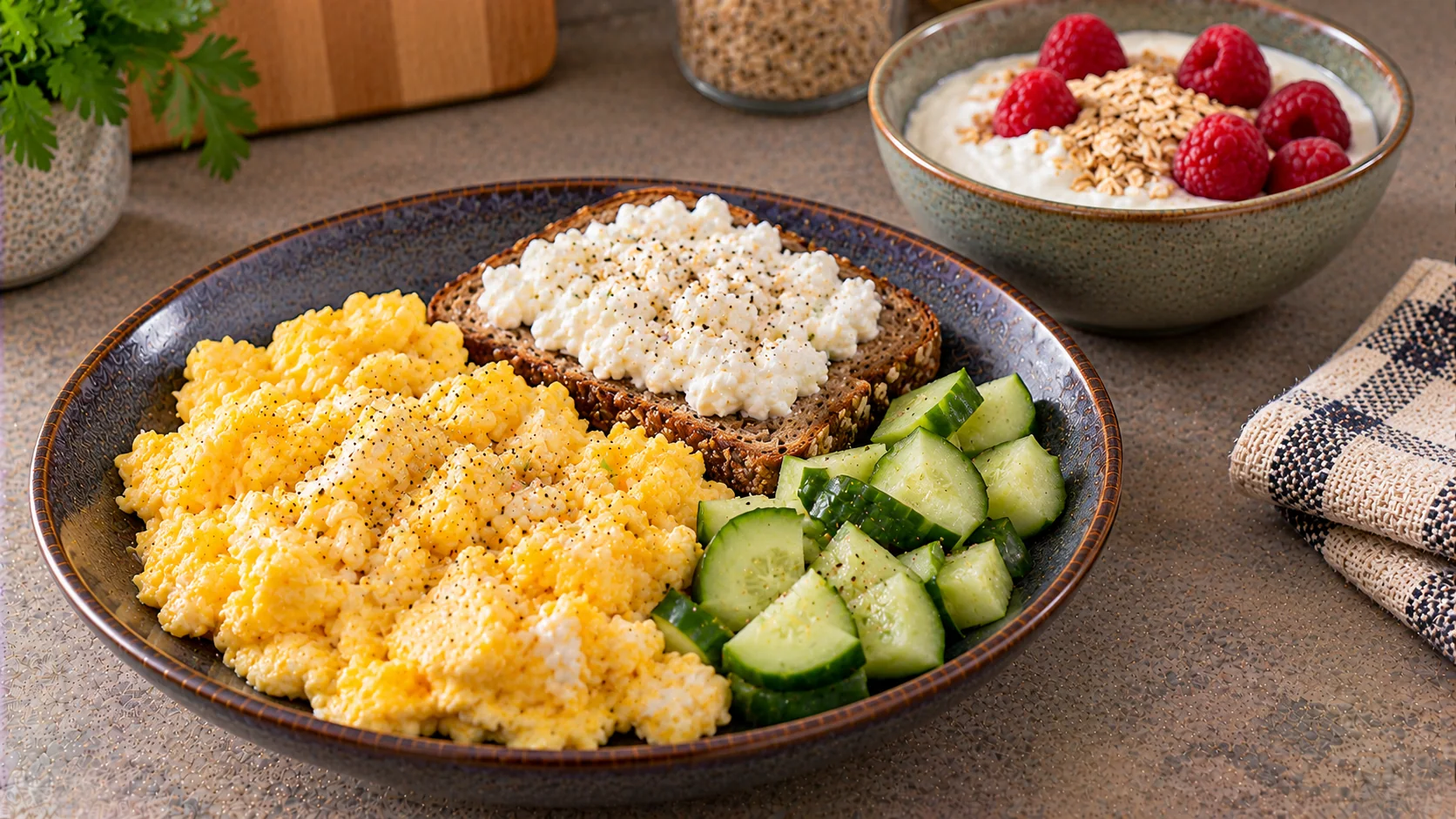
1. Egg, quark and toast plate
Ingredients (1 serving): 2 large eggs; 120 g low-fat quark; 80 g wholegrain bread.
Method: Boil or scramble two eggs until set. Spread the quark on the wholegrain toast; serve the eggs alongside. Season with black pepper and chopped herbs. Budget variation: replace quark with a comparable plain cultured dairy product, then recalculate protein from its label.
Calculated protein: 34.2 g. Illustrative ingredient cost: €1.55.
2. Skyr oats with seeds
Ingredients (1 serving): 200 g plain skyr; 50 g dry oats; 20 g seeds.
Method: Stir the dry oats into the skyr and leave for 10 minutes to soften, or prepare overnight and refrigerate. Scatter seeds over the bowl before eating. Add water for a thinner texture; do not count added water as extra nutrients.
Calculated protein: 32.5 g. Illustrative ingredient cost: €1.65.
3. Tofu-and-pepper breakfast scramble
Ingredients (1 serving): 180 g firm tofu; 100 g bell pepper; 80 g wholegrain bread.
Method: Pat the tofu dry and crumble it into a nonstick skillet with diced pepper. Cook for about 8–10 minutes until piping hot, stirring often. Serve with toasted wholegrain bread; optional oil must be added to the nutrition calculation.
Calculated protein: 33.4 g. Illustrative ingredient cost: €1.98.
4. White-bean and cottage-cheese toast
Ingredients (1 serving): 150 g cooked drained white beans; 150 g cottage cheese; 40 g wholegrain bread.
Method: Rinse and drain cooked white beans. Warm them in a small pan with a splash of water until hot. Spoon the cottage cheese over toast and add warm beans with pepper. Keep cold dairy refrigerated until serving.
Calculated protein: 32.1 g. Illustrative ingredient cost: €1.67.
5. Greek-style yogurt, peanuts and oats
Ingredients (1 serving): 250 g plain strained yogurt; 30 g unsalted peanuts; 40 g dry oats.
Method: Combine the plain strained yogurt with the oats; let soften for 10 minutes. Top with chopped unsalted peanuts. Check whether your yogurt is truly high in protein: regular plain yogurt can contain substantially less than the modeled strained version.
Calculated protein: 35.5 g. Illustrative ingredient cost: €1.85.
Cost per portion, not a shopping-basket promise
The illustrative ingredient-use costs below are not verified current supermarket prices. For example, a €0.50 egg pair, €0.70 of quark and €0.35 of bread add to €1.55. The price of an entire carton or bag may be higher than the ingredients actually used. Include unused portions, packaging and waste separately when planning the cash you need at checkout. A cheaper item per kilogram is not necessarily cheaper per gram of protein.
Protein targets and meal balance
The EFSA adult population reference intake is 0.83 g protein per kilogram body mass per day. This does not mean a fixed number of grams must come from breakfast, and high-protein breakfasts are not required for everyone. Pair these meals with fruit or vegetables and adjust energy to your total-day needs. Salt, saturated fat and added sugar may differ widely between packaged dairy and breads.
Food safety and storage
Keep dairy refrigerated and follow product use-by instructions. Cook eggs thoroughly when serving people vulnerable to foodborne disease; heat tofu and cooked beans adequately. Cool any cooked leftovers promptly and refrigerate rather than leaving them at room temperature. Overnight oats containing dairy need covered refrigeration. Prepare toast close to eating to avoid sogginess. For food-handling fundamentals see USDA FSIS.
How to swap ingredients without losing the calculation
A 150 g serving of a food with 12 g protein/100 g supplies 18 g protein; replacing it with a product that has 7 g/100 g supplies only 10.5 g. Recompute with serving grams × label protein per 100 g ÷ 100. For an inexpensive vegetarian variation, switch one dairy breakfast to tofu or beans, but check that it still fits your preferred flavor and cooking time. If you want a wider view of affordable protein meals, see affordable meal planning. For broader budget meal composition, see .