
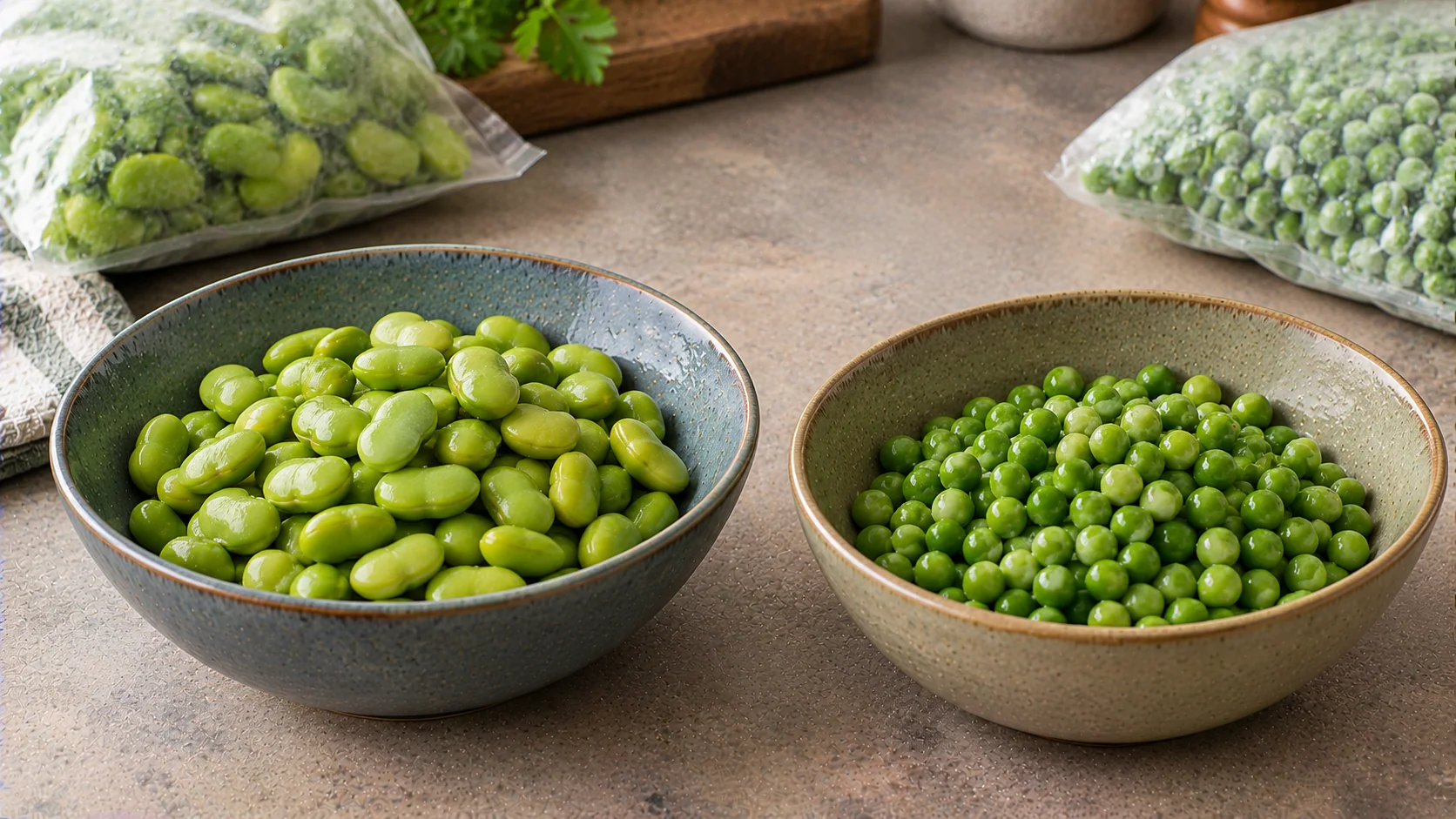
Frozen Edamame vs Frozen Peas: Protein and Portion Cost
Frozen green peas and frozen edamame both make quick additions to a grain bowl, salad or vegetable side, but they are not interchangeable in protein or price. Edamame are immature soybeans; green peas belong to a different legume crop. Compare 100 g of cooked edible beans or peas, not 100 g of an edamame bag that includes discarded pods. Frozen products can also be salted, seasoned or sold with sauces, which changes the result.
The useful 100 g comparison
The reference below uses USDA FoodData Central figures for edamame, frozen, prepared and green peas, cooked, boiled, drained, without salt. These are database references, not a laboratory test of whichever frozen pack is on your supermarket shelf.
| Per 100 g edible, cooked | Edamame, shelled | Green peas |
|---|---|---|
| Energy | 121 kcal | 84 kcal |
| Protein | 11.9 g | 5.4 g |
| Fibre | 5.2 g | 5.5 g |
| Fat | 5.2 g | 0.2 g |
| Carbohydrate | 8.9 g | 15.6 g |
The protein difference is about 6.5 g per 100 g. However, the similar reference fibre figures mean that choosing edamame does not automatically give you more fibre. Differences in water uptake, variety and brand can alter the numbers. See USDA FoodData Central for the relevant preparation entries. Do not use dry mature soybean nutrition as a substitute for young edamame.
Why pods change the comparison
Many frozen edamame packs contain whole pods, which are generally not eaten. If a €2.40 bag weighs 400 g including pods, charging a 100 g edible portion at €0.60 would be misleading. Weigh the shelled beans after cooking or estimate the usable yield by checking an actual bag. By contrast, most frozen peas are sold already shelled. The label's net weight generally refers to the peas you can cook, barring unusual added ingredients.
Worked basket: two differently packaged products
Here is a hypothetical purchase scenario, not a verified current German supermarket offer: frozen shelled edamame at €2.40 for 400 g, and frozen peas at €1.60 for 750 g. Assume 100% of each package is usable and cooking does not change the portion-weight basis used for pricing. Then:
| Example purchase | Edamame | Peas |
|---|---|---|
| Package | 400 g, €2.40 | 750 g, €1.60 |
| Cost per 100 g | €0.60 | €0.21 |
| Cost per 150 g | €0.90 | €0.32 |
| Protein per 150 g, using reference | 17.9 g | 8.1 g |
| Cost per 10 g protein | €0.50 | €0.40 |
Price per 10 g protein is calculated as (price for 100 g ÷ protein in 100 g) × 10. Rounded totals should not be treated as exact retail measurements. In this scenario peas are cheaper for each 10 g of protein, despite providing less protein by weight. A sale on edamame can reverse that conclusion.
Worked example when edamame come in pods
Imagine another €2.40, 400 g edamame pack contains pods. After cooking and shelling, you weigh 220 g edible beans. The yield is 220 ÷ 400 = 55% and your cost per 100 g edible is €2.40 ÷ 220 × 100 = €1.09. A 150 g edible serving costs about €1.64. That is not interchangeable with the shelled-pack example above. Real yields vary, so use your own kitchen measurement rather than treating 55% as a universal figure.
A 150 g portion in an everyday dinner
Cook 150 g of frozen shelled edamame or 150 g of frozen peas according to its packet instructions. Toss with 150 g cooked bulgur, 100 g chopped tomato and a tablespoon of lemon juice. The vegetable and grain portions are identical in either version. Using only the reference legume figures, the edamame contribute roughly 17.9 g protein and 182 kcal; the peas contribute 8.1 g protein and 126 kcal. Those numbers describe the legume portion only, not the complete meal. Bulgur and any dressing add energy and protein.
What about salt?
Unsalted reference foods are naturally low in sodium, but brand labels can differ. Some edamame are pre-salted and some peas come with seasoning or butter. On EU food labels, salt is reported per 100 g, whereas many US databases report sodium. To approximate salt from sodium, multiply sodium in grams by 2.5. Avoid comparing a sodium number in milligrams directly with a salt number in grams. For a 150 g portion, label salt per 100 g × 1.5 gives salt from that product.
Read the package before comparing
Check whether the product says edamame beans or edamame in pods. Determine whether the declared nutrition is per 100 g frozen product, per 100 g as prepared, or for a defined serving. Look for sauce, added oil, sugar and salt. If an edamame product includes a non-edible pod in the declared serving basis, follow the manufacturer’s edible-portion instructions before logging it. Products with different cooking losses should be weighed on a consistent basis.
Shopping decision: protein, budget or texture
Choose shelled edamame when you want a greater protein contribution from the vegetable component and enjoy its firm texture. Choose peas when you want a lower-priced, sweeter ingredient that works easily in soups, pasta and stews. Their fibre contributions can be comparable on the reference basis shown. Neither is automatically a complete high-protein meal; the rest of the plate matters. If protein per euro is your priority, compare your own local prices using the same cooked edible weight.
Cooking and storing both safely
Follow the frozen bag's heating directions rather than assuming all frozen vegetables are ready to eat. Bring the food to the manufacturer’s recommended ready-to-eat state, use clean utensils and avoid holding cooked vegetables at room temperature. Promptly refrigerate any leftovers in shallow containers and follow local food safety guidance for storage and reheating. Soybeans are a soy allergen; peas are not a safe substitute for every person with legume allergies either, so check individual needs.
Common calculation mistakes
One mistake is using the weight of an in-pod edamame bag as edible grams. Another is mixing per-100-g dry, frozen and cooked labels. A third is equating the highest protein number with the cheapest protein: calculate cost from the price actually paid. Finally, remember that a recipe with oil, cheese or sauce cannot be logged as plain boiled peas or edamame.
How this differs from a canned chickpea comparison
Our comparison of frozen edamame and canned chickpeas asks about preservation method and drained canned weight. Here both products are frozen, and the key comparison is species, prepared protein concentration and potential pod waste. For additional ingredient-level comparisons, see our edamame and canned chickpea comparison and our protein and vegetable cost guides.
Sources
- USDA FoodData Central — food-composition database, including prepared frozen edamame and boiled drained peas.
- European Commission: Food information to consumers — EU package nutrition and salt presentation.
- FoodSafety.gov: FoodKeeper — general refrigeration and storage guidance.