
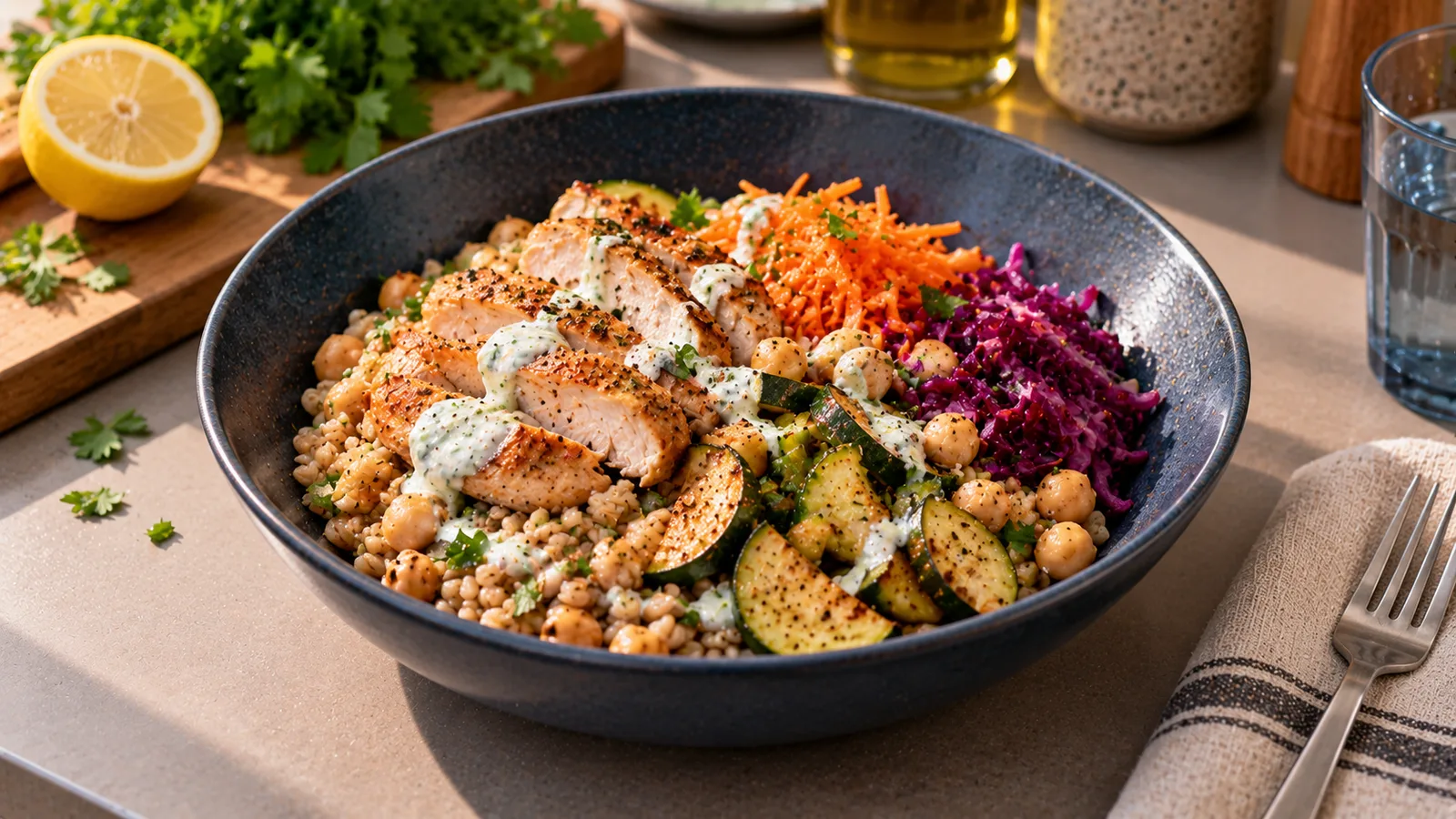
A balanced bowl is less about a particular recipe format and more about combining several useful meal components in one dish.
A practical bowl usually contains:
- a source of protein;
- vegetables or fruit;
- a carbohydrate-rich base;
- some dietary fat;
- a sauce, dressing or seasoning that makes the combination enjoyable.
The proportions do not need to be identical for everyone. Portion size should reflect appetite, energy needs and the rest of the day's food.
The 15 recipes below are complete meal ideas rather than lists of interchangeable ingredients.
Nutrition values are approximate because brands, produce size and cooking methods vary.
1. Chicken, Brown Rice and Roasted Vegetable Bowl
Servings
2
Ingredients
- 300 g boneless chicken breast;
- 140 g dry brown rice;
- 200 g broccoli;
- 1 red bell pepper, about 150 g;
- 1 medium carrot, about 100 g;
- 15 ml olive oil;
- 100 g plain Greek-style yogurt;
- 10 ml lemon juice;
- 1 small garlic clove;
- paprika;
- black pepper.
Method
- Cook the brown rice according to the package instructions.
- Cut the broccoli, pepper and carrot into bite-sized pieces.
- Toss the vegetables with half the oil and roast until tender.
- Season the chicken with paprika and pepper.
- Cook the chicken thoroughly, then slice it.
- Mix yogurt, lemon juice and crushed garlic.
- Divide rice, vegetables and chicken between two bowls.
- Spoon the yogurt dressing over the top.
Approximate nutrition per serving
About 620 kcal, 52 g protein, 74 g carbohydrate, 14 g fat and 9 g fiber.
---
2. Salmon, Potato and Green Bean Bowl
Servings
2
Ingredients
- 300 g salmon fillet;
- 500 g potatoes;
- 250 g green beans;
- 100 g cucumber;
- 10 ml olive oil;
- 100 g plain yogurt;
- 10 g Dijon mustard;
- 10 ml lemon juice;
- dill or parsley;
- black pepper.
Method
- Boil or roast the potatoes until tender.
- Cook the green beans until tender but still firm.
- Cook the salmon thoroughly using the oven or a pan.
- Slice the cucumber.
- Mix yogurt, mustard, lemon juice and herbs.
- Divide potatoes and vegetables between two bowls.
- Flake the salmon over the top.
- Add the dressing.
Approximate nutrition per serving
About 610 kcal, 39 g protein, 52 g carbohydrate, 27 g fat and 8 g fiber.
---
3. Lentil, Quinoa and Roasted Carrot Bowl
Servings
2
Ingredients
- 120 g dry quinoa;
- 240 g cooked lentils;
- 250 g carrots;
- 150 g cherry tomatoes;
- 60 g baby spinach;
- 15 ml olive oil;
- 20 g tahini;
- 15 ml lemon juice;
- water to thin the dressing;
- cumin;
- black pepper.
Method
- Cook the quinoa.
- Slice the carrots, coat them with part of the oil and cumin, and roast until tender.
- Warm the lentils if desired.
- Mix tahini, lemon juice and enough water to create a pourable dressing.
- Divide spinach, quinoa, lentils, carrots and tomatoes between two bowls.
- Finish with the tahini dressing.
Approximate nutrition per serving
About 570 kcal, 22 g protein, 81 g carbohydrate, 19 g fat and 18 g fiber.
---
4. Turkey Taco Bowl
Servings
2
Ingredients
- 300 g lean ground turkey;
- 120 g dry rice;
- 200 g canned black beans, drained;
- 150 g tomatoes;
- 100 g corn;
- 100 g lettuce;
- 70 g avocado;
- 10 ml olive oil;
- 1 teaspoon paprika;
- 1 teaspoon cumin;
- lime juice.
Method
- Cook the rice.
- Heat the oil and cook the turkey thoroughly.
- Season with paprika and cumin.
- Warm the beans and corn.
- Chop the tomatoes and lettuce.
- Divide rice, turkey, beans, corn and vegetables between two bowls.
- Add avocado and lime juice.
Approximate nutrition per serving
About 650 kcal, 45 g protein, 78 g carbohydrate, 19 g fat and 13 g fiber.
---
5. Chickpea Couscous Bowl With Lemon Dressing
Servings
2
Ingredients
- 140 g dry wholegrain couscous;
- 240 g canned chickpeas, drained;
- 150 g cucumber;
- 150 g tomatoes;
- 100 g red bell pepper;
- 60 g spinach or mixed leaves;
- 40 g feta;
- 15 ml olive oil;
- 20 ml lemon juice;
- parsley;
- black pepper.
Method
- Prepare the couscous according to the package directions.
- Rinse and drain the chickpeas.
- Chop cucumber, tomatoes and pepper.
- Mix olive oil, lemon juice, parsley and pepper.
- Divide couscous, chickpeas and vegetables between two bowls.
- Crumble feta over the top.
- Add the dressing.
Approximate nutrition per serving
About 590 kcal, 21 g protein, 86 g carbohydrate, 19 g fat and 14 g fiber.
---
6. Tofu, Rice and Broccoli Bowl
Servings
2
Ingredients
- 300 g firm tofu;
- 140 g dry rice;
- 250 g broccoli;
- 150 g carrots;
- 100 g edamame;
- 10 ml rapeseed oil;
- 20 ml reduced-salt soy sauce;
- 10 g sesame seeds;
- 10 ml lime juice;
- fresh ginger if available.
Method
- Cook the rice.
- Press excess water from the tofu and cut it into cubes.
- Heat the oil and brown the tofu.
- Steam or stir-fry broccoli and carrots.
- Cook the edamame according to package instructions.
- Mix soy sauce, lime juice and grated ginger.
- Divide the ingredients between two bowls.
- Add the sauce and sesame seeds.
Approximate nutrition per serving
About 630 kcal, 34 g protein, 81 g carbohydrate, 22 g fat and 12 g fiber.
---
7. Beef, Sweet Potato and Cabbage Bowl
Servings
2
Ingredients
- 300 g lean beef strips;
- 500 g sweet potato;
- 250 g red or white cabbage;
- 100 g carrot;
- 15 ml rapeseed oil;
- 100 g plain yogurt;
- 10 ml lemon juice;
- 1 teaspoon paprika;
- black pepper.
Method
- Cut the sweet potato into cubes and roast with half the oil.
- Thinly slice cabbage and carrot.
- Cook the beef thoroughly in the remaining oil.
- Mix yogurt with lemon juice and pepper.
- Divide sweet potato, cabbage and carrot between the bowls.
- Add beef and dressing.
Approximate nutrition per serving
About 600 kcal, 43 g protein, 63 g carbohydrate, 20 g fat and 11 g fiber.
---
8. Egg, Potato and Spinach Breakfast Bowl
A bowl does not need to be reserved for lunch or dinner.
Servings
2
Ingredients
- 6 eggs;
- 500 g potatoes;
- 200 g spinach;
- 200 g tomatoes;
- 100 g mushrooms;
- 10 ml olive oil;
- 100 g plain yogurt;
- black pepper;
- paprika.
Method
- Boil or roast the potatoes.
- Slice and cook the mushrooms.
- Add spinach and allow it to wilt.
- Cook the eggs until they reach your preferred safe doneness.
- Divide potatoes, vegetables and eggs between two bowls.
- Add yogurt and seasoning.
Approximate nutrition per serving
About 520 kcal, 29 g protein, 52 g carbohydrate, 23 g fat and 8 g fiber.
---
9. Tuna, White Bean and Potato Bowl
Servings
2
Ingredients
- 240 g canned tuna in water, drained;
- 400 g potatoes;
- 240 g canned white beans, drained;
- 150 g tomatoes;
- 150 g cucumber;
- 50 g mixed leaves;
- 15 ml olive oil;
- 20 ml lemon juice;
- parsley;
- black pepper.
Method
- Cook the potatoes and allow them to cool slightly.
- Drain the tuna and beans.
- Chop tomatoes and cucumber.
- Mix oil, lemon juice, parsley and pepper.
- Divide all ingredients between two bowls.
- Add the dressing.
Approximate nutrition per serving
About 550 kcal, 43 g protein, 68 g carbohydrate, 13 g fat and 13 g fiber.
---
10. Mediterranean Chicken Bulgur Bowl
Servings
2
Ingredients
- 300 g chicken thigh or breast;
- 140 g dry bulgur;
- 200 g zucchini;
- 150 g tomatoes;
- 100 g red pepper;
- 60 g feta;
- 15 ml olive oil;
- 20 ml lemon juice;
- oregano;
- black pepper.
Method
- Cook the bulgur.
- Cut zucchini and pepper into pieces.
- Roast or pan-cook the vegetables using part of the oil.
- Cook the chicken thoroughly and slice.
- Divide bulgur, vegetables and chicken between two bowls.
- Add tomatoes and feta.
- Finish with lemon juice, remaining oil and oregano.
Approximate nutrition per serving
About 640 kcal, 48 g protein, 65 g carbohydrate, 23 g fat and 10 g fiber.
---
11. Red Lentil, Rice and Spinach Curry Bowl
Servings
2
Ingredients
- 140 g dry red lentils;
- 100 g dry basmati rice;
- 200 g canned chopped tomatoes;
- 200 g spinach;
- 100 ml light coconut milk;
- 1 small onion;
- 10 ml oil;
- 2 teaspoons curry powder;
- water as needed.
Method
- Cook the rice.
- Dice the onion and cook it in oil.
- Add curry powder.
- Add lentils, tomatoes, coconut milk and enough water for the lentils to cook.
- Simmer until tender.
- Stir in spinach.
- Divide rice and lentil curry between two bowls.
Approximate nutrition per serving
About 600 kcal, 24 g protein, 99 g carbohydrate, 13 g fat and 15 g fiber.
---
12. Prawn, Rice and Mango Bowl
Servings
2
Ingredients
- 300 g peeled prawns;
- 140 g dry rice;
- 150 g mango;
- 150 g cucumber;
- 150 g red pepper;
- 100 g edamame;
- 10 ml rapeseed oil;
- 15 ml lime juice;
- 15 ml reduced-salt soy sauce;
- fresh coriander if desired.
Method
- Cook the rice.
- Cook the prawns thoroughly in the oil.
- Cook the edamame.
- Dice mango, cucumber and pepper.
- Mix lime juice and soy sauce.
- Divide rice, vegetables, mango, edamame and prawns between two bowls.
- Add the dressing.
Approximate nutrition per serving
About 580 kcal, 42 g protein, 82 g carbohydrate, 10 g fat and 9 g fiber.
---
13. Tempeh, Quinoa and Vegetable Bowl
Servings
2
Ingredients
- 250 g tempeh;
- 120 g dry quinoa;
- 200 g broccoli;
- 150 g carrots;
- 150 g red cabbage;
- 10 ml rapeseed oil;
- 20 ml reduced-salt soy sauce;
- 15 g peanut butter;
- 15 ml lime juice;
- water to thin the sauce.
Method
- Cook the quinoa.
- Slice the tempeh.
- Brown the tempeh in oil.
- Steam or roast broccoli and carrots.
- Thinly slice the cabbage.
- Mix soy sauce, peanut butter, lime juice and a little water.
- Divide everything between two bowls.
- Add the sauce.
Approximate nutrition per serving
About 650 kcal, 38 g protein, 68 g carbohydrate, 29 g fat and 15 g fiber.
---
14. Greek-Style Chicken and Chickpea Bowl
Servings
2
Ingredients
- 250 g chicken breast;
- 200 g canned chickpeas, drained;
- 120 g dry bulgur;
- 150 g cucumber;
- 150 g tomatoes;
- 50 g feta;
- 100 g plain Greek-style yogurt;
- 10 ml olive oil;
- 15 ml lemon juice;
- oregano;
- black pepper.
Method
- Cook the bulgur.
- Season and thoroughly cook the chicken, then slice it.
- Chop cucumber and tomatoes.
- Mix yogurt with lemon juice and oregano.
- Divide bulgur, chickpeas and vegetables between two bowls.
- Add chicken and feta.
- Spoon over the yogurt dressing.
Approximate nutrition per serving
About 630 kcal, 52 g protein, 70 g carbohydrate, 18 g fat and 13 g fiber.
---
15. Black Bean, Rice and Avocado Bowl
Servings
2
Ingredients
- 240 g canned black beans, drained;
- 120 g dry brown rice;
- 150 g corn;
- 200 g tomatoes;
- 100 g red cabbage;
- 100 g avocado;
- 100 g plain yogurt;
- 15 ml lime juice;
- cumin;
- paprika.
Method
- Cook the brown rice.
- Warm the beans and corn.
- Chop tomatoes and cabbage.
- Mash or slice the avocado.
- Mix yogurt with lime juice and a little cumin.
- Divide rice, beans, corn and vegetables between two bowls.
- Add avocado and dressing.
Approximate nutrition per serving
About 590 kcal, 20 g protein, 92 g carbohydrate, 17 g fat and 18 g fiber.
How to build a balanced bowl without a recipe
Once you understand the structure, a bowl can be assembled from leftovers without starting from zero.
A useful framework is:
1. Choose a protein source
Examples include:
- chicken;
- fish;
- eggs;
- tofu;
- tempeh;
- lentils;
- beans;
- chickpeas.
2. Add a carbohydrate-rich base
For example:
- rice;
- potatoes;
- quinoa;
- bulgur;
- couscous;
- another grain.
The quantity can be adjusted according to appetite and energy needs.
3. Add vegetables
Using more than one vegetable can improve variety in texture and flavor.
Fresh, roasted, steamed and frozen vegetables can all work.
4. Add a flavorful fat or dressing
Examples include:
- olive oil;
- tahini;
- avocado;
- nuts or seeds;
- yogurt-based dressing.
The amount matters because oils, seeds, nut butters and similar foods are energy-dense.
5. Finish with acidity, herbs or spices
Lemon, lime, vinegar, herbs and spices can make a simple combination much more interesting without requiring another full ingredient category.
Meal-prep strategy
Bowls are useful for meal preparation because components can be stored separately.
For example, prepare:
- a cooked grain;
- one protein;
- two vegetables;
- one dressing.
Then combine them in different proportions during the next few meals.
Keeping wet dressings separate until serving can help preserve texture.
Adjusting the recipes
The recipes are written for two servings, but the appropriate serving size differs between people.
If you need a larger meal, you can increase one or more components rather than automatically doubling everything.
For example:
- add more rice or potatoes after a demanding training session;
- add more vegetables for volume;
- increase the protein component when appropriate;
- add fruit or yogurt alongside the bowl.
For a smaller meal, reduce the grain or other energy-dense components while keeping enough food to make the meal satisfying.
About the nutrition estimates
The nutrition values above are estimates rather than laboratory measurements.
Actual values can change because of:
- food brands;
- exact ingredient weights;
- raw versus cooked weight;
- fat content of meat or dairy;
- drained weight of canned foods;
- amount of oil retained after cooking;
- recipe substitutions.
For precise tracking, calculate the recipe from the exact ingredients and package labels you use.
Food-safety basics
Cook poultry, meat, seafood and eggs safely.
Avoid cross-contamination between raw animal foods and ready-to-eat vegetables.
Cool cooked meal-prep components promptly and refrigerate them safely.
If a bowl contains cooked rice, follow appropriate cooling and storage guidance rather than leaving rice warm at room temperature for extended periods.
The practical takeaway
A balanced bowl does not require a perfect visual ratio or a rigid formula.
The useful idea is to combine enough complementary components to make a complete meal:
- protein;
- carbohydrate-rich food;
- vegetables or fruit;
- dietary fat;
- flavor.
The 15 recipes above show how the same structure can produce very different meals—from salmon and potatoes to lentil curry, tofu and rice, or chickpeas and couscous.
Use the recipes as complete starting points, then adjust portions to your own needs rather than assuming one bowl size fits everyone.
Sources
- Deutsche Gesellschaft für Ernährung (DGE), food-based dietary guidelines.
- European Food Safety Authority (EFSA), dietary reference values and nutrition guidance.
- USDA FoodData Central, reference nutrient composition data.
- U.S. Food and Drug Administration (FDA), safe food handling guidance.
- Bundeszentrum für Ernährung (BZfE), guidance on balanced meals and safe food preparation.