
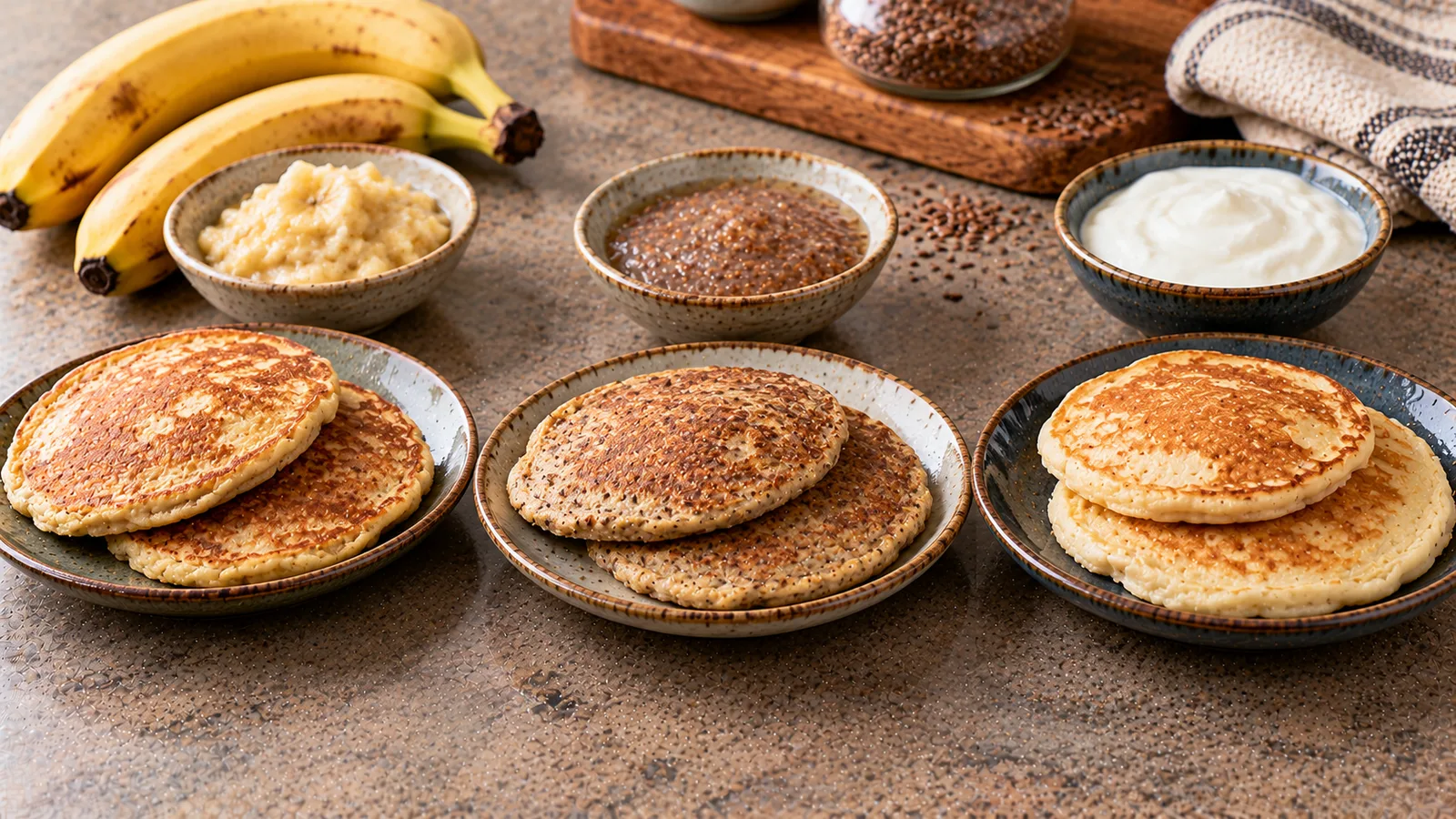
Egg-free pancakes can be made with banana, ground flaxseed or plain yogurt, but the three swaps do different jobs. Banana brings sweetness and moisture; soaked flax produces a gel that helps the batter hold together; yogurt adds tenderness and a little acidity. The useful question is not simply “What replaces an egg?” but “What texture, flavour and dietary restriction matter in this batch?” Below are three comparable small-batch methods measured in grams, not unrepeatable spoonfuls. They are practical formulations, not results of a controlled kitchen experiment.
A reliable starting point: one egg, three different swaps
King Arthur Baking suggests 57 g of mashed banana, about 7 g ground flaxseed mixed with 42 g water, or 57 g plain Greek yogurt as starting replacements for one large egg in suitable baked goods. The flax mixture must stand for 5–10 minutes until it thickens. These are substitution guides, not a promise of identical pancakes. In an ordinary pancake batter, baking powder still supplies much of the lift; the replacement mainly changes binding, moisture and flavour. A yogurt pancake contains dairy and is not vegan. Banana or flax pancakes are vegan only if the rest of the ingredients, including milk and toppings, are plant-based.
| Instead of one large egg | Weighed amount | Main effect | What to watch |
|---|---|---|---|
| Ripe mashed banana | 57 g | Sweetness and moisture | Banana taste, quicker browning |
| Finely ground flaxseed + water | 7 g + 42 g | Binding gel | Rest 5–10 minutes; denser crumb |
| Plain Greek yogurt | 57 g | Softness and moisture | Dairy; possible thick batter |
Do not use these substitutions as a universal solution for soufflés, custards or recipes based on whipped eggs. They work best as an initial experiment in conventional, relatively sturdy pancake batter. If your starting recipe requires three or four eggs, choose a purpose-designed egg-free recipe instead of multiplying the table without testing.
Three pancake batches, each making six small pancakes
Each version begins with 120 g plain wheat flour, 140 g milk or unsweetened plant drink, 6 g baking powder, 1 g salt and 5 g oil for the pan. Add exactly one replacement from the table. The recipe is designed for six small pancakes, two portions of three. Use one scale and the same pan for each batch. If you select dairy milk for the banana or flax version, the pancakes are egg-free but not vegan; check cross-contact when cooking for someone avoiding eggs. These quantities are an editorial recipe starting point, not an established nutritional standard.
For the banana batch, thoroughly mash 57 g ripe banana with a fork. Mix flour, baking powder and salt separately. Stir the banana into the measured milk, combine with dry ingredients and fold only until no large dry patches remain. Rest the mixture five minutes. Banana makes the surface brown quickly, so begin with moderate heat. The centre should be set before removing each pancake; a dark edge alone is not proof that the middle has cooked.
For the flax batch, stir 7 g finely ground flaxseed into 42 g drinking water and wait 5–10 minutes for a viscous gel. Then whisk the gel into 140 g of the selected milk. Fold into the same 120 g flour, 6 g baking powder and 1 g salt. A little graininess is normal. Do not add the 42 g water to the banana or yogurt versions: it belongs only to the flax replacement, so the three mixtures will have different final water quantities.
For the yogurt batch, whisk 57 g plain unsweetened Greek yogurt with the 140 g milk until mostly smooth. Fold into the dry mix. Thick strained yogurt varies by brand; if this batter cannot be poured, add 10–20 g extra milk, record the exact amount and do not assume this adjustment applies to the other batches. This is a vegetarian, not vegan, alternative. Flavoured yogurts change the sugar and can make the pan brown faster.
Cook and evaluate the batches consistently
Heat a non-stick pan over medium heat, spread a thin film from the total 5 g oil allowance and portion the batter into six roughly equal pancakes. Cooking may take around 2–3 minutes on the first side and 1–2 minutes after turning, but pan temperature, diameter and thickness matter more than a timer. Flip when the underside is golden, the outer edge is beginning to set and bubbles are visible; cook until the centre has no wet flour batter. Always cook all the way through. Let the pancakes sit briefly on a rack rather than stack them immediately if you want to preserve a drier surface.
Compare the finished pancakes using four useful criteria: whether they turn without tearing, how soft the centre feels, how evenly the surfaces brown and whether the substitute tastes noticeably different. Banana usually gives a fruity note; flax can create a heartier texture; yogurt tends to be mild and tangy. Those are expected tendencies, not measured results from these particular three batches. If you want a reproducible comparison, photograph each pancake's diameter and weigh the final cooked batch before serving.
Why the batter thickness changes
An egg contributes water, protein, fat and emulsifying ability. Banana mostly contributes water, carbohydrates and fruit solids. Flax forms a gel because of water-binding compounds, but it does not whip like egg. Greek yogurt contains water, milk proteins and variable amounts of fat depending on the type. Those mechanisms explain why a gram-for-gram volume swap can alter how the batter spreads. Do not try to rescue a dense pancake by adding much more baking powder: excessive leavening can taste unpleasant and leave an uneven crumb. Begin by adjusting liquid in small weighed increments and write down the result.
A recipe with baking soda rather than baking powder also behaves differently because yogurt adds acidity. The three batches here deliberately use the same baking powder base so that the substitution is the principal planned difference. If you change flour type, dairy content, pancake size and pan heat simultaneously, you cannot tell which change improved the texture. Start with one variable, especially when adapting the recipe for repeat use.
Calories and cost: calculate the actual batch
Neither banana, flax nor yogurt has a fixed calorie advantage for the entire recipe. To estimate a batch, multiply each ingredient's grams by its label calories per 100 g and divide by 100, then add the oil actually used and toppings. Divide by two for one three-pancake portion or by six for one small pancake. Do not exclude the 7 g flaxseed simply because its 42 g water contains no calories; do not treat the 5 g frying oil as absorbed with certainty if measurable oil remains in the pan. The same accounting applies to protein, fat and carbohydrates.
For ingredient nutrition, see calories in eggs · banana calories. Product labels take priority over generic estimates because flour, milk and yogurt differ between brands and countries.
This calculation measures ingredients, not how many grams of water evaporate during cooking. If the six pancakes lose water, their total ingredient energy does not disappear; their calories per 100 g can rise. A large topping of syrup or nut butter can add more energy than the difference between replacement choices. For a fair comparison keep toppings separate until you have recorded each plain batch.
Allergens, safe handling and storage
Replacing egg does not automatically make pancakes allergen-free. Wheat flour contains gluten, yogurt contains milk, and a shared utensil can introduce egg from another recipe. Use ingredients and a clean workspace that meet the eater's needs; this article is a culinary guide, not a personalised allergy treatment plan. The CDC warns against tasting raw batter because untreated flour can carry harmful germs even when no egg is present. Cook pancakes through, wash hands and utensils after handling flour, and refrigerate leftovers promptly in a covered container. For later servings, reheat thoroughly. Do not leave prepared batter at room temperature for extended periods.