
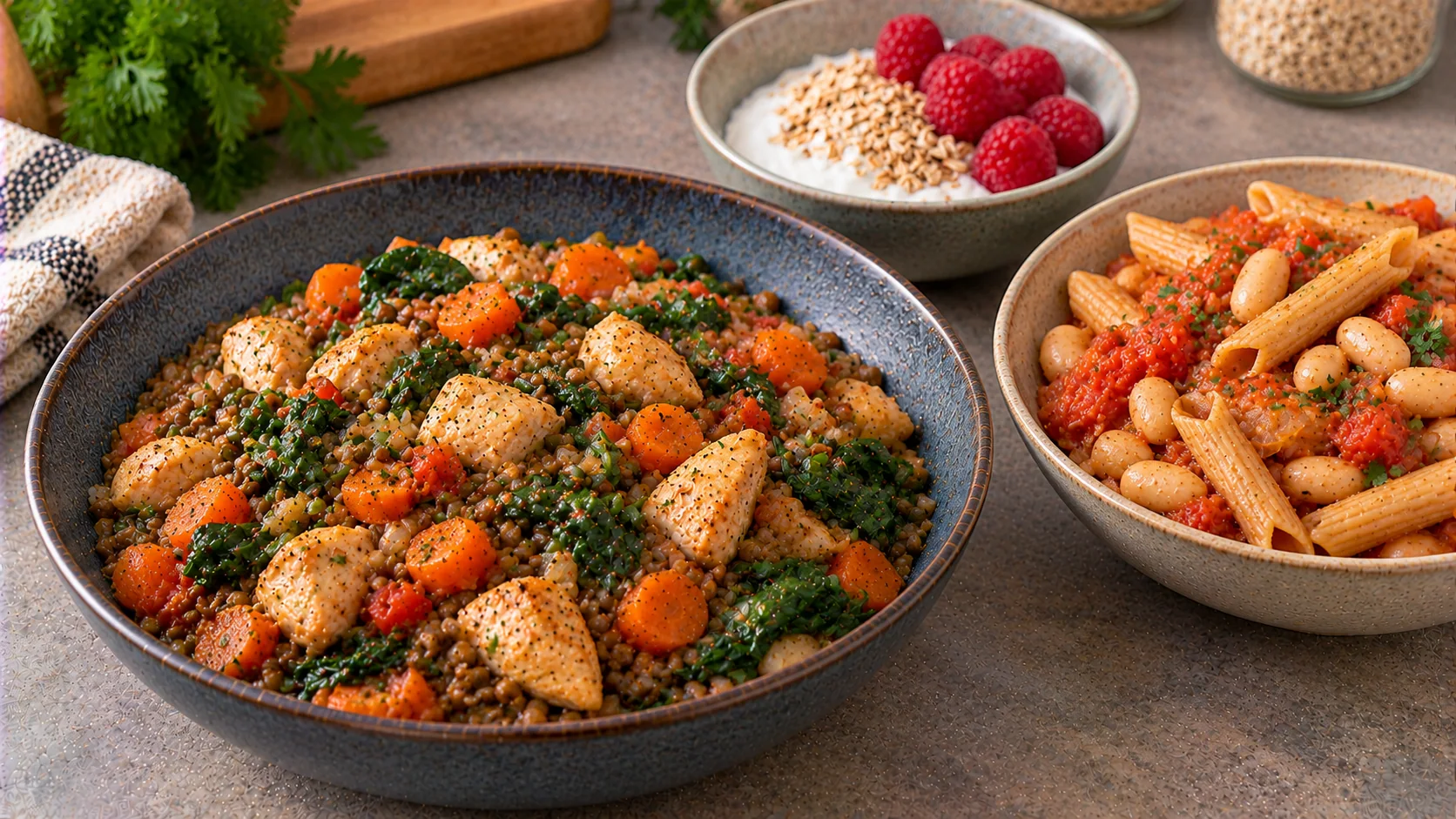
A meal can contain useful amounts of protein and dietary fiber without premium bars, powders or a complicated menu. The important step is to count both nutrients from the actual edible portions, not from a marketing claim on the front of a package. This guide gives ten distinct meals and a reproducible calculation method. The numbers are illustrative composition estimates, not laboratory results or verified values for a specific supermarket brand.
Protein contributes to maintaining normal body tissues; dietary fiber is important for normal bowel function. For context, EFSA's adult protein reference intake is 0.83 g per kg body weight per day, and its adult fiber adequate-intake reference is 25 g per day. These are daily reference values, not mandatory targets for each meal.
Why combine protein and fiber?
Combining beans, whole grains, vegetables, dairy, fish, eggs or soy can make a complete meal without claiming that one ingredient is nutritionally superior. Protein and fiber amounts depend on cooking, brand, drainage and weight. No individual dish here is prescribed as a complete diet.
Ten budget combinations with calculated portions
| Combination (one serving) | Protein (approx.) | Fiber (approx.) | Ingredient cost* |
|---|---:|---:|---:|
| Lentil, egg and spinach bowl | 29.3 g | 14.4 g | €1.45 |
| Chickpea, tuna and wholegrain toast | 41.0 g | 14.8 g | €2.05 |
| Tofu, edamame and rice bowl | 34.7 g | 7.5 g | €2.49 |
| Skyr, oats and chia breakfast | 28.2 g | 9.6 g | €1.01 |
| Bean and chicken wholegrain wrap | 39.8 g | 12.9 g | €1.92 |
| Wholegrain pasta with beans and tomato | 23.9 g | 17.4 g | €1.13 |
| Cottage cheese, pear and oats | 28.8 g | 8.3 g | €1.60 |
| Sardine and white-bean salad | 40.3 g | 16.0 g | €2.25 |
| Black-bean, egg and potato skillet | 31.3 g | 18.0 g | €1.67 |
| Tempeh, buckwheat and vegetable bowl | 33.7 g | 11.5 g | €3.15 |
*Modeled ingredient-use costs, not live shelf prices or the entire till receipt; assumed ingredient cost per 100 g varies from €0.15 (oats) to €1.50 (tuna and tempeh), before seasonings, energy, waste and packaging. The numbers are for decision examples, not quotations. Illustrative rounded nutrient estimates per serving. A brand label or matching FoodData Central entry supersedes these estimates. Pasta is dry weight; all other grain/legume weights here are cooked, drained where relevant.
How the numbers were estimated
Per-meal estimate = Σ [ingredient edible grams × nutrient per 100 g ÷ 100]. For example, the lentil bowl uses 160 g cooked lentils, 100 g cooked egg and 80 g spinach. Protein = (160×9 + 100×12.6 + 80×2.9)/100 = 29.3 g; fiber = (160×7.9 + 100×0 + 80×2.2)/100 = 14.4 g. This arithmetic is transparent, but the ingredient values are rounded generic estimates.
1. Lentils with eggs and spinach
For one serving: 160 g cooked lentils, 100 g cooked eggs, 80 g spinach. Simmer pre-cooked lentils with washed spinach until hot and serve with two fully cooked eggs.
2. Chickpeas with tuna and toast
For one serving: 140 g cooked, drained chickpeas, 90 g drained canned tuna, 60 g wholegrain bread. Drain and rinse chickpeas, combine with thoroughly drained canned tuna; serve with wholegrain toast.
3. Tofu with edamame and rice
For one serving: 150 g firm tofu, 100 g cooked edamame, 120 g cooked rice. Pan-fry tofu and cook edamame according to package directions; combine with freshly cooked rice.
4. Skyr with oats and chia
For one serving: 180 g plain skyr, 45 g dry oats, 15 g chia seeds. Stir oats and chia into chilled plain skyr; allow the chia to hydrate before eating.
5. Beans with chicken in a wrap
For one serving: 140 g cooked, drained beans, 75 g cooked chicken, 65 g wholegrain wrap. Cook chicken thoroughly; combine with reheated beans and fold into a wholegrain wrap.
6. Wholegrain pasta with beans
For one serving: 70 g DRY wholegrain pasta, 150 g cooked, drained beans, 180 g tomatoes. Boil 70 g dry wholegrain pasta; drain and mix with hot cooked beans and tomatoes.
7. Cottage cheese with pear and oats
For one serving: 200 g cottage cheese, 140 g pear, 40 g dry oats. Combine chilled cottage cheese, diced washed pear and dry oats just before serving.
8. Sardines with white beans
For one serving: 90 g drained canned sardines, 180 g cooked, drained beans, 150 g vegetables. Drain sardines and cooked white beans; toss with washed raw vegetables and a lemon dressing.
9. Black beans with eggs and potato
For one serving: 170 g cooked black beans, 100 g cooked eggs, 180 g cooked potato. Cook potato cubes until tender; heat drained black beans and add two fully cooked eggs.
10. Tempeh with buckwheat
For one serving: 130 g tempeh, 160 g COOKED buckwheat, 180 g vegetables. Brown tempeh in a pan, cook buckwheat and vegetables, then combine and season.
One basket, fewer leftovers
Buy inexpensive dried lentils and beans when time permits, or choose low-cost cans after checking drained edible weight. Frozen spinach and mixed vegetables reduce waste. Use plain dairy and staple grains, and compare costs per 100 g actually eaten. Dry-to-cooked weight matters: the pasta line uses 70 g dry, whereas buckwheat and rice lines use cooked weights. high-fiber meal ideas is useful for broader fiber ideas; building a balanced meal offers another angle on balancing a plate.
Food-safety and label checks
Cool cooked legumes, grains and animal foods promptly; refrigerate within the locally recommended window and reheat thoroughly. Rice needs particular attention to prompt cooling. Refrigerate dairy and fish; canned goods must be handled according to their labels after opening. Cook poultry fully and check fish bones, sesame/soy/wheat/dairy/egg allergens as relevant. If increasing fiber substantially, do so gradually with adequate fluids and seek tailored advice for medical diets.
Sources
- USDA FoodData Central — ingredient composition lookup; numbers here are rounded planning assumptions, not verified brand-specific analyses.
- EFSA: protein reference intake — 0.83 g/kg/day for healthy adults.
- EFSA: fiber reference — adequate intake of 25 g/day in adults.