
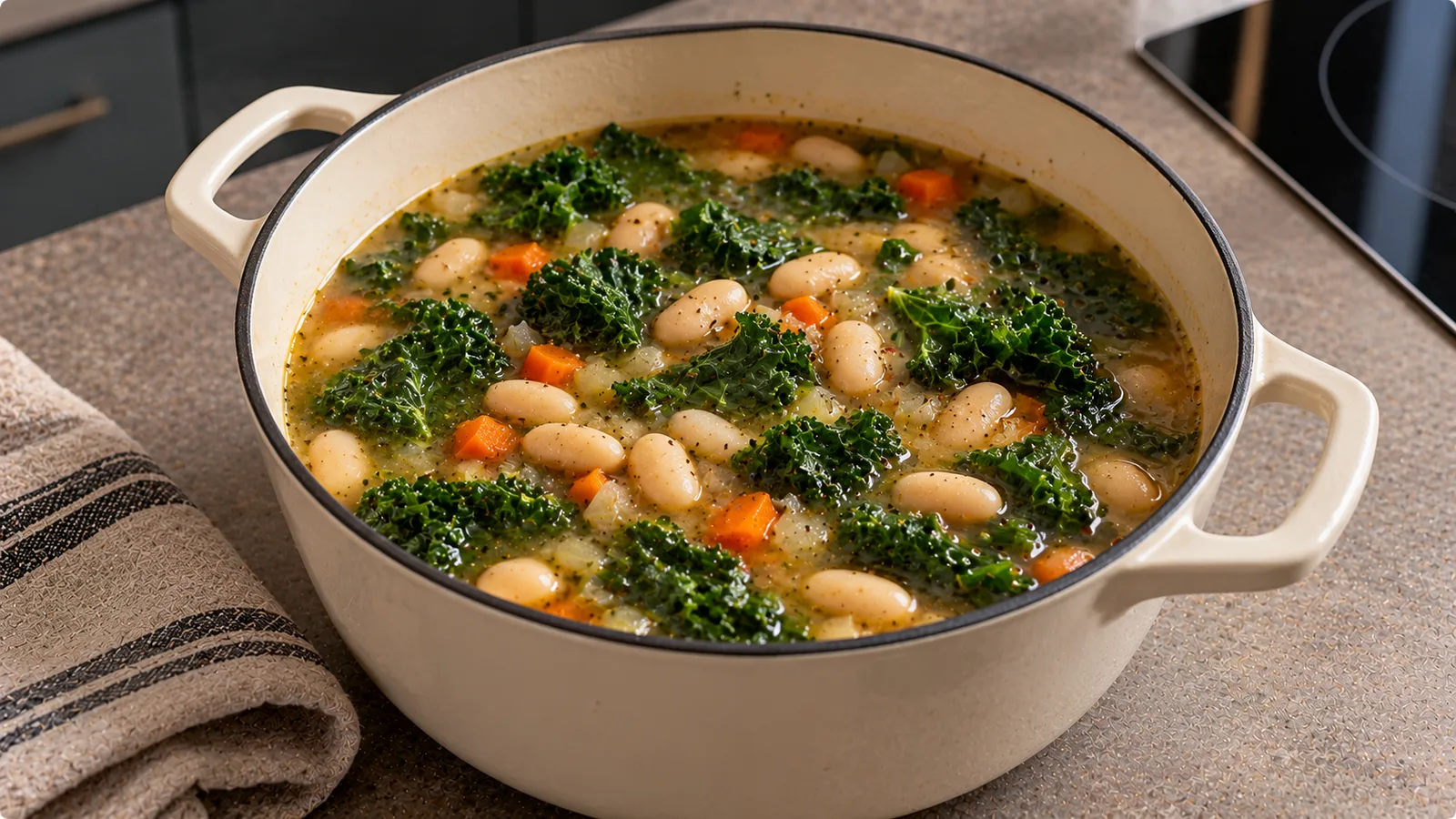
Kale and white bean soup is a comforting one-pot meal made with tender beans, leafy greens, vegetables and a savoury broth. It is naturally rich in plant ingredients, easy to adapt and practical for cooking several portions at once.
This version uses canned white beans to reduce preparation time. The beans make the soup satisfying, while kale adds texture and a slightly earthy flavour. Garlic, thyme and lemon bring the ingredients together without requiring cream.
The recipe makes four generous portions and takes approximately 35 minutes.
Recipe overview
| Detail | Amount |
|---|---|
| Servings | 4 |
| Preparation | 10 minutes |
| Cooking | 25 minutes |
| Total | 35 minutes |
| Method | One pot |
| Diet | Vegan when prepared with vegetable stock |
| Main ingredients | Kale, white beans, tomatoes and vegetables |
Ingredients
For four servings:
| Ingredient | Quantity |
|---|---|
| White beans, canned, drained and rinsed | 480 g |
| Kale, tough stems removed | 200 g |
| Onion | 150 g |
| Carrots | 150 g |
| Celery | 100 g |
| Garlic | 12 g, approximately 4 cloves |
| Olive oil | 20 g |
| Chopped canned tomatoes | 400 g |
| Vegetable stock | 800 ml |
| Dried thyme | 1 teaspoon |
| Smoked paprika | ½ teaspoon |
| Lemon juice | 20 ml |
| Black pepper | To taste |
| Salt | To taste |
| Fresh parsley | Optional |
Cannellini, navy beans or other mild white beans work well. Use the drained weight when measuring canned beans.
The salt content depends heavily on the stock and canned beans. Taste before adding extra salt.
How to make kale and white bean soup
1. Prepare the vegetables
Dice the onion, carrots and celery into small, roughly even pieces.
Finely chop the garlic.
Remove the thick central stems from the kale and chop the leaves into bite-sized pieces.
Drain and rinse the canned beans.
2. Soften the aromatic vegetables
Heat the olive oil in a large saucepan over medium heat.
Add the onion, carrots and celery. Cook for 6–8 minutes, stirring occasionally, until the onion softens.
Add the garlic, thyme and smoked paprika. Stir for approximately 30–60 seconds, just until fragrant.
Avoid burning the garlic, which can make the soup bitter.
3. Add tomatoes, beans and stock
Add the chopped tomatoes, drained beans and vegetable stock.
Stir well and bring to a gentle boil.
Reduce the heat and simmer for approximately 10 minutes to allow the flavours to combine and the carrots to become tender.
4. Add the kale
Stir in the chopped kale.
Simmer for another 5–8 minutes, or until the leaves are tender enough for your preference.
Young kale generally softens more quickly than mature, tougher leaves.
5. Create a slightly creamy texture
For a thicker soup, remove approximately one cup of the beans and broth.
Mash the mixture with a fork or briefly blend it, then return it to the pot.
This releases some of the beans' starch and thickens the broth without adding cream.
Leave the soup unblended if you prefer a lighter broth.
6. Finish with lemon
Turn off the heat.
Stir in the lemon juice and season with black pepper.
Taste before adding salt.
Serve hot, optionally topped with chopped parsley.
Which white beans work best?
Several types of white beans can be used.
| Bean | Texture | Best use |
|---|---|---|
| Cannellini | Creamy, relatively large | Classic hearty soup |
| Navy beans | Small and soft | Thick, cohesive soup |
| Great Northern | Medium-sized, mild | Brothy soup |
| Butter beans | Large and tender | Chunkier variation |
Canned beans are convenient because they are already cooked.
If using dried beans, cook them separately until fully tender before adding them to the recipe. Cooking time and water requirements vary.
Do not assume that dried beans can become fully cooked during the short simmering time of this recipe.
Can you use frozen kale?
Yes.
Frozen kale can be added directly to the simmering soup if the package instructions permit.
Because frozen kale is often already chopped or blanched, it may soften more quickly.
The final texture may be less firm than with fresh kale.
If using frozen kale, weigh the amount required and adjust the simmering time as necessary.
How to make the soup more filling
The original recipe is a substantial vegetable-and-bean soup, but you can adapt it to different meals. If comparing this homemade approach with packaged soup, see canned versus homemade bean soup.
| Goal | Adjustment |
|---|---|
| More carbohydrates | Add cooked pasta or serve with bread |
| More protein | Add extra beans or suitable cooked protein |
| Thicker texture | Mash more beans |
| More vegetables | Add zucchini or spinach |
| Spicier flavour | Add chili flakes |
| More acidity | Add lemon juice gradually |
| Richer flavour | Add a little extra olive oil when serving |
Additional ingredients change the nutrition values.
For a complete meal, consider both the soup and anything served alongside it.
Estimated nutrition per serving
The following estimates are based on four servings made with the listed ingredients, including 480 g drained white beans, 200 g kale and 20 g olive oil.
| Nutrient | Approximate amount |
|---|---|
| Calories | 300 kcal |
| Protein | 14 g |
| Carbohydrates | 43 g |
| Fat | 7 g |
| Fibre | 12 g |
These are rounded estimates rather than laboratory-tested values. Bean variety, drained weight, tomatoes and stock can change the result.
Salt is not estimated because its amount depends on the chosen stock, beans and seasoning.
How to calculate your actual serving
For accurate food tracking:
- Weigh the ingredients you use.
- Record the nutrition information for each ingredient.
- Add the calories and nutrients for the whole pot.
- Weigh the finished soup if portions differ.
- Calculate the fraction of the finished soup you eat.
For example, if the whole batch contains 1,200 kcal and is divided into four equal portions, each portion contains 300 kcal.
If one person eats 40% of the finished soup, their portion contains 40% of the recipe's total calories.
Cooking water changes the weight and energy concentration per 100 g, but does not by itself add calories.
Common mistakes and how to avoid them
The kale is too tough
Remove the thick stems and cook the leaves until tender.
Very mature kale may need a few extra minutes.
The soup is too thin
Mash or blend some of the beans, then stir them back into the pot.
You can also simmer the soup uncovered briefly.
The beans become mushy
Avoid vigorous boiling after adding already cooked canned beans.
Stir gently, especially when using softer varieties.
The soup tastes flat
Check the seasoning and add a little lemon juice.
Acidity can make the vegetable flavours more noticeable without requiring large amounts of extra salt.
The soup is too salty
Use low-sodium stock and rinse canned beans when appropriate.
Adding more unsalted ingredients or liquid can dilute the salt concentration, although it does not remove the sodium already present.
Can you prepare it ahead?
Yes. Kale and white bean soup is suitable for batch cooking.
Cool the soup promptly and refrigerate it in shallow, covered containers.
For food safety, refrigerate cooked perishable food within two hours and maintain a refrigerator temperature of approximately 4°C or below.
Use refrigerated leftovers within 3–4 days under appropriate storage conditions.
Reheat thoroughly before serving.
Can you freeze kale and white bean soup?
Yes.
Allow the soup to cool promptly, then portion it into freezer-safe containers.
Leave a little space for expansion.
For best quality, use within approximately 2–3 months.
Thaw in the refrigerator and reheat thoroughly.
Beans may soften further after freezing, but this is generally acceptable in soup.
If the soup thickens during storage, add a little water or stock while reheating.
Is kale and white bean soup a balanced meal?
White beans provide plant protein, carbohydrates and fibre. Kale and the other vegetables contribute additional nutrients.
The exact nutritional value depends on the ingredient quantities and serving size.
The soup can be part of a balanced diet, but no single recipe guarantees that every person's nutritional requirements are met.
Those seeking a higher protein intake can add another protein source or adjust the bean quantity.
Those monitoring sodium should pay particular attention to canned ingredients and stock.
Frequently asked questions
Can I use spinach instead of kale?
Yes. Add spinach near the end of cooking because it wilts more quickly.
Do I need to blend the soup?
No. Blending or mashing some beans is optional and only changes the texture.
Can I make the recipe without tomatoes?
Yes. Replace the tomatoes with additional stock and adjust the lemon juice and seasoning.
Can I use dried white beans?
Yes, but cook them fully before adding them to this short-cooking recipe.
Is this soup vegan?
The listed recipe is vegan when prepared with vegetable stock and without animal-derived toppings.
Sources
- USDA FoodData Central — reference nutrition data for beans, kale and other ingredients.
- USDA Food Safety and Inspection Service — food storage and handling guidance.
- World Health Organization: Healthy diet — general recommendations on varied diets.
Nutrition values are approximate. Use actual ingredient labels and weights for individual tracking.