
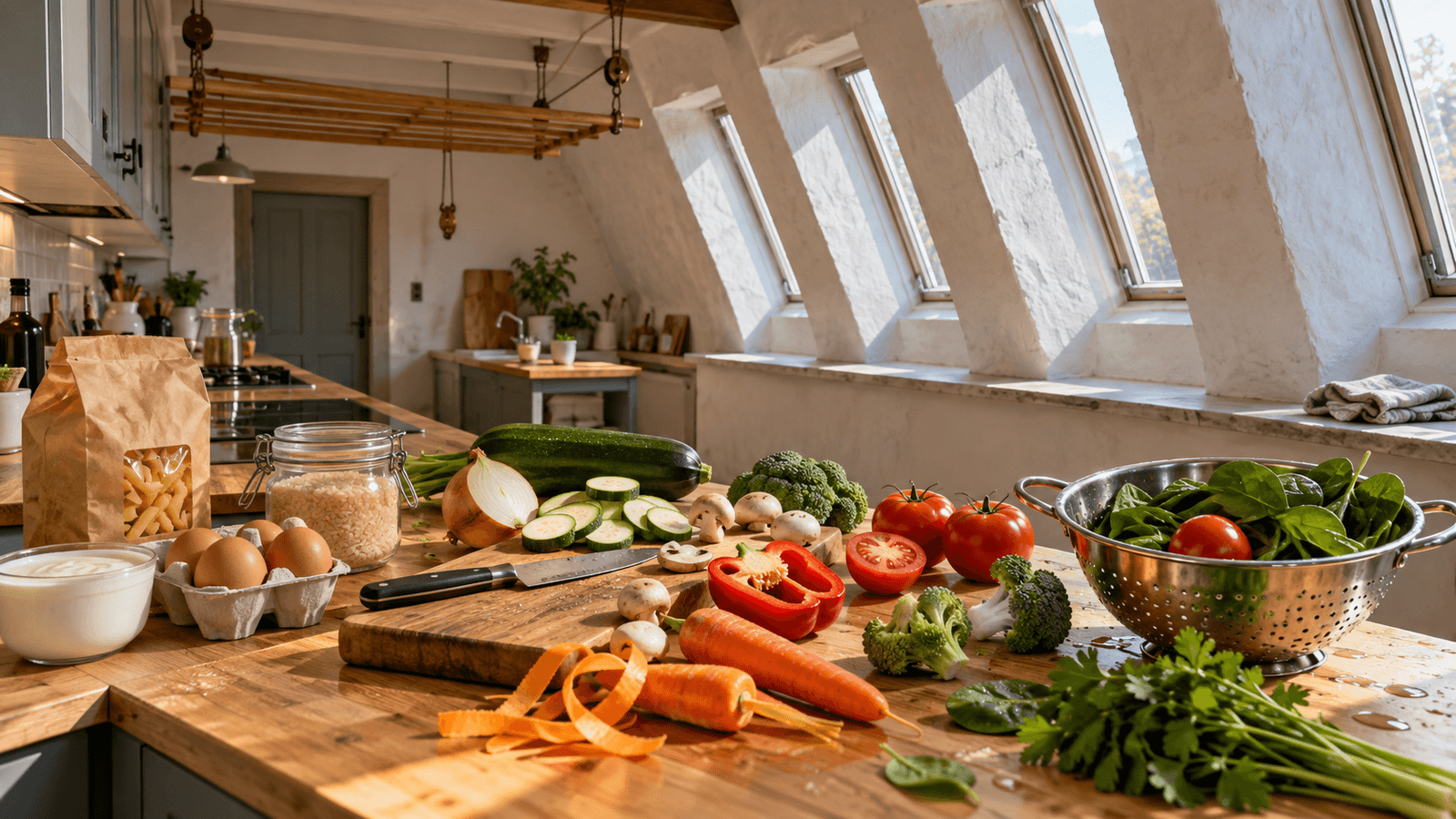
Eating more vegetables does not require replacing your entire diet with salads, buying unusual ingredients or preparing completely different meals.
For many people, the easiest approach is much smaller:
keep eating familiar foods and gradually add vegetables to meals you already enjoy.
This makes the change easier to repeat and can increase variety without turning everyday eating into a complicated project.
Why eat more vegetables?
Vegetables can contribute:
- fiber
- vitamins
- minerals
- water
- volume
- a wide range of plant compounds
Different vegetables provide different nutrients, so variety can be useful.
You do not need to find one "best" vegetable.
A practical goal is simply to make vegetables a more regular part of your normal meals.
Start with addition, not replacement
One of the simplest strategies is to ask:
Where could I add a vegetable to something I already eat?
This is often easier than designing an entirely new meal.
For example:
- add tomatoes or spinach to eggs
- add frozen vegetables to rice
- add mushrooms or zucchini to pasta sauce
- add vegetables to a sandwich
- add carrots or peppers beside a snack
- add vegetables to soup
- add extra vegetables to a stir-fry
The original meal remains recognizable.
You are simply changing its composition.
You do not need to eat salads every day
Vegetables are often associated with salads, but salads are only one option.
Vegetables can be:
- roasted
- steamed
- boiled
- grilled
- sautéed
- baked
- blended into soup
- cooked into sauces
- added to casseroles
- mixed into rice or grains
- included in sandwiches and wraps
If you do not enjoy large salads, there is no reason to make them the foundation of your diet.
Use vegetables you actually like
Trying to force yourself to eat vegetables you dislike can make the habit harder to maintain.
Start with vegetables you already tolerate or enjoy.
That might include:
- tomatoes
- cucumber
- carrots
- bell peppers
- zucchini
- broccoli
- cauliflower
- spinach
- mushrooms
- cabbage
- green beans
- peas
Once vegetables become a normal part of meals, you can gradually experiment with others.
Change the cooking method
Disliking a vegetable in one form does not necessarily mean you dislike the vegetable itself.
Texture and flavor can change substantially depending on preparation.
For example, broccoli can be:
- steamed until soft
- briefly steamed and still firm
- roasted until browned
- added to a stir-fry
- blended into soup
Carrots can be:
- raw and crunchy
- boiled
- roasted
- grated into dishes
- cooked into soup or sauce
Experimenting with preparation can be more useful than forcing yourself to eat a version you dislike.
Keep easy vegetables available
Convenience strongly influences what gets eaten.
If vegetables require washing, peeling, chopping and cooking every time, they may lose to faster foods when you are busy.
Useful convenient options include:
- frozen vegetables
- pre-washed vegetables
- canned vegetables
- vegetables that require little preparation
- leftovers from previously cooked vegetables
Convenience is not a nutritional failure.
It can make vegetables easier to eat consistently.
Frozen vegetables are useful
Frozen vegetables can be one of the easiest ways to increase vegetable intake.
They:
- keep for a long time
- reduce the pressure to use produce quickly
- require little preparation
- can be portioned as needed
- work well in many cooked dishes
Examples include:
- peas
- broccoli
- cauliflower
- spinach
- green beans
- mixed vegetables
They can be added directly to many soups, curries, rice dishes and stir-fries.
Canned vegetables can also help
Canned foods can be practical when fresh produce is inconvenient.
Depending on the product, options may include:
- tomatoes
- corn
- peas
- carrots
- green beans
- beetroot
Check the label if sodium, added sugar or other ingredients matter to you.
The important point is that vegetables do not have to be fresh from a market to be useful.
Add vegetables to breakfast
Breakfast does not have to be sweet.
If you eat eggs, try adding:
- spinach
- tomatoes
- mushrooms
- peppers
- leftover roasted vegetables
If your usual breakfast is something else, there is no need to force vegetables into it.
You can simply include more vegetables later in the day.
See What Makes a Breakfast Balanced?.
Add vegetables to lunch
Lunch is often an easy opportunity because many familiar foods can accommodate vegetables.
For example:
Sandwiches
Add:
- tomato
- cucumber
- lettuce
- peppers
- grated carrot
Wraps
Add vegetables alongside your usual filling.
Soup
Choose a vegetable-based soup or add extra vegetables to an existing recipe.
Leftovers
Add frozen or fresh vegetables when reheating yesterday's meal.
Grain bowls
Mix vegetables into rice, couscous, bulgur or another grain rather than building a completely separate dish.
See What Makes a Lunch Balanced?.
Add vegetables to dinner
Dinner does not need to be redesigned.
Consider the meal you already planned and ask whether one vegetable could be added.
Examples:
- pasta + extra mushrooms or zucchini
- rice + peas or broccoli
- potatoes + roasted carrots
- curry + cauliflower or spinach
- stir-fry + an extra vegetable
- soup + additional frozen vegetables
- casserole + vegetables mixed into the filling
Small additions can accumulate over the week.
See What Makes a Dinner Balanced?.
Use vegetables in familiar sauces
Sauces can be an easy place to add vegetables.
For example, tomato-based pasta sauce can include:
- onion
- carrots
- mushrooms
- zucchini
- peppers
- spinach
You can leave the vegetables visible or blend some of them into the sauce.
The goal is not to hide vegetables from yourself.
It is simply another preparation option.
Increase vegetables gradually
You do not need to suddenly double or triple your vegetable intake.
A large overnight change can be uncomfortable or difficult to maintain, particularly if it also increases fiber substantially.
Instead, try adding one small vegetable component to meals where it fits naturally.
Once that becomes normal, add another.
Use vegetables to increase meal volume
Many vegetables contain a lot of water and relatively few calories for their physical volume.
Adding them to meals can increase the amount of food on the plate without necessarily increasing energy intake as much as adding the same volume of more calorie-dense foods.
Examples include:
- zucchini
- mushrooms
- tomatoes
- leafy greens
- cucumber
- cauliflower
- cabbage
This can be useful when building satisfying meals.
See Low-Calorie-Density Foods: What to Eat and Why.
Do not remove protein to make room for vegetables
Eating more vegetables does not mean your meal should become only vegetables.
A practical meal may still include:
- a protein source
- a carbohydrate source
- vegetables
- some dietary fat
The exact composition depends on the meal and your preferences.
Vegetables are an addition to an overall eating pattern, not a replacement for every other food group.
Pair vegetables with foods you enjoy
Vegetables do not need to be eaten plain.
Flavor can come from:
- herbs
- spices
- garlic
- lemon
- vinegar
- yogurt-based sauces
- cheese
- olive oil
- other sauces and condiments
These ingredients can make vegetables more enjoyable.
If you track calories, remember that oils, cheese and sauces can add energy, so include them when they are relevant to your goal.
Roast vegetables for more flavor
Roasting can produce flavors and textures that are very different from boiling.
Vegetables that work well roasted include:
- carrots
- cauliflower
- broccoli
- peppers
- zucchini
- onions
- cabbage
A browned surface and firmer texture may make some vegetables more appealing.
Use a sheet pan
A sheet pan can make vegetables easier to prepare in larger quantities.
You can roast enough for more than one meal and later use the vegetables in:
- lunches
- wraps
- pasta
- grain dishes
- eggs
- side dishes
This reduces repeated preparation.
Cook once, use several times
If chopping vegetables every day feels inconvenient, prepare more than one serving.
For example:
- roast a tray of vegetables
- eat some with dinner
- refrigerate the remainder safely
- use them in lunch the next day
- add the rest to another cooked dish
This is different from preparing identical meals for an entire week.
You are preparing a flexible ingredient that can be reused.
Make vegetables visible
Foods that are easy to see can be easier to remember.
Depending on the vegetable and appropriate storage conditions, you might:
- keep suitable vegetables visible in the refrigerator
- place ready-to-use vegetables toward the front
- keep frozen vegetables in an easy-to-reach freezer section
- store prepared vegetables in clear containers
The goal is to reduce the chance that vegetables disappear behind other foods and are forgotten.
Buy realistic quantities
Buying a refrigerator full of vegetables does not guarantee that you will eat them.
If you repeatedly throw produce away, buy less.
A smaller amount that you actually use is more useful than a large aspirational grocery haul.
Meal planning can help estimate what you are likely to use.
See How to Avoid Food Waste With Meal Planning.
Plan vegetables before shopping
Instead of writing "vegetables" on a shopping list, decide where a few specific vegetables will be used.
For example:
- broccoli for Tuesday's rice dish
- spinach for eggs and pasta
- carrots for soup and snacks
- frozen peas for quick meals
This gives each purchase a purpose while still allowing flexibility.
Use one vegetable in several meals
You do not need a different vegetable for every recipe.
A single ingredient can work in several meals.
For example, spinach can be used in:
- eggs
- pasta
- soup
- curry
- sandwiches
Bell peppers can be used in:
- wraps
- stir-fries
- pasta sauce
- snacks
- rice dishes
This can reduce waste and simplify shopping.
Keep an emergency vegetable option
Some days the fresh vegetables you planned to use will be gone, spoiled or simply inconvenient.
Keep one low-effort backup.
Examples:
- frozen peas
- frozen broccoli
- frozen spinach
- canned tomatoes
- canned green beans
This makes the habit less dependent on perfect planning.
Vegetables as snacks
If you enjoy raw vegetables, they can work as snacks.
Examples include:
- carrots
- cucumber
- peppers
- cherry tomatoes
They may be paired with another food when you want a more satisfying snack.
See Healthy Snacks: How to Build a More Satisfying Snack.
Add vegetables to convenience foods
You do not need to cook everything from scratch.
Vegetables can be added to foods you already use for convenience.
For example:
- add frozen vegetables to instant noodles
- add spinach to packaged soup
- add vegetables to a frozen pizza
- add peas to microwave rice
- add tomatoes or cucumber to a ready-made sandwich
- add frozen vegetables to a prepared curry
This is often more realistic than replacing convenience foods entirely.
Start with one meal
If changing your entire day feels difficult, choose one meal.
For example:
Lunch: include one vegetable most days.
Once that feels normal, consider dinner.
Small repeatable changes are often easier to maintain than an ambitious complete reset.
Try a simple vegetable rule
A rule can reduce decision-making.
Examples:
- add one vegetable to dinner
- keep one frozen vegetable available
- buy three vegetables you know you will use
- add vegetables whenever reheating leftovers
The rule should be simple enough that it does not require constant planning.
Variety matters, but perfection does not
Eating different vegetables can provide a wider range of nutrients and make meals more interesting.
But you do not need maximum variety every day.
If you rely heavily on a few vegetables you enjoy, that can still be a useful starting point.
You can expand variety over time.
Fresh, frozen and canned can all fit
A practical vegetable routine may use all three.
Fresh
Useful for:
- raw snacks
- salads
- quick cooking
- vegetables you use frequently
Frozen
Useful for:
- backup meals
- soups
- stir-fries
- reducing waste
Canned
Useful for:
- pantry storage
- fast meals
- recipes where texture changes matter less
There is no requirement to choose only one form.
What if vegetables cause digestive discomfort?
A sudden increase in vegetables can also increase fiber intake.
Some people may notice:
- bloating
- gas
- changes in bowel habits
Increasing fiber more gradually and drinking enough fluids may be more comfortable for some people.
Individual digestive symptoms can have many causes. Persistent or significant symptoms should be discussed with an appropriate healthcare professional.
What if you dislike most vegetables?
Start very small.
Choose one or two vegetables that are acceptable and experiment with:
- different cooking methods
- different textures
- seasonings
- combining them with familiar foods
You do not need to force yourself to enjoy every vegetable.
What if fresh vegetables keep spoiling?
Consider:
- buying smaller quantities
- shopping more intentionally
- using frozen vegetables
- cooking perishable vegetables earlier in the week
- planning multiple uses for the same ingredient
Food waste is often a planning problem rather than a motivation problem.
What if vegetables feel too expensive?
Prices vary by season, country and store.
Ways to manage cost can include:
- compare price per usable amount
- buy seasonal options when cheaper
- use frozen vegetables
- choose versatile vegetables
- avoid buying more than you can use
- compare store brands for canned and frozen products
A vegetable that is inexpensive but repeatedly discarded is not actually economical.
Track what you really eat
If you use a food diary, record vegetables just as you would other foods.
Photo tracking can make this easy because the visual record shows whether vegetables regularly appear in your meals.
Over time, you may notice patterns such as:
- vegetables mostly appearing at dinner
- very little variety
- fresh vegetables repeatedly going unused
- vegetables disappearing on busy days
That information can help you make practical changes.
Do not turn vegetables into a test of willpower
The goal is not to prove discipline.
A useful system makes the desired behavior easier.
That can mean:
- buying vegetables you enjoy
- keeping convenient options available
- preparing them in ways you like
- adding them to familiar meals
- reducing preparation steps
Environment and convenience often matter more than motivation alone.
A simple seven-step approach
If you want to eat more vegetables without rebuilding your diet, try this:
- Choose three vegetables you already like.
- Buy realistic quantities.
- Keep one frozen option as backup.
- Add one vegetable to a meal you already eat.
- Prepare extra vegetables when cooking.
- Reuse them in another meal.
- Review what actually gets eaten before your next grocery trip.
This approach changes the system around your meals without requiring an entirely new diet.
Frequently asked questions
Do I need vegetables at every meal?
No. Your overall eating pattern matters more than forcing vegetables into every individual meal.
Are frozen vegetables healthy?
Frozen vegetables can be a practical part of a nutritious diet and are especially useful for convenience and reducing waste.
Are canned vegetables okay?
They can be. Check the product information if sodium, added sugar or other ingredients are relevant to you.
Is raw better than cooked?
Not universally. Cooking changes texture, digestibility and the availability of some nutrients. Both raw and cooked vegetables can fit into a varied diet.
Can vegetables help with weight loss?
Vegetables can increase food volume and provide fiber and water. Some vegetables have low calorie density, which can make them useful when building satisfying meals during weight loss. Weight change still depends on overall energy balance over time.
How can I eat vegetables if I hate salads?
Roast, sauté, steam, grill or bake them, add them to soups and sauces, or mix them into meals you already enjoy. Salad is only one way to eat vegetables.
Should I buy fresh or frozen vegetables?
Use whichever form makes it easier for you to eat them consistently. Many households benefit from keeping both fresh and frozen options available.
How can I stop vegetables from going to waste?
Buy realistic quantities, plan multiple uses for the same vegetable, cook highly perishable produce first and keep frozen options for later in the week.
The bottom line
You do not need to overhaul your diet to eat more vegetables.
The easiest strategy is often to work with meals you already eat.
Add vegetables to familiar foods.
Use fresh, frozen or canned options depending on what is practical.
Prepare vegetables in ways you actually enjoy.
Buy quantities you can realistically use.
Keep convenient backup options available.
And increase gradually rather than trying to change everything at once.
A sustainable change does not need to look dramatic.
If vegetables become slightly easier to buy, prepare and add to everyday meals, they are more likely to become a normal part of how you eat.
This article provides general educational information and is not individualized medical or dietary advice.