
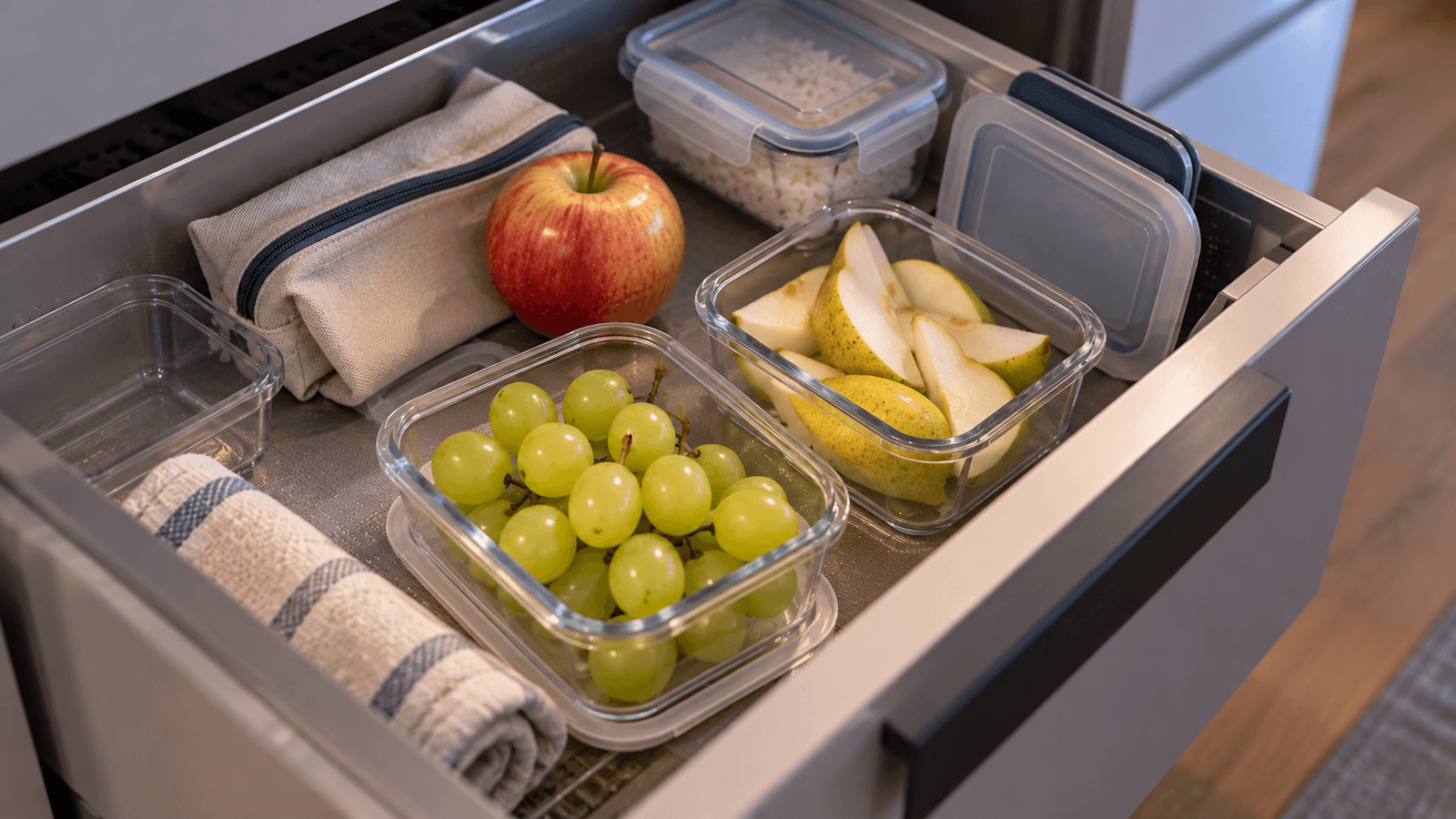
Eating more fruit does not require a new diet, complicated recipes or a refrigerator filled with unusual ingredients.
For most people, the easier approach is to make fruit more visible, convenient and connected to meals or snacks they already eat.
Fruit provides fibre, vitamins, minerals and a wide variety of plant compounds. Public-health recommendations commonly encourage eating a variety of fruit and vegetables regularly. The practical challenge is often not knowing that fruit is useful, but remembering to eat it consistently.
Here are realistic ways to make that easier.
1. Attach fruit to a meal you already eat
Instead of relying on the thought “I should eat more fruit today,” connect fruit to something that already happens.
For example:
- banana with breakfast
- berries with yogurt
- an apple after lunch
- orange or pear with an afternoon snack
- fruit as part of dessert after dinner
This creates a specific cue.
If breakfast already happens every day, adding fruit to breakfast is usually easier than creating a completely new eating occasion.
2. Keep ready-to-eat fruit where you can see it
Convenience strongly affects what gets eaten.
Fruit hidden at the back of a refrigerator drawer is easy to forget.
Depending on the fruit and appropriate storage conditions, keep frequently eaten options somewhere visible and accessible.
That might mean:
- apples or oranges in a visible fruit bowl
- washed grapes in the refrigerator
- berries near foods you use at breakfast
- frozen fruit in an easy-to-reach freezer drawer
The goal is not decorative presentation. It is reducing the number of steps between deciding to eat fruit and actually eating it.
3. Use fruit in breakfast you already make
You do not need a special “fruit breakfast.”
Add fruit to foods already in your routine.
Examples:
| If you usually eat... | Try adding... |
|---|---|
| Oatmeal | Banana, berries, apple or pear |
| Yogurt or skyr | Berries, peach, kiwi or banana |
| Cereal | Banana or berries |
| Toast | Fruit on the side |
| Cottage cheese | Berries, peach or pineapple |
| Pancakes | Fresh or warmed frozen berries |
A small addition repeated regularly can matter more than an elaborate breakfast you only prepare occasionally.
If skyr is part of your breakfast, see Calories in Skyr: Nutrition, Portions and Common Serving Sizes.
4. Make fruit the easiest snack option
If fruit requires washing, peeling or cutting while another snack can be opened immediately, convenience may win.
You can reduce that difference by doing a little preparation.
For example:
- wash grapes when you bring them home
- keep apples or mandarins ready to grab
- cut melon when you know it will be eaten soon
- portion frozen fruit for later use
- take a banana or apple when leaving home
You do not need to prepare an entire week of fruit at once.
Prepare only enough to make the next one or two eating occasions easier.
5. Fresh fruit is not the only option
Fresh fruit is useful, but relying exclusively on it can make the habit harder.
Frozen and canned fruit can also be practical choices.
Frozen fruit works particularly well when:
- berries are out of season
- fresh fruit spoils before you use it
- you want fruit available without frequent shopping
- you use fruit in oatmeal, yogurt or cooked dishes
Canned fruit can also be convenient. When possible, choose fruit packed in water or its own juice rather than syrup if you want to avoid additional added sugars.
Public-health guidance such as the NHS 5 A Day advice includes fresh, frozen and canned fruit among the forms that can contribute to fruit and vegetable intake.
6. Use seasonal fruit to create variety
You do not need to buy every type of fruit every week.
Changing a few choices with the season naturally creates variety.
For example:
Spring: strawberries, rhubarb-based fruit dishes, early berries depending on region
Summer: berries, cherries, peaches, nectarines, melon
Autumn: apples, pears, plums, grapes
Winter: citrus fruit, apples, pears, kiwi
Availability varies by country and climate, but the principle is simple: choose what is easy to find, tastes good and fits your budget.
Seasonal fruit can also be less expensive when supply is high.
7. Combine fruit with foods that make the snack more substantial
Fruit does not always need to be eaten alone.
If a piece of fruit by itself does not feel satisfying enough, combine it with another food.
Examples include:
- apple with yogurt
- pear with cottage cheese
- berries with skyr
- banana with a small amount of nut butter
- fruit with a handful of nuts
- peach with plain yogurt
The exact combination depends on your preferences and overall diet.
This can turn fruit from an “extra thing you should eat” into a normal component of a snack.
For more ideas on snack composition, see Healthy Snacks: How to Build a More Satisfying Snack.
8. Add fruit to meals without turning everything sweet
Fruit can also work in savoury meals.
Examples:
- apple in a cabbage salad
- orange segments in a leafy salad
- pear with a grain-based salad
- mango in a salsa
- pomegranate seeds with roasted vegetables or grains
- grapes in some salads
You do not need to force these combinations if you dislike them.
They are simply another way to increase variety beyond breakfast and dessert.
9. Keep frozen fruit as a backup
A freezer can solve one of the biggest practical problems with fruit: spoilage.
Keep one or two frozen options that you genuinely use.
For example:
- mixed berries
- blueberries
- mango
- cherries
Frozen fruit can be added directly to hot oatmeal or thawed for yogurt and other foods.
This gives you a fallback when fresh fruit has run out or spoiled.
10. Buy realistic quantities
Buying more fruit does not necessarily mean eating more fruit.
If you repeatedly throw away part of what you buy, purchase less at one time.
For example, instead of buying five different fruits for one person, you might buy:
- one type for breakfast
- one portable fruit for snacks
- one frozen option as backup
When those are nearly finished, restock.
The best quantity is the amount your household will realistically eat before it deteriorates.
11. Use ripeness to decide what to eat first
Not every fruit needs to be eaten in the order it was purchased.
When unpacking groceries, notice what is already ripe.
A simple priority might be:
eat first: ripe berries, peaches, soft pears
eat next: bananas, grapes, ripe kiwi
keep longer: apples, citrus fruit
backup: frozen fruit
The exact storage life varies, but using ripeness as a cue can reduce waste.
12. Replace occasionally rather than only adding
If you already eat enough food, “eat more fruit” does not necessarily mean adding fruit on top of everything else.
Sometimes it can replace another food in a situation where fruit works just as well for you.
For example:
- fruit instead of a sweet snack on some days
- berries instead of a sugary topping
- fruit as part of dessert
- banana instead of an additional packaged snack when convenient
This does not mean fruit must replace every dessert or snack.
The idea is simply to create natural opportunities rather than continually adding extra eating occasions.
13. Whole fruit and juice are not interchangeable
Fruit juice comes from fruit, but drinking juice is not nutritionally identical to eating whole fruit.
Whole fruit retains its intact structure and fibre and generally requires more chewing.
Public-health recommendations also commonly place limits on how much juice counts toward fruit and vegetable targets. For example, NHS guidance limits fruit juice and smoothies to a combined 150 ml per day for 5 A Day purposes.
If your goal is simply to eat more fruit, make whole fruit the default and treat juice as a separate option rather than the main strategy.
14. Dried fruit is concentrated
Dried fruit can be convenient because it stores well and is portable.
Removing much of the water makes it more concentrated by weight than fresh fruit, so the portion is smaller.
Examples include:
- raisins
- dried apricots
- prunes
- dates
- dried figs
It can work well in meals such as oatmeal or alongside other foods.
For dental-health reasons, guidance such as the NHS recommendation suggests having dried fruit with meals rather than repeatedly eating it between meals.
15. Create a simple fruit routine instead of chasing variety every day
You do not need a different fruit every morning.
A practical routine might look like:
Breakfast: banana or berries
Work snack: apple or pear
Backup: frozen berries
Weekend: one seasonal fruit you enjoy
You can change these choices over time.
Consistency and overall variety across days and weeks are more useful than trying to create a perfect fruit assortment every day.
A realistic example
Imagine someone who currently eats fruit only once or twice per week.
Instead of deciding to buy ten different fruits, they make three changes:
- keep bananas beside their usual breakfast foods
- take an apple to work on three days
- keep frozen berries available for yogurt
Those changes require very little additional planning.
If they become routine, fruit intake increases without creating a separate diet or complicated meal plan.
How much fruit should you eat?
Recommendations are usually framed together with vegetables rather than as one universal fruit-only number.
For example, the German Nutrition Society recommends at least five portions of fruit and vegetables per day for healthy adults, while the NHS uses a similar “5 A Day” framework and describes an adult portion of fresh, frozen or canned fruit or vegetables as roughly 80 g.
The exact balance between fruit and vegetables does not need to be identical every day.
Aim for variety across your overall diet rather than trying to hit a perfect fruit number at every meal.
Make the habit easier, not more complicated
If you want to eat more fruit, start with the point where it fits most naturally into your current routine.
Choose one or two changes:
- put fruit where you will see it
- add it to an existing breakfast
- take one portable fruit with you
- keep frozen fruit as backup
- buy smaller quantities more frequently
- combine fruit with a snack you already enjoy
Once one change becomes normal, add another if you want to.
The most useful strategy is not the one that creates the most impressive fruit bowl. It is the one that makes fruit easy enough to eat regularly.
This article provides general educational nutrition information and is not individualized medical or dietary advice.